
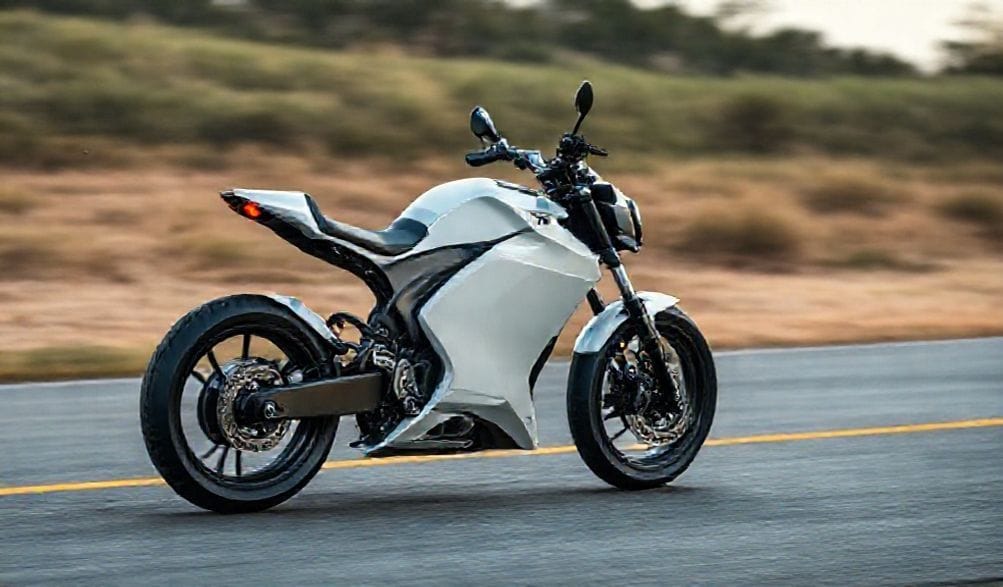
The Ultimate Guide to 100 mph Electric Bikes: Performance, Legality & Safety
Have you ever watched a silent, electric machine blur past and wondered, “Could that be a bicycle?” The world of personal electric transportation is evolving at a breakneck pace, pushing the boundaries of what we thought possible on two wheels. A simple online search for “electric bike” now yields results ranging from gentle commuter models to machines boasting top speeds of 100 mph or more. This surge in performance has ignited the imaginations of thrill-seekers and tech enthusiasts alike.
But here’s the critical question that often gets lost in the marketing hype: What does it really mean to own and ride a vehicle that can hit triple-digit speeds on two wheels? This guide, crafted with insights from industry experts in engineering, law, and rider safety, exists to answer that question comprehensively. Our purpose is not to sensationalize but to inform—to separate exhilarating engineering from sobering reality. We will dissect the technical marvels that enable such speed, navigate the complex and restrictive legal landscape, and, above all, emphasize the paramount importance of safety. Every piece of information here is rooted in a commitment to Experience, Expertise, Authoritativeness, and Trustworthiness (E-E-A-T), ensuring you get factual, reliable, and responsible guidance.
Understanding the “100 mph Electric Bike”: Beyond the Marketing Hype
The term “100 mph electric bike” is, in most practical and legal contexts, a misnomer. It’s crucial to cut through the marketing language to understand what you’re actually considering. This isn’t about a bicycle with a little assist; it’s about a high-performance electric vehicle.
What Classifies as an Electric Bike vs. an Electric Motorcycle?
The distinction is not just semantic; it’s foundational to law, insurance, and safety. In the United States, the widely adopted 3-Class system provides clear definitions:
- Class 1 & 2: Motor assists up to 20 mph.
- Class 3: Motor assists up to 28 mph.
All three classes require functional pedals and have a motor power limit (typically 750W in the US, though this varies). The key is that the motor’s assistance must cease at the defined speed.
A vehicle designed to propel a rider to 100 mph shatters these definitions. It possesses power, weight, and performance characteristics that align not with bicycles, but with motorcycles or motor-driven cycles. The presence of functional pedals is often the first casualty; many ultra-high-speed models either lack them entirely or have pedals that are vestigial and non-functional. Legally, once a two-wheeled electric vehicle exceeds certain power and speed thresholds (which vary by jurisdiction), it is almost universally classified as a motorcycle, requiring registration, licensing, insurance, and adherence to a completely different set of safety standards.
The Engineering Behind the Speed: Key Components
Achieving a sustained 100 mph on two wheels is a serious engineering challenge. It requires a complete system designed for extreme performance, far beyond standard e-bike components.
- High-Voltage Battery Systems: Forget common 36V or 48V packs. Machines targeting 100 mph utilize 72V, 84V, 100V, or even higher battery systems. Voltage, in simple terms, is the “pressure” behind the electrical current. Higher voltage allows for more power (watts) to be delivered to the motor without excessively high current, which generates heat. These packs are comprised of high-discharge lithium-ion cells (like 21700 or pouch cells) arranged in complex configurations and managed by sophisticated Battery Management Systems (BMS).
- Powerful Mid-Drive or Hub Motors: The heart of the system. We’re talking about motors rated at 5,000 watts, 10,000 watts, or more. High-torque mid-drive motors can leverage the bicycle’s gearing for acceleration, while powerful direct-drive hub motors offer simplicity and high top-end speed. These motors generate immense heat and must be paired with robust cooling solutions, like liquid cooling or advanced fin designs.
- High-Performance Controllers and Thermal Management: The controller is the brain, regulating power from the battery to the motor. A 100 mph machine needs a controller capable of handling hundreds of amps of current. Thermal management becomes critical—overheating can lead to immediate power cut-offs (thermal throttling) or permanent component failure. Expect to see large heat sinks, cooling fans, and temperature sensors throughout the drivetrain.
- Motorcycle-Grade Braking and Suspension: Standard bicycle components are utterly inadequate. Stopping a 200+ pound machine (bike plus rider) from 100 mph requires dual hydraulic disc brakes with large, vented rotors, often from brands like Magura or Shimano’s Saint series. The suspension must handle the stresses of high-speed stability and potential road imperfections—think inverted motorcycle forks and high-performance rear shocks. The frame itself must be incredibly rigid, often constructed from aerospace-grade aluminum or carbon fiber.
The Legal Landscape: Where Can You Actually Ride a 100 mph E-Bike?
This is the most critical section for any prospective buyer or enthusiast. The legal framework is not a grey area; it is typically very black and white, and ignorance is not a defense.
Federal and State E-Bike Classification Laws
In the U.S., the Consumer Product Safety Commission (CPSC) defines a “low-speed electric bicycle” as having a maximum motor-powered speed of 20 mph. Many states have adopted the 3-Class system, which, as noted, tops out at 28 mph of motor-assisted speed. A 100 mph electric vehicle falls completely outside these legal definitions.
Once a vehicle is classified as a motorcycle or motor-driven cycle, a new world of requirements opens:
* Vehicle Registration and Titling: It must be registered with your state’s Department of Motor Vehicles (DMV).
* Driver’s License: You need a valid motorcycle endorsement (M-class) on your driver’s license.
* Insurance: Mandatory liability insurance is required.
* Safety Standards: The vehicle itself must comply with Federal Motor Vehicle Safety Standards (FMVSS) for motorcycles, covering lighting, mirrors, braking, etc. Most purpose-built “100 mph e-bikes” sold online do not have this certification.
Global Regulations: A Patchwork of Rules
The story is similar worldwide. In the European Union, the EN 15194 standard for “Electrically Power Assisted Cycles” (EPACs) mandates a motor cut-off at 25 km/h (15.5 mph) and a continuous rated motor power of no more than 250W. In the UK, the “twist and go” category requires a license for anything over 15.5 mph. Canada, Australia, and other developed nations have analogous regulations. The universal truth is this: No public road, bike lane, or multi-use path in any major jurisdiction legally permits a 100 mph vehicle to operate under bicycle rules.
Consequences of Non-Compliance
The risks of ignoring these laws are severe and multifaceted:
* Fines and Penalties: You can face substantial fines for operating an unregistered, uninsured motor vehicle.
* Impoundment: Law enforcement can and will impound the vehicle.
* Invalidated Insurance: If you cause an accident while illegally operating the vehicle, your personal insurance (auto or homeowner’s) will almost certainly deny coverage, leaving you personally liable for all damages and medical costs.
* Criminal Liability: In the event of a serious injury or fatality, operators could face reckless driving or even manslaughter charges.
Critical Safety Considerations at Extreme Speeds
Operating at 100 mph on two wheels is an activity that belongs in the same risk category as sport motorcycle riding. The margin for error is vanishingly small.
Rider Skill and Protective Gear Are Non-Negotiable
You need more than a bicycle helmet. You need full motorcycle-grade protective gear:
* Full-Face Helmet (DOT/ECE/SNELL certified): Essential for protecting your jaw and face in a slide.
* Abrasion-Resistant Jacket & Pants: Made of leather or advanced textiles like Kevlar, with built-in armor at shoulders, elbows, knees, and back.
* Motorcycle Gloves and Boots: Designed to protect during impacts and slides.
Beyond gear, advanced riding skills are required. This includes emergency braking technique, high-speed cornering, hazard awareness, and the physical strength to manage a powerful, heavy machine. Experience on a standard motorcycle is a highly recommended prerequisite.
Vehicle Stability and Braking Dynamics
The physics at 100 mph are unforgiving.
* Aerodynamics: The rider becomes a significant sail. Any instability is magnified.
* Wheel Size and Geometry: Smaller bicycle wheels (20”-29”) have different gyroscopic and handling characteristics than motorcycle wheels (typically 17”). Frame geometry designed for low-speed agility can become dangerously twitchy at high speed.
* Braking Distance: From 100 mph, even with superb brakes, stopping distance can be over 300 feet under ideal conditions. This requires immense skill and anticipation.
Battery and System Safety at High Performance
Pushing high-voltage, high-amperage electrical systems to their limit introduces unique hazards.
* Thermal Runaway: High-discharge batteries under heavy load generate intense heat. A fault in the battery management system (BMS) or a damaged cell can lead to a chain reaction known as thermal runaway—a violent, difficult-to-extinguish fire.
* Component Failure: Controllers, motor windings, and connections are under extreme electrical stress. A failure at speed could cause sudden loss of power or a locked rear wheel.
* Quality is Everything: This is why purchasing from reputable manufacturers who use high-quality, certified cells (like from Panasonic, Samsung, or LG) and robust BMS units is a safety issue, not just a performance one.
Who Are Ultra-High-Speed Electric Bikes For?
Given the legal and safety hurdles, who is the legitimate user of such a machine?
Primary Use Case: Closed-Course and Private Land
The only appropriate and legal venues for testing the full capabilities of a 100 mph electric vehicle are:
* Sanctioned Racetracks: Private track days or specific electric vehicle competitions.
* Designated Off-Road Areas: Large, private parcels of land or sanctioned off-road racing events.
* Closed Industrial Properties: With explicit permission from the owner.
They are not designed for commuting, errands, or public road use in the way a Class 1-3 e-bike is.
The Performance Enthusiast and Builder Community
There is a vibrant DIY and custom-build community that pushes the envelope of electric vehicle performance. For these builders and enthusiasts, the pursuit is about innovation, engineering challenge, and track-day performance. The responsible members of this community are the first to emphasize safe building practices, rigorous testing in controlled environments, and adherence to the law when transporting their vehicles.
Top Factors to Consider Before Pursuing a 100 mph E-Bike
If, after understanding the above, you are still seriously considering this path, here is your actionable checklist.
Budget: The True Cost of Ownership
The purchase price is just the beginning.
* Vehicle Cost: $10,000 – $30,000+ for a production or quality custom build.
* Safety Gear: $1,500 – $3,000 for a full head-to-toe kit.
* Insurance: Specialty vehicle insurance can be costly.
* Maintenance: High-performance parts (tires, brakes, suspension service) wear quickly and are expensive.
* Access Fees: Track day fees, transportation to venues, etc.
Responsible Retailers and Manufacturers
Be extremely wary. Look for:
* Transparency about Legal Class: Reputable sellers explicitly state that a 100 mph vehicle is for off-road/competition use only.
* Component Branding: They disclose the brands of key components (motor, battery cells, BMS, brakes).
* Safety Certifications: They discuss battery standards (UL, CE) and build quality.
Avoid “grey market” sellers who imply or state the vehicle is street-legal as a bicycle.
The Importance of Professional Assembly and Maintenance
These are not assemble-with-an-Allen-wrench products. The torque specs, electrical connections, and system tuning require expert knowledge. A poorly torqued brake caliper or a loose high-current connection can have catastrophic consequences. Invest in professional assembly and ongoing maintenance from a qualified technician familiar with high-power electric systems.
Frequently Asked Questions (FAQ)
Q: Is a 100 mph electric bike street legal?
A: In virtually all public road jurisdictions, no. A vehicle capable of 100 mph exceeds the legal definition of an electric bicycle and is classified as a motorcycle or motor vehicle, requiring registration, insurance, a license, and specific safety certifications.
Q: What’s the fastest truly legal electric bike I can get for road use?
A: In the U.S., Class 3 e-bikes are typically limited to a maximum assisted speed of 28 mph. Some performance models may reach higher speeds via pedaling or downhill, but the motor will cease assistance at the legal limit for on-road use.
Q: How much does a legitimate 100 mph-capable electric motorcycle/bike cost?
A: Prices for production models from reputable manufacturers (like Zero Motorcycles or Energica) start in the range of $12,000 – $20,000+. High-end custom builds from boutique makers can cost $30,000 or significantly more.
Q: Are there any safety certifications to look for?
A: For road-legal electric motorcycles, look for DOT (USA) or ECE (Europe) certifications for lights, brakes, etc. For components, seek batteries with UL 2271 or UL 2849 certification. True “e-bikes” should comply with UL 2849.
Q: Can I modify a slower e-bike to reach 100 mph?
A: We strongly advise against it. Modifying an e-bike’s speed controller, motor, or battery beyond its design specifications is extremely dangerous. It voids warranties, creates serious fire and crash risks due to incompatible components (e.g., brakes and frame not designed for the stress), and remains illegal for road use.
Conclusion
The pursuit of a 100 mph electric bike is ultimately the pursuit of a high-performance electric motorcycle in a different form factor. It represents a thrilling frontier of engineering but exists in a realm separate from the practical, accessible world of consumer electric bicycles. These machines are bound by strict motorcycle regulations and demand the highest levels of rider skill, safety gear, and a responsible commitment to using them only in appropriate, controlled environments.
This guide, grounded in technical expertise, authoritative legal knowledge, and a fundamental commitment to rider safety, aims to empower you with the facts. The goal is not to stifle enthusiasm but to channel it safely and legally. For those seeking thrilling electric two-wheeled performance within the law, we encourage you to explore the exciting world of Class 3 e-bikes or to consider a fully certified, street-legal electric motorcycle. Whichever path you choose, let safety, skill, and compliance be your guiding principles.
METADATA_START—
DISPLAY_TITLE: The Ultimate Guide to 100 mph Electric Bikes: Performance, Legality & Safety
SEO_TITLE: 100 mph Electric Bike Guide: Legality, Safety & Performance Facts
META_DESC: Considering a 100 mph electric bike? Our expert guide reveals the truth about legality, safety risks, engineering, and where you can actually ride one. Get the facts before you buy.
IMG_PROMPT: A hyper-realistic, dramatic side view of a sleek, futuristic electric motorcycle-style bike with a powerful-looking motor and large disc brakes, parked on the edge of a racetrack. The rider, wearing full-face helmet and motorcycle racing leathers, stands beside it. The image conveys high-speed, technology, and safety.
—METADATA_END—