
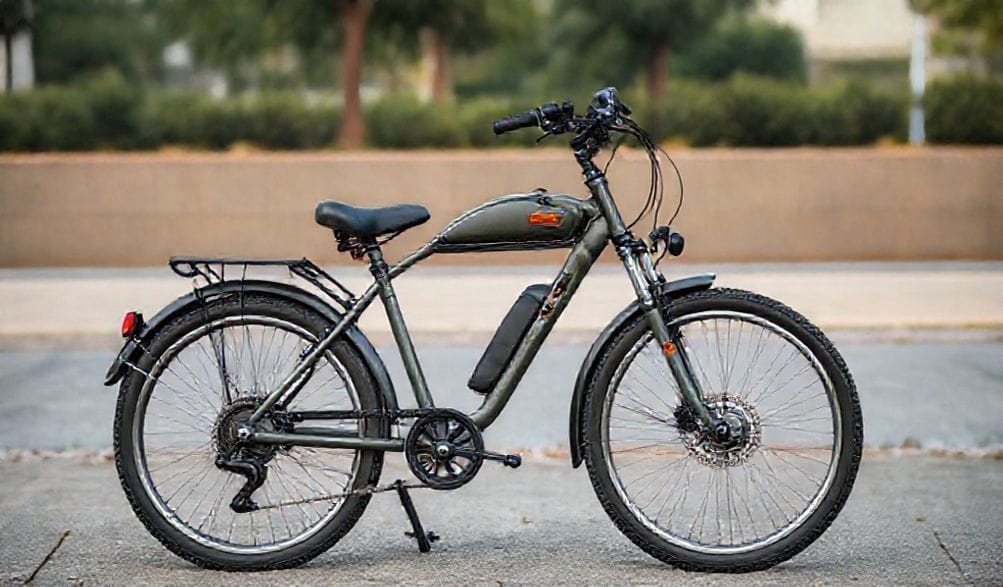
The Ultimate Guide to 72 Volt E-Bikes: Power, Performance, and Practicality
The electric bicycle has undergone a quiet revolution. What began as a modest pedal-assist commuter has evolved into a category of high-performance machines that blur the line between bicycle and motorcycle. At the forefront of this evolution is the 72-volt e-bike—a platform that represents the pinnacle of consumer-available electric bicycle power. This isn’t just an incremental upgrade; it’s a fundamental shift in capability.
This comprehensive guide is designed to be your definitive resource. We’ll move beyond marketing hype and delve into the technical specifications, real-world performance data, and practical considerations of 72V systems. Whether you’re a seasoned enthusiast craving more torque, a long-distance commuter seeking unwavering power, or a curious buyer wondering what lies beyond the standard 48V offering, this expert-driven analysis will equip you with the knowledge to make a truly informed decision.
What is a 72 Volt E-Bike? Understanding the Core Technology
At its core, a 72-volt e-bike is defined by its operating voltage—the electrical “pressure” supplied by its battery pack to the motor and controller. This higher voltage is the foundational element that unlocks a new tier of performance, but it’s crucial to understand the system as a whole, not just a single number.
Voltage Explained: The “Pressure” Behind the Power
Think of your e-bike’s electrical system like a water hose. Amperage (Ah) is the volume of water flowing through the hose—it determines your range. Wattage (W) is the total power output, a product of voltage and amperage. Voltage (V), then, is the water pressure.
A higher voltage system (like 72V) is like a high-pressure fire hose compared to a standard garden hose (like 36V or 48V). For the same diameter hose (amperage), the fire hose delivers water with far more force. In electrical terms, this means a 72V system can deliver more power (watts) to the motor with less electrical current (amps), leading to greater efficiency, less heat generation in the wiring, and, most noticeably, explosive performance.
Key Components of a 72V System: Battery, Controller, and Motor
A 72V system is a harmonious, high-stress trio:
-
The Battery: The heart of the system. A 72V battery is typically built by connecting 20 lithium-ion cells in series (20S). Its quality is paramount. We’re talking about cells from reputable manufacturers like LG, Samsung, or Panasonic, governed by a sophisticated Battery Management System (BMS). The BMS is the brain, protecting the pack from overcharging, deep discharge, and overheating—failures that are riskier at this voltage and energy capacity.
-
The Controller: The central nervous system. This electronic unit acts as the intermediary between your throttle/pedal assist sensor, the battery, and the motor. It regulates the power flow. A 72V controller is specifically designed to handle the higher voltage input and translate your commands into smooth, powerful output to the motor. Its amperage rating (e.g., 40A, 50A) is a key determinant of peak torque.
-
The Motor: The muscle. Whether a hub motor or mid-drive, it must be engineered for 72V operation. A motor wound for 72V will spin faster and produce more power at its optimal efficiency point than an identical physical motor wound for 48V. The synergy here is critical: a high-voltage battery feeding a high-amperage controller that drives a high-rpm motor.
72V vs. 48V vs. 52V: A Comparative Power Analysis
Let’s put the numbers into perspective. The following table outlines the key differences between common e-bike voltage tiers.
| Feature | 48V System (Common Standard) | 52V System (Performance Upgrade) | 72V System (High-Performance Tier) |
| :— | :— | :— | :— |
| Typical Nominal Voltage | 48V | 52V (58.8V fully charged) | 72V (84V fully charged) |
| Peak Power Output | 750W – 1,500W | 1,000W – 2,000W | 2,000W – 6,000W+ |
| Performance Character | Zippy, good for urban commuting and moderate hills. | Stronger acceleration, better hill climbing, longer range than 48V. | Explosive acceleration, exceptional hill-climbing, motorcycle-like torque. |
| Efficiency & Heat | Good efficiency. Can experience voltage sag under heavy load. | Better efficiency under load, less voltage sag than 48V. | Highest efficiency for a given power level. Minimal voltage sag, runs cooler at high power. |
| Best Use Cases | Daily commuting, recreational trails, light cargo. | Enthusiast commuting, serious trail riding, heavier cargo. | Long-distance high-speed commuting, extreme off-roading (e.g., surron), heavy cargo/towing, performance seekers. |
| System Cost & Weight | Most affordable, lighter batteries. | Moderate cost and weight increase. | Premium cost. Batteries are significantly larger and heavier. |
Unmatched Performance: Benefits of a 72 Volt E-Bike
Choosing a 72V platform is about transcending the limitations of mainstream e-bikes. The benefits are tangible and transformative.
Superior Speed and Acceleration
This is the most immediately apparent advantage. A 72V system doesn’t just offer a higher top speed; it gets you there with breathtaking urgency. Where a 48V bike might feel quick, a 72V bike feels forceful. It’s the difference between merging into city traffic and launching off the line. Typical top speeds for unrestricted 72V e-bikes can range from 35 mph to over 50 mph, depending on motor winding, controller limits, and gearing.
Crucial Disclaimer: These speeds far exceed the legal definitions of a “bicycle” in virtually all jurisdictions (usually capped at 20-28 mph with motor assist). Operating at these speeds on public bike paths or roads may classify your vehicle as a moped or motorcycle, with serious legal implications. Always know and obey your local laws.
Enhanced Hill Climbing and Load Capacity
Voltage sag is the enemy of hill climbing. As a standard battery depletes under heavy load, its voltage drops, and power plummets. A 72V battery has a much higher voltage ceiling, so even under the strain of a steep incline or heavy load, it maintains operational voltage, delivering consistent power.
This makes 72V e-bikes the undisputed champions for:
* Steep Grade Climbing: Conquering mountains or long, steep hills without breaking a sweat.
* Heavy Riders: Providing ample power for riders above 250 lbs without performance compromise.
* Cargo and Towing: Ideal for heavy-duty cargo bikes or for towing trailers, as the motor operates efficiently even under maximum strain.
Increased Range and Efficiency
Here’s a common misconception: higher voltage alone doesn’t mean more range. Range is determined by battery capacity, measured in Watt-hours (Wh). Watt-hours = Voltage (V) x Amp-hours (Ah). A 72V 20Ah battery has a capacity of 1,440 Wh.
The range benefit comes from efficiency. Because the 72V system draws fewer amps to produce the same power, it experiences less energy loss as heat in the wires and controller. When ridden conservatively at the same speed as a lower-voltage bike, the 72V system can be more efficient, extending your range. Furthermore, when you need that explosive power, it’s available without brutally draining the battery. In real-world scenarios, expect ranges from 30 miles (under aggressive, high-speed use) to 70+ miles (using moderate pedal assist on flat terrain).
Key Considerations Before You Buy a 72V E-Bike
With great power comes great responsibility—and several important practicalities. An honest assessment is key.
Ideal Rider Profile: Who Needs This Much Power?
A 72V e-bike is a specialized tool. It’s ideal for:
* The Long-Distance, High-Speed Commuter: Someone with a 20+ mile commute who wants to travel at near-car speeds without fatigue.
* The Off-Road/Enduro Enthusiast: Riders tackling technical, steep mountain bike trails who need instant torque and high power to clear obstacles.
* The Heavy Hauler: Operators of cargo e-bikes for delivery services or personal use, regularly carrying significant weight.
* The Performance Seeker: An enthusiast who views power and acceleration as primary metrics of enjoyment.
If your needs are a 5-mile flat commute or leisurely park rides, a 72V system is overkill.
Safety, Licensing, and Legal Regulations
This is the most critical section of this guide. The legal landscape for high-power e-bikes is complex and varies wildly.
* Classification: In most of the USA and Europe, e-bikes are legally defined by their motor wattage (often 750W max) and top assisted speed (20-28 mph). A 72V e-bike almost always exceeds these limits.
* Consequences: This typically reclassifies the vehicle as a moped, scooter, or motorcycle. This can mandate:
* A driver’s license (often a motorcycle endorsement).
* Vehicle registration, license plate, and insurance.
* Helmet laws equivalent to motorcycles.
* Prohibition from bicycle paths, lanes, and trails.
* Your Responsibility: You MUST contact your local Department of Motor Vehicles (DMV) or transportation authority to understand the specific laws in your city, county, and state. Ignorance is not a legal defense.
Weight, Size, and Practicality for Daily Use
The power has physical trade-offs:
* Weight: A 72V battery pack is substantial, often adding 10-15+ lbs to the bike’s weight compared to a 48V pack. The bike itself may have a reinforced frame. Total weights of 70-100 lbs are common.
* Size: The battery is larger, affecting frame design and sometimes integration.
* Maneuverability: The added weight makes lifting the bike (for racks, stairs, etc.) a two-person job. Low-speed handling can feel more cumbersome.
* Theft & Security: Such a valuable, powerful machine is a prime target. Investment in the highest-grade locks (e.g., heavy-duty chains, hardened D-locks) and secure storage is non-negotiable.
Choosing the Right 72 Volt E-Bike: A Buyer’s Checklist
If you’ve determined a 72V bike is right for you and your locale, here’s what to scrutinize.
Motor Type and Wattage: Hub vs. Mid-Drive
- Hub Motor (Geared or Direct Drive): Common on many high-power e-bikes. Pros: Simple, often less expensive, can handle massive power. Cons: Unsprung weight can affect off-road suspension performance; power delivery is less nuanced.
- Mid-Drive Motor: The choice for serious off-road and performance riding. Pros: Leverages the bike’s gears, making it incredibly efficient on hills; central weight improves handling. Cons: Puts more stress on the bicycle’s chain and drivetrain; typically more expensive.
Wattage Rating: Look for continuous wattage, not peak. A quality 72V mid-drive might be rated for 1,000W continuous, while a performance hub motor could be 3,000W+. Match the wattage to your use case.
Battery Quality and Amp-Hour (Ah) Rating
This is your most important component. Do not compromise.
* Cell Brand: Insist on name-brand cells (LG, Samsung, Panasonic, Murata).
* BMS: Ensure it has a high-quality BMS with balancing, temperature monitoring, and clear documentation.
* Ah Rating: This is your “gas tank” size. A 72V 20Ah pack (1,440Wh) is a good starting point. For long range, seek 25Ah (1,800Wh) or higher.
Frame Build, Brakes, and Suspension
High power demands high-end components.
* Frame: Must be robust, often from 6061 or 7075 aluminum or steel. Look for reinforced weld points and a design that handles the torque.
* Brakes: Hydraulic disc brakes are mandatory. Look for large rotors (203mm+) from reputable brands like Shimano, SRAM, or Magura. Mechanical discs are insufficient for repeated high-speed stops.
* Suspension: For off-road use, a quality air-sprung fork (e.g., RockShox, Fox) with ample travel is essential. A full-suspension frame is highly recommended for anything beyond light trails.
Reputable Brands and Warranty Considerations
The 72V market has specialists. Research brands known for quality and support in this segment. Look for:
* Clear, lengthy warranties on the frame, motor, and battery.
* Accessible customer service and technical support.
* An established community of users for troubleshooting and advice.
* Availability of replacement parts.
Maintenance and Care for Your High-Power E-Bike
Proactive care ensures longevity and safety.
Battery Best Practices for Longevity
- Charging: Use only the provided charger. Avoid leaving it at 100% charge for extended periods; 80-90% is ideal for storage. Never let it fully deplete.
- Storage: Store in a cool, dry place (ideally 50-70°F). For long-term storage, charge to ~60%.
- Temperature: Avoid charging in freezing temperatures or in direct hot sun.
Mechanical Upkeep for High-Stress Components
- Brakes: Check pad wear frequently. Bleed hydraulic lines annually or as needed.
- Motor: For hub motors, ensure torque arms are securely fastened to prevent axle spin-out. For mid-drives, monitor chain, cassette, and chainring wear closely—they will wear faster.
- General: Regularly check all bolts (especially motor mounts, stem, handlebars) for proper torque. Keep the drivetrain clean and lubricated.
Troubleshooting Common 72V System Issues
- No Power: Check main battery connection, fuse, and display/controller wiring.
- Error Codes: Consult your manual. Common codes relate to communication errors, throttle faults, or BMS issues.
- Reduced Power/Stuttering: Could indicate a failing cell group in the battery, a overheating controller, or a loose connection. If basic checks don’t solve it, seek a professional with high-voltage experience.
FAQ Section
What is the typical top speed of a 72 volt e-bike?
Capable of 35-50+ mph depending on configuration. However, for legal operation as a bicycle in most areas, you would be restricted to 20-28 mph. Always prioritize local laws and safe riding practices over maximum capability.
How far can a 72V e-bike go on a single charge?
Range is highly variable. With a typical 20Ah battery, expect 30-40 miles under aggressive throttle use or 50-70+ miles using moderate pedal assist on mixed terrain. Larger capacity batteries (25Ah+) can extend this further.
Do I need a special license to ride a 72V e-bike?
This is the most important question. In most jurisdictions, yes. Because 72V systems almost always exceed legal power and speed limits for bicycles, they are typically classified as mopeds or motorcycles. This often requires a driver’s license (sometimes a motorcycle endorsement), registration, insurance, and a helmet. You MUST check with your local DMV or transportation authority.
Are 72 volt e-bikes safe for beginners?
Generally, no. The immense power, weight, and speed require experienced handling. The instant torque can be startling and lead to loss of control. We strongly recommend gaining significant experience on a standard 48V e-bike first.
How much does a quality 72 volt e-bike cost?
Expect a significant investment. For a well-built model from a reputable manufacturer with quality components, prices typically range from $3,000 to $7,000+. DIY kits can be less, but require technical knowledge.
Conclusion
The 72-volt e-bike represents the cutting edge of personal electric mobility, offering a blend of acceleration, hill-climbing prowess, and efficient power that was once the sole domain of internal combustion engines. It is a transformative tool for the right user—the serious commuter, the adventurous trail rider, or the heavy hauler.
However, this power is coupled with significant responsibility. The legal landscape is fraught with complexity, the physical demands of the machine are greater, and the investment is substantial. Successfully integrating a 72V e-bike into your life requires diligent research into local laws, a commitment to premium safety gear and secure storage, and a purchase from a manufacturer that stands behind its product.
As urban landscapes evolve and the search for efficient, exhilarating alternatives to car travel intensifies, high-power e-bikes like the 72V platforms are carving out a vital niche. They offer a glimpse into a future where personal transportation is not only green and efficient but also genuinely thrilling. Choose wisely, ride responsibly, and you’ll unlock a new dimension of two-wheeled freedom.
METADATA_START—
DISPLAY_TITLE: The Ultimate Guide to 72 Volt E-Bikes: Power, Speed & What to Know
SEO_TITLE: 72 Volt E-Bike Guide: Performance, Laws, Prices & Top Picks | [Your Site]
META_DESC: Considering a 72 volt e-bike? Our expert guide covers speed, range, legal requirements, costs, and key buying tips. Learn if this high-power e-bike is right for you.
IMG_PROMPT: A dynamic, professional photo of a sleek, modern 72 volt electric bike parked on a mountain trail overlook, with the city in the distant background. The bike looks powerful, with a large, integrated battery, hydraulic disc brakes, and aggressive tires. The scene is sharp, well-lit, and conveys both performance and adventure.
—METADATA_END—