
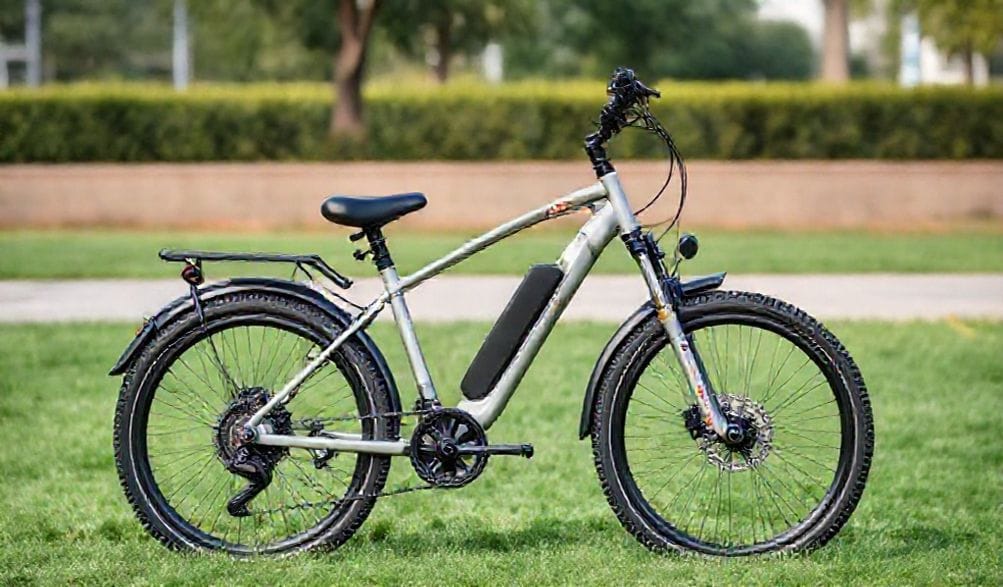
The Ultimate Guide to 72 Volt Ebikes: Power, Performance, and Practicality
If you’re searching for “72 volt ebike,” you’re likely no stranger to the world of electric bicycles. You’ve probably outgrown the gentle assist of a standard commuter model. You’re an enthusiast, a serious commuter, or an adventurer seeking more—more power to conquer hills, more speed for open trails, and more range to push the boundaries of your journey. You’re looking at the high-performance tier of personal electric transport.
This guide is your comprehensive, authoritative resource for understanding 72V ebikes. We’ll move beyond the hype and demystify the technical specs, comparing them squarely to common 48V and 36V systems. More importantly, we’ll provide clear, actionable advice on choosing, using, and maintaining a high-voltage electric bike, with an unwavering focus on safety and real-world performance. Our goal is to empower you with the expert knowledge needed to make a confident, informed decision.
What is a 72 Volt Ebike? Understanding High-Voltage Systems
At its core, a 72-volt ebike is defined by its electrical system’s operating voltage. While most commercial ebikes operate at 36V or 48V, a 72V system represents a significant step up in potential power and performance. It’s not just a bigger number; it’s a fundamental shift in how energy is delivered to the motor.
The Core Principle: Voltage as Electrical “Pressure”
Think of voltage like water pressure in a hose. A 36V system is like a standard garden hose—perfect for watering plants. A 48V system is a pressure washer hose, delivering more force for tougher jobs. A 72V system is like a fire hose, capable of moving a tremendous amount of energy with immense pressure. This higher “electrical pressure” allows more power (watts) to be delivered to the motor more efficiently, especially under heavy load, by drawing fewer amps for the same wattage output.
Key Components of a 72V System
A 72V ebike isn’t just a standard bike with a different battery. It’s an integrated system where every key component must be designed for the higher voltage.
- The Battery: This is the heart of the system. Beyond the 72V rating, capacity is measured in Amp-hours (Ah). A 72V 20Ah battery stores more total energy (1440 Watt-hours) than a 48V 20Ah battery (960Wh). Chemistry is critical: high-quality Lithium-ion (often NMC for energy density) or LiFePO4 (for longevity and safety) cells are essential. A robust Battery Management System (BMS) is non-negotiable for safety, balancing cells, and preventing over-charge or discharge.
- The Motor: The motor must be engineered to handle the 72V input. These are typically high-wattage motors, ranging from 1000W to 3000W and beyond. They can be hub motors (geared for torque or direct-drive for high-speed efficiency) or mid-drive motors that leverage the bike’s gears. On a 72V system, they unlock exceptional torque and top-speed potential.
- The Controller: This is the essential “brain.” It regulates the flow of power from the battery to the motor, interpreting your throttle or pedal-assist input. A controller rated for 72V is mandatory; using a lower-voltage controller would fail catastrophically. The controller’s amperage rating also dictates how much current can be sent to the motor, directly influencing acceleration and torque.
72V vs. 48V vs. 36V: A Clear Comparison
| Feature | 36V System | 48V System | 72V System |
| :— | :— | :— | :— |
| Typical Use Case | Casual commuting, light leisure | Mainstream performance, commuting, light trail | High-performance, off-road, cargo, long-range |
| Power & Torque | Moderate. Good for flat terrain. | Very Good. Confident hill climbing. | Excellent. Strong acceleration, heavy load capability. |
| Top Speed Potential | 20-25 mph | 25-30 mph | 35-50+ mph (config dependent) |
| Efficiency Under Load | Good | Better | Best. Higher voltage means lower current for same power, reducing heat loss. |
| Theoretical Range | Dependent on Wh capacity. For equal Wh, similar. | Dependent on Wh capacity. For equal Wh, similar. | Higher potential. A 72V battery of the same physical size can often hold more Wh, extending range. |
| Component Cost | Lowest | Moderate | Highest |
| System Weight | Lightest | Heavier | Heaviest (battery is a major factor) |
| Legal Classification | Often Class 1/2/3 compliant. | Often Class 3 compliant. | Frequently exceeds ebike laws; may be a moped/motorcycle. |
Benefits and Advantages of Choosing a 72 Volt Ebike
Why choose a 72V system? For the right rider, the benefits are transformative.
Unmatched Power and Performance
This is the primary draw. The surge of acceleration from a stop is motorcycle-like. Steep hills become manageable, even with a heavy rider or a cargo trailer in tow. For off-road enthusiasts, it means the ability to climb sandy dunes or power up rocky, technical inclines where lower-voltage systems would bog down. The higher potential top speed (used responsibly and where legal) allows for faster commuting or thrilling open-trail riding.
Improved Efficiency and Potential Range
This is a key technical advantage often overlooked. Because power (Watts) = Voltage (V) x Current (Amps), a 72V system can deliver, say, 1500 watts of power while drawing only ~21 amps. A 48V system delivering the same 1500W must draw ~31 amps. Lower current means less energy lost as heat in the wiring and controller. This efficiency gain can translate to a longer range, especially when you’re demanding high power continuously—like maintaining 30 mph into a headwind or climbing a long mountain pass. You’re using the battery’s energy more effectively.
Future-Proofing and Upgrade Potential
Investing in a 72V platform is like building on a robust foundation. The high-voltage framework allows for significant future upgrades. Want more acceleration? You can upgrade to a higher-amperage controller. Seeking even more power? A more powerful 72V motor can be swapped in. You’re not capped by a low-voltage electrical system that would require a complete overhaul to progress.
Important Considerations and Potential Drawbacks
With great power comes great responsibility—and several critical considerations.
Legal Landscape and Classification
This cannot be overstated. In most regions—including the United States, European Union, Canada, and Australia—72V ebikes almost universally exceed the legal definitions for a standard “electric bicycle.”
- In the US, a federal three-class system defines ebikes (max 750W motor, 20-28 mph assisted speed). A typical 72V system (often 1500W+) blows past these limits.
- In the EU, pedelecs are limited to 250W continuous power and 25 kph (15.5 mph).
Consequently, a 72V ebike will likely be classified as a moped, motorcycle, or “speed pedelec.” This can mandate requirements for:
* Vehicle registration and license plates
* Driver’s license (often a motorcycle endorsement)
* Insurance
* DOT-approved helmet (not just a bike helmet)
* It may be prohibited from bicycle paths and trails.
You are solely responsible for knowing and complying with all local, state/provincial, and national laws. Riding an unregistered, uninsured vehicle where it’s not legal can result in fines, impoundment, and invalidate insurance in case of an accident.
Safety First: Handling High-Power Systems
The risks scale with the performance.
* Quality is Non-Negotiable: A cheap 72V battery is a fire hazard. A subpar controller can fail dangerously. Invest in components from reputable brands with proven safety records and proper certifications (e.g., UL, CE).
* Riding Gear is Essential: At speeds exceeding 35 mph, a bicycle helmet is insufficient. A full-face motorcycle helmet, motorcycle gloves, armored jacket, and sturdy footwear are prudent safety investments.
* Increased Maintenance Awareness: The stresses on the frame, brakes, and tires are significantly higher. Regular inspection of brake pads, tire pressure and wear, and torque on all bolts becomes crucial.
Cost and Weight Implications
Performance has a price. The high-capacity 72V battery alone can cost significantly more than a 48V equivalent. The high-power motor, robust controller, and reinforced components add to the cost. Furthermore, the battery is heavy, making the entire bike more cumbersome to lift or transport on a rack. This weight also affects low-speed handling and requires more powerful brakes to control.
Who is a 72 Volt Ebike Best Suited For?
A 72V system is a specialized tool, not for everyone.
The Performance Enthusiast and Off-Road Rider
If your idea of fun is trail riding with motorcycle-like power, climbing extreme off-road terrain, or simply experiencing exhilarating acceleration, this is your platform.
The Heavy Hauler and Cargo Bike User
For riders who regularly transport heavy loads, children, or commercial cargo, the immense low-end torque of a 72V system makes the ride smooth, safe, and manageable, even on hills.
The Long-Distance Commuter (Where Legal)
If you have a lengthy, high-speed commute (e.g., 20+ miles at 30+ mph) and can do so on roads where it’s legal, the efficiency and sustained power of a 72V system can be ideal.
Who Should Avoid a 72V System?
- First-time ebike buyers: Start with a Class 1/2/3 bike to learn fundamentals.
- Casual or recreational riders: The cost, weight, and legal complexity are overkill.
- Those on a tight budget: The initial investment and potential regulatory costs (insurance, registration) are high.
- Anyone needing a strictly legal bicycle-path-legal vehicle: Unless you’re willing to register it as a motor vehicle and ride only where those are permitted.
How to Choose the Right 72 Volt Ebike
Pre-Built vs. DIY Conversion Kits
- Pre-Built: Companies like Sur Ron, Stealth, or high-end custom builders offer complete, integrated bikes. Pros: Engineered as a system, warranty support, no assembly hassle. Cons: Higher cost, less customization.
- DIY Conversion Kits: You add a motor, battery, and controller to a standard bicycle frame. Pros: Ultimate customization, can be more cost-effective, rewarding project. Cons: Requires significant mechanical/electrical skill. Integration can be clunky. Safety and reliability depend entirely on your workmanship and part selection.
Evaluating Motor Type and Wattage
- Hub Motor: Simpler, often less expensive. Geared hubs offer great torque for hills. Direct-drive hubs are robust and efficient at high speeds but can have less low-end torque.
- Mid-Drive Motor: Leverages the bike’s gears, making it incredibly efficient on hills and varied terrain. It puts stress on the drivetrain (chain, cassette), which will wear faster under 72V power. Ideal for technical off-roading.
Battery Specifications: Beyond Voltage
Look past the “72V” label. Watt-hours (Wh) = Voltage (V) x Amp-hours (Ah). This is your “gas tank” size. A 72V 20Ah battery (1440Wh) has 50% more energy than a 48V 20Ah battery (960Wh). Prioritize batteries from known brands (e.g., Samsung, LG, Panasonic cells) with a high-quality BMS that includes features like temperature monitoring and individual cell balancing.
Critical Questions to Ask Before Buying
- Is it street-legal as an ebike in my specific area? What are the penalties if it’s not?
- What is the warranty, especially on the battery (often 1-2 years)?
- What is the real-world tested range at my intended riding speed and terrain?
- Are replacement parts and service readily available? For DIY, are wiring diagrams and controller programming software accessible?
- Does the bike have components to match the power? Look for hydraulic disc brakes, a reinforced frame, and high-quality, load-rated tires.
FAQ Section
Q1: How fast can a 72 volt ebike go?
A: While capable of 35 to over 50 mph depending on motor windings, controller limits, and rider weight, top speed should never be the sole focus. It is always limited by local laws, which often restrict such vehicles to lower speeds on public roads, and by safety considerations.
Q2: What is the real-world range of a 72V ebike?
A: Range varies dramatically from 20 to 70+ miles. It depends entirely on battery capacity (in Watt-hours), rider weight, terrain, wind, tire pressure, and most critically, how you ride. Aggressive, high-speed throttle use will drain the battery quickly. Conservative pedal-assist use on flat ground can maximize it. The higher voltage system’s efficiency is an advantage, but it doesn’t negate the laws of physics.
Q3: Are 72V ebikes street legal?
A: In the vast majority of jurisdictions, they do not qualify as standard electric bicycles due to their high power and speed capabilities. They are typically regulated as motor vehicles (mopeds or motorcycles), requiring registration, insurance, a license, and helmet. You must research your specific local and state/provincial laws; this is a critical and non-negotiable step.
Q4: Is a 72V ebike safe?
A: Safety is a product of the machine and the operator. A 72V ebike built with high-quality, properly rated components and assembled correctly can be as safe as its design allows. However, the inherent risks are higher due to increased speed and mass. Responsible riding, comprehensive safety gear, and diligent maintenance are exponentially more important than on a standard ebike.
Q5: Can I convert my existing bike to 72V?
A: It is possible but is an advanced DIY project suitable only for those with strong mechanical and electrical skills. You must ensure your bicycle frame is robust enough (steel or high-quality aluminum MTB frames are best). You’ll need a compatible motor wheel, a 72V battery, a 72V controller, display, throttle, and often upgraded brakes. It is not a beginner project.
Conclusion
The 72 volt ebike stands at the high-performance frontier of personal electric mobility. It offers a compelling package of exhilarating power, remarkable hill-climbing and load-hauling capability, and potential efficiency benefits for sustained high-speed travel. It represents the pinnacle of what electric bicycle technology can achieve in terms of raw performance.
However, this power comes with profound responsibilities. The increased cost, weight, and maintenance demands are tangible. Most significantly, the complex legal status creates a major hurdle for casual use on public roads and paths. A 72V ebike is not a solution for every rider; it is a specialized tool designed for specific, often off-road or legally-permissive on-road use cases.
By thoroughly understanding the system’s intricacies, honestly assessing your needs against local regulations, and investing unreservedly in quality components and safety gear, you can unlock a thrilling new dimension of riding. Choose wisely, ride responsibly, and always—always—put safety first.
METADATA_START—
DISPLAY_TITLE: The Ultimate Guide to 72 Volt Ebikes: Power, Performance & Practicality
SEO_TITLE: 72 Volt Ebike Guide: Benefits, Speed, Range & Legal Considerations
META_DESC: Considering a 72 volt ebike? Our ultimate guide covers power, speed, range, safety, and crucial legal info. Learn if a high-voltage e-bike is right for you.
IMG_PROMPT: A dynamic, high-quality photo of a powerful, modern 72 volt electric mountain bike on a rugged dirt trail, with a clear view of its large battery pack and robust motor, capturing a sense of speed and off-road adventure.
—METADATA_END—