
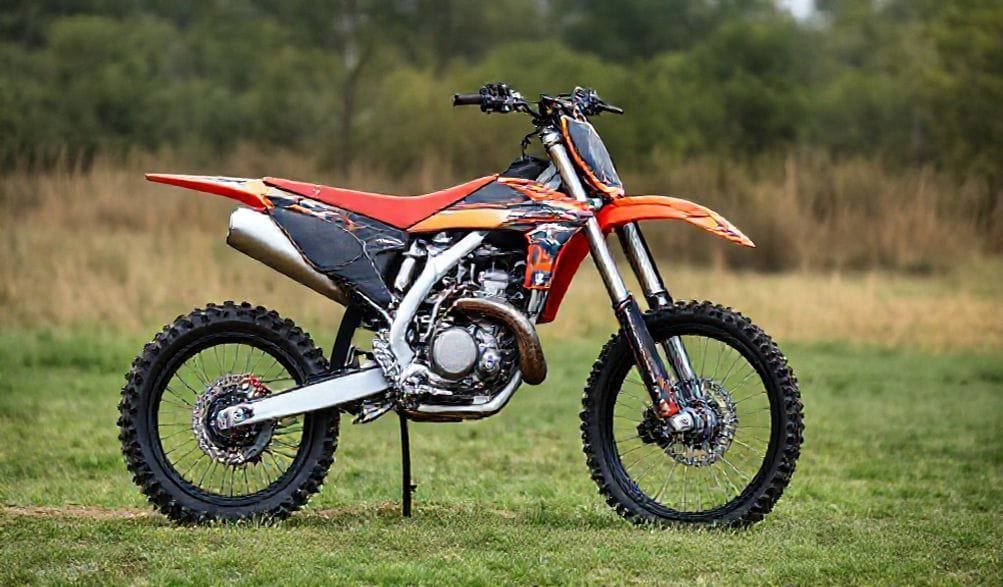
The Ultimate Guide to Full-Size Dirt Bikes: Choosing Your Adventure
So, you’re ready to step up. The world of full-size dirt bikes beckons with the promise of serious power, true off-road capability, and the kind of adrenaline that smaller machines can’t deliver. Whether you’re a seasoned rider graduating from a 125cc, an adult beginner with a thirst for adventure, or a veteran returning to the sport, choosing the right full-size machine is the most critical decision you’ll make. Get it right, and you unlock endless trails, track days, and pure riding joy. Get it wrong, and you could be saddled with an intimidating, ill-suited bike that hinders your progress or, worse, compromises your safety.
As an off-road enthusiast and certified mechanic with decades of experience wrenching on and riding everything from vintage two-strokes to the latest fuel-injected race bikes, I’ve seen the good, the bad, and the blown-up. This guide is designed to cut through the marketing hype and forum folklore. We’ll break down exactly what defines a full-size dirt bike, explore the different types built for specific purposes, and give you a clear-eyed evaluation of the features that matter. My goal is to arm you with the knowledge to make a confident, informed purchase that aligns with your skill level, terrain, and ambitions. Let’s get started.
What Defines a “Full-Size” Dirt Bike?
The term “full-size” gets thrown around a lot, but it’s more than just a bike that looks big. It’s a combination of specific engineering metrics that define a motorcycle built for an adult rider’s power, weight, and proportions.
Engine Displacement: The Core Metric
The most straightforward defining characteristic is engine displacement. In the dirt bike world, the full-size category generally starts at 250cc. This is the entry point for adult-oriented performance. However, it’s crucial to understand the engine type:
- Four-Stroke (250cc, 350cc, 450cc, 500cc): These are the most common. A 250cc four-stroke is a potent and popular choice for many riders. The 450cc class is the pinnacle of motocross and off-road performance, offering massive, tractable power. Larger displacements like 500cc are often found in dual-sport and enduro bikes for extreme torque.
- Two-Stroke (125cc, 150cc, 250cc, 300cc): Due to their different power cycle, two-strokes pack a bigger punch per cubic centimeter. A 250cc two-stroke is considered a full-size, expert-level machine, often competing directly with 450cc four-strokes in terms of outright speed and power intensity. Modern 300cc two-stroke enduro bikes are legendary for their torque and tractability in technical terrain.
Physical Dimensions: Seat Height & Ergonomics
A full-size bike is physically sized for an adult. The most noticeable spec is the seat height.
- Typical Seat Heights: Expect measurements from 37 inches to 40 inches unloaded. This can be intimidating, but it’s necessary for ample ground clearance over logs, rocks, and ruts.
- The Importance of Sag: Static seat height isn’t the whole story. When you sit on the bike, the suspension compresses. Setting the rider sag (how much the bike sinks under your weight) is the single most important setup task. Proper sag (usually 100-110mm for the rear) lowers the effective seat height and, more importantly, puts the bike’s geometry in the correct position for optimal handling.
- Ergonomics: The relationship between the handlebars, footpegs, and seat (the “rider triangle”) is designed for an adult frame. This allows for proper standing posture, weight distribution, and control input, which are essential for advanced riding techniques.
Types of Full-Size Dirt Bikes: Matching Bike to Purpose
Not all full-size dirt bikes are created equal. Manufacturers design them with specific disciplines in mind. Choosing the wrong type for your primary riding is the fastest way to spoil the fun.
Motocross (MX) Bikes: For the Track Warrior
These are the purebred race machines, built for one purpose: to lap a groomed motocross track as fast as possible.
- Characteristics: Ultra-lightweight, aggressively tuned engines with a focus on peak horsepower, stiff suspension designed to handle massive jumps and hard landings, and minimal extras (no lights, kickstand, or quiet muffler).
- Ideal For: Motocross and Supercross tracks, closed-course racing. They are high-strung and demanding.
- Brands & Models: Honda CRF450R, Yamaha YZ450F, Kawasaki KX450, KTM 450 SX-F, Husqvarna FC 450.
Enduro/Cross-Country Bikes: The Trail & Race Hybrid
Think of these as the “do-it-all” off-road weapons. They bridge the gap between motocross intensity and trail-riding practicality.
- Characteristics: Softer, more tractable power delivery, plush suspension tuned for absorbing roots and rocks over miles, wider-ratio transmissions, and essential equipment like a kickstand, skid plate, softer seat, and often a headlight/taillight. Many high-end models come street-legal from the factory.
- Ideal For: Technical single-track trails, hare scrambles, enduro races, and anywhere you need to connect trails via short public road sections.
- Brands & Models: KTM 350 XC-F / 500 EXC-F, Husqvarna FE 350 / FE 501, Yamaha WR450F, Beta 430 RR-S, Sherco 300 SEF.
Dual-Sport/Adventure Bikes: Street-Legal Explorers
These bikes prioritize versatility and legality. They are fully homologated for street use, allowing you to ride to the trails, explore forest service roads, and tackle long-distance adventures.
- Characteristics: Heavier due to added street equipment (lights, mirrors, horn, DOT-approved tires, emissions systems), significantly subdued engine tuning for reliability and smoothness, plusher and longer-travel suspension than a street bike, but softer than a pure enduro bike.
- Ideal For: Connecting trails via paved roads, long-distance adventure/backcountry exploration, and riders who need one bike to do it all.
- Brands & Models: Honda CRF450L / CRF300L, Kawasaki KLX300 / KLR650, Suzuki DR-Z400S, Yamaha Tenere 700 (adventure-focused).
Key Features to Evaluate When Buying
Once you’ve narrowed down the bike type, it’s time to look under the surface. These components define the riding experience.
Engine Performance & Power Delivery
- Powerband Character: A four-stroke typically delivers linear, tractable power from low RPMs, making it easier to control, especially for beginners. A two-stroke has a more “explosive” powerband, with a sudden surge of power (the “hit”) as the RPMs rise, demanding more clutch and throttle control.
- Fuel Injection vs. Carburetion: Virtually all new full-size bikes use Fuel Injection (FI). It provides perfect fueling at all altitudes and temperatures, easier starting, and often includes selectable engine maps. Carburetors are simpler and easier to rebuild trailside but require jetting changes for altitude/weather and can be finicky.
- Tunable ECUs: High-performance models often have a smartphone app or plug-in dongle that allows you to change engine mapping (aggressive/smooth), adjust traction control, and tailor throttle response.
Suspension: The Heart of Handling and Comfort
This is arguably more important than engine power. Good suspension keeps the tires on the ground, which means control and speed.
- Air Forks vs. Spring Forks: Air forks (like Showa SFF) use pressurized air as the spring. They are highly adjustable for spring rate via a pump and are lighter. Spring forks use a traditional metal coil spring. They are often praised for a more consistent, plush feel, especially over small bumps, and require less frequent maintenance for the average rider.
- Rear Suspension Design: Most bikes use a linkage system (a lever arm connecting the swingarm to the shock), which offers a progressive feel. Some KTM/Husqvarna models use a PDS (link-less) system, where the shock connects directly to the swingarm. PDS is simpler and has fewer wear parts, while linkage systems often provide more rear-wheel traction and adjustability.
- Adjustability: Ensure the bike has compression and rebound damping adjustments, at a minimum. Getting the suspension professionally tuned or re-sprung for your weight and skill level is the best upgrade you can make.
Frame, Weight, and Handling Geometry
- Chassis Material: Most modern frames are aluminum for its light weight and stiffness. Some brands (like Beta, Sherco) use high-quality steel frames, which can offer a more forgiving, flexible feel that some riders prefer in technical terrain.
- Weight & Center of Gravity: A lighter bike is easier to maneuver, pick up, and feels less tiring. Pay attention to how the weight is carried; a centralized, low center of gravity makes a bike feel more nimble.
- Geometry: The steering head angle and wheelbase determine stability vs. agility. A steeper head angle and shorter wheelbase make for a quick-turning, agile bike (good for tight trails). A slacker angle and longer wheelbase increase high-speed stability (good for desert or motocross).
The Buying Decision: New vs. Used & Total Cost of Ownership
Let’s talk real-world logistics and money.
The Case for New: Warranty, Tech, and Peace of Mind
- Benefits: You get the latest technology, zero wear on any components, a full manufacturer’s warranty, and the knowledge that maintenance history starts with you. Dealers often include a first service.
- The Reality: Be prepared for Out-the-Door (OTD) fees (destination, assembly, documentation) which can add 10-15% to the MSRP. Factor in the cost of the critical first service (usually at 1 hour or 500 miles), which often includes an oil change, filter change, and critical bolt re-torquing.
The Case for Used: Value and Depreciation
- The Value Play: Dirt bikes depreciate, especially in the first few years. A 2-3 year old bike can be found for a significant discount. This frees up budget for gear and upgrades.
- Inspection is Everything: Never buy blind.
- Engine: Check for easy cold starting. Listen for unusual knocking or rattling. Ask about recent top-end rebuilds (especially on high-hour four-strokes).
- Frame & Subframe: Look for cracks, repairs, or welds, particularly around stress points like the steering head and swingarm pivot.
- Bearings: Check for play in the steering head, swingarm, and wheel bearings by lifting the front/rear and wiggling.
- Suspension: Look for oil leaks on the fork seals and shock body. Ensure the forks aren’t pitted or scratched.
- Maintenance History: Receipts for oil, filters, and valve adjustments are gold.
Beyond the Sticker Price: Calculating Real Cost
The bike’s price is just the beginning. A responsible budget includes:
- Essential Gear ($1,000 – $2,000+): Do not skimp here. A quality DOT/SNELL or ECE helmet, motocross boots, gloves, goggles, knee guards, and a chest protector/roost deflector are non-negotiable.
- Regular Maintenance Fund: Oil/filter changes every 10-15 riding hours, air filter cleaning every ride, new tires every 20-40 hours, chain/sprocket sets, brake pads, and periodic suspension servicing.
- The “Oh Crap” Fund: Things break. Budget for levers, pedals, maybe a clutch, or a flat tire repair.
- Tools: You’ll need a basic metric tool set, stand, air filter cleaner/oil, and tire changing tools.
Getting Started: From Purchase to First Ride
You’ve signed the papers. Now, before you hit the gas, follow this checklist.
Essential Pre-Ride Setup and Safety Check
- Set the Rider Sag: This is step one. Follow your manual’s procedure. It transforms the bike’s handling.
- Adjust Controls: Position the levers (clutch, brake) and shift lever to a comfortable angle for your hands and feet.
- Bolt Check: Go over critical fasteners with a torque wrench: axle nuts, brake caliper bolts, handlebar clamps, shifter/brake pedal, and engine mounts.
- Fluids & Wheels: Check engine oil, coolant, and brake fluid levels. Check spoke tension and tire pressure.
- The Break-In Procedure: Follow your manual religiously. Modern engines don’t need “babying,” but they do require varied RPMs and no sustained high load for the first hour. This properly seats the piston rings and bearings.
Finding Places to Ride and Riding Communities
- Resources: Use websites for your state’s Department of Natural Resources (DNR), Bureau of Land Management (BLM), or National Forests. Apps like OnX Offroad and RiderX are invaluable for finding legal trails.
- Join a Community: Local riding clubs and forums (like ThumperTalk or ADVRider) are fantastic for finding riding buddies, getting trail recommendations, and learning from experienced mentors.
- Tread Lightly: Always know the regulations, get permits if required, stay on designated trails, and yield the right of way. Protecting riding areas is every rider’s responsibility.
FAQ Section
Q: What is a good first full-size dirt bike for an adult beginner?
A: A 250cc four-stroke trail or enduro bike (e.g., Yamaha WR250F, Honda CRF250F, Kawasaki KLX230R) is highly recommended. Its manageable, linear power and forgiving suspension build confidence far better than a peaky 450cc motocross bike. For taller or heavier beginners, a mild-mannered 350cc enduro bike can also be a great start.
Q: How tall do you need to be to ride a full-size dirt bike?
A: While seat height is a factor, skill and technique are more important. Most riders 5’7″ and taller can manage a full-size bike with proper sag setup and learning techniques like stopping with one foot down. For riders 5’5″ to 5’7″, it’s challenging but possible with practice. Options like lowering links, shaved seats, and lowering the forks in the triple clamps can help shorter riders.
Q: What maintenance does a full-size dirt bike require?
A: Maintenance is intensive and non-negotiable for reliability and safety. Key routines include: cleaning the air filter after every dusty ride, changing engine oil and filter every 10-15 hours, checking valve clearances (on four-strokes) per the manual (often 30-50 hours), and regularly servicing suspension, greasing bearings, and adjusting the chain.
Q: Can I make a dirt bike street legal?
A: It depends entirely on your state’s laws. Some Enduro bikes come from the factory with a street-legal title (like the KTM/Husqvarna EXC/FE models, Honda CRF450L). Converting a pure off-road bike (like a motocross model) involves adding a lighting kit, horn, mirrors, and often dealing with a “for off-road use only” title. This process ranges from simple to impossible depending on your location. Always check your local DMV and vehicle code first.
Q: Two-stroke vs. four-stroke: which is better for a full-size bike?
A: It’s a matter of preference and riding style. Modern four-strokes offer tractable, easy-to-use power everywhere, dominate motocross, and are generally preferred for fast, open terrain. Two-strokes are lighter, have simpler/cheaper top-end maintenance, and deliver a thrilling, explosive powerband. They are hugely popular in technical hard enduro and with riders who enjoy the classic, lively feel and lower weight.
Conclusion
Choosing your full-size dirt bike is a thrilling rite of passage. It’s the key that unlocks a new level of capability and adventure. The journey to the right bike begins not with brand loyalty, but with honest self-assessment. Match the bike’s core purpose—motocross, enduro, or dual-sport—to the terrain you ride most. Temper your ego when considering engine size; a manageable 250cc or 350cc will make you a faster, happier rider than an intimidating 450cc you can’t fully utilize.
Remember, quality suspension and a comfortable ergonomic fit will impact your enjoyment more than last year’s peak horsepower figure. Take your time. Do the research, scour the used listings with a critical eye, and if possible, attend demo days or ask to test ride a friend’s bike. Consult with experienced riders and trusted mechanics—their insights are invaluable.
Your investment extends beyond the motorcycle itself. It includes proper safety gear, a commitment to maintenance, and a respect for the trails and riding community. The ultimate goal is simple: to find the machine that you are excited to ride, that builds your confidence, and that delivers mile after mile of pure, unadulterated fun. Now, gear up, start your engine, and go explore.
METADATA_START—
DISPLAY_TITLE: The Ultimate Guide to Full-Size Dirt Bikes: Choosing Your Adventure
SEO_TITLE: Full-Size Dirt Bike Buyer’s Guide 2024 | Types, Features & Tips
META_DESC: Ready for a full-size dirt bike? Our expert guide covers 250cc+ bikes, compares MX, Enduro & Dual-Sport types, key features, and new vs. used buying advice to find your perfect match.
IMG_PROMPT: A dynamic, professional action shot of a rider on a modern full-size dirt bike, such as a KTM 450 SX-F or Honda CRF450R, leaning into a corner on a forest single-track trail, with sunlight filtering through the trees. The rider is in full gear, and the image conveys speed, skill, and adventure.
—METADATA_END—