
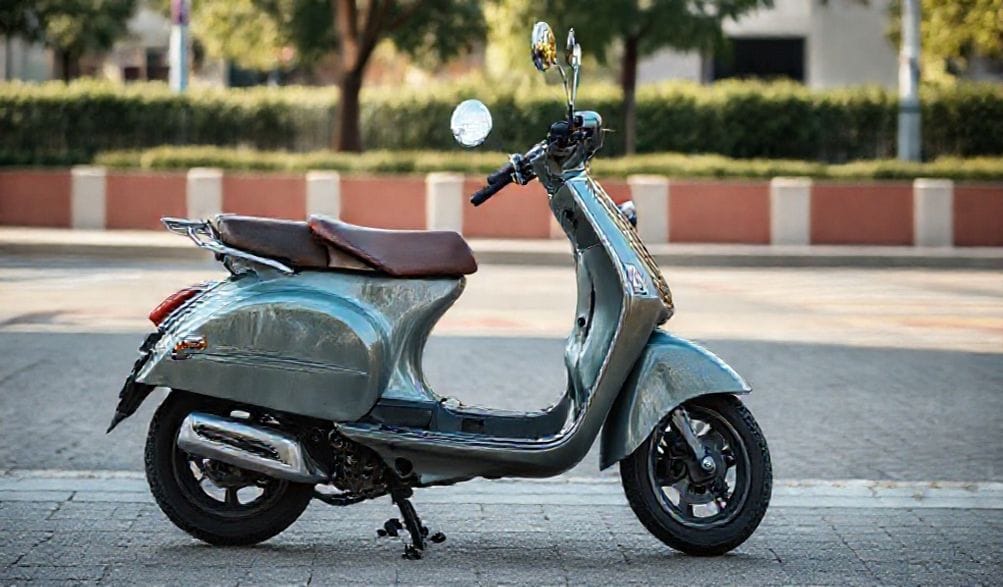
Scooter vs. E-Bike: Choosing the Right Electric Ride for Your Lifestyle
The urban landscape is humming with a new kind of energy. Gone are the days when your commute options were limited to a car, a crowded bus, or a sweat-inducing pedal on a standard bicycle. Today, the streets are shared with the silent whir of electric motors, propelling two revolutionary forms of personal transportation: the electric scooter and the electric bike (e-bike).
Both promise to slash commute times, reduce your carbon footprint, and inject a dose of fun into daily travel. But when standing at the crossroads of this electric mobility revolution, a critical question arises: which one is right for you? Is it the minimalist, stand-up scooter, or the versatile, pedal-assisted e-bike?
This isn’t a question of one being objectively superior. It’s a matter of aligning technology with lifestyle. This comprehensive guide dives deep into the world of scooters and e-bikes, comparing them across every critical factor—from cost and performance to legality and comfort. By the end, you’ll have all the information needed to make an informed investment in your personal mobility and a more sustainable way to move.
Understanding Your Options: Defining Scooters and E-Bikes
Before we pit them against each other, let’s clearly define what we’re talking about.
What is an Electric Scooter?
The electric scooter is the epitome of compact, point-to-point urban transit. Think of the dockless rentals that flooded city sidewalks, but in a more robust, personally-owned form.
- Core Design: A stand-up platform (deck) with handlebars, typically mounted on small wheels (8-10 inches in diameter). They are controlled by a throttle on the handlebars and brake levers.
- Power & Speed: Consumer models usually feature motors from 250W to 1000W, with top speeds ranging from 15 mph to 25+ mph for performance models. They are almost exclusively throttle-operated—you don’t pedal.
- Primary Use Case: Ideal for short-distance trips (under 5 miles), solving the “first and last mile” problem between your home and a transit station, or for quick errands around a dense urban core. Their essence is convenience and portability.
What is an Electric Bike (E-Bike)?
An e-bike is, at its heart, a bicycle supercharged with an electric motor. It enhances your pedaling effort, making hills disappear and long distances feel short.
- Core Design: A traditional bicycle frame (cruiser, mountain, commuter, etc.) with an integrated electric motor, battery, and control system. Most require you to pedal to activate the motor (pedal-assist), though many also include a throttle.
- The Three Classes: This is crucial for understanding regulations:
- Class 1: Pedal-assist only, with no throttle. Motor provides assistance up to 20 mph.
- Class 2: Features a throttle that can propel the bike without pedaling, up to 20 mph.
- Class 3: Pedal-assist only, but motor assistance continues up to 28 mph. Often restricted from bike paths.
- Primary Use Case: A true car replacement. Perfect for longer commutes (5-20+ miles), fitness rides where you want to control exertion, recreational trail riding (with specific e-MTBs), and practical tasks like grocery hauling or carrying kids.
Head-to-Head Comparison: Key Decision Factors
Now, let’s break down the showdown across the dimensions that matter most.
Cost Analysis: Initial Investment and Ongoing Expenses
- Purchase Price: Generally, electric scooters have a lower entry point. You can find reliable commuter scooters for $400-$800. High-performance, long-range models can reach $1,500+. E-bikes are a more significant investment, with quality entry-level models starting around $1,200-$1,800 and premium models easily exceeding $3,000-$5,000.
- Ongoing Costs: Both have low “fuel” costs (pennies per charge). Maintenance is where they diverge.
- Scooters: Have fewer mechanical parts but are vulnerable to tire wear (especially solid tires), brake pad replacement, and electronic issues. Their compact, stressed components can be less forgiving of potholes.
- E-Bikes: Inherit all the maintenance needs of a regular bicycle (chain lubrication, derailleur adjustments, brake servicing) plus the electrical system. However, their larger, more robust components (like pneumatic tires) often handle wear and tear better. Long-term, a well-maintained e-bike can be very reliable.
- Verdict: Scooters win on upfront cost, but a quality e-bike may offer better durability and lower cost-per-mile over a multi-year lifespan.
Performance & Range: How Far and How Fast Can You Go?
- Range: This is highly variable. A scooter with a 500Wh battery might claim a 25-mile range, but real-world factors like rider weight, hills, and speed cut that significantly—often by 30-40%. An e-bike with a similar 500Wh battery can often go much farther because the rider’s pedaling contributes substantially to motion. For covering distance, e-bikes are the clear winner.
- Speed & Power: Top speeds are comparable (15-28 mph), governed more by local law than engineering. However, e-bikes dominate in hill-climbing ability. Their combination of more powerful motors (often 250W-750W nominal, with higher peak output), multiple gears, and pedal power allows them to tackle steep inclines that would stall or severely drain a typical scooter.
- Verdict: For flat, short trips, both are capable. For longer commutes, variable terrain, or any significant hills, the e-bike’s performance is superior.
Practicality & Convenience for Daily Life
- Portability: This is the scooter’s flagship advantage. Most quality scooters fold down in seconds into a compact package weighing 30-45 lbs, making them easy to carry onto a train, store under a desk, or tuck into a closet. E-bikes are heavy (50-70 lbs) and do not fold (with rare exceptions). They require secure bike parking.
- Storage: Scooters are apartment-friendly. E-bikes need a garage, shed, or a sturdy indoor bike rack.
- Utility: E-bikes are in a league of their own here. You can easily add panniers, cargo racks, baskets, and even child seats. They are designed for carrying loads. Most scooters offer minimal cargo options—perhaps a small bag on the stem—and are not suited for transporting anything beyond a backpack.
- Verdict: Scooters for seamless integration into multi-modal transit and tight living spaces. E-bikes for replacing car trips and handling daily chores.
Safety, Comfort, and Riding Experience
- Stability & Handling: E-bikes provide a more stable, confident ride. Large wheels (26″-29″) roll over cracks, potholes, and debris with ease. The seated, bicycle geometry is inherently more balanced. Scooters, with their small wheels and high center of gravity, are more sensitive to road imperfections and require more active balancing.
- Comfort: Standing on a scooter deck for more than 20-30 minutes can be tiring for your legs and hard on your joints due to vibration. The seated position of an e-bike is far more comfortable for extended periods.
- Safety Features: Both offer lights and brakes (disc or drum). E-bikes, due to their higher speeds and use on roads, often come with more advanced braking systems and are more visible to drivers due to their standard bicycle profile.
- Verdict: For comfort, control, and managing imperfect urban terrain, the e-bike offers a significantly more pleasant and secure riding experience.
Legal Landscape and Where You Can Ride
This is the most critical and variable factor. You must check your LOCAL and STATE laws.
- Where to Ride: Regulations are in flux but generally:
- E-Bikes (Class 1 & 2): Are typically treated as bicycles. They are allowed on streets, in bike lanes, and on multi-use paths unless specifically prohibited (some paths ban all motorized vehicles).
- Electric Scooters: The law is less consistent. They are often banned from sidewalks. They may be allowed in bike lanes or required to be in the road. Some cities treat them like mopeds, restricting them from bike infrastructure entirely.
- Helmet, License, & Registration: Helmet laws vary by age and vehicle type. Generally, low-speed e-bikes (Classes 1 & 2) do not require a license, registration, or insurance in most U.S. states. Scooter laws are patchier; some states/cities impose age limits, license requirements, or even registration for higher-powered models.
- Verdict: E-bikes currently enjoy a clearer and more widely accepted legal framework, granting access to a broader network of safe infrastructure. Scooter laws are more restrictive and less uniform.
Making the Right Choice: Which is Best for You?
Let’s translate these comparisons into personal recommendations.
Choose an Electric Scooter If…
- Your typical trip is short (under 3-5 miles).
- Portability is non-negotiable—you need to combine it with bus/train rides or carry it into your office or home.
- You have very limited storage space (a small apartment, no garage).
- Your budget for the initial purchase is tight.
- Your daily route is on well-maintained, smooth pavement.
Choose an Electric Bike If…
- You have a longer commute (5+ miles) or want to replace car trips for errands and social visits.
- You value versatility—you want one vehicle for exercise, commuting, and carrying groceries or kids.
- Comfort and stability for rides over 20 minutes are a priority.
- Your route includes hills, varied terrain, or imperfect roads.
- You plan to ride primarily in bike lanes or on multi-use paths where scooter access might be uncertain or illegal.
Expert Tips for Ownership and Maintenance
Whichever you choose, proper care ensures longevity, safety, and performance.
Maximizing Battery Life and Range
- Avoid Extreme Depletion: Try not to regularly run the battery down to 0%. Recharge when it hits 20-30%.
- Store Smart: For long-term storage (weeks), keep the battery at a 40-60% charge in a cool, dry place. Avoid leaving it fully charged or fully depleted.
- Mind the Temperature: Extreme heat and cold degrade batteries. Avoid charging immediately after a hot ride and don’t leave your device in direct sun or freezing temps.
- Smooth Riding: For both, aggressive acceleration and braking waste energy. A steady pace maximizes range.
Essential Safety Gear and Riding Etiquette
- Helmet: Always wear one. Consider a MIPS-equipped helmet for better impact protection. For e-bikes (especially Class 3), a cycling helmet is a must.
- Visibility: Use bright lights (front and rear) day and night. Wear reflective clothing or accessories.
- Ride Predictably: Follow traffic laws. Signal your turns. Don’t weave between sidewalks and roads. On paths, announce your pass (“On your left!”) and slow down around pedestrians.
- Assume You’re Invisible: Ride defensively. Never assume a driver has seen you.
Routine Maintenance Checklists
For Your Electric Scooter:
* Weekly: Check tire pressure (if pneumatic) and inspect for wear/cuts.
* Monthly: Ensure all bolts (especially on the folding mechanism and stem) are tight. Test brakes for responsiveness. Clean the deck to maintain grip.
* Periodically: Check for loose wires or rattles. Listen for unusual motor sounds.
For Your Electric Bike:
* Weekly: Lubricate the chain and check tire pressure.
* Monthly: Inspect brake pads for wear and test brake function. Check that the battery is securely mounted and connections are clean.
* Seasonally/Annually: Get a professional tune-up to adjust derailleurs, true wheels, and inspect the motor system.
FAQ Section
Q: Are e-bikes or electric scooters better for hills?
A: E-bikes are overwhelmingly better for hills. Their combination of gearing, more powerful motors, and the ability to add your own pedal power makes climbing much easier. Most scooters will slow dramatically and drain their battery quickly on steep inclines.
Q: Can I ride an electric scooter or e-bike in the rain?
A: Check the manufacturer’s IP (Ingress Protection) rating. Many are rated IP54 or similar, meaning they are resistant to light rain and splashes. However, neither is a submarine. Avoid deep puddles, heavy downpours, and pressure washing, as water can damage electronics, reduce traction, and compromise safety.
Q: Do I need a license to ride an e-bike or electric scooter?
A: You must check your local laws. As a general rule in the U.S., Class 1 and 2 e-bikes (20 mph max) do not require a license, registration, or insurance in most states. Laws for electric scooters are far less uniform; some cities/states have age limits, license requirements, or classify them as mopeds. Always verify before you buy.
Q: Which is more environmentally friendly?
A: Both are excellent green alternatives to cars, producing zero tailpipe emissions. Their overall carbon footprint depends on how your local electricity is generated and the manufacturing process. Their greatest shared environmental benefit is taking single-occupancy cars off the road, reducing congestion and fossil fuel demand.
Q: How long do the batteries typically last before needing replacement?
A: With proper care, the lithium-ion batteries in both devices should last 3 to 5 years, or approximately 500 to 1000 full charge cycles. After this, you’ll notice a significant reduction in range, indicating it’s time to consider a replacement.
Conclusion
The journey to choosing your ideal electric ride ends not with a declaration of a winner, but with a clearer understanding of your own roadmap. The electric scooter is the agile, minimalist urbanite—perfect for short hops, seamless transit integration, and those with limited space and budget. The electric bike is the capable, versatile workhorse—ready to conquer longer commutes, haul your cargo, and turn daunting hills into gentle slopes, all while offering a comfortable, stable ride.
By honestly assessing your primary commute distance, storage situation, budget, local terrain, and legal landscape, the right choice will come into focus. Whether you opt for the sleek portability of a scooter or the empowering versatility of an e-bike, you’re making a choice that benefits not just your daily routine, but also the health of your city and planet. Now, it’s time to charge up and ride.
METADATA_START—
DISPLAY_TITLE: Scooter vs. E-Bike: Your Ultimate Guide to Choosing an Electric Ride
SEO_TITLE: Scooter vs. E-Bike: Compare Cost, Range & Laws | Ultimate Guide
META_DESC: Stuck between an electric scooter and an e-bike? Our detailed guide compares cost, range, comfort, laws, and practicality to help you choose the perfect electric vehicle for your commute.
IMG_PROMPT: A modern city street scene with a happy commuter riding an electric bike in a bike lane, passing a person on a foldable electric scooter waiting at a crosswalk. Both vehicles look sleek and contemporary, with the e-bike carrying a pannier bag. Bright, clear day, urban background.
—METADATA_END—