
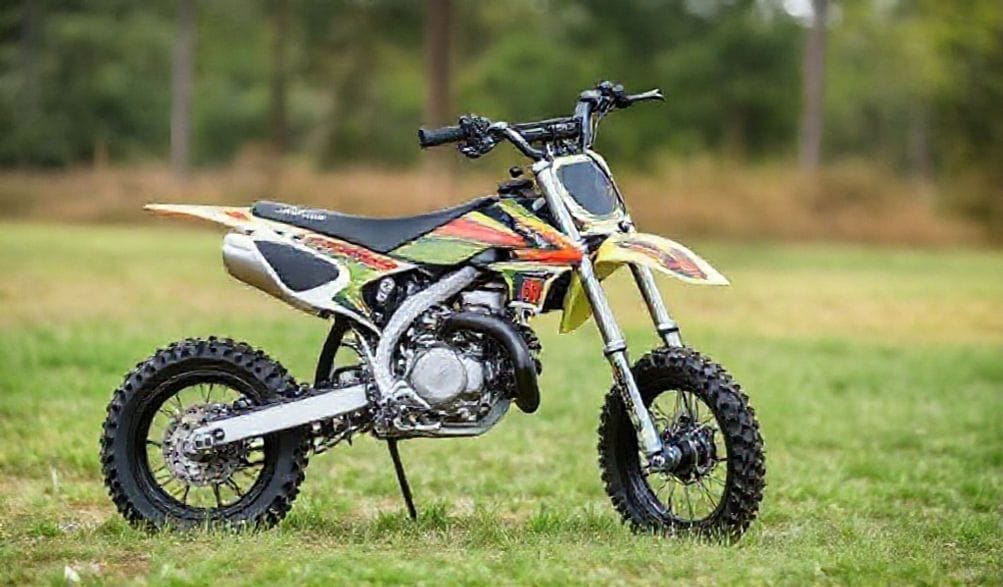
The Parent’s Complete Guide to Mini Dirt Bikes for 10-Year-Olds (Safety, Selection & Fun)
You see that sparkle in their eye. It’s a mix of excitement, adventure, and a plea you remember from your own childhood. Your 10-year-old has seen it—maybe in a video, at a friend’s house, or whizzing by on a trail—and now they’re asking, “Can I have a Geländemotorrad?” Your heart does a little flip. On one hand, you envision the incredible outdoor fun, the confidence boost, and the shared adventures. On the other, a wave of parental concern crashes in: Are they safe? How do I choose the right one? What if they get hurt?
Take a deep breath. That internal debate is the sign of a responsible parent, and you’ve come to the right place. As parents and off-road enthusiasts with over a decade of experience guiding families into motorsports, we’ve navigated these exact questions. This comprehensive guide is designed to cut through the confusion and provide expert-backed advice. We’ll walk you through choosing the perfect mini dirt bike for your 10-year-old, prioritizing Sicherheit above all else, and setting the stage for a fantastic, confidence-building experience that your whole family can enjoy.
Understanding the Right Fit: Why Age 10 is a Key Milestone
Ten years old isn’t just another birthday; it’s a sweet spot in a child’s development that often aligns perfectly with the introduction to motorized sports. They’re transitioning from little kid to a more capable, independent pre-teen, making it an ideal time to start with proper foundations.
Physical and Cognitive Readiness at Age 10
Physically, the average 10-year-old stands about 54 to 56 inches tall and weighs between 60 to 80 pounds. This size is crucial because it means they can typically fit on youth-specific models designed with appropriate seat heights (usually between 20 to 26 inches), allowing them to get at least the balls of their feet, if not flat-footed, on the ground—a key safety factor for control.
Beyond size, their coordination, balance, and strength have matured significantly. They can process multi-step instructions, understand cause and effect more clearly (“If I twist the throttle hard, the bike will lunge”), and possess the focus needed for a dynamic activity. This cognitive leap means they can learn and adhere to critical safety rules, making supervised riding a more viable and educational endeavor.
Engine Size and Power: CCs Explained for Beginners
When shopping for Mini-Dirtbikes für 10-Jährige, you’ll immediately encounter the term “cc” or cubic centimeters. This is a measurement of the engine’s displacement, or the total volume of air and fuel the engine can draw in. Generally, more cc means more potential power.
For a first-time 10-year-old rider, the recommended engine range is typically 50cc to 110cc. Here’s a simple breakdown:
* 50cc-70cc: The ideal starting point for a true beginner. These bikes offer manageable power that builds confidence as they master the basics of throttle control, braking, and balance.
* 110cc: A great step-up for a taller, more coordinated 10-year-old, or a perfect fit for a child with some prior riding experience (like on a 50cc). It offers more power for growing into.
You’ll also hear about engine types: four-stroke vs. two-stroke. For beginners, a four-stroke engine is almost always the best recommendation. They provide smooth, predictable power delivery (torque) that’s easier to control, are generally quieter, and are more forgiving. Two-stroke engines have a “power band”—a sudden surge of power that can be challenging for a novice to manage.
Top Safety Considerations: Non-Negotiables for Parents
Safety isn’t just one part of the dirt bike equation; it is the equation. Approaching this sport means adopting a safety-first mindset that is non-negotiable. This commitment is what transforms a potentially risky activity into a controlled, rewarding skill-building experience.
Essential Safety Gear: The Head-to-Toe Kit
Think of safety gear as your child’s riding uniform. It is not optional and is as important as the bike itself. Never let them ride without it.
* Helm: Muss DOT-certified mindestens; Snell or ECE certification is even better. It must fit snugly. Replace after any significant impact.
* Schutzbrille: Protect eyes from dirt, rocks, and branches. Look for anti-fog, tear-off lenses.
* Handschuhe: Provide grip, protect hands from blisters, and offer abrasion resistance.
* Stiefel: Purpose-built motocross boots are essential. They support ankles, protect feet and shins, and prevent feet from slipping off pegs.
* Brustschutz: Guards the torso, spine, and sometimes shoulders from impacts and roost.
* Knie-/Schienbeinschützer: Protect these vulnerable joints from impacts with the bike or ground.
* Durable Clothing: Long, durable pants (motocross pants) and a jersey or long-sleeved shirt.
Choosing a Safe Bike: Key Features to Look For
The bike itself should have features that aid a beginner’s learning curve and safety.
* Automatic Clutch: For absolute beginners, a bike with an automatic clutch (also called a semi-automatic) removes the complexity of manually operating a clutch lever, allowing the child to focus solely on throttle, brakes, and balance.
* Adjustable Throttle Limiter: A godsend for nervous parents and new riders. This screw allows you to physically limit how far the throttle can be twisted, effectively capping the bike’s top speed until skills improve.
* Reliable Braking: Look for bikes with responsive drum or disc brakes that are appropriately sized for the bike. Test that your child can comfortably reach and squeeze the brake levers.
* The “Fit Test”: The most critical factor. Your child should be able to sit on the bike with both feet firmly planted on the ground (or at minimum, the balls of both feet). If they are tiptoeing or leaning the bike over to reach, the bike is too tall.
The Critical Role of Supervision and Training
Your involvement is the most important safety feature.
* Formal Training: Seek out a certified course like the MSF DirtBike School or local riding clinics. Professional instructors teach foundational skills in a controlled environment far more effectively than a well-meaning parent can.
* Supervised Riding: Early rides should be 100% supervised. Establish clear rules: where to ride, hand signals, what to do if they fall, and always having a spotter.
* Environment is Everything: Start in a wide-open, flat, grassy field free of obstacles, traffic, and bystanders. Designated off-road parks are excellent next steps. Beginnen Sie niemals allow riding on public roads or unfamiliar, rugged terrain at this stage.
How to Choose the Best Mini Dirt Bike: A Buyer’s Checklist
With safety fundamentals in mind, you’re ready to shop. This checklist will help you navigate the practical decisions.
New vs. Used: Weighing the Pros and Cons
- New Bike:
- Vorteile: Full manufacturer warranty, pristine condition with no hidden wear, latest safety features, and dealer support. Peace of mind is the biggest benefit.
- Nachteile: Higher upfront cost, immediate depreciation.
- Used Bike:
- Vorteile: Significant cost savings, slower depreciation if you resell.
- Nachteile: Requires extreme diligence. You must inspect it thoroughly or bring a mechanically savvy friend. Look for worn frames, cracked welds, leaking fluids, rust in the gas tank, and non-original parts. Ask about maintenance history.
Key Specifications Comparison Chart
Here’s a simplified comparison of popular beginner models to illustrate what to look for:
| Model | Engine | Seat Height | Approx. Weight | Key Feature for Beginners |
| :— | :— | :— | :— | :— |
| Honda CRF50F | 49cc 4-Stroke | 21.6 inches | 110 lbs | Legendary reliability, auto-clutch, low seat height. |
| Yamaha TT-R50E | 49cc 4-Stroke | 21.5 inches | 110 lbs | Electric start, auto-clutch, Yamaha durability. |
| Kawasaki KLX110 | 112cc 4-Stroke | 26.8 inches | 159 lbs | Manual clutch option, great for taller beginners to grow into. |
| Suzuki DR-Z50 | 49cc 4-Stroke | 21.9 inches | 109 lbs | Smooth power, auto-clutch, Suzuki’s proven design. |
Trusted Brands for Young Riders
Sticking with established brands is a cornerstone of safety and satisfaction. Brands like Honda (CRF), Yamaha (TT-R), Kawasaki (KLX), and Suzuki (DR-Z) have earned their reputations over decades. Why does this matter?
* Safety Heritage: Their engineering prioritizes predictable handling and reliable components.
* Parts & Service Availability: Finding replacement parts or a mechanic who knows the bike is easy.
* Resale Value: These bikes hold their value remarkably well because of their known durability.
Getting Started: First Rides and Building Skills
The bike is home, the gear is on. Now, the real fun (and learning) begins.
Pre-Ride Bike Inspection (Teach Your Child)
Make this a ritual. It teaches responsibility and ensures mechanical safety.
1. Reifen: Check pressure and for cracks/embedded objects.
2. Bremsen: Test lever and pedal feel. Ensure they work before riding.
3. Kette & Ritzel/Kettenräder: Check tension (about 1-1.5 inches of play) and look for rust or stiff links.
4. Kette: Check fuel level and look for oil/gas leaks underneath.
5. Nuts & Bolts: Give critical fasteners (axle nuts, handlebar clamps) a visual check for looseness.
Finding the Perfect Practice Location
Start in the safest possible environment: a large, open, flat field with soft grass (which provides a more forgiving landing). As skills progress, move to a designated off-road park with beginner trails. Always, always ensure you have explicit permission to ride on any private land.
Bringen Sie grundlegende Wartung bei:
Focus on these basics in the first several outings:
* Starting & Stopping: Practice from a standstill, riding in a straight line for 50 feet, and coming to a controlled, balanced stop.
* Balance at Low Speed: Use the “friction zone” of the clutch (if manual) or just idle speed to practice slow, controlled maneuvers.
* Gentle Turning: Make wide, gradual turns before attempting tighter ones.
* Progressive Braking: Teach squeezing the brake lever, not grabbing it. Practice using both front and rear brakes together smoothly.
* Scanning: Instill the habit of looking ahead where they want to go, not down at the front wheel.
Häufig gestellte Fragen (FAQ)
Q1: What is the best cc dirt bike for a 10-year-old beginner?
A: Für ein Kind ohne Vorerfahrung ist typischerweise ein 50ccm- oder 70ccm-Viertaktmotor der perfekte, vertrauensbildende Einstieg. Ein größeres oder sportlich erfahreneres 10-jähriges Kind könnte bereit für 110ccm sein. Stets Kontrolle über Leistung priorisieren.
F2: Sind Mini-Dirtbikes für 10-Jährige sicher?
A: Motorradfahren birgt inhärente Risiken. Allerdings lassen sich diese mit dem richtigen, auf die Kindesgröße abgestimmten Bike, stets getragener vollständiger Sicherheitsausrüstung, konstanter Aufsicht durch Erwachsene und ordentlichem formalem Training, beherrschen, um eine bereichernde und lehrreiche Aktivität zu schaffen. Sicherheit ist eine aktive, fortwährende Verantwortung der Eltern.
F3: Mit welchen Kosten muss ich rechnen?
A: Für ein Ein neues, Anfängermotorrad einer großen Marke, budgetieren Sie zwischen 1.200 und 2.500 Euro. Hochwertige, neue Sicherheitsausrüstung (Helm, Stiefel, Brustprotektor etc.) kostet zusätzlich 300 bis 600 Euro. Don’t forget ongoing costs like maintenance, fuel, and possible trail fees.
F4: Welche Vorteile hat das für mein Kind?
A: Neben dem puren Nervenkitzel vermittelt Dirtbiken wertvolle Lebenskompetenzen: Selbstvertrauen, Verantwortungsbewusstsein (für das Bike und die eigene Sicherheit), Hand-Auge-Koordination, Gleichgewichtssinn, mechanisches Verständnis sowie Respekt vor Regeln und der Umwelt. Es ist auch eine phänomenale Möglichkeit, Outdoor-Aktivitäten zu fördern und einzigartige gemeinsame Familienerlebnisse zu schaffen.
F5: Benötigen sie einen Führerschein oder eine Zulassung?
A: Für das Fahren auf Privatgrundstücken oder ausgewiesenen Offroad-Strecken, wird typischerweise weder Führerschein noch Zulassung benötigt. Dies variiert jedoch dramatisch je nach Bundesstaat und Gemeinde. Sie müssen Ihre spezifischen Kreis- und Landesgesetze zur Nutzung von Geländefahrzeugen (ORV) prüfen. Im Zweifelsfall gehen Sie davon aus, dass es erforderlich ist, bis Sie das Gegenteil bestätigt haben.
Fazit
Den Weg zu beschreiten, Ihrem 10-Jährigen ein Mini-Dirtbike zu ermöglichen, ist mehr als ein Kauf; es ist das Öffnen einer Tür zu Abenteuer, Können und Familienerinnerungen. Der Weg baut auf drei unerschütterlichen Säulen auf: Das Finden der perfekten physischen Passform für Ihr Kind, das Verpflichten zu umfassender Sicherheit durch Ausrüstung und Aufsicht sowie das Investieren in ordentliches Training , um eine Grundlage guter Gewohnheiten zu schaffen.
Betrachten Sie diese Entscheidung als ein Tor. Wenn sie mit Geduld, Respekt und einem Fokus auf fortschreitendes Lernen angegangen wird, kann sie eine lebenslange Leidenschaft für die Natur fördern, Resilienz lehren und ein unglaubliches gemeinsames Hobby bieten. Das Ziel ist nicht, am ersten Tag einen Motocross-Champion zu schaffen, sondern einen selbstbewussten, verantwortungsvollen und freudigen Fahrer heranzubilden.
Gehen Sie also den nächsten Schritt. Besuchen Sie diesen Samstag einen seriösen Händler und lassen Sie Ihr Kind verschiedene Modelle probesitzen. Recherchieren Sie lokale Anfängerfahrkurse. Beginnen Sie dieses aufregende Kapitel nicht mit Bedenken, sondern mit der fundierten Zuversicht, dass Sie Ihrem Kind den Weg zu Erfolg und endlosem Spaß ebnen.
METADATA_START—
DISPLAY_TITLE: The Parent’s Complete Guide to Mini Dirt Bikes for 10-Year-Olds
SEO_TITLE: Mini-Dirtbikes für 10-Jährige: Ein Sicherheits- & Kaufratgeber 2024
META_DESC: Suchen Sie das richtige Mini-Dirtbike für Ihr 10-jähriges Kind? Unser Expertenratgeber behandelt sichere Hubraumgrößen (50ccm-110ccm), essentielle Ausrüstung, Top-Marken und Anfängertipps für einen spaßigen, selbstvertrauensbildenden Start ins Fahren.
IMG_PROMPT: Ein fröhliches, sicher ausgerüstetes 10-jähriges Kind sitzt selbstbewusst auf einem roten Honda CRF50F Mini-Dirtbike auf einer sonnigen, grasbewachsenen Wiese, während ein Elternteil unterstützend in der Nähe steht. Das Kind trägt einen Integralhelm, eine Brille, Handschuhe und Motocross-Stiefel.
—METADATA_ENDE—