
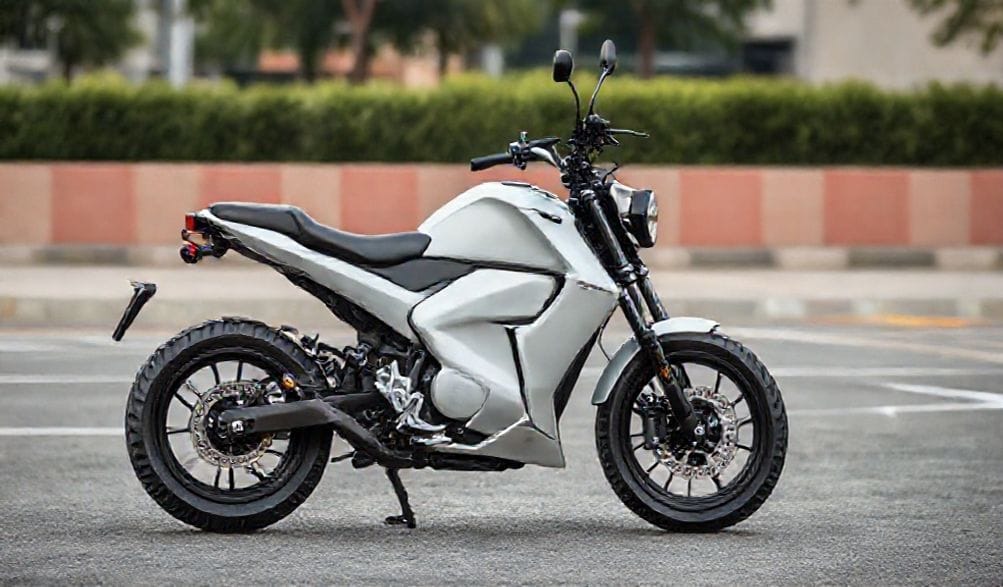
Navigating Street Legal Electric Motorcycles That Require No License: A Complete Guide
Imagine a vehicle that combines the freedom of the open road with whisper-quiet, emission-free operation and the promise of bypassing the traditional hurdles of licensing. Is it possible? As cities grow denser and the demand for accessible, eco-friendly personal transportation skyrockets, this question is on the minds of countless commuters and enthusiasts. The electric two-wheeler market is exploding, offering everything from bicycle-like models to machines that rival gasoline-powered motorcycles in performance. Yet, this exciting innovation is shrouded in a fog of confusion, particularly around one critical point: licensing requirements.
The phrase “street legal electric motorcycle no license” captures a powerful desire for simplicity and accessibility. This guide exists to cut through the marketing hype and regulatory complexity. Our purpose is to provide you with clear, accurate, and actionable information based on current vehicle classifications and regulations. We will help you understand the realistic options for street-legal electric two-wheelers that may not require a standard motorcycle license, while placing the utmost emphasis on one non-negotiable truth: you must verify every detail with your local and state laws. Let’s navigate this landscape together.
Understanding the “No License” Concept for Electric Motorcycles
The dream of a license-free motorcycle is compelling, but it’s crucial to ground that dream in legal reality. The key to understanding this market lies not in finding magical exemptions, but in understanding precise government classifications.
It’s About Vehicle Classification, Not Exemption
When a manufacturer or seller uses the term “no license required,” they are almost always referring to a vehicle that, in the eyes of the law, is not classified as a motorcycle. Instead, these machines are legally defined as electric bicycles (e-bikes) oder mopeds. The distinction hinges on three core technical specifications:
- Motor Power and Wattage: Measured in watts (W) or kilowatts (kW). Lower power outputs (e.g., 250W, 500W, 750W) are typical of e-bike classifications.
- Maximum Speed Capability: This is the single most important factor. Legal classifications often cap speed at thresholds like 20 mph (32 km/h) or 28 mph (45 km/h) for operation without a license.
- Operational Mode: Whether the motor provides assistance only when you pedal (pedal-assist) or can propel the vehicle via a throttle alone (throttle-only). Throttle-only operation often pushes a vehicle into a more regulated category.
The Critical Role of Local & State Laws
Here is the most important paragraph in this guide: There is no universal “no license” rule. Regulations vary dramatically—not just from country to country, but from state to state, and even between cities and counties within the same state. What is perfectly legal as a license-free e-bike in Oregon may be classified as a moped requiring registration in New Jersey, and may be outright illegal on certain paths in New York City.
Your absolute first step, before falling in love with any vehicle online, must be to consult your local Department of Motor Vehicles (DMV) or equivalent transportation authority. Become familiar with the terminology they use:
* Class 1, 2, 3 E-Bikes: A three-tier system adopted by many U.S. states, primarily differing by top speed and use of a throttle.
* Moped / Motorized Bicycle: Typically describes low-speed, low-power vehicles that may require registration, insurance, and a special (often simpler) license or endorsement.
* Motor Scooter / Low-Speed Motorcycle: May refer to slightly more powerful vehicles that almost always require a standard driver’s or motorcycle license.
Types of Street-Legal “No License” Electric Two-Wheelers
The market breaks down into distinct categories, each with its own legal framework. Understanding these categories is essential to making an informed choice.
High-Power Electric Bicycles (Class 3 E-Bikes)
Often the closest in appearance and feel to a motorcycle, Class 3 e-bikes are a popular “no license” option where permitted.
* Spezifikationen: Typically defined as having a motor that provides assistance up to 28 mph (45 km/h). They are usually pedal-assist only (the motor only helps while you are pedaling), though laws vary. Motor power is often 750W or less.
* Legality: They are street-legal in many, but not all, U.S. states and regions. Where legal, they are generally treated as bicycles. This means:
* No driver’s license required (though some states have a minimum age, like 16).
* No vehicle registration or license plate.
* No mandatory insurance (though personal liability insurance is wise).
* They are usually allowed on roads and bike lanes but are prohibited on sidewalks and sometimes on natural-surface trails.
Electric Mopeds and Scooters
This category is a significant gray area and requires the most diligent research.
* Low-Speed Models: Often defined by a maximum speed of 20-30 mph (32-48 km/h) and a motor under a certain power (e.g., 1-2 kW or 50cc equivalent). In many jurisdictions, these may be classified as “mopeds.” While they might not require a Motorrad license, they frequently require:
* A standard driver’s license (Class C).
* Vehicle registration and a license plate.
* Liability insurance.
* Helmets (mandatory in most places).
* Higher-Speed Models: Any electric scooter capable of exceeding 30 mph will almost certainly be classified as a motorcycle or motor-driven cycle, requiring a full motorcycle license (M1/M endorsement).
Electric Motorcycles with Restricted Power (L1e / L3e EU Categories)
The European model provides a clear framework that is instructive globally. Vehicles are categorized by power, speed, and weight.
* L1e-A & L1e-B (“Powered Cycles”): Very low-speed/power vehicles, akin to e-bikes and mopeds. In the UK, for example, vehicles in these categories can be ridden with just a Category AM moped license, die ab 16 Jahren erhältlich ist und wesentlich einfacher als die vollständige Motorradprüfung.
* L3e (Krafträder): Dies ist die Kategorie für vollwertige Elektromotorräder. Sie erfordern eine Standard-Motorradlizenz (A1, A2 oder A, je nach Leistung). Einige Hersteller verkaufen “gedrosselte” Versionen ihrer Motorräder, die in leistungsschwächere Unterkategorien (wie A1) für Fahranfänger fallen.
Wichtige Merkmale und Spezifikationen, auf die Sie achten sollten
Bewerten Sie ein Fahrzeug nicht nur anhand der Werbung – hinterfragen Sie die technischen Daten. Sie bestimmen die rechtliche Einstufung.
Motorleistung und Wattgrenzen
Die Wattzahl ist ein primäres rechtliches Kriterium. In den USA orientieren sich viele Bundesstaaten an einer 750-Watt- Grenze für gasgriffbetriebene E-Bikes, um sie als Fahrräder einzustufen. In Europa ist, 250W eine gängige Grenze für Pedelecs (pedalunterstützte E-Bikes), um sie als normale Fahrräder zu behandeln. Eine höhere Wattzahl (1 kW, 3 kW, 5 kW+) führt fast immer zur Einstufung des Fahrzeugs als Moped oder Motorrad.
Höchstgeschwindigkeit und Geschwindigkeitsbegrenzer
Dies ist das bevorzugte Maß der Gesetzgebung. Ein Hersteller kann ein Fahrzeug bauen, das 45 mph (ca. 72 km/h) erreichen kann, aber wenn es werksseitig mit einem Geschwindigkeitsbegrenzer ausgestattet ist, der es auf 20 mph (ca. 32 km/h) begrenzt, kann es für eine niedrigere Rechtsklasse qualifiziert sein. Entscheidend ist, dass das Manipulieren oder Entfernen dieses Begrenzers illegal ist und das Fahrzeug neu einstuft, wodurch sein Status “führerscheinfrei” erlischt.
Pedalunterstützung vs. Nur-Drosselbetrieb
Dieses Merkmal ist ein wesentlicher rechtlicher Unterscheidungsfaktor.
* Pedalunterstützung (Pedelec): Der Motor liefert nur dann Leistung, wenn der Fahrer in die Pedale tritt. Dieses Design ist zentral für die rechtliche Definition eines E-Bikes in den meisten Gerichtsbarkeiten und die sicherste Wahl für den führerscheinfreien Betrieb.
* Nur-Drosselbetrieb: Ein Drehgriff oder Daumendrossel, der das Fahrzeug ohne Pedalieren antreibt. Obwohl bei einigen E-Bike-Klassen erlaubt (wie Klasse 2 in den USA), ist es ein Warnsignal für Regulierungsbehörden und stuft das Fahrzeug oft in eine stärker regulierte Kategorie (Moped) ein.
Die Nicht-Verhandelbaren: Sicherheit, Versicherung und Zulassung
Selbst wenn Sie den Führerschein-Dschungel erfolgreich durchqueren, enden Ihre Pflichten nicht dort.
Sicherheitsausrüstung ist obligatorisch
Das Gesetz mag für bestimmte Klassen nur einen Helm vorschreiben, aber die Physik diskriminiert nicht. Bei jedem zweirädrigen Fahrzeug, insbesondere einem, das die Straße mit Autos teilt:
* Ein DOT/ECE-zertifizierter Integralhelm ist die wichtigste Investition, die Sie tätigen können.
* Handschuhe, eine gepanzerte Jacke, Hose und Stiefel verringern die Verletzungsgefahr bei einem Sturz erheblich.
* Hochsichtbare Kleidung und ausgezeichnete Beleuchtung sind unerlässlich, um gesehen zu werden.
Versicherungs- und Zulassungsanforderungen verstehen
Gehen Sie nicht davon aus, dass “kein Führerschein” “keine Papierarbeit” bedeutet.”
* E-Bikes: Erfordern gesetzlich selten eine Zulassung oder Versicherung.
* Elektro-Mopeds/Roller: Sehr oft wird beides benötigt. Sie müssen das Fahrzeug bei der Zulassungsbehörde (DMV) registrieren, ein Kennzeichen erhalten und mindestens eine Haftpflichtversicherung abschließen.
* Die Überprüfung: Wenden Sie sich mit der Fahrzeugidentifikationsnummer (FIN) und den Spezifikationen des von Ihnen erwogenen Modells an Ihre Zulassungsbehörde (DMV) oder Ihren Versicherungsagenten, um eine definitive Antwort zu erhalten. Selbst wenn eine Versicherung gesetzlich nicht vorgeschrieben ist, ist es äußerst fahrlässig, ein motorisiertes Fahrzeug auf öffentlichen Straßen ohne Haftpflichtdeckung zu betreiben.
Wichtigste Überlegungen vor dem Kauf
Ihr Hauptanwendungsfall: Pendeln, Besorgungen oder Freizeit?
Wählen Sie das Fahrzeug entsprechend Ihren Bedürfnissen:
* Kurze Stadtpendelstrecken (<10 Meilen / ca. 16 km): Ein E-Bike der Klasse 3 oder ein langsames E-Moped könnte perfekt sein.
* Schnelleres Pendeln / Zubringerstraßen zur Autobahn: Sie benötigen wahrscheinlich einen zugelassenen Elektroroller oder ein Motorrad, das 40+ mph (ca. 65+ km/h) erreichen kann, um sicher im Verkehr mithalten zu können.
* Freizeit & Geländefahren: Stellen Sie sicher, dass die von Ihnen gewählte E-Bike-Klasse auf den von Ihnen gewünschten Wegen rechtlich erlaubt ist.
Überprüfung der lokalen Gesetze: Eine Schritt-für-Schritt-Checkliste
- Website der staatlichen Zulassungsbehörde (DMV): Suchen Sie nach “Elektrofahrradgesetz”, “Moped-Definition” und “Anforderungen für motorisierte Fahrräder”.”
- Gesetzgebungskodex des Bundesstaates: Schlagen Sie den tatsächlichen Fahrzeugkodex nach (z.B. “California Vehicle Code Section 406”).
- Stadt-/Gemeindeverordnungen: Prüfen Sie die Websites der lokalen Behörden auf Regeln, wo E-Bikes/Roller gefahren werden dürfen (Gehwege, Radwege usw.).
- Anrufen: Wenden Sie sich zur Klärung an Ihr lokales DMV-Büro und die Nicht-Notrufnummer Ihrer örtlichen Polizeidienststelle.
Budgetplanung für die Gesamtbetriebskosten
Berücksichtigen Sie alle Kosten:
* Kaufpreis
* Umsatzsteuer
* Zulassungs- & Titelkosten (falls zutreffend)
* Versicherung (monatliche/jährliche Prämien)
* Sicherheitsausrüstung ($300-$1000+ für eine hochwertige Ausstattung)
* Wartung (Reifen, Bremsen, Batteriepflege)
* Ladekosten (gering, aber nicht null)
Häufig gestellte Fragen (FAQ)
F1: Gibt es wirklich ein straßenzugelassenes Elektromotorrad, das nirgends einen Führerschein erfordert?
A: Für Fahrzeuge, die gesetzlich als “Motorräder” definiert sind, wird fast immer ein Führerschein benötigt. Der “kein Führerschein”-Weg gilt für Fahrzeuge, die aufgrund ihrer begrenzten Höchstgeschwindigkeit und Leistung gesetzlich als Elektrofahrräder oder Leichtmofas eingestuft werden. Klären Sie dies stets bei Ihrer örtlichen Zulassungsbehörde (DMV).
F2: Kann ich ein E-Bike so modifizieren, dass es schneller fährt, und es bleibt ohne Führerschein straßenzugelassen?
A: Nein. Wenn Sie ein E-Bike oder Mofa so modifizieren, dass es die Geschwindigkeits- oder Leistungsgrenzen seiner gesetzlichen Klasse überschreitet, wird es wahrscheinlich zu einem Kraftfahrzeug, das einen Führerschein, eine Zulassung und eine Versicherung erfordert. Dies kann auch Garantien erlöschen lassen und ist illegal, was Sie Strafen und Haftungsrisiken aussetzt.
F3: Was ist der Unterschied zwischen einem Elektro-Mofa und einem Elektromotorrad in Bezug auf die Führerscheinanforderungen?
A: Der Unterschied liegt typischerweise in der Höchstgeschwindigkeit, der Leistungsabgabe und manchmal im Fahrzeuggewicht. Elektro-Mofas (z.B. max. 30 mph / 45 km/h) fallen oft unter eine “Mofa”-Führerschein- oder Zulassungsklasse, die einfacher zu erhalten sein kann als ein voller Motorradführerschein. Echte Elektromotorräder überschreiten diese Grenzen und erfordern einen standardmäßigen Motorradführerschein.
F4: Benötige ich eine Versicherung für ein führerscheinfreies Elektromotorrad oder E-Bike?
A: Die Anforderungen variieren. Für E-Bikes ist selten eine Versicherung erforderlich. Für Elektro-Mofas und -Roller oft schon. Auch wenn gesetzlich nicht vorgeschrieben, wird eine Haftpflichtversicherung dringend empfohlen, um sich finanziell vor ruinösen Kosten zu schützen, falls Sie einen Unfall verursachen.
F5: Wo darf ich ein straßenzugelassenes, führerscheinfreies elektrisches Zweirad fahren?
A: Das hängt vollständig von seiner Klassifizierung ab. E-Bikes sind typischerweise auf Radwegen und Straßen erlaubt (aber nicht auf Gehwegen). Mofas und Roller sind normalerweise auf Straßen beschränkt und dürfen keine Radinfrastruktur nutzen. Kennen Sie die Klasse Ihres Fahrzeugs und Ihre lokalen Vorschriften.
Fazit
Sich in der Welt der straßenzugelassenen, führerscheinfreien Elektromotorräder zurechtzufinden, läuft letztendlich darauf hinaus, eine einfache Gleichung zu verstehen: spezifische Fahrzeugspezifikationen + hyperlokale Gesetze = Ihr legaler Fahrstatus. Die zentrale Erkenntnis ist, dass der echte führerscheinfreie Betrieb Fahrzeugen vorbehalten ist, die rechtlich gesehen überhaupt keine Motorräder sind.
Priorisieren Sie Sicherheit und gesetzliche Konformität gegenüber Bequemlichkeit. Die Freude über eine neue elektrische Fahrt sollte mit dem Vertrauen einhergehen, dass Sie sie korrekt betreiben und geschützt sind. Werden Sie ein Experte für Ihre lokalen Vorschriften – das ist der einzige Weg, um ein reibungsloses und legales Fahrerlebnis zu gewährleisten.
Ihr Aufruf zum Handeln:
1. Recherchieren Sie offiziell: Nutzen Sie die Website Ihrer Zulassungsbehörde (DMV) und lokale Verordnungen als Ihre primäre Wahrheitsquelle.
2. Probefahrt: Besuchen Sie seriöse Händler, um den Unterschied zwischen einem E-Bike, einem E-Mofa und einem Elektromotorrad zu erfahren.
3. Schutzkleidung tragen: Investieren Sie vor Ihrer ersten Fahrt in hochwertige Sicherheitsausrüstung.
Die Wahl des richtigen elektrischen Zweirads innerhalb des richtigen rechtlichen Rahmens eröffnet eine Welt des effizienten, angenehmen und nachhaltigen Transports. Fahren Sie klug, fahren Sie sicher und genießen Sie die elektrische Zukunft.
METADATA_START—
DISPLAY_TITLE: Die Wahrheit über “führerscheinfreie” Elektromotorräder: Ein Leitfaden für 2024
SEO_TITLE: Straßenzugelassenes Elektromotorrad ohne Führerschein: Was ist wirklich möglich? | Leitfaden
META_DESC: Verwirrt durch Behauptungen zu “straßenzugelassenen Elektromotorrädern ohne Führerschein”? Unser definitiver Leitfaden erklärt die gesetzlichen Klassifizierungen, Fahrzeugtypen und wie man legal ohne Motorradführerschein fährt. Tipps zu Sicherheit & Recht inside.
IMG_PROMPT: Ein modernes, elegantes Elektro-Mofa oder leistungsstarkes E-Bike, das auf einer Stadtstraße geparkt ist, mit einem Fahrer mit Helm und lässiger Kleidung, der auf ein Smartphone schaut, das eine Website der Zulassungsbehörde (DMV) zeigt. Die Szene ist sauber, urban und hell und betont Zugänglichkeit und Rechtsrecherche.
—METADATA_ENDE—