
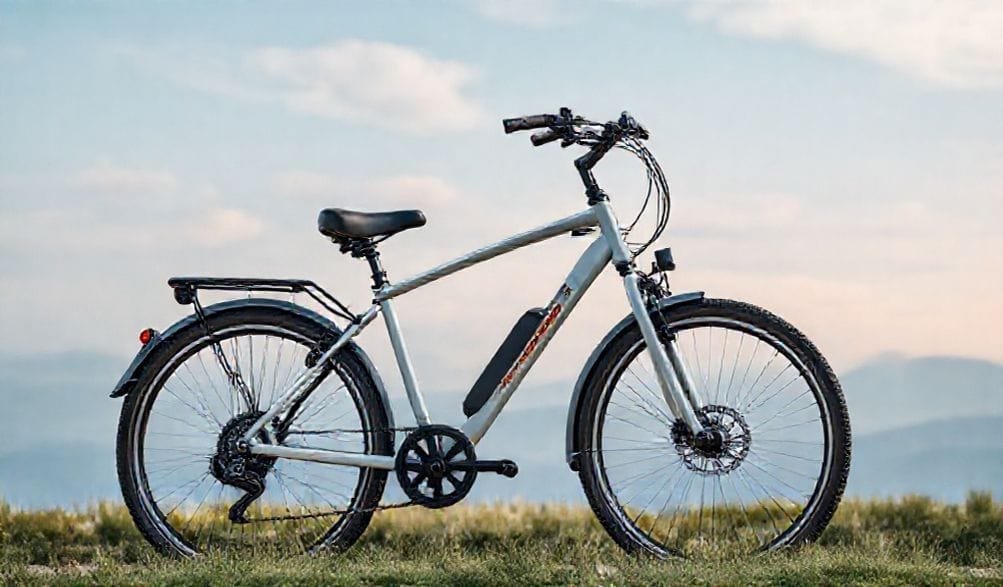
Atlis Ebike: A Deep Dive into the Future of Electric Adventure Cycling
Το ηλεκτρικό ποδήλατο market is exploding, but a clear divide persists. On one side, sleek urban commuters and agile trail machines. On the other, rugged utility vehicles that prioritize brute force over finesse. Consumers—from weekend adventurers to rural landowners—increasingly demand a single machine that bridges this gap: a high-performance, durable electric bike capable of both heart-pounding recreation and hard, honest work. Enter the Atlis Ebike, a vehicle that doesn’t just aim to enter the market, but to redefine a category. Promising industrial-grade power, exceptional payload, and go-anywhere durability, it positions itself as a potential game-changer.
This analysis provides a comprehensive, objective look at the Atlis Ebike. Our purpose is not to promote, but to investigate—dissecting available specifications, the company’s ambitious vision, and the bike’s place within the broader mobility landscape. We will reference official Atlis Motor Vehicles materials and public announcements, while grounding our discussion in comparable industry standards. It is crucial to note from the outset that, as of this writing, the Atlis Ebike exists in a pre-production or early-stage phase. This distinction between promised potential and verified, real-world performance is central to our evaluation. We will explore its innovative features, identify its target audience, envision its practical applications, and outline the key considerations for any potential buyer captivated by its promise.
What is the Atlis Ebike? Vision vs. Specification
The Company Behind the Bike: Atlis Motor Vehicles
To understand the bike, you must first understand the ambition behind it. Atlis Motor Vehicles is not a traditional bicycle company. It is an Arizona-based electric vehicle startup with its sights set on the commercial trucking sector. Their flagship project is the Atlis XT pickup truck, built on a modular XP platform designed for extreme durability, configurability, and ease of manufacturing. This background is pivotal. It establishes a foundation of authoritativeness in EV powertrain and chassis engineering, albeit on a vastly different scale.
The Atlis Ebike is conceived as an extension of this ecosystem—a micro-mobility solution that shares the company’s core engineering philosophy. It’s designed to be a rugged, electric workhorse that leverages the company’s experience in battery systems, motor control, and vehicle architecture. This lineage suggests a bike built with automotive-grade robustness in mind, rather than the incremental refinements of the cycling industry.
Core Design Philosophy and Promised Features
The Atlis Ebike is marketed not as a bicycle with a motor, but as an electric utility vehicle on two wheels. Its advertised features read like a spec sheet for a compact off-roader:
- Powertrain: Promising a powerful mid-drive motor (specific wattage often subject to change in development), emphasizing high torque for climbing and hauling.
- Battery & Range: A large-capacity, removable battery pack targeting a range that significantly exceeds typical e-MTBs, potentially 75-100+ miles under ideal conditions.
- Payload & Towing: This is its headline feature. Claims suggest a payload capacity of several hundred pounds (rider + cargo) and a towing capability measured in thousands of pounds, aiming to rival small utility vehicles.
- Durability: Highlights include a full-suspension aluminum frame, high-volume, aggressive-tread tires, high-end hydraulic disc brakes, and touted water/dust resistance for all-weather, all-terrain capability.
- Design: Features a distinctive, angular aesthetic that aligns with the Atlis truck, integrated lighting, and a digital display.
It is essential to present these as claimed specifications. Without independent, third-party verification from production models, they represent the company’s engineering targets, not certified performance metrics.
Current Status: Concept, Pre-Production, or Available?
This is the most critical section for establishing trustworthiness. As of late 2023/early 2024, the Atlis Ebike is not a mass-market, readily available product. It has been unveiled as a prototype and has been offered for pre-order or reservation directly through Atlis Motor Vehicles. The company has showcased working models and released videos demonstrating capabilities, but full-scale production, widespread dealer networks, and independent professional reviews are future milestones.
For the interested consumer, this means managing expectations. You are evaluating a vision and a set of engineering promises. Delivery timelines, final production specifications, pricing, and the establishment of a service and support network are all part of an evolving picture that requires careful monitoring.
Engineering and Performance Analysis
Powertrain and Battery Deep Dive
The choice of a mid-drive motor is significant. Unlike hub drives, a mid-drive leverages the bike’s gears, providing more efficient power delivery, better hill-climbing torque, and reduced strain on the wheel spokes—a must for heavy payloads. The quoted torque figures (often estimated in high Nm) suggest a focus on low-end grunt over top-speed, aligning with its workhorse mission.
The battery capacity, likely in the 1,000Wh+ range, is what enables its extended range claims. However, expertise in e-bike analysis demands context. The “real-world range” of 75+ miles will be drastically affected by factors Atlis is directly targeting: rider weight, cargo load, terrain, and assist level. Towing a loaded trailer up a forest service road could see that range halve or more. Comparisons to high-performance adventure e-bikes from brands like Specialized (Turbo Creo) or Riese & Müller will show the Atlis aiming for a different priority: maximum capacity and stamina over lightweight agility.
Durability and Build Quality Assessment
The proposed build suggests a machine meant to withstand abuse. An aluminum frame is standard for strength, but the quality of welding, geometry, and stress points will be key. The promised IP rating for water and dust ingress will be a major selling point for hunters, farmers, and all-weather commuters if validated. Components like brakes (likely 4-piston hydraulics) and the drivetrain will need to be commercial-grade to handle the stated loads repeatedly. The suspension travel and tuning will dictate whether it’s merely stable off-road or genuinely capable on technical trails.
The “Workhorse” Capability: Payload and Towing
This is the Atlis Ebike’s raison d’être. A payload capacity of 400-500+ lbs transforms it from a personal transporter to a cargo vehicle. Practical applications become immediately clear: hauling feed bags on a farm, transporting game from a hunting blind, or carrying landscaping tools across a large property. The towing claim, perhaps its most audacious, positions it as a potential replacement for a gas-powered ATV or small tractor for light-duty tasks like moving a compost cart, a trailer of firewood, or small implements.
The engineering challenge here is immense, transferring stress not just to the frame but to the hitch point, motor, and battery. It pushes the legal and common definitions of an “electric bicycle” to its absolute limit.
Target Audience and Practical Applications
The Adventure Seeker and Off-Road Enthusiast
For this rider, the Atlis is a backcountry exploration platform. Its long range enables deep forays into trail networks or multi-day bikepacking trips where charging is scarce. The payload allows for carrying substantial camping gear, photography equipment, or supplies. However, its likely weight and focus on durability over nimbleness may make it less suitable for tight, technical singletrack compared to a dedicated e-MTB.
The Rural Landowner, Farmer, or Hunter
This is arguably its core demographic. Here, the Atlis isn’t for sport; it’s a tool. Its quiet, electric operation is perfect for wildlife management. Its payload can replace dozens of trips with a wheelbarrow. Its ability to tow small trailers for harvest, tools, or game processing makes it a versatile asset. When compared to the cost, noise, and maintenance of a side-by-side or ATV, the Atlis presents a compelling, zero-emission alternative for many daily tasks.
The Urban Commuter with Extreme Needs
While its size may be a drawback in dense city traffic, it has niche urban applications. It could be ideal for urban delivery services requiring heavy cargo capacity over moderate distances. For a commuter who must also haul children, groceries, or trade equipment, its robust build and capacity are unique advantages, though parking and storage become significant considerations.
Market Context and Competitive Landscape
Positioning in the E-Bike Ecosystem
The Atlis Ebike does not fit neatly into an existing category. It is more powerful and capable than premium adventure e-bikes (e.g., Trek Rail, Specialized Turbo Levo). It is more refined and potentially trail-capable than dedicated hunting/utility e-bikes from brands like QuietKat or Rambo. Its price point, expected to be in the high-end range ($7,000+), reflects this hybrid positioning. It is attempting to create a new segment: the electric utility adventure vehicle.
Direct and Indirect Competitors
A balanced comparison is key to showcasing experience in product evaluation.
| Feature | Atlis Ebike (Claimed) | Premium e-MTB (e.g., Specialized Turbo Levo) | Hunting/Utility Bike (e.g., QuietKat Ranger) | Gas-Powered ATV |
| :— | :— | :— | :— | :— |
| Motor Power | High-Torque Mid-Drive | High-Performance Mid-Drive | High-Wattage Hub or Mid-Drive | Gas Engine |
| Primary Focus | Payload, Towing, Range | Trail Performance, Agility | Payload, Off-Road Durability | Power, Towing, Utility |
| Payload Capacity | Very High (400-500+ lbs) | Medium (300-350 lbs) | High (350-400 lbs) | Very High |
| Towing Capacity | Claimed High (1,000+ lbs) | Not Designed For | Moderate | Very High |
| Noise/Emissions | Silent, Zero-Emission | Silent, Zero-Emission | Silent, Zero-Emission | Loud, Emissions |
| Price Point | Expected Premium ($7k+) | Premium ($6k-$12k) | Mid-High ($4k-$8k) | Mid-High ($5k-$10k+) |
Key Considerations and Potential Challenges
Price Point and Value Proposition
The anticipated premium price must be justified by unparalleled performance and durability. For a professional using it as a tool, the ROI versus an ATV or truck may be clear. For a recreational user, it becomes a harder sell against a top-tier e-MTB unless the specific towing and hauling capabilities are non-negotiable needs.
Availability, Service, and Support Network
This is a critical challenge for any new vehicle manufacturer. Unlike a Trek or Specialized bike supported by thousands of dealers globally, Atlis will need to build its service network from the ground up. Questions abound: Who will repair it? How will warranty claims be handled? Are components proprietary or standard? The long-term viability of the bike is inextricably linked to the company’s ability to provide robust customer support.
Regulatory and Safety Considerations
The Atlis Ebike’s power and speed may place it in a regulatory gray area. In the US, Class 1, 2, and 3 e-bikes have specific limits on motor wattage and top assisted speed (typically 28 mph). If the Atlis exceeds these, it may be classified as a moped or motorcycle, requiring licensing, registration, and insurance, and restricting its use on bike paths and trails. Potential buyers must rigorously check their local and state laws.
FAQ Section
Q1: What is the expected price range of the Atlis Ebike?
* Based on pre-order information and market positioning, the Atlis Ebike is expected to be a premium product, likely starting in the $7,000 to $9,000 range. Final pricing will be confirmed by Atlis upon production launch.
Q2: What is the real-world range on a single charge?
* Official claims suggest 75-100+ miles under ideal conditions (light load, moderate terrain, eco mode). Realistically, with its focus on heavy payloads, range will be highly variable. In demanding use (towing, off-road, high assist), a range of 25-50 miles is a more practical expectation.
Q3: When will the Atlis Ebike be available for purchase/delivery?
* As a pre-production vehicle, a firm mass-market delivery date has not been established. Interested buyers should monitor official Atlis Motor Vehicles channels (website, press releases) for the most current timelines, which are subject to change.
Q4: How does it compare to a traditional electric mountain bike (e-MTB)?
* It is heavier, more powerful for towing, and built for maximum durability and payload. A traditional e-MTB from brands like Santa Cruz or Yeti will be significantly lighter, nimbler, and better optimized for aggressive trail riding. The Atlis is a utility vehicle that can handle trails; an e-MTB is a trail bike first.
Q5: What is the warranty on the frame and battery?
* Comprehensive warranty details for production models are not yet publicly finalized. This is a key question for potential buyers to resolve directly with Atlis before purchasing, as it directly impacts long-term value and trust.
Q6: Can I test ride the Atlis Ebike before buying?
* Widespread test rides are not currently available due to its pre-production status. The company may host demonstration events as production ramps up. Initially, purchasing will likely be direct and sight-unseen, emphasizing the importance of thorough research.
Συμπέρασμα
The Atlis Ebike is an undeniably ambitious proposition. It synthesizes a high-performance adventure bike with a micro-duty utility vehicle, powered by the engineering ethos of an electric truck startup. Its potential is vast: a silent, potent tool for the hunter, a rugged companion for the remote adventurer, and a versatile asset for the rural property owner.
Our analysis, grounded in available information, must reiterate the balance between this potential and present reality. The authoritativeness of Atlis Motor Vehicles’ engineering background lends credibility to their vision. However, the trustworthiness of the final product hinges on the successful translation of prototypes into reliable, supported, mass-produced vehicles. The true test will come when independent reviewers and early customers can verify its real-world performance, durability, and the strength of its service network.
For now, the Atlis Ebike is a fascinating glimpse into a possible future for electric mobility. If you are a consumer whose needs align perfectly with its unique blend of extreme payload and adventure-range, it demands close attention. The final call to action is for diligent due diligence: follow Atlis’s official updates, wait for verified third-party reviews of production models, and compare its final specs and price meticulously against both e-bike and alternative utility vehicle options. This machine isn’t for everyone, but for the right user, it could be exactly what the future of electric adventure looks like.
METADATA_START—
DISPLAY_TITLE: Atlis Ebike: A Deep Dive Into the Electric Workhorse
SEO_TITLE: Atlis Ebike Review 2024: Specs, Price, & Is It Worth It? | Analysis
META_DESC: Our in-depth Atlis Ebike review covers specs, price, towing capacity & real-world potential. Is this electric adventure/work bike the future? Unbiased analysis.
IMG_PROMPT: A photorealistic image of a rugged, angular electric bike with thick tires and full suspension parked on a rocky mountain trail at sunset, with a cargo rack loaded with camping gear. The bike has a sleek, modern digital display and powerful LED headlight, embodying a blend of adventure and utility.
—METADATA_END—