
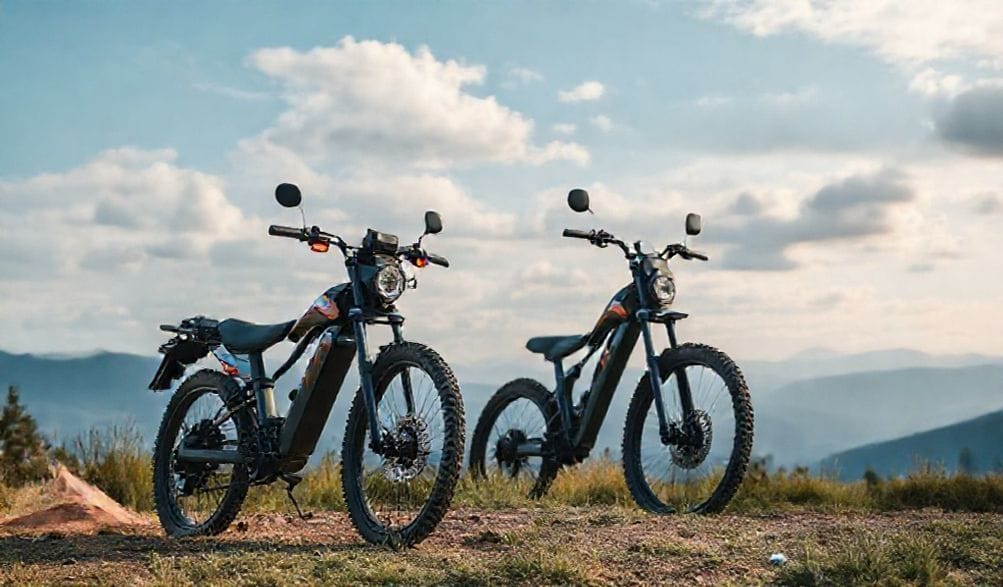
The Ultimate Guide to Electric Adventure Bikes: Power, Range & Off-Road Freedom
Introduction
Imagine this: the first rays of sun crest a distant ridge, painting the sky in hues of orange and purple. The only sounds are the crunch of gravel under your tires, your own steady breath, and the faint, almost silent hum of a motor. You’re climbing a trail that would have been a grueling, hike-a-bike ordeal just a few years ago. Now, you’re cresting the summit with energy to spare, ready to soak in a vista that was previously out of reach. This isn’t a fantasy; it’s the new reality powered by electric adventure bikes.
As cycling enthusiasts and technical reviewers who have logged thousands of miles on everything from sleek road e-bikes to burly e-MTBs, we’ve experienced firsthand the revolution in two-wheeled exploration. We’ve seen the hype, tested the limits, and learned what truly matters when the pavement ends. This guide is born from that hands-on experience and a commitment to providing accurate, helpful information. Our goal is simple: to help you understand if an electric adventure bike is the right key to unlock your next great adventure.
We’ll cut through the marketing jargon and dive into the core components, performance, and practicalities. Whether you’re a curious newcomer wondering what all the buzz is about or a seasoned cyclist contemplating adding electric assist to extend your range and redefine your limits, this guide is for you. Let’s explore what makes these machines so transformative.
What is an Electric Adventure Bike? (Defining the Category)
At first glance, an electric adventure bike might look like a standard mountain bike or gravel bike with a battery bolted on. But it’s a distinct category built for a specific purpose: expanding your horizons.
Beyond the Standard E-Bike
Unlike commuter e-bikes focused on urban efficiency or road e-bikes built for speed on tarmac, electric adventure bikes are engineered for variable, often unpredictable terrain. This is reflected in their geometry—typically more upright and stable for confident handling on loose surfaces. They prioritize durability and versatility over outright lightness or aerodynamic sleekness. Think of them as the all-terrain vehicles of the e-bike world.
The “Adventure” DNA
Several key characteristics define the breed:
* Robust Frames: Built to withstand bumps and loaded gear, commonly from durable aluminum or higher-end, vibration-damping carbon fiber.
* Tire Clearance: Ample room for wide, knobby tires (650b or 29-inch) that provide traction and comfort on dirt, gravel, and rock.
* Suspension Options: Ranging from rigid or front-suspension (hardtail) setups for gravel and smoother trails, to full-suspension designs for tackling technical singletrack.
* Mounting Points: A true adventure bike is a platform for journeys. Look for multiple braze-ons and bosses for bottle cages, front and rear cargo racks, and frame bags for bikepacking.
The Electric Advantage for Exploration
This is where the magic happens. The electric motor isn’t a replacement for pedaling; it’s a powerful trail partner. It flattens hills, extends your effective range by miles (or tens of miles), and allows you to carry camping gear, food, and water without being crushed by the weight. It democratizes challenging landscapes, letting riders of different fitness levels adventure together and enabling you to explore further within your available time.
Critical Components: What to Look For
Understanding the core technology is key to choosing the right bike. Here’s what matters most.
Motor Systems: Mid-Drive vs. Hub Drive
The motor’s placement and design dramatically affect the ride feel and capability.
-
Mid-Drive (The Premium Choice for Adventure): Located at the bike’s crank and bottom bracket, this motor powers the chainring. It’s the preferred system for serious off-road and adventure riding because:
- Better Weight Distribution: Central, low weight improves handling and balance on technical terrain.
- Natural Feel: It works with your gears, multiplying your pedaling effort. This feels more intuitive and provides superior control.
- Efficiency & Torque: Leveraging the bike’s gearing makes it incredibly efficient on steep climbs, delivering high torque right where you need it.
- Key Brands: Bosch, Shimano STEPS, Brose, Specialized, and Yamaha are major players, each with unique characteristics.
-
Hub Drive (The Budget-Friendly Option): This motor is built into the front or rear wheel hub.
- Pros: Often simpler, quieter, and more affordable. Can feel like a gentle push.
- Cons: The weight in the wheel can negatively affect handling, especially on rough ground. It doesn’t leverage the bike’s gears, so it can struggle on steep climbs and feel less connected to your pedaling input.
Battery Technology: Range Anxiety Solved
The battery is your fuel tank. Understanding it is crucial for planning adventures.
- Capacity (Watt-hours – Wh): This is the key number. Think of it as the size of your fuel tank. A higher Wh rating (e.g., 500Wh vs. 750Wh) means more potential range, all else being equal.
- Range Factors: The quoted “max range” is almost always a best-case scenario. Real-world range depends on:
- Terrain: Hills consume power rapidly.
- Rider Weight & Cargo: More mass requires more energy to move.
- Assist Level: Using Turbo mode will drain the battery much faster than Eco mode.
- Temperature: Cold weather reduces battery performance.
- Tire Pressure & Surface: Soft tires and sticky mud increase rolling resistance.
- Realistic Estimate: For a typical electric adventure bike, plan for a range of 20 to 80 miles on a single charge, depending on these variables.
- Integration & Removal: Modern bikes often have sleek, frame-integrated batteries for protection and aesthetics. A removable battery is a huge plus, allowing you to charge it easily indoors or carry a spare for epic trips.
Frame & Build: Durability for the Long Haul
This is the foundation of your adventure machine.
- Materials: Aluminum offers excellent durability and value, making it the workhorse of the category. Carbon Fiber is lighter, stiffer, and better at damping high-frequency vibrations, but commands a premium price.
- Geometry: Look for stable, longer wheelbase designs that inspire confidence at speed and on descents, not twitchy, race-oriented angles.
- Mounting Points: This is non-negotiable for true adventure. Scour the frame for multiple sets of bosses. Can it fit three water bottles? Does it have rack mounts front and rear? Are there dedicated mounts for frame bags? This versatility is what transforms a bike into an expedition vehicle.
Choosing Your Electric Adventure Bike: A Buyer’s Framework
With the basics covered, let’s apply that knowledge to your decision.
Assess Your Primary Use Case
Your ideal bike is dictated by where you want to ride most.
- Gravel & Fire Roads: Prioritize efficiency and comfort. Look for a lighter build, slicker or lightly-knobbed tires, a modest-travel suspension fork or rigid carbon fork, and a motor tuned for sustained output (like Bosch’s gravel-specific Performance Line CX).
- Technical Singletrack & Mountain Trails: Prioritize capability and robustness. Full-suspension or a hardtail with 120mm+ of travel is key. Aggressive, knobby tires, powerful brakes (4-piston hydraulic discs), and a high-torque motor (85 Nm+) are essential.
- Bikepacking & Expedition Riding: Prioritize range and cargo capacity. The largest battery you can find (750Wh+) is paramount. An abundance of mounting points for racks and bags is critical. Comfort-oriented geometry and components (like a suspension seatpost) will pay dividends on day three of your journey.
Set Your Budget Realistically
Electric adventure bikes are a significant investment. Here’s a rough breakdown:
* Entry-Level ($2,000 – $4,000): Expect capable aluminum frames, reliable but entry-level mid-drive or hub-drive motors, and functional components. A great place to start for casual adventuring.
* Mid-Range ($4,000 – $7,000): The sweet spot for most enthusiasts. Here you’ll find better-quality motors (Bosch Performance, Shimano EP8), larger batteries, higher-grade drivetrains (Shimano Deore/XT, SRAM GX), and better suspension.
* High-End ($7,000+): Premium carbon frames, the latest and most powerful/refined motor systems, top-tier wireless components, and cutting-edge suspension. This is for those who want the best performance and lightest weight possible.
Remember: Investing in quality brakes, a durable drivetrain, and a reputable motor system pays off in reliability and enjoyment over the long term.
The Essential Test Ride Checklist
Never buy an electric adventure bike without a test ride. Here’s what to evaluate:
1. Motor Engagement: Is it smooth and natural, or jarring and abrupt when it kicks in?
2. Handling: How does it feel unloaded? Can you maneuver it easily? If possible, test it with some weight on a rack.
3. Interface: Is the display/controller intuitive to use while riding? Can you easily change assist levels?
4. Comfort: Ride over some bumps. Does the frame and/or suspension soak up vibrations?
5. Fit: Does the bike’s size and geometry feel comfortable and in control?
Maximizing Your Adventure: Tips & Best Practices
You’ve got the bike. Now, let’s use it wisely and safely.
Planning Rides Around Battery Life
- Conservation is Key: Use the lowest assist level (Eco) on flats and downhills. Shift to a lower gear before a climb to let the motor work efficiently. Maintaining proper tire pressure reduces rolling resistance.
- Route Scouting: Apps like Komoot or Trailforks can help estimate elevation gain. Plan routes that pass by cafes, parks, or other spots with potential charging outlets for a “range extender” top-up.
Essential Gear & Accessories
- Safety First: A high-quality helmet is non-negotiable. Bright front and rear lights (even for daytime rides) increase visibility. Carry a robust repair kit: tube, patches, multi-tool, tire levers, chain quick link, and a specific e-bike motor belt or tool if applicable.
- Adventure Specific: A GPS unit or smartphone mount for navigation. A frame bag, seat pack, and handlebar roll for bikepacking. Layered, moisture-wicking clothing.
- Power Backup: For multi-day trips, consider a portable power bank that’s compatible with your bike’s battery charging system.
Maintenance & Care for Longevity
- Battery Care: Store and charge the battery at room temperature. Avoid leaving it at 0% or 100% charge for extended periods; ~60% is ideal for storage. Never expose it to extreme heat or cold.
- Cleaning: Avoid high-pressure spray directly on motor seals, battery contacts, or the display. A damp cloth and mild soap are best.
- Drivetrain: The higher torque of an e-bike wears chains, cassettes, and chainrings faster. Clean and lubricate your chain regularly. Consider a wear indicator tool.
- Professional Servicing: The motor and internal wiring are complex. Establish a relationship with a shop certified to service your bike’s specific motor system for annual check-ups and any error codes.
Frequently Asked Questions (FAQ)
Q: How far can I really go on one charge?
A: As detailed above, it’s highly variable. Use the battery’s Watt-hour (Wh) rating as a starting point, but plan conservatively. For mixed-terrain adventure riding, a realistic spectrum is 20 to 80 miles, heavily dependent on assist level, hills, and weight. Always plan a route shorter than your maximum estimated range.
Q: Are electric adventure bikes too heavy?
A: They are undeniably heavier than analog bikes, typically between 45-55 lbs. However, the moment you start pedaling and the assist engages, that weight melts away. The added mass can actually contribute to a stable, planted, and confident feel on descents and rough terrain. The trade-off for the power and range is worth it for most adventurers.
Q: Can I ride them in the rain or through water crossings?
A: Most quality electric adventure bikes have an IP (Ingress Protection) rating for the motor and battery (e.g., IP54 or IP56). This means they are resistant to dust and water spray from any direction and can handle heavy rain and puddles. However, deep submersion (like submerging the motor in a creek) should be strictly avoided. Always consult your owner’s manual for the manufacturer’s specific guidelines.
Q: What’s the legal status of riding these bikes on trails?
A: This is critical and varies widely. In the United States, Class 1 e-bikes (pedal-assist only, no throttle, with a maximum assisted speed of 20 mph) are generally allowed on trails where traditional mountain bikes are permitted. However, land management agencies (USFS, BLM, state parks) and local trail coalitions can have their own rules. It is 100% the rider’s responsibility to know and follow the regulations for the specific trail they are on. When in doubt, assume e-bikes are not allowed unless explicitly posted.
Q: Is an electric adventure bike “cheating”?
A: This is a common sentiment, but we see it differently. The bike is a tool, and the motor is a feature of that tool. It doesn’t remove the adventure; it changes the parameters. It’s about access, not replacement. It allows friends and families of differing abilities to ride together. It lets you explore a 40-mile loop instead of a 20-mile one. It helps those recovering from injury or managing physical limitations stay in the sport. The challenge, the scenery, the problem-solving, and the joy of being outdoors remain entirely authentic.
Conclusion
An electric adventure bike is more than just a bicycle with a motor; it’s a passport to new experiences. It democratizes landscapes, amplifies joy, and redefines what’s possible on two wheels. It’s about riding further, seeing more, and returning home exhilarated rather than exhausted.
Our final piece of advice: Start with your dream adventure. Visualize the trails you want to explore, the distances you want to cover, and the gear you want to carry. Then, let those goals guide you to the bike that best serves them. The “best” electric adventure bike isn’t the most expensive one; it’s the one that fits you, your aspirations, and your budget—the one you’ll ride the most.
The best way to understand the transformation is to feel it. We highly recommend visiting a reputable local bike shop that specializes in e-bikes and taking a few for a test ride on some varied terrain. Feel the assist engage, notice how the bike handles, and imagine the possibilities.
We’d love to hear about your adventures! What kind of riding are you dreaming of? Do you have any more questions? Share your thoughts in the comments below.
Ride responsibly. Respect trail access rules. Yield to other trail users. And always, always wear a helmet.
METADATA_START—
DISPLAY_TITLE: The Ultimate Guide to Electric Adventure Bikes: Power, Range & Off-Road Freedom
SEO_TITLE: Electric Adventure Bikes: The Complete Buyer’s Guide for 2024
META_DESC: Considering an electric adventure bike? Our ultimate guide covers motors, batteries, range, and key features to help you choose the right e-bike for gravel, trails, and bikepacking.
IMG_PROMPT: A dynamic, wide-angle shot of a rider on an electric adventure bike cresting a scenic mountain gravel trail at sunrise, with the bike’s frame, wide tires, and battery pack clearly visible, showcasing adventure and freedom.
—METADATA_END—