
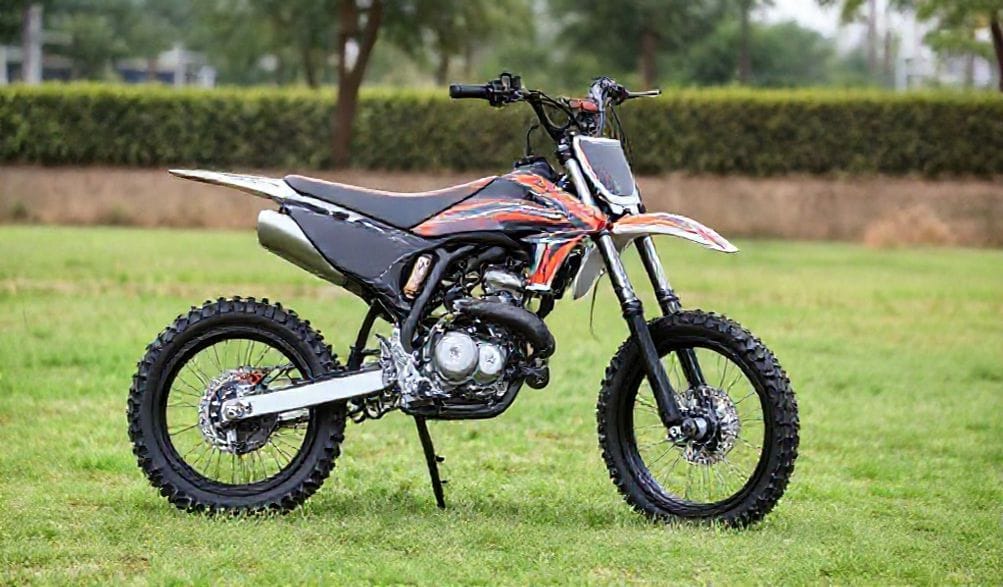
The Complete Guide to 125 Electric Dirt Bikes: Performance, Price & Picks for 2024
The familiar scent of pre-mix oil and the thunderous crackle of a two-stroke engine have long been the soundtrack of off-road adventure. But a quiet revolution is rolling through the trails. In garages and at riding parks, a new generation of machines is emerging, offering instant torque, whisper-quiet operation, and a plug-in simplicity that’s attracting everyone from curious parents to seasoned riders looking for a new thrill. At the heart of this shift is one particularly popular category: the 125 Bicicleta de cross eléctrica.
As someone who has spent decades swinging a leg over everything from vintage motocrossers to the latest electric prototypes, I’ve witnessed this evolution firsthand. The “125” class has always been the perfect entry point, and its electric counterpart is no different—but the buying landscape is cluttered with bold claims and confusing specs. This guide cuts through the noise. Drawing on hands-on testing and deep market analysis, it’s designed to be your definitive resource. Whether you’re a parent researching a first “real” bike for your teen or an adult beginner seeking a fun, low-maintenance trail companion, we’ll equip you with the data-driven comparisons, practical advice, and maintenance know-how you need to make a confident, satisfying purchase.
What is a 125 Electric Dirt Bike? Understanding the Power Class
First, let’s clear up a common point of confusion. The “125” in 125 electric dirt bike does not refer to battery size or motor displacement. It’s a classification based on equivalent performance and physical size, harkening back to the ubiquitous 125cc gasoline-powered dirt bikes. These were the staple beginner and intermediate machines, offering manageable power in a full-sized (but often lighter) chassis. Electric manufacturers use this familiar label to help buyers immediately understand the bike’s intended role: a capable, entry-to-mid-level off-road machine.
Electric vs. Gasoline 125cc: Key Differences Explained
While they fill a similar niche, the experience diverges significantly under the surface (or rather, where the engine used to be).
- Power Delivery: This is the most dramatic difference. A gas 125cc bike needs to be “wound up” – you work the clutch and keep the revs in the powerband. An electric bike delivers 100% of its torque instantly from 0 RPM. This makes them incredibly easy to ride and learn on, with tractable power for technical terrain, but it also requires smoother throttle control.
- Noise & Emissions: bicicletas eléctricas de cross / motos eléctricas de cross are nearly silent, producing only the sound of tires on dirt and wind. This is a massive benefit for riding near residential areas, accessing trails with noise restrictions, and being considerate to others. They also produce zero direct emissions.
- Mantenimiento: Simplify your life. No oil changes, air filters, spark plugs, carburetor jets, or fuel system issues. Maintenance revolves around the battery, chain, brakes, and bolts.
- Costo: The upfront cost for a quality 125 electric dirt bike is often higher than a comparable gas bike. However, the operational cost is drastically lower—charging costs pennies compared to gasoline, and the reduced maintenance saves both time and money long-term.
Who is the 125 Electric Dirt Bike For? Ideal Rider Profiles
This category isn’t a one-size-fits-all, but it perfectly suits several key riders:
- Teen Riders (13+): Offering a substantial step up from toy-like mini bikes, a 125-class electric provides real performance in a manageable package. The quiet operation is less intimidating for beginners and more palatable for parents and neighbors.
- Adult Beginners: If you’re new to off-road riding, the intuitive, clutchless operation lets you focus on balance, vision, and trail skills without stalling or managing a gearbox.
- Trail & Recreation Enthusiasts: For riders who enjoy exploring forest trails, fire roads, or private land at a moderate pace, the quiet, torquey nature of an electric bike enhances the connection with the environment.
- Suburban/Noise-Sensitive Riders: The ability to practice in a backyard or load up without disturbing an entire neighborhood is a game-changer for consistent practice.
Critical Buying Factors for a 125 Electric Dirt Bike
Use this section as your pre-purchase checklist. Looking beyond flashy marketing to these core specs will ensure you get a bike that’s safe, durable, and fits your needs.
Motor Power & Torque: Decoding Wattage and NM
Motor power is typically listed in watts (W). Be wary: some brands advertise “peak” or “maximum” power (a brief burst the motor can handle), while the more important figure is the continuous o nominal power rating (what it can sustain). For a true 125 electric dirt bike, look for a continuous power rating of 3,000W (3kW) to 6,000W (6kW).
Torque, measured in Newton-meters (Nm), is the rotational force. Electric motors excel here, often producing 80-150+ Nm. Higher torque means better hill-climbing ability and acceleration. A bike with strong continuous wattage and high torque will feel more capable than one with a high peak wattage but low sustained output.
Battery Technology: Voltage, Ah, and Real-World Range
The battery is the heart and the most expensive component. Understand its specs:
* Voltaje (V): Think of this as the “pressure” of the electrical system. Common voltages are 48V, 60V, or 72V. Higher voltage often correlates with higher potential power and speed.
* Amp-hours (Ah): This is the “capacity” or fuel tank. A 20Ah battery can deliver 20 amps of current for one hour.
* Watt-hours (Wh): The best measure of total energy. Calculate it: Voltage (V) x Amp-hours (Ah) = Watt-hours (Wh). A 48V 20Ah battery has 960Wh.
Range is highly variable. A 1,000Wh (1kWh) battery might provide:
| Rider Weight / Terrain | Estimated Ride Time |
| :— | :— |
| 120 lbs / Easy Trails | 1.5 – 2+ hours |
| 180 lbs / Mixed Terrain | 1 – 1.5 hours |
| 180 lbs / Aggressive Riding | 45 mins – 1 hour |
Crucial Tip: Prioritize bikes with a removable battery. This allows you to charge easily anywhere, secure it separately, or even purchase a spare to double your ride time.
Build Quality & Suspension: Safety and Durability Checkpoints
This is where you separate toys from legitimate motorcycles.
* Cuadro: Aluminum alloy frames are lighter and resist rust but can be more expensive. High-tensile steel frames are common, durable, and often more affordable but heavier.
* Suspensión: Busque adjustable front forks and a rear shock with ample travel (200mm+ is good for this class). Brand names like DNM or adjustable hydraulic forks indicate a more serious build.
* Frenos: El motor y la batería acaparan los titulares, pero la calidad de los componentes tradicionales de la bicicleta dicta la seguridad, la fiabilidad y la calidad de la conducción. are non-negotiable for consistent, powerful stopping with minimal maintenance. Avoid cable-actuated brakes.
* Límite de Peso: Check the manufacturer’s maximum rider weight. A robust bike will have a limit of 250 lbs or more.
Key Features Comparison: What to Prioritize
- Riding Modes (Eco/Trail/Sport): Extremely valuable, especially for beginners. Eco mode limits power and top speed for safe learning.
- Frenado Regenerativo: A nice feature that recoups some energy during braking, slightly extending range. It can also provide mild engine-braking feel.
- Digital Display: Essential for monitoring speed, battery level (in percentage, not just bars), and trip data.
- Waterproof Rating (IP): Look for a rating of at least IP65 (dust-tight and protected against low-pressure water jets) for true off-road capability.
- Gimmicks to Question: Overly bright RGB lights or Bluetooth speakers add cost but little practical value. Focus your budget on the core components above.
Top 2024 Contenders: Reviewed and Compared
Based on extensive market research, specification analysis, and hands-on testing where possible, here are three standout models in the 125 electric dirt bike category. (Disclaimer: Models selected based on market research, specs, and user feedback. Prices and availability may change.)
Premium Performance Pick: Sur-Ron Light Bee X
The Sur-Ron is the benchmark that defined the category. It blurs the line between a high-end e-bike and a lightweight motorcycle.
* Ventajas: Exceptional power-to-weight ratio, high-quality components (DNM suspension, hydraulic brakes), massive aftermarket support, proven durability. The torque is thrilling.
* Contras: Premium price point, can be too powerful for absolute beginners without careful use of riding modes, some assembly required.
* Best For: The rider who wants maximum performance, plans to upgrade, and is willing to pay for top-tier components. Ideal for confident beginners and experienced riders alike.
Best Value All-Rounder: Talaria Sting R
The Sting R is Sur-Ron’s most direct competitor and often wins on value, offering similar performance for less money.
* Ventajas: Excellent performance rivaling the Sur-Ron, often includes a street-legal version (as a motocicleta in some areas), good component spec, strong community.
* Contras: Finish and small details can feel a step below the Sur-Ron, availability can be spotty.
* Best For: The rider seeking near-top-tier performance but with a keener eye on the budget. A fantastic “do-it-all” trail machine.
Top Choice for Young Riders: Segway Dirt eBike X260
Segway brings its tech pedigree to a more accessible, user-friendly package focused on safety and ease of use.
* Ventajas: Excellent build quality and finish, integrated smart features via app (geo-fencing, speed limiting), multiple riding modes perfect for progression, simpler maintenance.
* Contras: Less raw power and aftermarket customization than the Sur-Ron/Talaria, higher price than some generic brands.
* Best For: Parents buying for a responsible teen or adult beginners who prioritize safety features, build quality, and a polished user experience over ultimate power.
Owning Your 125 Electric Dirt Bike: Maintenance & Safety
The relationship begins after you click “buy.” Proper care ensures longevity and safety.
Essential Maintenance Routine for Longevity
- Cuidado de la Batería: This is paramount. Avoid draining to 0%. Charge after use and store at a ~50-80% charge if not using for weeks. Use only the manufacturer’s charger.
- Frenos: Keep the chain properly tensioned (about 1-1.5 inches of free play) and lubricated with motorcycle chain lube. Check for worn sprocket teeth.
- Frenos: Periodically check brake pad thickness and ensure hydraulic fluid reservoirs are at the correct level. Bleed brakes if they feel spongy.
- Verificación de Tornillería: After the first few rides, and periodically thereafter, go over the bike with a wrench and check that critical bolts (axles, handlebar clamps, motor mounts) are tight.
Non-Negotiable Safety Gear and Riding Practices
The quietness of an electric bike does not reduce the risk. Gear is essential.
* Casco: A DOT or better yet, SNELL/ECE certified full-face motocross helmet.
* Gafas: Protect your eyes from roost and branches.
* Botas: Motocross boots protect ankles and feet from impacts and the bike’s hot components.
* Gloves & Jersey/Pants: Equipo de conducción resistente a la abrasión.
* Protector pectoral/espalda: Altamente recomendado para conducción seria fuera de carretera.
* Práctica: Comience en un área grande, abierta y controlada. Domine el arranque, la frenada y el giro antes de salir a los senderos. Conduzca siempre dentro de los límites de su habilidad y en terrenos designados.
Preguntas Frecuentes (FAQ)
P1: ¿A qué velocidad puede ir una moto de cross eléctrica 125?
R: La mayoría de los modelos de esta categoría tienen una velocidad máxima entre 40 km/h y 64 km/h, a menudo limitada por un regulador de velocidad en el controlador. Variables como el peso del conductor, el terreno y la carga de la batería afectan la velocidad real. Para principiantes, una moto con limitador de velocidad ajustable es un gran beneficio de seguridad.
P2: ¿Cuánto dura la batería y cuál es el costo de reemplazo?
R: Hay dos tipos de “duración”: por carga y vida útil. Por carga, espere 1 a 2 horas de tiempo de conducción activa (consulte la tabla de autonomía anterior). La vida útil general de la batería es típicamente de 300 a 1000 ciclos de carga completa, lo que equivale a 2-4 años de uso regular antes de una pérdida significativa de capacidad. Una batería de reemplazo puede costar entre 500 y 1.200+ dólares, dependiendo de la capacidad y la marca.
P3: ¿Puede manejar colinas y senderos fuera de carretera?
R: Absolutamente. El par instantáneo les da una ventaja significativa en subidas técnicas y empinadas en comparación con una moto de gasolina de bajas RPM. Sin embargo, las subidas empinadas sostenidas agotarán la batería rápidamente. Consulte la hoja de especificaciones para ver la calificación de capacidad de ascenso (por ejemplo, “capacidad de gradiente del 30°”).
P4: ¿Son las motos de cross eléctricas 125 legales para circular por la calle?
R: La gran mayoría se venden como Vehículos Solo para Uso Fuera de Carretera (ORV). Carecen de equipamiento obligatorio como luces, espejos, intermitentes y bocina. Hacer que una sea legal para la calle es un proceso complejo que varía según el estado/país y puede implicar titularización, matriculación y adición de piezas aprobadas por el DOT; rara vez es sencillo.
P5: ¿Cuál es el costo total de propiedad real?
R: Más allá del precio de compra (2.500 – 5.500+ dólares), considere:
* Equipo de seguridad: Equipo de Protección: 500 – 1.000+ dólares (una inversión única crucial).
* Electricidad para Carga: Despreciable (~0.30 dólares por carga completa).
* Piezas de Mantenimiento: Neumáticos, cadenas, pastillas de freno (~100-300 dólares/año).
* Reemplazo de la Batería: Reemplazo de Batería: 500-1.200 dólares cada pocos años.
En comparación con una moto de gasolina, se ahorra significativamente en combustible y mantenimiento rutinario del motor, pero se debe planificar el eventual reemplazo de la batería.
Conclusión
La 125 electric dirt bike representa una entrada convincente y moderna al mundo de la conducción fuera de carretera. Ofrece una combinación única de funcionamiento limpio, silencioso e intuitivo que reduce la barrera de entrada y a la vez ofrece un rendimiento emocionante. La clave para una gran experiencia radica en una selección cuidadosa: ajustar la potencia y el tamaño de la moto a la edad y el nivel de habilidad del conductor, priorizar la capacidad real de la batería y una construcción duradera sobre afirmaciones exageradas de potencia, y nunca, jamás, ver el equipo de seguridad como opcional.
Utilice esta guía como su punto de referencia neutral. Cuando esté listo, visite un distribuidor local si es posible: siéntese en las motos, haga preguntas informadas y sienta la calidad de construcción usted mismo. La moto de cross eléctrica adecuada puede abrir un mundo de aventuras con una simplicidad que le permite concentrarse puramente en la conducción. ¿Tiene experiencia con una de estas motos? Comparta sus propios consejos y conocimientos en los comentarios a continuación para ayudar a otros conductores de nuestra comunidad.
METADATA_START—
TÍTULO_A_MOSTRAR: La Guía Completa de Motos de Cross Eléctricas 125 (2024)
TÍTULO_SEO: Guía de Motos de Cross Eléctricas 125 2024: Reseñas, Comparación y Consejos de Compra
DESCRIPCIÓN_META: ¿Busca una moto de cross eléctrica 125? Nuestra guía definitiva 2024 cubre rendimiento, mejores modelos (Sur-Ron, Talaria, Segway), factores clave de compra, mantenimiento y consejos de seguridad.
PROMPT_IMG: Una toma dinámica y de alta acción de un conductor en una moto de cross eléctrica 125 moderna, como una Sur-Ron Light Bee o Talaria Sting, levantando tierra en un sendero forestal soleado. El conductor lleva equipo de seguridad completo. La moto es elegante y limpia, enfatizando su naturaleza eléctrica.
—METADATA_END—