
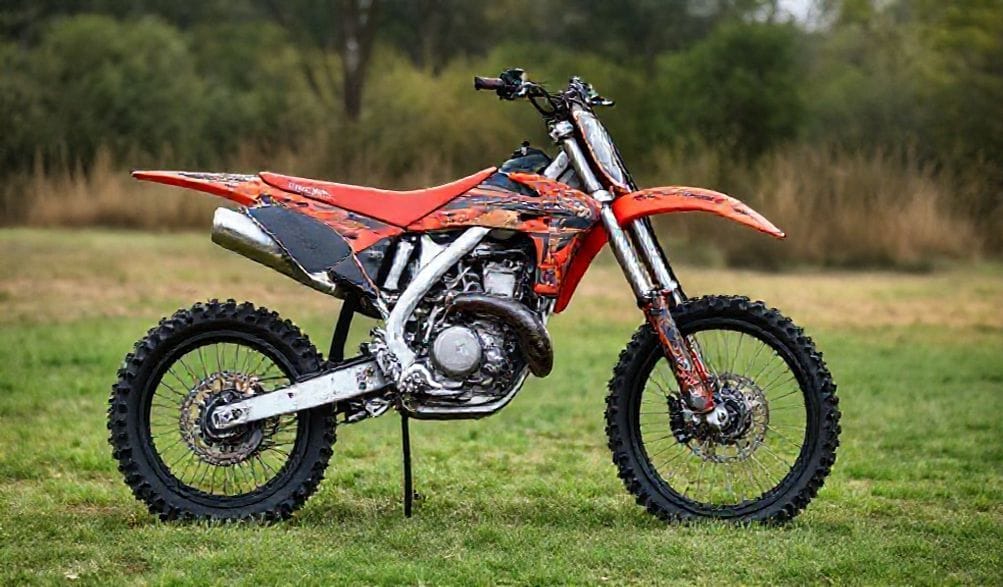
Finding a Reliable Dirt Bike for $500: A Realistic Guide for Beginners
Introducción
The dream is universal: the freedom of the trails, the thrill of the ride, all without breaking the bank. It’s why searches for a “300 dollar dirt bike” o “dirt bikes for 500” are incredibly common among hopeful new riders and budget-conscious parents. This guide is written directly for you. We’re here to address that search intent with a heavy dose of honesty and years of hard-earned mechanical expertise.
Let’s be clear from the start: finding a safe, functional, and reliable dirt bike at this price point is a significant challenge. It’s the bargain-hunter’s extreme sport. But with the right knowledge, a sharp eye, and managed expectations, it’s not impossible. This isn’t just a list of bikes for sale; it’s a practical roadmap built on real-world experience. Our core mission is to steer you away from dangerous money pits and toward a smart, safe purchase that leads to genuine enjoyment. We adhere to a simple principle: safety and long-term value must always trump a tempting, too-good-to-be-true price tag. Let’s begin by understanding the landscape you’re about to enter.
Understanding the Real-World Market for Budget Dirt Bikes
Before you open a single marketplace app, you need a firm grasp on what $500 truly means in the world of dirt bikes. This isn’t about pessimism; it’s about setting a strategic foundation for your search.
The Truth About “New” Dirt Bikes Under $500
If you see an ad for a brand-new dirt bike priced at $300-$500, proceed with extreme caution. Legitimate, name-brand entry-level models from Honda, Yamaha, Kawasaki, or KTM start at nearly triple that price for a reason—engineering, materials, and safety testing cost money.
The bikes you’ll find in this ultra-cheap “new” category are typically generic, no-name brands sold on Amazon, Walmart, or other big-box retailers. From hands-on experience, these machines are fraught with risk:
- Poor Materials: Components like levers, footpegs, and frame welds are often made from brittle, low-grade metals and plastics that can snap under stress.
- Zero Parts Support: When (not if) something breaks, finding a replacement brake lever or clutch cable can be a nightmare. There’s no dealership network or standardized parts diagrams.
- Serious Safety Concerns: We’ve seen everything from throttles that stick open, to brake lines that fail, to front forks that buckle on light impacts. These are not minor inconveniences; they are crash-inducing failures.
The Experience Bottom Line: That $300 new bike will almost certainly cost you another $400 in immediate repairs, upgrades, and frustration, assuming you can even find the parts. It’s a false economy.
The Pre-Owned Market: Your Primary Hunting Ground
For a $500 budget, the used market is your only viable arena. This is where patience and knowledge become your greatest assets. A used bike from a reputable brand, even if it’s 15 years old, is almost always a better investment than a new generic bike.
To set expectations, here are typical price ranges (varying heavily by region) for common, durable entry-level bikes in different conditions:
- Project/Non-Running: $100 – $300. A major gamble requiring mechanical skill.
- Running, but Needs Work: $300 – $600. This is your target zone. The bike starts and moves, but will require immediate safety and maintenance items (tires, chain, brakes).
- Good, Ready-to-Ride Condition: $800 – $1,500+. A bike in this category is usually outside the strict $500 budget but represents a significantly better starting point.
Your mission is to find a diamond in the “Running, but Needs Work” rough. The key is knowing what to look for.
Critical Pre-Purchase Inspection Checklist (Expertise in Action)
This is the most important section. Never buy a used dirt bike based on photos or promises alone. Always inspect it in person. Bring a friend, a flashlight, and this checklist.
Safety-First Mechanical Inspection
Start with the fundamentals that keep the bike (and you) in one piece.
- Frame & Fork: Run your hands along the frame tubes, especially near welds and engine mounts. Look for any cracks, deep rust, or obvious bends. Check the front forks for straightness and any signs of major oil leakage.
- Wheels & Tires: Spin both wheels. They should spin freely without wobbling side-to-side (a “wobble” indicates a bent rim). Squeeze spokes; none should be loose or missing. Tires should have decent tread left and no deep cracks or gashes.
- Frenos: Pull the front brake lever and press the rear brake pedal. They should feel firm, not mushy or go all the way to the handlebar/grip. Visibly check brake pad thickness through the caliper and look at the rotor/drum for deep grooves.
- Suspensión: Push down hard on the handlebars and the seat. The suspension should compress and rebound smoothly without making nasty squeaking or clunking sounds. Look for oil residue on the fork seals or shock body.
Engine & Drivetrain Health Assessment
Now, assess the heart of the machine.
- The Cold Start: This is non-negotiable. You must hear the bike start from completely cold. A bike that “just needs a carb clean” often has deeper issues. Listen for excessive rattling, knocking, or screeching.
- Smoke & Leaks: As it starts and idles, look at the exhaust. A little white smoke (condensation) is normal. Blue smoke means the engine is burning oil—a sign of worn piston rings or valve seals, a potentially expensive fix. Look under the bike for fresh puddles or significant oil coating the engine cases.
- Transmission: With the bike warmed up and the clutch pulled in, click through the gears. It should shift without loud clunks or refusing to engage. Test the clutch engagement; it should be smooth, not grabby or slipping.
- Frenos: A worn drivetrain is a telltale sign of neglect. Look at the rear sprocket teeth. If they are hooked or sharp like shark fins, it’s worn out. A rusty, stiff, or overly loose chain also needs replacement.
The All-Important Test Ride (If Possible)
If the seller allows and you are in a safe, open area, a short test ride is invaluable.
- Frenos: Test them at low speed. Do they stop the bike effectively and evenly?
- Throttle Response: Is it crisp, or does the engine bog or hesitate?
- Manejo: Does the bike track straight, or does it pull to one side (indicating a bent frame or fork)?
- Listen: Beyond the engine, listen for clunks from the suspension, grinding from the brakes, or rattles from loose parts.
The Best “Budget-Friendly” Dirt Bike Models to Look For
Your $500 will go furthest if you target known, reliable platforms. These bikes were over-engineered for durability, and parts are still plentiful and affordable.
Modelos de Entrada Confiables (Años Anteriores)
Enfoca tu búsqueda en estos caballos de batalla. Un ejemplar bien mantenido de principios de los 2000 es una compra mucho más sensata que una moto llamativa y desconocida del año pasado.
- Honda: El rey de la confiabilidad. Busca las XR50R, XR70R, XR100R, o las más nuevas CRF50F, CRF70F, CRF100F. Estas motos de cuatro tiempos refrigeradas por aire son simples, resistentes y fáciles de trabajar.
- Yamaha: Otra marca excepcional. La PW50 es la moto icónica para principiantes. Las TTR-90, TTR-110 y TTR-125 son fantásticas motos de cuatro tiempos amigables para el trail.
- Kawasaki: La KLX110 is a direct competitor to Honda’s CRF and Yamaha’s TTR line, known for its great suspension and bulletproof engine.
El Veredicto del Experto: A 2005 Honda XR100 that needs a new chain and tires is a superior project to a 2022 “Amazon Special” that’s never been ridden.
Pit Bikes y Mini Motos: Una Nota de Precaución
You’ll see many small “pit bikes.” There’s a crucial distinction:
* Minis de Marca Reconocida: Como la Honda CRF50 o la Yamaha PW50. Estas son motocicletas de calidad a escala reducida.
* Pit Bikes Genéricas: Frecuentemente clones de diseños Honda fabricados en China.
Ventajas: Son innegablemente más baratas inicialmente y pueden ser divertidas para un uso casual y a baja velocidad.
Contras (Por Experiencia): El control de calidad es una lotería. Los sujetadores se desgastan fácilmente, los sistemas eléctricos son poco fiables, y aunque existen repuestos en línea, encontrar la right para tu modelo específico puede ser un dolor de cabeza. Rara vez mantienen su valor.
Considerando los Costos Ocultos de una Moto de $500
Aquí es donde se construye la confianza—siendo brutalmente honesto sobre el costo real. El precio de compra es solo la entrada.
Immediate “Must-Do” Repairs and Maintenance
Asume que tu nueva moto de $500 necesita lo siguiente para seguridad y confiabilidad básica. Puedes hacer parte del trabajo tú mismo para ahorrar dinero.
- Cambio de Fluidos: Aceite del motor, filtro y refrigerante (si es refrigerada por líquido). ~$30-$50
- Filtro de Aire: Limpiar o reemplazar. ~$15-$25
- Juego de Cadena y Piñón: Si están desgastados. ~$60-$120
- Neumáticos y Cámaras: Si están agrietados o lisos. ~$100-$200+
- Pastillas de Freno / Líquido: ~$30-$60
- Varios: Empuñaduras, palancas, cables. ~$20-$50
Realistic Immediate Investment: $200 – $500+. Esta es la razón por la que una moto de $300 rara vez se mantiene como una moto de $300.
Equipo de Seguridad Esencial: Gastos No Negociables
Este presupuesto es independiente de la moto y no es opcional. Puedes encontrar equipo usado de calidad, pero nunca un casco usado.
- Casco (Certificado DOT/SNELL): ~$100-$250
- Gafas: ~$30-$60
- Guantes: ~$20-$50
- Botas (Motocross/Todo Terreno): ~$100-$250+
- Protector de Pecho / Jersey / Pantalones: ~$100-$200+
Gear Investment: $350 – $800+. Proteger tu cuerpo es infinitamente más importante que la moto que conduces.
Dónde Buscar y Cómo Negociar
Mejores Plataformas para Encontrar Ofertas
- Facebook Marketplace: The most active. Use saved searches for model names (e.g., “XR100”, “TTR125”).
- Craigslist: Sigue siendo una fuente viable, a menudo con menos ruido.
- Foros/Clubes Locales de Motocross: La mejor fuente para motos bien mantenidas de pilotos conocedores.
Identificar Estafas: Avoid deals where the seller can’t meet in person, rushes you, or asks for payment upfront. “Title in hand” is a major plus.
Estrategias de Negociación Inteligentes
Tu inspección es tu poder de negociación. Sé educado pero factual.
- Aprovecha Tu Lista de Verificación: “I’m really interested, but I noticed the chain and sprockets are completely shot, and the tires are cracked. I’ll need to put about $200 into it right away. Would you consider $400?”
- El Efectivo es Rey: Presentarse con el dinero exacto en efectivo es un poderoso motivador para un vendedor.
- Esté Preparado para Retirarse: Si la moto tiene un defecto grave (cuadro agrietado, echa mucho humo) o el vendedor es irrazonable, retírese. Aparecerá otra moto.
Sección de Preguntas Frecuentes
P: ¿Realmente puedo conseguir una moto de cross segura por 300 dólares?
R: Es extremadamente difícil y arriesgado. A ese precio, es casi seguro que una moto requerirá una inversión adicional significativa en reparaciones y piezas relacionadas con la seguridad para ser confiable. Su costo total final muy probablemente igualará o superará los 500 dólares.
P: ¿Cuál es el problema más común con las motos de cross baratas?
R: Neglect. The lack of basic maintenance—oil changes, air filter cleaning, and chain adjustment—leads to accelerated engine and drivetrain wear. This neglect is far more costly to fix than the maintenance ever was.
P: ¿Es mejor una 2 tiempos o una 4 tiempos para una primera moto barata?
R: Para un principiante absoluto con un presupuesto ajustado y experiencia mecánica limitada, generalmente se recomienda con mayor seguridad una 4 tiempos (como una XR o TTR). Tienen una entrega de potencia más progresiva y tolerante, son más fáciles de manejar y, a nivel básico, suelen ser más simples y baratas de mantener.
P: ¿Cuánto debería presupuestar en total para mi primera moto de cross usada?
R: Para prepararse para el éxito, un presupuesto inicial total más realista es $800-$1,200. Esto permite una moto de 500-800 dólares y el mantenimiento esencial inmediato y el equipo de seguridad no negociable.
P: ¿Debería simplemente ahorrar más dinero?
R: If your primary goals are safety, reliability, and immediate fun without the “project” phase, then sí, ahorrar más es el mejor consejo. Un presupuesto de 1,200-1,800 dólares solo para la moto abrirá un mundo de modelos más nuevos, bien mantenidos y listos para rodar de marcas reputadas, ofreciendo una introducción al deporte dramáticamente mejor y con menos estrés.
Conclusión
La búsqueda de una moto de cross confiable alrededor de 500 dólares es una prueba de paciencia, investigación y discernimiento mecánico. Es un proyecto que puede ser increíblemente gratificante para la persona adecuada. Al enfocar estratégicamente su búsqueda en modelos antiguos y bien construidos de marcas confiables y realizando una inspección rigurosa centrada en la seguridad, ciertamente se puede encontrar una máquina valiosa.
Recuerde este principio rector: el precio del anuncio es solo el comienzo de la historia financiera. El costo verdadero incluye el trabajo esencial para poner la moto en condiciones de rodar y la inversión crítica en su propia protección. Este viaje requiere una combinación de compra astuta y precaución mecánica. Al priorizar una ingeniería sólida y la seguridad por encima de una fachada brillante y barata, usted sienta la base adecuada. Esa base—incluso si tiene una década de antigüedad—es lo que realmente desbloquea la emoción duradera y la libertad de conducir.
METADATA_START—
DISPLAY_TITLE: Finding a Reliable Dirt Bike for $500: A Realistic Beginner’s Guide
SEO_TITLE: Can You Get a Safe Dirt Bike for $300? A Realistic Buyer’s Guide
META_DESC: ¿Buscas una moto de cross de 300 dólares? Nuestra guía experta revela la verdad sobre el mercado de bajo presupuesto, una lista de verificación de inspección crítica, costos ocultos y cómo encontrar realmente una moto de cross usada segura y confiable por alrededor de 500 dólares.
IMG_PROMPT: Un primer plano detallado de una moto de cross Honda XR100 ligeramente desgastada pero clásica, con una mano enguantada de mecánico señalando la cadena y el piñón para inspeccionar el desgaste. La moto está en un taller de garaje con herramientas al fondo, con luz del sol entrando. Fotorrealista, enfoque nítido.
—METADATA_END—