
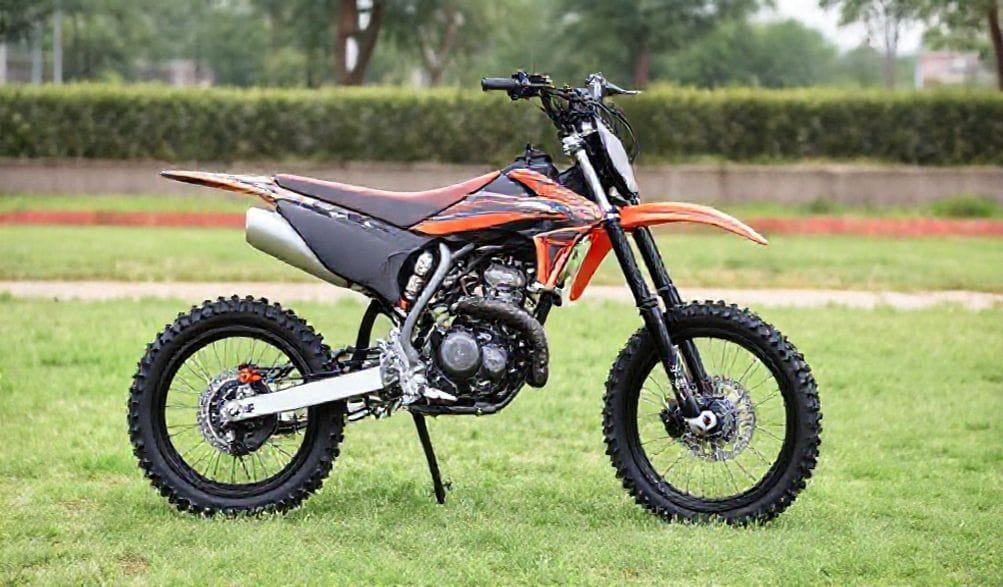
The Ultimate Guide to 72V Electric Dirt Bikes: Power, Performance, and Practicality
Introducción
The world of off-road riding is undergoing a silent revolution. The familiar roar of two-stroke and four-stroke engines is being joined—and in some cases, replaced—by the futuristic whir of electric power. At the forefront of this shift are 72V electric dirt bikes, machines that are rapidly shedding their “novelty” status to become formidable contenders on trails and tracks. For riders, enthusiasts, and curious newcomers, navigating this new landscape can be confusing, filled with technical jargon and bold marketing claims.
This guide is crafted to cut through the noise. We provide a comprehensive, unbiased, and expert-driven look at high-voltage electric dirt bikes. We’ll move beyond the spec sheets to combine technical understanding, real-world performance analysis, and hard-won ownership advice. Our goal is to empower you with the knowledge needed to make an informed decision, whether you’re considering your first electric bike or looking to upgrade your garage. By drawing on engineering principles, rider experiences, and evolving industry trends, this post serves as your authoritative resource for understanding the true potential, and the practical realities, of 72V electric dirt biking.
1. Understanding the 72V Electric Dirt Bike: Core Technology Explained
Before hitting the trail, it’s crucial to understand what makes these bikes tick. The “72V” designation is more than just a number; it’s the key to a new kind of performance.
1.1 What Does “72V” Really Mean? (Voltage, Power & Torque)
Think of voltage as the electrical “pressure” in the system. In simple terms, a higher voltage system can deliver more power to the motor more efficiently, especially under heavy load. While a 48V or 60V bike might be perfect for lighter trail duty, a 72V electric dirt bike is designed for serious performance.
Here’s the direct impact:
* Power & Top Speed: Higher voltage allows the motor to spin faster, directly influencing potential top speed. A 72V system can sustain high power outputs at speed better than lower-voltage systems, which might “sag” under demand.
* Torque: This is the star of the show. Electric motors deliver maximum torque instantly, from 0 RPM. A 72V architecture supports high-current flow, which translates to that breathtaking, wheel-lifting acceleration that defines the electric riding experience. It means climbing steep hills and powering out of corners with relentless force.
1.2 Key Components: Motor, Battery, and Controller
Three core components define the bike’s character.
-
Motor Types (Hub vs. Mid-Drive): Most performance-oriented 72V bikes use a mid-drive motor (mounted centrally near the bike’s crank) or a high-power geared hub motor.
- Mid-Drive: This is the gold standard for off-road. It leverages the bike’s existing chain drive and gearing, allowing the motor to operate in its optimal RPM range. This results in phenomenal torque, better efficiency, and a more natural, motorcycle-like feel with engine braking.
- Geared Hub Motor: Mounted directly in the rear wheel, these offer a simple, direct drive. Modern high-power versions can be very potent, but they add unsprung weight to the rear wheel, which can slightly affect suspension performance on rough terrain.
-
The Battery Pack: Heart of the Bike: The 72V lithium-ion battery is the most critical and expensive component. You’ll typically find two chemistries:
- LiFePO4 (Lithium Iron Phosphate): Known for exceptional safety, longevity (2000+ cycles), and stability. It’s slightly heavier and less energy-dense than NMC.
- NMC (Nickel Manganese Cobalt): Offers higher energy density (more range for a given size/weight) and better performance in cold weather, but may have a shorter overall lifespan and requires more careful management.
The capacity, measured in Amp-hours (Ah), determines your range. A 72V 40Ah pack holds more energy than a 72V 20Ah pack. Inside every quality pack is a Sistema de Gestión de Batería (BMS), a critical circuit that monitors cell health, prevents overcharging/discharging, and balances the cells for safety and longevity.
-
The Electronic Speed Controller (ESC): This is the bike’s “brain.” It sits between the battery and motor, interpreting your throttle input and precisely regulating the power sent to the motor. A sophisticated ESC enables features like regenerative braking (which recovers some energy when slowing down), multiple ride modes (Eco, Sport, Race), and protects the system from overloads.
2. Performance Deep Dive: Riding a 72V Electric Dirt Bike
How does all this technology translate to dirt, mud, and jumps? Let’s break down the riding experience.
2.1 Acceleration and Torque: The Instant Thrill
This is the single most transformative aspect. Forget clutch work and waiting for the powerband. Twist the throttle on a 72V electric dirt bike, and 100% of the motor’s torque is available instantly. The acceleration is linear, forceful, and incredibly controllable. It can feel like being launched from a catapult. On tight, technical trails or out of corners, this immediate power delivery provides a massive advantage, allowing for precise bursts of speed that leave comparable 250cc gas bikes struggling to match the initial hit.
2.2 Top Speed and Sustained Power
While torque is the headline, top speed matters for open trails and fire roads. A typical 72V performance bike, depending on gearing and motor power, can achieve speeds of 50 to 70+ mph. The higher voltage is key here; it reduces current draw at high speeds, meaning less heat buildup and more sustained power for longer stretches at full throttle compared to lower-voltage systems that can overheat or power-limit.
2.3 Handling and Weight Distribution
The handling story is nuanced. The battery pack, often a large slab, is usually mounted low in the frame, creating a very centro de gravedad extremadamente bajo. This makes the bike feel incredibly planted and stable, especially in corners and whoops. However, the overall weight—often 120-180 lbs for the bike itself—can be similar to or slightly less than a full-size gas dirt bike, but the weight is concentrated and non-rotating (except for hub motors).
This can affect “flickability.” The bike may not feel as light to toss sideways as a 200-lb gas bike with a spinning crankshaft and flywheel, but its stability is often superior. It’s a different kind of agility, one that rewards smooth, deliberate input.
3. Critical Considerations for Potential Owners
Excitement aside, practical ownership requires a clear-eyed view of the trade-offs.
3.1 The Range Reality: Factors That Affect Your Ride Time
Manufacturer range claims (often 50-70 miles) are achieved under ideal lab conditions. Real-world trail riding is anything but ideal. Your actual range is a complex equation:
* ¿Es para paseos emocionantes los fines de semana, un trayecto largo al trabajo, o ambos? Su peso lo hace poco práctico para desplazamientos multimodales que involucren autobuses o trenes. Hill climbing is a massive energy drain. Mountainous rides can halve your range compared to flat land.
* Estilo de Conducción: Aggressive, throttle-happy riding consumes battery much faster than a smooth, conservative pace.
* Rider Weight & Gear: More mass to move requires more energy.
* Temperatura: Cold weather (below 50°F/10°C) significantly reduces battery performance and range.
* Assist Level: Using a lower power mode (Eco) can dramatically extend range.
Realistic Expectation: For aggressive single-track trail riding, plan for 20 to 40 miles on a full charge. For casual fire road exploration, 40-50+ miles is possible.
3.2 Charging Logistics: Time, Cost, and Infrastructure
- Charging Time: This is the biggest operational difference from gas. With a standard charger, a full charge from empty can take 4 a 8 horas. Some brands offer optional fast chargers that can cut this to 2-3 hours, but they come at a higher cost and may impact long-term battery health if used exclusively.
- Cost of “Refueling”: This is where electric shines. A full charge for a 72V 40Ah battery uses about 3 kWh of electricity. At the U.S. average of ~$0.15/kWh, that’s $0.45 per “tank.” Compare that to $10-$15 for a tank of premium gas.
- Ride Planning: You can’t just carry a jerry can. Long, remote rides require careful planning to ensure you can return to your charging point. The convenience shifts from “any gas station” to “your garage.”
3.3 Maintenance vs. Gas Bikes: A Comparative Overview
Dramatically Less Routine Maintenance:
* Eliminadas: Engine oil changes, air filter cleaning, spark plugs, valve adjustments, clutch adjustments, carburetor jetting, exhaust repacking, premixing gas.
* Greatly Reduced: There is no transmission with gears to wear, no piston rings, no cam chain.
Still Required Maintenance:
* Cuidado de la Batería: Long-term storage charging, avoiding extreme temperatures, monitoring health.
* Everything Else: Tires, tubes, brakes (pads, fluid), suspension (fork seals, linkage bearings), chain lubrication and tension, spoke tension, and general bolt checks are all identical to a gas bike.
The maintenance schedule is simpler and cleaner, but not non-existent.
4. Evaluating the Market: How to Choose Your 72V Bike
Ready to shop? Here’s how to navigate the options.
4.1 Top Brands and Models to Research (As of 2024)
The market is evolving quickly. As a starting point for your research, consider brands that have established a reputation in the performance electric off-road space. These include comunidad de la motocicleta eléctrica de tierra (the Light Bee X and Storm Bee), Talaria (the Sting R and MX4), and Kuberg. Established motorcycle brands are also entering the fray with their own models. Focus on companies with active user communities and good parts/technical support.
4.2 Key Specs to Compare on Your Shortlist
Create a spreadsheet. Compare these key metrics:
* Motor Power: Busque Continuous (sustained) and Peak (burst) power ratings in kW. 8kW+ continuous is serious performance territory.
* Batería: Voltage (V) & Capacity (Ah). Multiply them to get Watt-hours (Wh) for a better energy comparison (e.g., 72V x 40Ah = 2880Wh).
* Claimed vs. Realistic Range: Apply the “real-world” discount discussed in Section 3.1.
* Peso: All-up weight ready to ride.
* Suspensión: Travel (mm), brand, and adjustability. This is critical for handling.
* Frenos: Hydraulic disc size and brand (e.g., Magura, Tektro).
* Garantía: Pay special attention to the garantía de la batería (often 1-2 years, sometimes pro-rated).
4.3 New vs. Used: Risks and Rewards
Buying used can offer significant savings but carries risk.
* The #1 Concern: Battery Health. There is no simple “dipstick” for a battery. Ask for purchase receipts, inquire about charging habits, and if possible, test the bike to see if it achieves a reasonable range. A battery at 70% of its original capacity may only get you 20 miles on a trail.
* Controller & Motor: These are generally robust, but check for any error codes or strange behavior.
* Standard Used Bike Checks: Frame for cracks, suspension for leaks, bearings for play, electronics for water damage.
5. The Riding Experience: Community, Terrain, and Modifications
Owning a 72V bike is about more than the machine.
5.1 Where Can You Legally Ride?
This is the most critical point in this guide. The laws governing electric dirt bikes are complex and vary wildly by country, state, county, and even local park.
* Terreno Privado: With owner permission, you’re generally good.
* Designated OHV Areas: Many public Off-Highway Vehicle parks have specific rules. Some welcome electric bikes, some classify them differently, some may not allow them. You must check the specific regulations for the area you plan to ride.
* Public Trails: Often governed by land management agencies (USFS, BLM) or state parks. Many non-motorized trails (for hiking/biking) are strictly off-limits to any motorized vehicle, electric or not.
Disclaimer: This website does not provide legal advice. It is your responsibility as a rider to research and comply with all local, state, and federal regulations regarding the use of your electric dirt bike.
5.2 The Electric Dirt Bike Community
One of the fastest-growing aspects is the community. Online forums, dedicated Facebook groups, and Subreddits are invaluable resources for troubleshooting, finding riding buddies, and sharing modifications. Group rides for electric bikes are becoming more common, offering a unique and quiet social riding experience.
5.3 Popular Upgrades and Modifications
The aftermarket is booming. Common upgrades include:
* Controllers: “Tuning” the ESC can unlock more power, adjust throttle response, and raise speed limits.
* Batteries: Upgrading to a higher-capacity (Ah) pack from a reputable builder is the best way to extend range.
* Suspensión: For heavier or more aggressive riders, upgrading springs or entire fork/shock units transforms handling.
* Neumáticos y Ruedas: Off-road tire choice is always terrain-specific.
* Accessories: Lights, fenders, footpegs, and bash plates.
Preguntas Frecuentes (FAQ)
Q: How far can a 72V electric dirt bike really go on a single charge?
R: While some models advertise 50-70 miles, real-world range for aggressive trail riding is typically 20-40 miles. Conservative riding on flat terrain can extend this. Always consider terrain, rider weight, and throttle use.
Q: Is a 72V bike too powerful for a beginner?
R: It can be. Many offer multiple power modes (Eco, Sport, etc.). A beginner can start in a restricted mode to learn control. However, the weight and instant torque demand respect. A true novice might be better served starting on a lower-voltage (e.g., 48V) model.
P: ¿Cuánto dura la batería antes de necesitar reemplazo?
R: Lifespan is measured in charge cycles. A quality battery can last 800-1500+ full cycles before degrading to ~80% of its original capacity. With typical use (1-2 charges per week), this could mean 3-5 years or more. Proper care is essential for longevity.
Q: Are electric dirt bikes better for the environment than gas bikes?
R: They produce zero direct emissions, drastically reducing local air and noise pollution on the trail. Their overall environmental footprint depends on the source of the electricity used to charge them (coal vs. renewables) and the lifecycle (mining, manufacturing, recycling) of the lithium-ion battery.
Q: What is the biggest drawback compared to a gas bike?
R: The two main trade-offs are refueling time (minutes for gas vs. hours for electric) and range anxiety on very long, remote backcountry rides where charging is impossible. For most day trips on known trail systems, this is a manageable consideration.
Conclusión
The 72V electric dirt bike is not merely an alternative to a gas bike; it represents a thrilling and distinct new branch of off-road motorcycling. It delivers a unique blend of instant, visceral torque, reduced maintenance complexity, and a quieter, more connected feel with your surroundings. It excels in technical terrain and offers intoxicating acceleration.
However, it is not a perfect, drop-in replacement. Success with a 72V bike requires an honest alignment of its capabilities—exceptional power, limited range, and home-centric refueling—with your riding style, local terrain, and, most importantly, the legal places you can ride. By approaching your purchase with thorough research, a solid understanding of the technology, and managed expectations around range, you can confidently decide if the potent, silent surge of a 72V electric dirt bike is the right catalyst for your next off-road adventure. The future of dirt biking is here, and it’s electrifyingly fun.
METADATA_START—
DISPLAY_TITLE: The Ultimate Guide to 72V Electric Dirt Bikes: Power, Performance & Practicality
SEO_TITLE: 72V Electric Dirt Bike Guide 2024 | Performance, Range & Buying Tips
META_DESC: Considering a 72V electric dirt bike? Our ultimate 2024 guide covers power, real-world range, maintenance, top models, and key buying advice. Learn if high-voltage electric is right for you.
IMG_PROMPT: A dynamic, high-action shot of a modern, sleek 72V electric dirt bike in mid-air over a dirt jump on a forest trail, with a rider in full gear. The bike should look powerful and futuristic, with sunlight filtering through the trees. The scene conveys speed, performance, and the thrill of silent off-road riding.
—METADATA_END—