
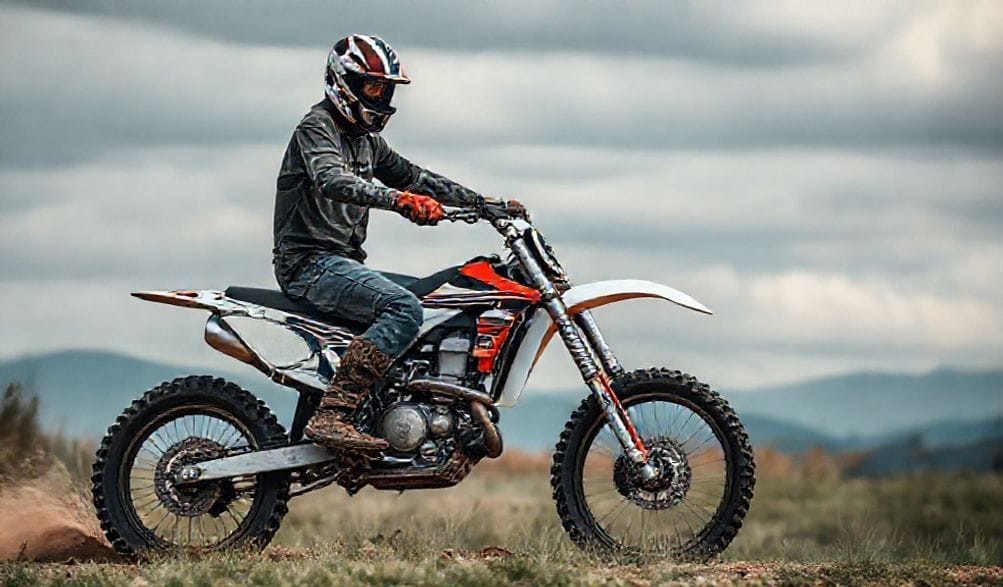
The Ultimate Guide to Dirt Bikes for Men: Choosing Your Off-Road Machine
The call of the wild isn’t just a whisper; for many men, it’s a roar—the unmistakable sound of an engine echoing through a canyon, the smell of pre-mix in the morning air, the feeling of conquering a trail you’ve only ever seen in videos. Dirt biking represents the ultimate fusion of adrenaline, skill, and freedom. But before you can carve that first berm or catch air off a natural kicker, you face the most critical decision: choosing the right machine.
This isn’t about picking the coolest-looking bike or the one with the biggest number on the side. It’s a deeply personal equation that balances your skill level, riding ambitions, physical build, and budget. Get it wrong, and you’re in for a frustrating, or worse, dangerous experience. Get it right, and you unlock a lifetime of adventure. Built on decades of collective riding experience, wrench-turning, and a fundamental commitment to rider safety, this guide is designed to cut through the marketing hype. Consider this your trustworthy roadmap to finding the perfect dirt bike for men.
Understanding Dirt Bike Types: It’s All About the Terrain
Before you look at a single model, you must understand the landscape—literally. Dirt bikes are highly specialized tools, and the first major fork in the road is choosing the category engineered for the terrain you dream of tackling. Picking a motocross bike for long-distance trail exploration is like taking a Formula 1 car on a safari. Let’s break down the four primary types.
Motocross Bikes: For the Track Enthusiast
Define: These are the purebred race machines. Designed exclusively for closed-course competition on manicured motocross tracks, they are built for one thing: going fast over jumps, through whoops, and around berms.
Key Characteristics: You’ll notice they lack essentials for the trail—no headlight, taillight, kickstand, or quiet muffler. They are incredibly lightweight, with ultra-stiff suspension designed to absorb massive jumps and aggressive, peaky powerbands that demand skilled clutch work. Their transmissions are “close-ratio,” meaning the gears are packed tightly together for optimal acceleration on a track, not for putting down a fire road.
Ideal Para: The man whose weekend is spent at the local motocross track, focused on lap times, technique, and airtime. If you don’t see yourself on a track 90% of the time, look elsewhere.
Trail/Enduro Bikes: The Versatile All-Rounder
Define: This is the most popular and practical category for the majority of men getting into dirt biking. Often called “off-road” or “enduro” bikes, they are engineered to handle the unpredictable, varied conditions of real-world trails—roots, rocks, hill climbs, sand, and mud.
Key Characteristics: Think of them as the “adventure-ready” version. They feature softer, more plush suspension that soaks up trail trash, wider-ratio transmissions that can crawl up a technical hill and then cruise a connecting road, and electric start (a godsend on a steep incline). Most have lighting, and many are street-legal from the factory (often denoted by a model letter like “F” for Honda’s CRF250F or “L” for Kawasaki’s KLX series).
Ideal Para: The explorer. The guy who wants to load up, drive to the national forest, and spend all day discovering new single-track trails, fire roads, and hidden vistas. It’s the do-it-all machine for the rider who values versatility over pure track performance.
Dual-Sport/Adventure Bikes: On and Off the Pavement
Define: As the name implies, these bikes are fully street-legal motorcycles that are also capable off-road. They bridge the gap between the dirt and the asphalt, prioritizing comfort and range for longer journeys.
Key Characteristics: They are noticeably heavier than pure dirt bikes, with more comfortable, upright seating positions, larger fuel tanks for extended range, and amenities like windshields and luggage racks. The suspension is tuned for a mix of surfaces, and they come with all necessary DOT-approved lighting, mirrors, and instrumentation. Think of models like the Suzuki DR-Z400S or the Honda CRF300L.
Ideal Para: The adventurer who wants to ride from his garage to the trailhead, or embark on multi-day “adventure touring” trips that mix highway miles with rugged backcountry exploration. If your dream involves a map with long lines between dirt sections, this is your category.
Trials Bikes: The Technical Skill Masters
Define: Often misunderstood, trials bikes are not about speed or distance. They are ultra-specialized tools for the sport of observed trials, which involves navigating near-impossible obstacles—giant boulders, log piles, steep ravines—with absolute precision and balance.
Key Characteristics: They are shockingly lightweight (often under 150 lbs), have very low seat heights (or no seat at all), incredibly responsive throttles, and unique, long-travel suspension. They have tiny fuel tanks because you might only travel a few miles in a full day of competition. Speed is irrelevant; control is everything.
Ideal Para: The man obsessed with ultimate bike control, balance, and technical mastery. It’s a niche but deeply rewarding discipline that hones skills which translate brilliantly to every other form of riding.
Critical Sizing & Fit Considerations for Male Riders
You wouldn’t buy mountaineering boots three sizes too big, and the same logic applies to your dirt bike. Proper fit is the bedrock of control, confidence, and, most importantly, safety. A bike that’s too tall or powerful isn’t just intimidating—it’s a hazard.
Seat Height: The #1 Factor for Confidence
This is the most immediate and obvious fit factor. The ability to comfortably reach the ground is paramount, especially when you’re stopped on an off-camber trail or navigating a tricky section.
- The Measurement: Start with your barefoot inseam. A good starting point is to look for a bike with a seat height within 4-6 inches of your inseam. This typically allows you to get at least the balls of both feet down.
- The “Flat-Foot” Debate: While it’s comforting, most full-size dirt bikes for men are not designed for a full flat-foot stance for an average-height rider. The “tip-toe” or “one-foot-down” technique is standard for taller bikes and is part of the skill set.
- Making Adjustments: If you find your dream bike is just an inch too tall, you have options. Lowering links (which change the rear suspension geometry), sliding the fork tubes up in the triple clamps, or shaving the seat foam can make a significant difference. Crucial Warning: A bike that is drastically too tall will undermine your confidence and increase your risk of a fall during slow-speed maneuvers or stops.
Engine Size (cc): Matching Power to Skill Level
Engine displacement, measured in cubic centimeters (cc), is often mistakenly used as a sole proxy for “good.” In reality, it’s a measure of potential power that must be matched to your skill.
- Beginner (125cc-250cc): This is the golden zone for new riders. A 250cc 4-stroke trail bike (like a Honda CRF250F) offers manageable, linear power that allows you to focus on learning the fundamentals: clutch control, braking, body positioning, and reading the terrain without being terrified of the throttle. Smaller 125cc 2-strokes are also fantastic learning tools but require more active clutch management.
- Intermediate (250cc-450cc): This is the sweet spot for the experienced trail rider or weekend warrior. A modern 250cc 4-stroke motocross bike is a serious machine, while a 350cc or 450cc enduro bike offers massive torque and power for hill climbs and fast terrain. These bikes reward skill and punish mistakes.
- Expert (450cc+): These are high-strung, powerful beasts. A 450cc motocross bike is a professional-level machine with explosive power. For the vast majority of riders, especially beginners, this is too much bike. The old adage holds true: it’s more fun to ride a slow bike fast than a fast bike slow (and scared).
Weight and Ergonomics: Handling and Comfort
A bike’s “wet weight” (full of fluids) directly impacts how it feels on the trail. A lighter bike is easier to maneuver in technical terrain, pick up after a fall, and feels less taxing to ride all day.
- Ergonomía: This is how the bike fits your body. Can you easily reach the handlebars without hunching? Are the footpegs in a natural position? Do the controls (clutch lever, brake pedal) feel within easy reach? Sitting on multiple models is the only way to answer these questions. Many handlebars and control levers can be adjusted or replaced to fine-tune the fit.
Top Dirt Bike Brands & Models for Men: A 2024 Overview
The dirt bike market is rich with excellent options. Here’s a balanced look at the key players and their standout models in the categories that matter most for men entering the sport.
Japanese Dominance: Reliability & Performance
For decades, the “Big Four” from Japan have set the standard for reliability, accessible performance, and widespread dealer networks.
* Honda: The CRF series is legendary. The CRF250F y una CRF300L are top-tier recommendations for beginner and dual-sport riders, respectively, known for their bulletproof reliability and user-friendly nature. Their CRF450R is a benchmark motocross machine.
* Yamaha: Renowned for exceptional handling. The YZ250F y una YZ450F are track terrors, while the WR250F is a premier, competition-ready trail bike. The TT-R 230 remains one of the best pure beginner bikes ever made.
* Kawasaki: Offers great value. The KX motocross models are fierce competitors, and the KLX230R y una KLX300R are fantastic, affordable entry-points into trail riding and dual-sporting.
* Suzuki: La RM-Z series holds its own on the track, but the star is the DR-Z400S. This air-cooled, simple, and torquey dual-sport is a modern classic beloved for its durability and versatility.
European Specialists: High-Tech & Performance
European brands often push the envelope with cutting-edge technology and race-bred performance, typically at a higher price point.
* KTM & Husqvarna: These sister companies (under Pierer Mobility) dominate the enduro and hard enduro scenes. Their EXC-F (KTM) and FE (Husqvarna) models are the pinnacle of ready-to-race, street-legal trail bikes, packed with features like hydraulic clutches, linkage-less rear suspension (Husky), and premium components. Their SX-F y una FC motocross bikes are equally potent.
* Beta: An Italian brand celebrated for its trials heritage and exceptional enduro bikes (RR series). They are known for smooth power delivery and agile handling, making them favorites among technical trail riders.
Choosing New vs. Used: A Practical Breakdown
Ventajas de una Moto Nueva: Peace of mind with a full warranty, the latest technology, emissions compliance, and knowing the history starts with you. You pay for this privilege.
Used Bike Advantages: The number one choice for beginners. You avoid the steep initial depreciation and can get into a capable bike for significantly less money. Caution is paramount.
Used Bike Inspection Checklist (Trust but Verify):
1. Cuadro y Brazo Oscilante: Look for cracks, repairs, or deep gouges, especially around weld points and engine mounts.
2. Fork & Shock Seals: Are they leaking oil? A small sweat is okay; dripping is a red flag and a sign of needed maintenance.
3. Motor: Start it cold. Listen for excessive knocking, rattling, or smoke from the exhaust (a little blue smoke on a 2-stroke is normal; white or blue smoke on a 4-stroke is bad). Feel for excessive vibration.
4. Wheels & Bearings: Lift the bike and spin the wheels. They should spin freely without grinding. Check for side-to-side play in the wheels (indicating worn bearings).
5. Filtro de Aire: Ask to see it. A filthy filter suggests poor maintenance, which could mean internal engine wear.
6. General Condition: Does it look ragged or cared for? Straight radiators, intact plastics, and a relatively clean engine are good signs.
Essential Gear for Men: Safety is Not Optional
Your gear is your armor. Prioritizing it over a more expensive exhaust or graphics kit is non-negotiable. This isn’t about fashion; it’s about function and walking away from a crash.
The Non-Negotiables: Helmet, Boots, Chest Protector
- Casco: This is your most important purchase. Look for current safety certifications: DOT is the US minimum, SNELL is a stricter voluntary standard, and ECE is the rigorous European standard. Fit is critical—it should be snug without pressure points. Replace it after any significant impact or every 5 years.
- Botas: MX boots protect your feet, ankles, and lower legs from impacts, twists, and burns from the exhaust. They should have sturdy soles, reinforced ankle cups, and buckles that secure tightly. Don’t wear work boots.
- Chest Protector/Roost Deflector: This protects your torso, shoulders, and back from flying rocks (“roost”), branch impacts, and falls. Many integrate back protectors or have compatibility with separate spine guards.
Highly Recommended Gear: Gloves, Goggles, Knee Pads, Jersey/Pants
- Gafas: They protect your eyes from dirt, dust, and branches. Look for a comfortable fit with your helmet, good ventilation, and tear-off or roll-off systems for mud.
- Guantes: Improve grip, protect your hands from blisters and abrasion, and offer some impact protection.
- Protectores de rodilla/espinilla: The knees are incredibly vulnerable in a crash. Simple sleeve-style guards or more robust brace-style protection is a wise investment.
- Jersey y pantalones: Designed for durability and mobility. They wick sweat and are made to slide in a crash rather than grab the ground like cotton can.
Getting Started: Your Path to the Trails
You’ve got the knowledge; now it’s time for action. Here’s how to begin your journey responsibly and safely.
Finding Places to Ride Legally & Responsibly
Riding on unauthorized land gives the sport a black eye and closes trails. Do it right.
* Recursos: Start with your state’s Department of Natural Resources (DNR) website, the U.S. Forest Service, or the y de la Oficina de Administración de Tierras (BLM, por sus siglas en inglés). They provide maps and info on designated Off-Highway Vehicle (OHV) areas. The American Motorcyclist Association (AMA) website is also a fantastic resource for finding clubs and legal riding areas.
* The “Tread Lightly” Principle: This ethic is core to our community. Stay on designated trails, respect wildlife, cross streams only at fords, pack out all your trash, and yield the right of way to hikers and equestrians. We are stewards of the land.
Basic Maintenance Every Rider Should Know
A well-maintained bike is a safe and reliable bike. Learn these basics:
* Pre-Ride Checklist (T-CLOCS):
* Tires & Wheels (pressure, spokes, damage)
* Controls (levers, throttle, cables)
* Lights & Electrics (if equipped)
* Oil & Fluids (levels, leaks)
* Chassis (frame, suspension, bolts)
* Stands (kickstand)
* Filtro de Aire: Clean and re-oil it regularly. A dirty filter is the fastest way to destroy an engine.
* Límpialo y engrásalo regularmente. Un filtro sucio es un asesino de motores. Keep it clean, lubricated, and adjusted to the proper tension. A loose chain can break and crack your engine case.
Preguntas Frecuentes (FAQ)
What is the best beginner dirt bike for a grown man?
A 250cc 4-stroke trail bike (e.g., Yamaha WR250F, Honda CRF250F, Kawasaki KLX230R) is often the ideal choice. It offers manageable, linear power, a forgiving chassis, and the versatility to learn on a variety of terrain without being overwhelming.
How much should I spend on my first dirt bike?
For a reliable, used beginner bike in good condition, budget between $2,500 and $4,500. For a new entry-level model, expect $6,500 to $9,000+. Crucially, always budget an additional $1,000+ for head-to-toe quality safety gear.
Do I need a license to ride a dirt bike?
On private property or designated closed-course tracks, typically no. For riding on public land, forests, or BLM land, you almost always need a state-issued OHV permit or sticker. For Para circular por senderos y parques todoterreno designados (áreas OHV), normalmente no necesitas una licencia de motocicleta, pero el área puede requerir un permiso. Para bikes ridden on public roads, a standard motorcycle endorsement on your driver’s license is required.
Is a 2-stroke or 4-stroke engine better for men?
It’s a preference, not a superiority contest. Los motores de 4 tiempos are more common, with smooth, predictable power from idle to redline, making them easier for beginners. Los motores de 2 tiempos are lighter, have a distinct “powerband” hit, and their simplicity can be an advantage in technical terrain; they are often favored by experienced riders for their explosive feel and easier top-end rebuilds.
How important is rider weight for bike choice?
Very. Manufacturers spring bikes for an “average” rider (often ~160-180 lbs). Heavier riders will compress the suspension more, affecting handling and potentially bottoming it out. You may need to install heavier aftermarket springs for your weight and set the “sag” correctly. This is a key question to ask when shopping.
Conclusión
Choosing the perfect dirt bike is a journey that starts with honest self-assessment. Let the terrain you crave dictate the bike type. Let your inseam and skill level dictate the size and power. Remember that the right fit fosters confidence, and matching power to skill ensures a fun, progressive learning curve—not a frightening one. Never compromise on safety gear; it is the foundation of every ride.
Now, take this knowledge offline. Visit reputable dealerships. Sit on as many bikes as you can. Talk to experienced riders at your local shop or OHV park. The dirt biking community is one of the most welcoming you’ll find, built on a shared passion for two wheels and the great outdoors. Your machine is out there, waiting to start a lifetime