
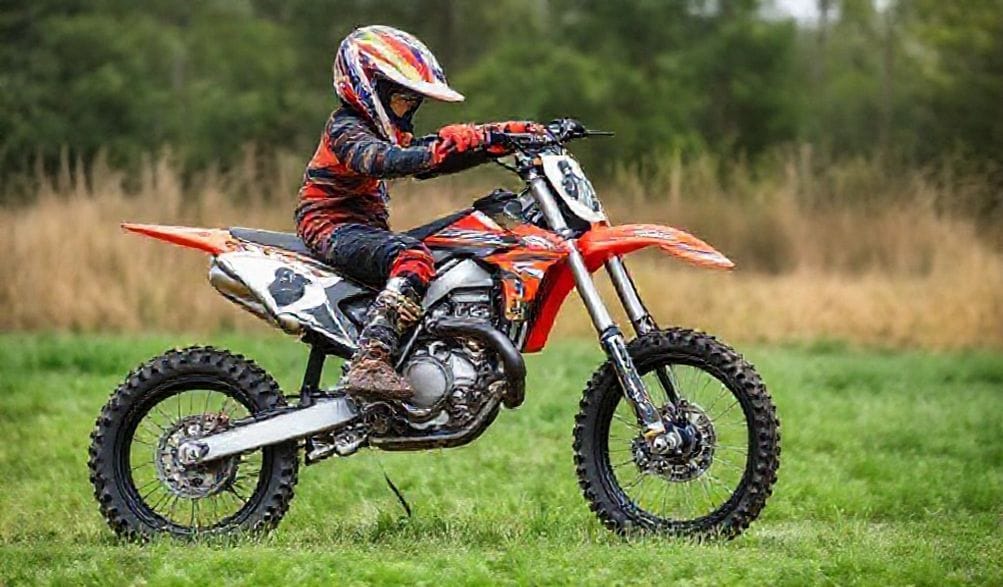
The Ultimate Parent’s Guide to Dirt Bikes for 9-Year-Olds (2024)
That look. It’s a mix of pure excitement, unbridled curiosity, and a dash of “I can totally do that, Dad!” Your 9-year-old has seen a dirt bike in action, and now the question hangs in the air: “Can I get one?” As a parent, your heart does a simultaneous leap of joy and a somersault of anxiety. You envision the confidence, outdoor fun, and life skills it could foster. But you also picture the scrapes, the risks, and the sheer responsibility. How do you navigate this?
You’re in the right place. This guide isn’t just a list of bikes; it’s a roadmap built on the collective experience of seasoned riders, safety-conscious parents, and professional instructors. Our sole purpose is to arm you with the expert knowledge needed to make an informed, safe, and incredibly rewarding decision for your young adventurer. We’ll walk you through the non-negotiable safety fundamentals, decode the process of choosing the perfect beginner dirt bike for your 9-year-old, highlight top-recommended models, and lay out a practical action plan for those first thrilling rides. Let’s turn that nervous excitement into confident preparation.
Safety First: Non-Negotiables for Young Riders
Before we talk horsepower or shiny graphics, we must establish the absolute foundation: safety. In dirt biking, safety isn’t a suggestion or an accessory—it’s the core of the sport. Approaching it any other way is a disservice to your child. This mindset is the single most important thing you, as a parent, can bring to this new adventure. It transforms risk into managed, calculated fun and builds habits that last a lifetime.
The Essential Safety Gear Checklist (Head-to-Toe)
Think of safety gear as your child’s personal protective exoskeleton. Never, ever let them ride without it—not even for a “quick spin” in the backyard. This investment is more important than the bike itself.
- Casco: This is non-negotiable. It must be a DOT-certified motocross helmet, with SNELL certification being the gold standard for higher impact protection. The fit is critical: snug but not painful, with no side-to-side or front-to-back rocking when you try to move it. A loose helmet is a useless helmet.
- Gafas: Dirt, rocks, and branches are not your child’s friend. Goggles protect their eyes and provide clear vision. Look for anti-fog coatings and a comfortable fit with the helmet.
- Jersey y pantalones: These aren’t just for style. Motocross-specific gear is made from durable, tear-resistant material designed to slide rather than grab in a fall. The pants often include padding at the knees and hips.
- Guantes: They protect hands from blisters, handlebar vibration, and minor scrapes. Good grip is essential for control.
- Botas: Do not use hiking boots or work boots. Motocross boots are engineered with rigid soles, ankle support, and shin protection to prevent twists, breaks, and impacts from the bike or terrain. They are a crucial piece of the puzzle.
- Chest Protector & Knee/Elbow Guards: This is the “next level” of protection that serious beginners should adopt. A chest protector shields the ribs and back, while knee and elbow guards prevent painful impacts and scrapes that can quickly end a fun day.
Supervised Training & Choosing the Right Environment
The right gear is useless without the right context. Your role as a supervisor and guide is paramount.
- The Critical Role of Adult Supervision: Your child is not ready to explore alone. An experienced adult must be present at all times to provide instruction, enforce rules, and respond immediately if needed. This is about mentorship, not just surveillance.
- Start in Controlled, Open Areas: The first rides should happen in a wide-open, flat, and obstacle-free space. Think empty fields (with permission), large flat dirt lots, or a beginner-friendly section of a designated off-road park. This environment allows them to focus on controlling the bike without navigating complex hazards.
- Avoid Public Roads and Unpredictable Terrain: Dirt bikes are not street-legal for children. Never allow riding on public roads. Similarly, avoid trails with steep hills, large rocks, deep ruts, or unknown obstacles until fundamental skills are second nature. Mastery begins with simplicity.
How to Choose the Perfect Dirt Bike for a 9-Year-Old
Now, let’s demystify the bike itself. The goal is to find a machine that matches your child’s physical size, maturity, and complete lack of experience. A bike that’s too big or too powerful is intimidating, dangerous, and will hinder learning. One that’s too small will be outgrown quickly. We’re aiming for the “Goldilocks” fit.
Engine Size (cc): Start Small, Grow Safely
“cc” stands for cubic centimeters, a measure of the engine’s displacement. In simple terms, it generally correlates with power. For a typical 9-year-old beginner, the sweet spot is between 50cc and 110cc.
- Why This Range? Bikes in this category provide manageable power that allows a new rider to learn throttle control without being overwhelmed by sudden acceleration. The mantra is always: It’s safer to start on a bike they can control and move up, than to start on a bike that controls them.
- 2-Stroke vs. 4-Stroke for Beginners: This is a key distinction.
- 4-Stroke Engines (e.g., Honda CRF110F): The overwhelming recommendation for first-time riders. They provide smooth, predictable power delivery, have a broader “powerband” (are more forgiving with throttle input), and are generally quieter and easier to maintain. They are confidence-inspiring.
- 2-Stroke Engines (e.g., KTM 50 SX): Deliver power in a sudden “burst” or “hit.” They require more precise throttle and clutch control and are better suited for a child who has already mastered basics on a 4-stroke. For a true beginner, they can be intimidating and harder to manage.
The Fit Test: Seat Height and Weight
A bike that doesn’t fit is a bike that can’t be controlled safely.
- The “Flat-Foot” Rule: When your child sits on the bike in an upright position, they should be able to place the balls of both feet flat on the ground. If they are on their tiptoes or one-footing it, the bike is too tall. This connection to the ground is crucial for stopping, balancing at low speeds, and instilling confidence.
- Importance of Lightweight: Kids’ dirt bikes are designed to be light for a reason. A lighter bike is easier to maneuver, pick up after a tip-over, and feels less daunting. A 150-pound bike is vastly different for a 70-pound child than a 250-pound one. Prioritize models known for their manageable weight.
- The Manageability Assessment: Have your child sit on the bike. Can they comfortably reach the handlebars and controls? Can they rock the bike side-to-side? If it feels like they’re wrestling a bear, it’s too much bike.
Key Features for Beginners: Electric vs. Gas-Powered
Today, parents have a clear choice between two technologies, each with distinct advantages.
-
Electric Dirt Bikes:
- Ventajas: Virtually silent operation (great for neighborhoods), zero emissions, very low maintenance (no oil, gas, or air filters), and instant, smooth torque. They are fantastic for learning balance, throttle control, and basic maneuvering in a less intimidating package.
- Contras: Limited ride time (typically 1-2 hours per charge), can lack the “feel” of progression through gears, and may not prepare a rider as directly for moving to a larger gas bike.
- Best For: Complete beginners, practice in sound-sensitive areas, and families wanting the simplest possible introduction.
-
Gas-Powered Dirt Bikes:
- Ventajas: Offer the traditional dirt bike experience, longer ride time (just refuel and go), and teach mechanical skills (clutch, gears). The progression from an automatic clutch to a manual one is a clear skill pathway.
- Contras: Require regular maintenance (oil changes, air filter cleaning), produce noise and fumes, and generally have a higher initial cost and ongoing expense.
- Best For: Families committed to the sport, those with access to appropriate riding land, and kids who are likely to stick with it and progress through larger bikes.
Top Recommended Dirt Bikes for 9-Year-Olds
Based on years of community feedback, reliability data, and beginner-friendly design, here are three archetypes of excellent starter bikes. Always have your child sit on any potential model to confirm the fit.
Best Electric Starter Bike: Razor MX650
The Razor MX650 is a gateway machine. Its fully electric operation means you can teach fundamentals in the backyard without disturbing the peace. It has adjustable speed settings (allowing you to limit top speed initially), a sturdy steel frame, and a low seat height. It’s not for track riding, but for building that initial confidence and understanding of two-wheeled control, it’s a superb and affordable first step.
Best Gas-Powered Beginner Bike: Honda CRF110F
The Honda CRF110F is the quintessential first “real” dirt bike for a reason. It’s built on a legacy of legendary Honda reliability. It features a user-friendly 4-stroke engine, an automatic clutch (so the rider only has to worry about throttle, braking, and shifting without stalling), and a low seat height. It’s forgiving, durable, and holds its value incredibly well. For most 9-year-olds stepping up from an electric bike or starting fresh, the CRF110F is the benchmark.
Best for Growth & Skill Development: Kawasaki KLX110
For the taller, more coordinated, or slightly more experienced 9-year-old who is ready for the next challenge, the Kawasaki KLX110 is a stellar choice. It shares the reliable 4-stroke, beginner-friendly ethos but often comes with a manual clutch (check specific model years). This introduces the critical skill of clutch control, which is necessary for riding larger bikes. It has a slightly more aggressive stance and suspension, allowing a rider to develop proper technique and grow into the bike for a longer period before needing an upgrade.
Getting Started: Your Family’s Action Plan
You have the gear and the bike. Now, let’s plan the first successful outing. Your calm, prepared demeanor will set the tone.
Pre-Ride Bike Inspection Basics
Make this a ritual. Before every ride, walk through this quick checklist with your child:
1. Neumáticos: Are they properly inflated? Check for cuts or embedded objects.
2. Frenos: Squeeze the levers. Do they feel firm? Do the brakes engage?
3. Throttle: Twist the throttle and let it snap back. It must return freely and quickly on its own.
4. Límpialo y engrásalo regularmente. Un filtro sucio es un asesino de motores. Is it too loose or too tight? Is it clean and lubricated?
5. General: Give critical bolts (axle, handlebar clamp) a visual check for tightness.
The First Riding Lesson: Drills & Mindset
The first day is about control, not speed.
* Power-Off Maneuvering: With the engine off, have your child walk the bike around, getting a feel for its weight and balance. Practice squeezing the front brake and putting a foot down.
* Basic Controls Drill: With the bike on a stand, have them practice finding the throttle, front brake, rear brake, and kill switch with their eyes closed. Muscle memory is key.
* The First Powered Moves: In your wide-open area, start with simple straight-line acceleration and braking to a stop. Then, practice large, gentle turns. Constantly reinforce: “Slow is smooth, and smooth is fast.” Praise control and deliberate action over any attempt at speed.
Maintenance 101 for Parents
Involve your child in simple upkeep. It teaches responsibility and mechanical familiarity.
* Filtro de Aire: Learn to clean and re-oil the foam air filter regularly. A dirty filter is an engine’s worst enemy.
* Cuidado de la Cadena: Keep the chain properly tensioned and lubricated with specific chain lube to prevent wear and breakage.
* Verificación de Tornillería: Vibrations loosen bolts. Periodically check and tighten critical fasteners like axles, handlebar clamps, and footpegs.
Preguntas Frecuentes (FAQ)
Q: What is the best cc dirt bike for a 9-year-old?
R: Para la gran mayoría de los principiantes, un 50cc, 70cc, or 110cc 4-stroke is ideal. The specific choice depends entirely on your child’s height, weight, and maturity. A small-framed, cautious child should start on a 50cc. A taller, athletic child with some coordination might be ready for a 110cc. Always err on the side of less power.
$1,500 – $2,200
R: Absolutamente. Electric dirt bikes like those from Razor or higher-end brands like Oset are excellent tools for learning fundamental balance and throttle control. They eliminate the complexities of a gas engine, making the initial learning curve gentler, quieter, and cleaner—a perfect fit for many families.
P3: ¿Cuánto debería esperar gastar en una moto de cross para principiantes y equipo?
R: Para una moto nueva entry-level gas bike (e.g., CRF110F), budget between $2,200 and $3,000. Quality full safety gear (helmet, goggles, boots, gloves, chest protector) will add another $500 to $1,000+. You can save significantly by buying a used bike from a reputable source and shopping for prior-year gear sales. Remember, gear is not where you cut corners.
P: ¿Dónde es legal que mi hijo conduzca una moto de cross?
A: This is crucial to research. Dirt bikes are generally not legal on public streets, sidewalks, or parks. Legal riding areas include designated off-road vehicle (OHV) trails, motocross tracks, and private property with the owner’s explicit permission. Always check your county and state ordinances for specific laws regarding age, equipment (like spark arrestors), and approved riding areas.
Conclusión
Embarking on the journey of dirt biking with your 9-year-old is about so much more than a machine. It’s about building confidence through mastered skills, fostering responsibility through preparation and maintenance, and creating irreplaceable family memories in the great outdoors. The path is built on four unwavering pillars: complete safety gear, a properly fitted bike, constant adult supervision, and a patient, step-by-step approach to learning.
See this as a collaborative project. Visit local dealerships together to sit on bikes. Consider a lesson from a certified instructor for a professional foundation. Let your child’s excitement be matched by your commitment to their safety and education. With the knowledge you now have, you are perfectly equipped to transform that initial “Can I?” into a lifelong story of “Remember when we learned together?” The trail ahead is waiting.
METADATA_START—
DISPLAY_TITLE: The Ultimate Parent’s Guide to Dirt Bikes for 9-Year-Olds (2024)
SEO_TITLE: Best Dirt Bikes for 9 Year Olds | 2024 Beginner’s Guide & Safety Tips
META_DESC: Elija con seguridad la motocross perfecta para su hijo de 9 años. Nuestra guía experta 2024 cubre equipos de protección, selección de motos de 50cc a 110cc, los mejores modelos y consejos de entrenamiento esenciales para principiantes.
IMG_PROMPT: Un niño feliz de 9 años, equipado con todo el equipo de seguridad, sentado con confianza en una motocross para principiantes (como una Honda CRF110F) en un campo de tierra abierto y soleado, con un padre de pie cerca ofreciendo apoyo. El niño lleva casco integral, gafas, jersey, guantes y botas de motocross.
—METADATA_END—