
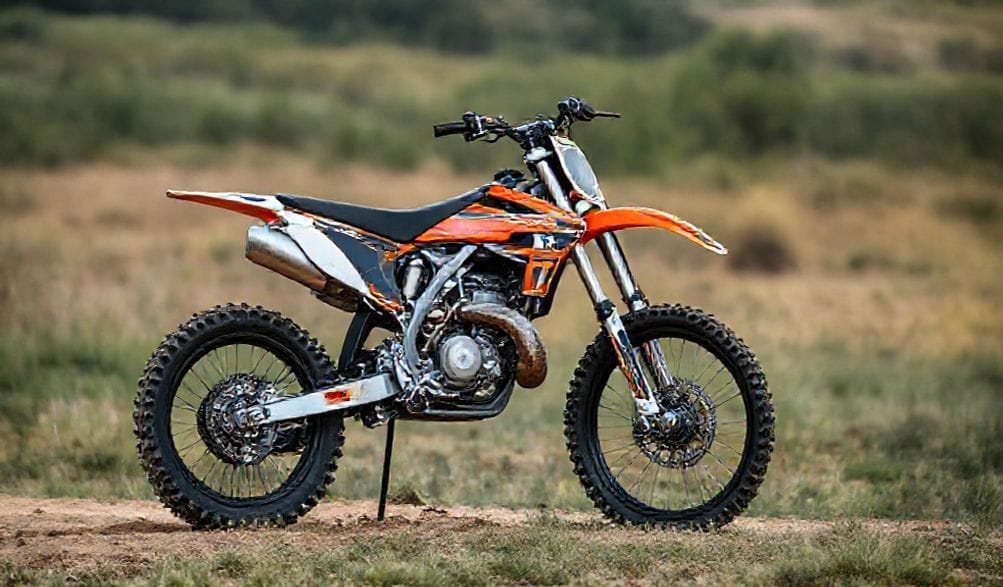
The Ultimate Guide to EV Dirt Bikes: Power, Performance, and the Future of Off-Roading
Introduction
The iconic, throaty roar of a two-stroke engine has long been the definitive soundtrack of motocross and trail riding. It’s a sound synonymous with adrenaline, horsepower, and the smell of premix. But a quiet—literally—revolution is carving new singletrack: the electric dirt bike. No longer a futuristic concept or a niche toy for early adopters, the EV dirt bike has matured into a serious and rapidly growing segment of the powersports industry. Combining jaw-dropping instant torque, radically simplified maintenance, and a new kind of riding experience, these machines are challenging decades of tradition.
This guide is crafted to cut through the marketing hype and provide a comprehensive, trustworthy, and actionable look at everything you need to know. We’ll examine the core technology, weigh the undeniable advantages against the current limitations, survey the top models, and help you decide if an electric dirt bike is the right key to your next off-road adventure. Welcome to the new frontier of riding.
1. What is an Electric Dirt Bike? Defining the Technology
At its core, an electric dirt bike replaces the complex internal combustion engine (ICE) and its associated systems with an electric motor, a battery pack, and an electronic controller. This fundamental shift in architecture leads to a dramatically different machine in both form and function.
1.1 Core Components: Motor, Battery, and Controller
- Electric Motor: Most EV dirt bikes use a brushless DC (BLDC) motor, prized for its efficiency, reliability, and power density. You’ll typically find two configurations:
- Hub Motor: Integrated directly into the rear wheel. Simple and often used on entry-level models, but it can increase unsprung weight, affecting suspension performance.
- Mid-Drive Motor: Mounted centrally on the bike’s frame, driving the rear wheel via a chain or belt. This preserves optimal suspension kinematics and allows for better weight distribution, making it the choice for high-performance models.
- Battery Pack: This is the fuel tank of the EV dirt bike. Modern bikes almost exclusively use lithium-ion (Li-ion) cells for their high energy density, offering the best balance of power and weight. Some models may use lithium-iron-phosphate (LiFePO4), which is heavier and less energy-dense but offers superior longevity and thermal stability. Capacity is measured in Amp-hours (Ah) or Kilowatt-hours (kWh), and voltage (e.g., 60V, 72V, 80V) determines the potential power.
- Controller: Acting as the bike’s “brain,” the electronic speed controller (ESC) is a critical component. It regulates the precise amount of power drawn from the battery and delivered to the motor based on your throttle input. Advanced controllers manage torque curves, regenerative braking, and different riding modes.
1.2 How It Works: The Simplification of Power
Contrast the mechanical ballet of a gas bike—air/fuel mixture, compression, ignition, exhaust, coupled with a multi-gear transmission and a clutch—with the elegant simplicity of an EV. In an electric dirt bike, the process is direct: electrical energy flows from the battery, through the controller, to the motor, which turns the wheel.
This eliminates the need for a clutch and a multi-speed gearbox. The electric motor produces maximum torque instantly, from 0 RPM, and maintains a broad, flat power curve. The rider experience shifts from managing engine RPM and shifting gears to pure throttle control and body positioning. It’s a more intuitive, linear connection between your wrist and the rear tire.
2. Advantages of Riding an EV Dirt Bike: Beyond the Quiet
The benefits of electric off-road riding extend far beyond the obvious lack of noise. They reshape the practical, performance, and social aspects of the sport.
2.1 Performance Perks: Instant Torque and Linear Power
This is the “wow” factor. The sensation of 100% torque available from 0 RPM is transformative. It translates to explosive acceleration out of corners, effortless lofting of the front wheel over obstacles, and incredible hill-climbing ability. The power delivery is perfectly linear and predictable, giving the rider sublime control over traction. This makes technical terrain more manageable, especially for beginners who aren’t fighting a powerband or stalling a clutch. Furthermore, placing the heavy battery pack low in the frame gives most EV dirt bikes a phenomenally low center of gravity, enhancing cornering stability and overall handling.
2.2 Practical Benefits for Riders and Land Access
- Minimal Maintenance: Forget oil changes, fouled spark plugs, jetting carburetors, adjusting valves, or cleaning air filters. Maintenance shifts to the chassis: keeping the chain lubed, checking brake pads, and servicing suspension. This saves significant time and money.
- Ride Anywhere, Anytime: The near-silent operation is a game-changer. It allows for early morning or late evening rides without disturbing neighbors. More importantly, it reduces noise pollution, which is the primary cause of trail closures. An EV dirt bike can be a key to preserving and gaining access to riding areas.
- At-Home Convenience: “Refueling” means plugging into a standard 110V wall outlet. Overnight, you have a full “tank.” No more storing gasoline or trips to the gas station.
2.3 Environmental and Community Impact
- Zero Direct Emissions: Riding an EV dirt bike produces no exhaust fumes—a clear benefit for local air quality and the rider’s immediate environment, eliminating that familiar cloud of two-stroke smoke.
- Good Neighbor Policy: The dramatically reduced noise footprint fosters better relationships with landowners, trailside communities, and other outdoor user groups like hikers and equestrians. It promotes a more sustainable and socially responsible image for the sport.
3. Key Considerations and Current Limitations
A balanced perspective is crucial. While the advantages are compelling, the technology is still evolving, and understanding its limits is key to a satisfying ownership experience.
3.1 Range and Ride Time: Understanding Your Needs
This is the most common concern. Range is not a fixed number; it’s highly variable based on:
* Rider Input: Aggressive, wide-open-throttle riding drains the battery much faster than a steady trail pace.
* Terrain: Deep sand, mud, and steep hills consume more energy than hardpack.
* Rider Weight: A significant factor.
* Battery Capacity & Health: A new, larger-capacity battery offers more range.
Real-World Estimates: A light-duty trail bike might offer 20-40 miles of casual riding. A high-performance motocross EV dirt bike might deliver 1-2 hours of hard track use, comparable to a gas bike’s fuel tank. The strategy shifts from “carrying a gas can” to “managing your right wrist” and planning loops around your available charge.
3.2 Charging Logistics and Infrastructure
- Charge Times: A Level 1 charge from a standard household outlet can take 4-8+ hours for a full cycle. Level 2 charging with a dedicated 240V charger can cut that to 1.5-3 hours.
- The Remote Riding Challenge: The biggest hurdle for multi-day trail adventures or remote track days is the lack of charging infrastructure. You can’t just bring a jerry can.
- Emerging Solutions: Some riders are turning to portable power stations or solar generators. A few manufacturers are exploring quick-swap battery systems, though this is not yet standardized.
3.3 Upfront Cost and Long-Term Value Proposition
- Initial Price: High-quality EV dirt bikes currently command a premium over comparable gas bikes, largely due to the cost of the battery pack.
- Long-Term Savings: This premium is offset by drastically lower “fuel” costs (electricity vs. gasoline) and the near-elimination of routine engine maintenance.
- Battery Longevity & Cost: Lithium-ion batteries degrade over time and use. A quality pack should last 5-8 years or 800-1500 charge cycles before significant capacity loss. Replacement is a major future expense, though costs are falling.
- Resale Value: The market is still new, making resale value somewhat unpredictable. However, as technology stabilizes and adoption grows, a strong aftermarket is developing.
4. Top EV Dirt Bike Brands and Models for 2024
The market has exploded from a few pioneers to a crowded field of innovators. Here’s a breakdown of standout models across key categories.
4.1 For the Motocross & Hardcore Enthusiast
These bikes are built for aggression, with a focus on power-to-weight ratio and track-ready suspension.
* Stark VARG: The current performance benchmark. With up to 80 hp, adjustable power maps that mimic any 2-stroke or 4-stroke engine characteristic, and premium WP suspension, it’s a serious weapon for serious riders.
* Sur-Ron Light Bee X / Talaria Sting R: The “gateway” performance bikes. These ultra-lightweight machines blur the line between a high-powered e-bike and a motorcycle. Incredibly fun, moddable, and capable on tight tracks and trails.
4.2 For Trail Riding and Exploration
These models prioritize range, versatility, and durability for all-day adventures.
* Zero FX: From a established electric motorcycle brand, the FX is a street-legal dual-sport that excels off-road. It offers multiple battery options for extended range and a robust, proven platform.
* KTM Freeride E-XC: A purpose-built off-roader from a legendary dirt bike brand. It features a low-maintenance belt drive, quality components, and the handling pedigree you’d expect from KTM.
4.3 For Beginners and Younger Riders
Safety, manageability, and lower cost are the priorities here.
* Segway Dirt eBike: A well-built, lower-power option with full suspension, hydraulic brakes, and multiple assist modes. A fantastic tool for learning fundamentals without intimidation.
* Razor MX650: An affordable, entry-level introduction to the electric dirt bike feel. Best suited for younger riders in controlled environments.
5. Making the Decision: Is an EV Dirt Bike Right for You?
This isn’t about one technology “winning.” It’s about finding the right tool for your specific riding life.
5.1 Assessing Your Riding Profile
Ask yourself:
* Primary Use: Is it a motocross track, tight singletrack, or a backyard play area?
* Ride Duration: Do you typically ride for 30-minute motos or 4-hour trail loops?
* Charging Access: Do you have a garage or shed where you can plug in overnight?
* Mechanical Inclination: Do you enjoy tinkering with engines, or do you prefer simply riding?
5.2 Gas vs. Electric: A Side-by-Side Comparison
| Feature | Gas-Powered Dirt Bike | Electric Dirt Bike (EV) |
| :— | :— | :— |
| Power Delivery | Peaky, requires clutch/gear management | Instant, linear, single-speed |
| Noise | Loud (90-110+ dB) | Very Quiet (~70 dB) |
| Maintenance | High (oil, filters, valves, etc.) | Very Low (chain, brakes, suspension) |
| “Refuel” Time | 5 minutes at a station | 1-8+ hours at an outlet |
| Range | Easy to extend with carried fuel | Fixed by battery, harder to extend |
| Upfront Cost | Generally Lower | Generally Higher |
| Operating Cost | Higher (fuel, maintenance parts) | Lower (electricity, fewer parts) |
| Emissions | Direct exhaust emissions | Zero direct emissions |
5.3 The Hybrid Approach: Owning Both
Many seasoned riders are finding the ideal solution is not an either/or choice, but a “both/and” strategy. A gas bike might be the tool for long desert races or remote backpacking trips, while an EV dirt bike is the perfect choice for after-work track sessions, practicing in sound-sensitive areas, or introducing a friend to the sport. They complement each other perfectly.
6. The Future of Electric Off-Road Riding
The trajectory is clear: electric is not a fad; it’s the next major chapter in off-road motorcycling.
6.1 Technological Innovations on the Horizon
- Battery Tech: Solid-state batteries promise higher energy density, faster charging, and improved safety, potentially solving the current range and weight challenges.
- Charging: Faster DC charging and even wireless inductive charging pads could make track-day logistics seamless.
- Modularity: Swappable, standardized battery packs could become the new “jerry can” for off-roaders.
6.2 The Evolution of Racing and Competition
Racing drives innovation. Dedicated electric series, like those promoted by Stark Future, are proving the performance credibility of the platform. As more factory teams invest, the trickle-down of technology—in motor efficiency, battery management, and chassis design—will accelerate rapidly for consumer bikes.
6.3 Infrastructure and Industry Growth
Expect to see Level 2 charging stations popping up at popular riding parks. The most significant catalyst will be the full-scale entry of traditional Japanese OEMs (Honda, Yamaha, Kawasaki). When they launch production EV dirt bikes, it will validate the market, drive economies of scale, and bring a new wave of riders into the electric fold.
Frequently Asked Questions (FAQ)
Q: How long does an EV dirt bike battery last before needing replacement?
A: Battery lifespan is typically measured in charge cycles. Most quality lithium-ion packs are rated for 800-1500 full cycles before reaching 80% of original capacity. With moderate use, this can translate to 5-8 years of service. Proper care (avoiding full discharges, extreme heat/cold) is key to longevity.
Q: Can you ride an electric dirt bike in the rain or through water?
A: Most reputable models have significant water resistance (IP ratings) for riding in wet conditions and through shallow puddles. However, they are not submarines. Submerging the motor, battery, or controller can cause catastrophic damage. Always consult your owner’s manual for the manufacturer’s specific guidelines on water fording depth.
Q: Are electric dirt bikes actually better for the environment?
A: They produce zero direct emissions during operation, which is a significant local air quality benefit. Their overall environmental footprint depends on the source of the electricity used to charge them (e.g., coal vs. solar) and the manufacturing/recycling processes for their batteries. On balance, and as grids become greener, their lifetime environmental impact is generally lower than gas bikes.
Q: Do electric dirt bikes have a clutch and gears?
A: Almost universally, no. The electric motor provides power across a very wide RPM range, eliminating the need for a multi-speed transmission and clutch. This greatly simplifies riding, especially for beginners. Some high-performance models offer selectable “maps” that simulate different gear ratios.
Q: How do I get my electric dirt bike serviced?
A: Service needs are drastically reduced. Maintenance focuses on traditional chassis components: tire pressure, chain tension and lubrication, brake pads/fluid, suspension, and bearing checks. For issues with the motor, battery, or controller, you will need to contact the manufacturer or an authorized dealer, as specialized knowledge and tools are required.
Conclusion
The EV dirt bike represents more than a new type of motorcycle; it signifies a fundamental shift in the philosophy of off-road riding. It trades auditory drama for visceral, instantaneous torque. It exchanges weekend wrenching for more time on the trail. It replaces the stigma of noise with the promise of greater land access.
Yes, the technology is still maturing. Range anxiety and charging logistics are real considerations for certain types of riding. But the pace of innovation is staggering, and the core experience—the sheer, unadulterated fun of piloting a powerful machine through dirt—is not only preserved but enhanced in a uniquely accessible way.
Choosing an EV dirt bike today is an investment in a cleaner, quieter, and intensely engaging future for the sport. It’s a chance to be part of the vanguard. Whether it becomes your primary steed or a specialized tool in a diverse garage, one thing is undeniable: the electric dirt bike has arrived, and it’s here to change the game.
Ready to experience the instant torque for yourself? We recommend seeking out a demo day, connecting with current owners in online forums, and using the framework in this guide to match a model to your specific riding life. The trail ahead is electric, and it’s calling.
METADATA_START—
DISPLAY_TITLE: The Ultimate Guide to EV Dirt Bikes: Power, Performance & Future
SEO_TITLE: EV Dirt Bike Guide 2024: Reviews, Pros/Cons, & Top Models
META_DESC: Your complete guide to electric dirt bikes. Explore performance benefits, key considerations, top 2024 models, and see if an EV dirt bike is right for your off-road adventures.
IMG_PROMPT: A dynamic, high-action shot of a modern electric dirt bike, like a Stark VARG or Sur-Ron, launching off a dirt jump in a motocross track. The bike should be sleek and futuristic, the rider in full gear, with dust flying and a clear blue sky in the background. The scene should convey power, performance, and the clean, quiet nature of electric off-roading.
—METADATA_END—