
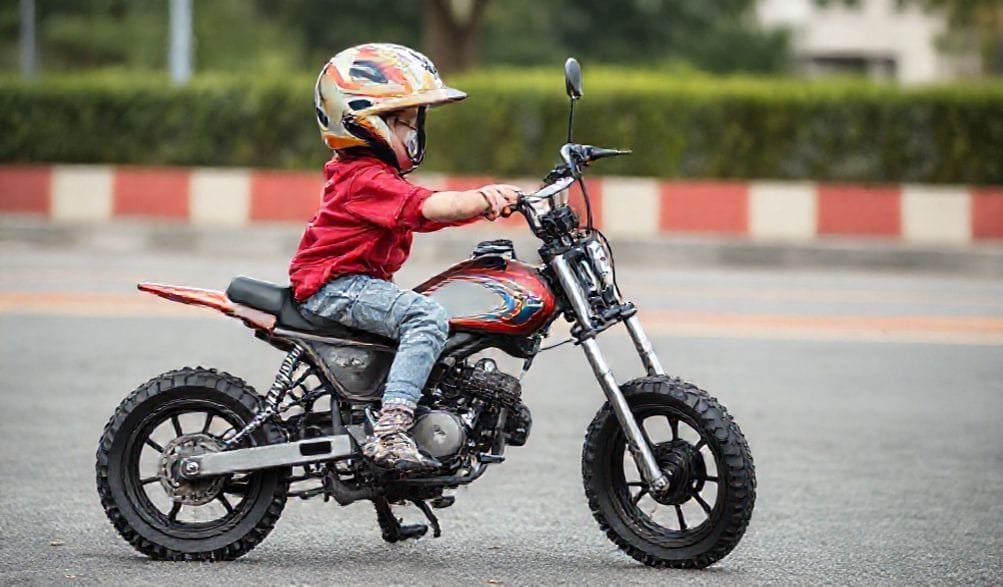
The Ultimate Guide to Kid Motor Bikes: Safety, Selection, and Fun
There’s a magical moment every parent recognizes: the look of pure, unadulterated joy on a child’s face when they first experience the thrill of independent movement. It starts with a wobbly pedal bike, a determined scooter, and then, for many, the exciting prospect of a kid motor bike. That spark of excitement in their eyes is contagious, but it’s quickly followed by a wave of parental questions. Is it safe? Which one is right? What do I need to know?
If you’re searching for “kid motor bike,” you’re likely at that exact decision-making crossroads, sifting through marketing claims and endless product listings, seeking trustworthy information. This guide is designed to be your definitive resource. Compiled from parenting experiences, consultations with safety experts, and thorough research, we’ll cut through the noise. Our goal is to walk you through everything—from critical safety protocols and decoding specifications to choosing the right model and maintaining it—so you can make a confident, informed choice for your child’s next great adventure.
Understanding Kid Motor Bikes: Types and Key Features
Before diving into specific models, it’s crucial to understand the landscape. “Kid motor bike” is a broad term covering everything from slow-paced electric ride-ons for toddlers to more powerful machines for pre-teens. Knowing the types and key features will help you instantly narrow your search and ask the right questions.
Electric vs. Gas-Powered: What’s Best for Your Child?
The first major fork in the road is power source. Each has distinct pros and cons.
-
Electric Kid Motor Bikes:
- Avantages : Quiet operation (perfect for neighborhoods), zero emissions, minimal maintenance (no oil or gas changes), and often simpler to start with a key or button. They typically have excellent safety features like parental remote controls and programmable speed limiters.
- Inconvénients : Limited run time per charge (usually 1-2 hours), recharge time, and battery performance can degrade over years. Top speeds are generally lower than comparable gas models.
- Best For: Most families, especially beginners. Ideal for suburban driveways, parks, and controlled environments where noise is a concern.
-
Gas-Powered Kid Motor Bikes:
- Avantages : Longer ride times (just refuel and go), more power and higher speeds, and often a more “authentic” motorcycle feel and sound. They can handle rougher terrain better.
- Inconvénients : Loud, produce fumes, require regular engine maintenance (oil, air filters, spark plugs), and are generally more complex to operate. They are almost exclusively for older children (8+).
- Best For: Older, more experienced children with access to large private property like farms or rural land, and parents comfortable with small engine upkeep.
Decoding Specifications: Voltage, Wattage, and Max Speed
Don’t let the tech specs intimidate you. For vélos électriques, they’re simply a guide to power and speed.
-
Tension (V) : Think of this as the “power potential.” Higher voltage generally means more torque (ability to climb hills) and a higher potential top speed.
- 6V: For toddlers (ages 2-4). Very slow speeds (1-3 mph), perfect for first-time riders.
- 12V: The most common range for kids ages 3-6. Good balance of speed (2-5 mph) and power for light inclines.
- 24V: For kids ages 6-9. Offers more speed (8-15 mph) and significantly better hill-climbing ability.
- 36V/48V: For older kids and teens, approaching adult electric bike performance.
-
Wattage (W): This is the motor’s power output. A higher-watt motor within the same voltage class will be stronger and more responsive.
-
Max Speed: Always check this! A responsible manufacturer will list it. Remember, a 15 mph bike feels incredibly fast to a small child. The ability to limit this speed via a controller is a vital safety feature.
Essential Safety Features to Look For
Beyond the powertrain, these features are non-negotiable when evaluating any kid motor bike:
- Parental Remote Control: An absolute must-have for beginner models. Allows you to stop the bike instantly or take over steering from a distance.
- Speed Limiters & Variable Settings: Look for bikes that allow you to cap the maximum speed (e.g., a “training mode” at 50% power) and increase it as your child’s skill grows.
- Sturdy Construction & Stable Wheelbase: A wider distance between wheels prevents easy tipping. The frame should feel solid, not flimsy.
- Reliable Braking System: Disc brakes offer better stopping power than simple hub brakes, especially for faster models. Ensure the brake levers are sized for small hands.
Prioritizing Safety: Non-Negotiables for Riding
This section is the heart of responsible ownership. A kid motor bike is not a toy; it’s a vehicle. Treating it as such is the only way to ensure fun doesn’t turn into fear. This commitment to safety aligns with the highest standards of trustworthy advice, especially for topics involving our children’s well-being.
The Complete Safety Gear Checklist
Gear is not optional. It must be worn every single time, for a five-minute driveway loop or a longer trail session.
- Casque : A DOT-certified (or equivalent like ECE) youth motorcycle/motocross helmet is the only acceptable choice. Bicycle helmets are not designed for motorized speeds. It must fit snugly without wobbling.
- Lunettes : Protect eyes from dust, debris, and insects. Look for shatterproof lenses with a secure strap.
- Gants : Full-fingered gloves protect hands in a fall and improve grip.
- Vêtements : Long sleeves, long pants, and sturdy closed-toe shoes (like boots) are mandatory. For serious riding, invest in a youth motocross jersey, pants, and padded gloves.
Choosing and Preparing a Safe Riding Environment
Where your child rides is as important as how they ride.
- Ideal Locations: A smooth, paved driveway on a quiet cul-de-sac, an empty parking lot (with permission), or a designated, legal off-road trail for motorized vehicles. Never public roads, sidewalks, or public bike paths.
- Hazards to Scout and Avoid: Steep slopes, ditches, bodies of water, loose gravel, low-hanging branches, and of course, any area with vehicle or pedestrian traffic.
- The Golden Rule: Direct Adult Supervision: This means an engaged adult, free from phone distractions, watching the child at all times. You are the spotter, safety officer, and coach.
Teaching Your Child Core Riding Rules
Before the first ride, have a serious talk. Make them a partner in safety.
- Pre-Ride Check: Involve them in the “T-CLOCS” check (see Maintenance section below).
- Basic Operations: Practice starting, stopping, and gentle steering in a wide-open, flat area before exploring.
- Establish Boundaries: Set clear physical boundaries for where they can and cannot go. Use cones or natural markers.
- Instill Respect: Teach them that the bike is powerful and must be respected. They must listen immediately to your “STOP” command or hand signal.
How to Choose the Perfect Kid Motor Bike: A Step-by-Step Guide
Now, with safety as your foundation, you can focus on finding the perfect match. This is where experience-based, practical advice makes all the difference.
Matching the Bike to Your Child’s Age and Size
Manufacturer age recommendations are a starting point, but size and maturity are king.
- Ages 2-4 (Toddlers): Look for 6V electric ride-ons with a remote control. Speed should be under 3 mph. The seat height should allow them to sit comfortably with feet flat on the footrests.
- Ages 4-7 (Beginners): 12V-24V electric bikes are ideal. Ensure they can easily reach the handlebars and operate the throttle and brake levers without stretching. Their feet should be flat when stopped.
- Ages 7+ (Intermediate): 24V+ electric or small 50cc gas-powered bikes enter the picture. Critical: They must have the strength to handle the bike’s weight if it tips and the maturity to understand and follow complex safety rules.
Assessing Your Riding Terrain
The bike must suit your landscape.
- Pavement/Driveways: Any bike will work, but street-style tires are optimal.
- Grass & Dirt: You’ll need more torque. Look for higher voltage (e.g., 24V over 12V) and knobby, air-filled tires for better traction. Suspension becomes a valuable comfort feature.
- Light Off-Road/Trails: Knobby tires, good ground clearance, and front/rear suspension are important. Gas-powered models often excel here due to their power and runtime.
Balancing Budget with Quality and Growth
- Set Realistic Ranges: You can find basic 12V bikes for $200-$300, while high-end 24V or entry-level gas models can range from $400-$800+.
- Durability & Resale: A well-built bike from a reputable brand may cost more upfront but will last through multiple children and have better resale value. Check for metal frames, quality plastic, and name-brand batteries.
- The “Buying Used” Consideration: Can be a great way to save, but inspect it thoroughly. Check the battery health on electric models (ask about runtime), look for frame cracks, and test all functions. For gas bikes, be prepared for potential maintenance.
Top Maintenance Tips for Longevity and Performance
A well-maintained bike is a safer, more reliable, and longer-lasting bike. These simple habits will pay off.
Routine Checks Before Every Ride (The “T-CLOCS” for Kids)
Adapt the motorcyclist’s safety check to be kid-friendly:
* T – Tires: Are they properly inflated? Any cuts or wear?
* C – Controls: Do the throttle, brakes, and steering move smoothly without sticking?
* L – Lights & Electric: (If applicable) Are headlights/taillights working? Is the battery charged?
* O – Oil & Fuel: (For gas bikes) Check levels.
* C – Chassis & Chain: Look for loose bolts or cracks. Is the chain (if present) clean and properly tensioned?
* S – Stand: Does the kickstand spring back up?
Battery Care for Electric Models
- Chargement : Follow the manufacturer’s instructions. Avoid leaving it on the charger indefinitely after it’s full. Don’t let the battery fully deplete before recharging.
- Stockage : If storing for more than a month, charge the battery to about 50-70% and store it in a cool, dry place.
- Durée de Vie : Prévoyez 2 à 4 ans d'utilisation typique avant une baisse notable de l'autonomie.
Nettoyage de base et stockage saisonnier
- Nettoyage : Utilisez un chiffon humide et du savon doux. Évitez les nettoyeurs haute pression près des roulements, du moteur ou des composants électriques. Séchez le vélo soigneusement.
- Stockage saisonnier : Pour un stockage à long terme (comme pendant l'hiver), chargez complètement la batterie puis débranchez-la. Rangez le vélo dans un endroit sec et à température stable, comme un garage. Pour les vélos à essence, ajoutez également un stabilisateur de carburant dans le réservoir.
Foire Aux Questions (FAQ)
Q1 : Quel est l'âge approprié pour qu'un enfant commence à utiliser un vélo motorisé ?
R : Les jouets à conduire motorisés avec télécommande peuvent être introduits vers 2-3 ans. Pour qu'un enfant utilise de manière autonome un modèle semblable à un vélo avec accélérateur, 5-6 ans est un point de départ courant. Le véritable déterminant n'est pas l'âge seul, mais la maturité individuelle de l'enfant, sa coordination physique et sa capacité avérée à comprendre et à suivre des règles de sécurité strictes.
Q2 : Les motos pour enfants sont-elles sûres ?
R : Avec les bonnes précautions, elles peuvent constituer une activité sûre et enrichissante. La sécurité n'est pas inhérente au produit ; elle résulte directement de : 1) Le choix d'un modèle adapté à l'âge et à la taille, 2) L'insistance sur un équipement de sécurité complet et certifié pour chaque sortie, et 3) Une supervision constante et active dans un environnement contrôlé et sans danger. C'est le parent qui crée le cadre de sécurité.
Q3 : À quelle vitesse ces vélos roulent-ils généralement ?
R : Les vitesses varient considérablement. Les modèles débutants 6V vont de 2 à 5 km/h. Les vélos 12V populaires vont de 3 à 8 km/h. Les vélos électriques 24V plus avancés peuvent atteindre 13 à 24 km/h. Les modèles à essence pour les enfants plus âgés (50 cm³) peuvent souvent dépasser 32 km/h. Utilisez et appréciez toujours les limiteurs de vitesse lorsqu'ils sont disponibles.
Q4 : Où est-il légal que mon enfant roule ?
R : Vous devez vérifier les règlements locaux et de votre état. En règle générale, les motos pour enfants ne sont not autorisées sur les routes publiques, les trottoirs ou les pistes cyclables publiques. Leur utilisation est généralement limitée à une private property with the owner’s explicit permission. Certaines zones ont des sentiers désignés pour véhicules hors route (OHV) pour les modèles jeunesse homologués.
Q5 : Quelles sont les marques les plus réputées à considérer ?
R : Brands like Razor, Peg Perego et KTM (pour les modèles plus âgés et orientés performance) sont bien établies avec des normes de sécurité et de qualité reconnues. Quelle que soit la marque, recherchez toujours le modèle spécifique, lisez les avis vérifiés d'achat et assurez-vous que le produit est conforme aux certifications de sécurité pertinentes (comme la CPSC aux États-Unis ou le CE en Europe).
Conclusion
Se lancer dans l'aventure des motos pour enfants repose sur trois piliers clés : Une Sélection Éclairée, une Sécurité Sans Compromis et une Implication Parentale Active. L'objectif est de favoriser un amusement joyeux et qui renforce la confiance, et cela n'est possible que lorsque l'aventure est soutenue par la responsabilité et l'éducation.
Utilisez ce guide comme votre liste de contrôle. Impliquez votre enfant dans les conversations sur la sécurité dès le premier jour. N'oubliez pas que les meilleures balades ne concernent pas seulement le vélo lui-même, mais l'expérience partagée, les leçons apprises et les souvenirs heureux créés en apprenant ensemble. Priorisez le parcours, et vous assurerez que chaque sortie est une aventure sûre, heureuse et partagée.
METADATA_START—
DISPLAY_TITLE: The Ultimate Guide to Kid Motor Bikes: A Parent’s Handbook to Safety & Fun
SEO_TITLE : Guide des Motos pour Enfants 2024 | Sécurité, Sélection & Conseils aux Parents
META_DESC : Vous avez des questions sur les motos pour enfants ? Notre guide complet pour parents couvre l'électrique vs. l'essence, l'équipement de sécurité vital, la sélection adaptée à l'âge et les conseils d'entretien pour une balade amusante et sûre.
IMG_PROMPT : Un enfant heureux et équipé de sécurité (avec casque, lunettes, gants) conduisant une moto électrique pour enfants rouge sur une allée ensoleillée, avec un parent souriant qui surveille de près à proximité. La scène est lumineuse, sûre et joyeuse.
—METADATA_END—