
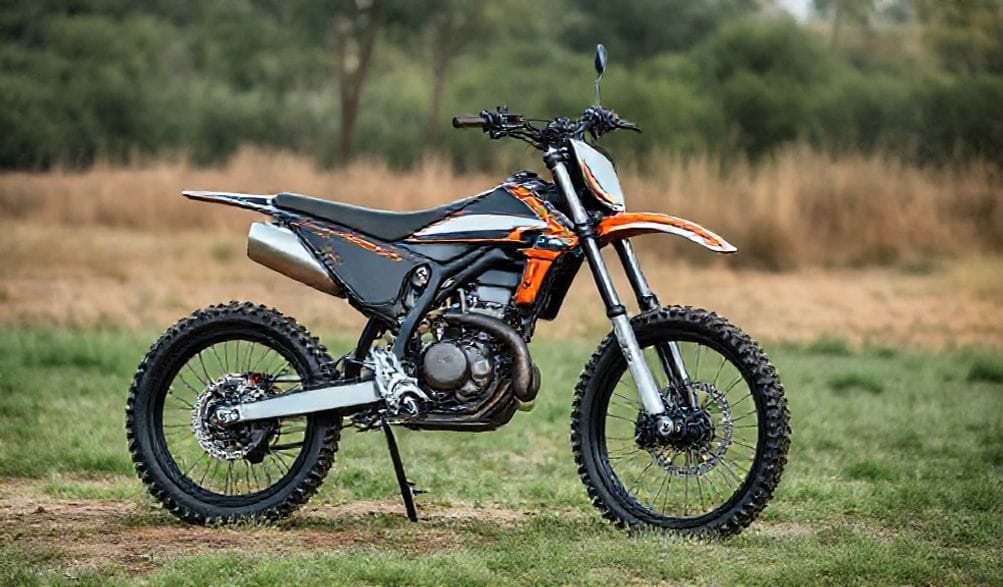
The Ultimate Guide to Electric Dirt Bikes: Power, Performance & Off-Road Adventure
The call of the trail is timeless—the smell of pine, the crunch of dirt under tires, the thrill of navigating a challenging climb. For generations, that call has been answered by the distinctive snarl of a gasoline engine. But a new sound, or rather, a profound quiet, is reshaping the off-road landscape. Welcome to the era of the moto tout-terrain électrique, a machine that swaps the roar for a whirr and the fumes for pure, instantaneous torque. This isn’t just a niche curiosity; it’s a high-performance revolution that’s winning over motocross champions, trail explorers, and eco-conscious adventurers alike.
If you’re intrigued by the idea of an electric bike with dirt bike style and capability, you’re in the right place. This guide is designed to cut through the hype and provide a comprehensive, grounded look at what electric dirt bikes offer. We’ll delve into the technology that powers them, the tangible benefits you’ll feel on the trail, the crucial factors to consider before buying, and an overview of the leading models defining this exciting category. Whether you’re a seasoned rider curious about “going electric” or a newcomer seeking a cleaner, quieter entry into off-road riding, consider this your trusted roadmap to silent, electric-powered adventure.
What is an Electric Dirt Bike? Defining a New Era of Riding
At first glance, an electric dirt bike looks the part: aggressive knobby tires, long-travel suspension, and a rugged motocross or enduro stance. But beneath the familiar silhouette lies a completely different heart. Understanding this distinction is key to appreciating what makes them special.
Beyond the Label: More Than Just a “Quiet Dirt Bike”
An electric dirt bike is a purpose-built, off-road motorcycle powered by an electric motor and a rechargeable lithium-ion battery pack. It is designed from the ground up to handle the rigors of motocross tracks, mountain single-track, and everything in between.
It’s critical to distinguish them from electric mountain bikes (e-MTBs). While both are electric and off-road capable, an e-MTB is fundamentally a bicycle with pedal assist, limited to lower power outputs (often 250W-750W), and is meant for human-powered trail riding with a boost. An electric dirt bike, however, is a throttle-controlled motorcycle. It delivers power measured in kilowatts (comparable to 10-50+ horsepower), features heavy-duty motorcycle-grade suspension with 8+ inches of travel, and is built for performance that directly rivals its gas-powered counterparts. The “electric bike dirt bike style” is not an imitation; it’s a reimagination of off-road power.
Core Components: How an Electric Dirt Bike Works
The simplicity of an electric drivetrain is its genius. It replaces hundreds of moving parts with a few key systems:
- The Battery Pack (The Fuel Tank): This is your energy source, typically a high-voltage (e.g., 60V, 72V, 102V) lithium-ion pack. Its capacity, measured in watt-hours (Wh), directly determines your range. Think of it as your gas tank—the bigger it is, the longer you can ride.
- The Electric Motor (The Muscle): Usually a brushless DC motor mounted near the swingarm or in the frame. This is where the magic happens. It converts electrical energy from the battery directly into rotational force (torque) at the wheel.
- The Controller (The Brain): This component manages the power flow from the battery to the motor. It interprets your throttle input and dictates how much power and torque is delivered. In a traditional bike analogy, it combines the roles of the carburetor/EFI and the ignition system.
- Regenerative Braking (A Clever Bonus): Many models feature regen braking. When you let off the throttle or apply the brakes, the motor temporarily acts as a generator, converting kinetic energy back into electricity to slightly recharge the battery. It also provides a noticeable engine-braking effect.
Why Go Electric? The Tangible Benefits for Off-Road Riders
The advantages of electric dirt bikes aren’t just theoretical; they translate into a distinctly different and often superior riding experience.
Instant Torque and Unmatched Control
This is the game-changer. A gas engine needs to build revs to produce peak torque. An electric motor delivers maximum torque instantly, from 0 RPM. The moment you twist the throttle, you have 100% of the bike’s pulling power. This transforms technical riding:
* Effortless Hill Climbs: Tractoring up steep, loose inclines becomes more controlled, as you have precise, linear power right from the start.
* Simplified Operation: Most have a single-speed transmission. No clutch, no stalling, no missed shifts. You focus entirely on riding, not gear management.
* Exact Throttle Modulation: The immediate, linear response allows for incredibly precise power delivery over obstacles, through corners, and on slippery surfaces.
The Joy of Stealth Riding: Access and Responsibility
The noise reduction is profound. The loudest sound is often the tires on the dirt and the wind. This “stealth” factor offers multiple benefits:
* Expanded Riding Access: Ride early in the morning or late in the evening near residential areas without disturbing the peace. Some trails previously closed due to noise complaints may become accessible.
* Reduced Trail Conflict: Share multi-use trails with hikers, bikers, and horseback riders more harmoniously. A quiet approach prevents startling others.
* Immersive Experience: Hear the sounds of nature, communicate easily with riding buddies, and enjoy a more connected, less intrusive adventure.
Lower Long-Term Maintenance & Operating Costs
Electric drivetrains are mechanically simple, eliminating a long list of routine maintenance items and consumables:
* No More: Engine oil changes, oil filters, air filter cleaning/replacement, spark plugs, coolant, clutch adjustments, or complex valve checks.
* “Fueling” Cost: Charging a battery costs a fraction of filling a gas tank. Expect to pay roughly 10-30 cents for a “full tank” of electricity versus $10-$15 for gasoline.
* Durability: With far fewer moving parts subject to wear and tear (no piston rings, valves, gears constantly meshing), the core powertrain is exceptionally robust.
Environmental Impact: A Cleaner Ride
The environmental benefit is clear and direct:
* Zero Local Emissions: No exhaust means no CO2, NOx, or unburned hydrocarbons are emitted on the trail. You leave behind only tire tracks.
* Reduced Overall Footprint: When charged from a renewable energy source (solar, wind, hydro), the carbon footprint is minimal. Even on a standard grid mix, it’s typically lower than a gas bike’s lifecycle emissions.
* Ecosystem Protection: No risk of spilling gasoline or oil into sensitive trailside ecosystems.
Key Considerations Before You Buy
Switching to electric requires a new way of thinking about your ride. Being honest about your needs is crucial.
Understanding Range and Battery Life Realistically
Range anxiety is the top concern, and manufacturer claims can be optimistic. Real-world range is affected by:
* Terrain : Hard-packed fire roads vs. technical, hilly single-track.
* Rider Input: Aggressive, throttle-happy riding drains the battery much faster than a conservative pace.
* Rider Weight and Gear: More mass requires more energy to move.
* Mode Settings: Eco/Trail modes extend range; Sport/MX modes maximize power but reduce it.
* As a rule of thumb: For aggressive trail riding, plan for 20-40 miles on most light-to-midweight bikes. Full-size performance models may offer 50-80 miles at moderate paces. Always plan your ride with a buffer.
Longévité de la batterie : Quality lithium batteries last 800-1500+ full charge cycles. With regular use, this typically means 3-5 years or more before you notice significant capacity loss. Replacement costs are significant ($800-$2500+), so factor this into long-term ownership.
Power and Performance Metrics: Decoding kW and Nm
Forget cubic centimeters (cc). Electric bike performance is measured in:
* Kilowatts (kW): The unit of power. 1 kW ≈ 1.34 horsepower. A 10kW bike has roughly 13.4 hp; a 30kW bike has about 40 hp.
* Newton-Meters (Nm): The unit of torque. This is the rotational force. High Nm (e.g., 250-500 Nm) means incredible low-end grunt and acceleration.
* Tension (V) : The system’s electrical pressure. Higher voltage (e.g., 72V vs. 60V) generally allows for more efficient power delivery and higher potential performance.
Suspension, Frame, and Build Quality
Electric power doesn’t excuse poor chassis components. A true “dirt bike style” machine needs:
* Quality Suspension: Look for adjustable, name-brand forks and shocks (e.g., DNM, Fast Ace, Öhlins on premium models) with sufficient travel (8+ inches) for your discipline.
* Robust Frame: Aluminum or chromoly steel frames are standard. Ensure the design looks well-finished and the battery is integrated securely.
* Freins : Hydraulic disc brakes are essential for control and managing the bike’s weight, which can be concentrated and feel different than a gas bike.
Where to Ride: Legalities and Trail Access
This is the most critical responsibility for any rider. The law is struggling to keep pace with this new technology.
* Classification Varies Wildly: In some jurisdictions, certain electric dirt bikes may be classified as “motor-driven cycles,” “off-highway vehicles (OHVs),” or even “motorcycles,” requiring registration, insurance, and a driver’s license. Others may lump lower-power models into e-bike categories with different rules.
* Trail Access is Not Universal: Just because it’s quiet doesn’t mean it’s legal. Many public trails (USFS, BLM, state parks) have specific rules about motorized vehicle use, and “electric” does not always mean “exempt.”
* Your Responsibility: You must check the specific regulations for your state and the exact trail systems you plan to ride. Start with the websites of your state parks department, Bureau of Land Management (BLM), and local off-road riding associations. Never assume access.
Top Electric Dirt Bike Styles & Models to Consider
The market has matured, offering options for every type of rider.
Lightweight Trail & Enduro Models
These are the agile, flickable bikes that have popularized the category. Perfect for tight single-track and technical trails.
* Examples: Sur-Ron Light Bee X, Talaria Sting R, Segway Dirt eBike X260.
* Profile: ~150 lbs weight, ~8-10 kW power, ~40-50 mph top speed. They feel like a hyper-capable mountain bike on steroids and are often the gateway into electric dirt biking.
Full-Size Performance Machines
These are direct competitors to 250cc-450cc gas dirt bikes, built for motocross, hard enduro, and high-speed trail riding.
* Examples: Zero FX, Cake Kalk OR, KTM Freeride E-XC, Stark Varg.
* Profile: 220-300 lbs weight, 20-45+ kW power, 70-85+ mph top speed. They feature premium motorcycle components, sophisticated suspension, and offer the closest experience to a traditional race bike, minus the noise and maintenance.
Youth and Entry-Level Options
Designed to introduce new riders to the sport safely and cleanly.
* Examples: Razor MX650, Kuberg Trial Hero, Sur-Ron Storm Bee (in lower power modes).
* Profile: Lower seat heights, reduced power output (often with multiple, parent-controlled modes), and durable construction to handle the learning curve.
Living with an Electric Dirt Bike: Ownership FAQs
How do I charge it on the trail or at a campsite?
Planning is key. For remote adventures:
* Portable Charger: Always carry the standard charger.
* Portable Power Station: Large-capacity lithium power stations (e.g., from Jackery, EcoFlow) can provide 1-2 full charges.
* Inverter Generator: A small, quiet inverter generator is the most reliable way to charge deep in the backcountry. Ensure it produces clean, stable power (pure sine wave).
Is it safe to ride in wet conditions or through water?
Check the bike’s Protection contre les Intrusions (IP) élevé.. Une cote de IP65 signifie qu'il est étanche à la poussière et protégé contre les jets d'eau à basse pression de toute direction — adapté à la pluie battante et aux flaques d'eau. Cependant, l'immersion n'est pas recommandée pour tout modèle standard, car elle peut endommager les joints et l'électronique. Procédez avec prudence dans les traversées d'eau profonde.
En quoi la répartition du poids diffère-t-elle de celle d'un moto à essence ?
C'est un avantage majeur pour la maniabilité. L'élément le plus lourd — la batterie — est monté bas dans le cadre, souvent au niveau du patin de protection. Cela crée un centre de gravité extrêmement bas. Le résultat est une moto qui se sent remarquablement stable, qui prend les virages avec moins d'effort et est moins susceptible de se renverser, surtout à basse vitesse, comparée à une moto à essence instable avec un réservoir de carburant et un moteur en hauteur.
Foire Aux Questions (FAQ)
Q : Quelle est la vitesse maximale d'une moto tout-terrain électrique ?
R : Les vitesses varient considérablement. Les modèles légers de type trail comme la Sur-Ron plafonnent autour de 70-80 km/h. Les motos de performance taille réelle comme la Stark Varg ou la Zero FX peuvent dépasser 135 km/h. La plupart ont des modes de conduite programmables ou sélectionnables qui limitent la vitesse de pointe.
Q : Combien de temps dure la batterie avant de devoir être remplacée ?
R : Une batterie lithium-ion de qualité délivrera typiquement 800 à 1500+ cycles de charge complets avant que sa capacité ne se dégrade à environ 80% de son état d'origine. Avec une utilisation régulière, cela se traduit par 3-5 ans ou plus des années de service avant d'envisager un remplacement, similaire à une batterie de voiture électrique.
Q : Les motos tout-terrain électriques sont-elles bonnes pour les débutants ?
R : Elles peuvent être excellentes. L'absence d'embrayage et de boîte de vitesses simplifie énormément l'opération, permettant aux nouveaux pilotes de se concentrer sur l'équilibre et le contrôle. Le fonctionnement silencieux est moins intimidant. Cependant, le couple instantané et puissant exige du respect. Les débutants doivent toujours commencer dans le mode de puissance le plus bas et s'entraîner au contrôle de l'accélérateur dans une zone sûre et dégagée.
Q : Puis-je convertir ma moto tout-terrain à essence en électrique ?
R : Bien qu'il existe des kits de conversion du marché secondaire, ce sont des projets d'ingénierie complexes et coûteux. Le produit final correspond rarement à la conception intégrée, à la répartition de poids optimisée, aux performances, à la fiabilité ou à la sécurité d'une moto tout-terrain électrique construite en usine. Pour la plupart des pilotes, ce n'est pas une voie pratique ou recommandée.
Conclusion
La moto tout-terrain électrique n'est plus un concept futuriste ; c'est une réalité actuelle offrant une alternative convaincante et performante pour l'enthousiaste du tout-terrain. Elle offre un mélange unique de puissance instantanée et contrôlable, d'accès discret aux sentiers et de possession simplifiée qui séduit tous les types de pilotes. La sensation viscérale de la conduite n'est pas diminuée — elle est amplifiée par un nouveau type de connexion avec la machine et l'environnement.
Votre voyage commence par une évaluation honnête de votre style de conduite principal, de l'autonomie souhaitée, des besoins en performance et de votre budget. Le bon modèle pour un coureur de motocross est différent de celui pour un explorateur de sentiers du week-end. Une fois que vous avez affiné votre choix, prenez l'étape la plus importante : trouvez un concessionnaire ou un événement et faites un essai. Ressentir cette poussée silencieuse et instantanée du couple est le seul moyen de vraiment comprendre la révolution.
Enfin, adoptez cette nouvelle ère de manière responsable. Soyez un ambassadeur du sport en recherchant méticuleusement et en suivant les réglementations locales, en respectant les règles d'accès aux sentiers, et en montrant qu'une aventure puissante et excitante peut coexister avec une empreinte plus légère. L'avenir de la conduite tout-terrain est là, et il est électrisant.
Appel à l'action : Prêt à en faire l'expérience par vous-même ? Recherchez un concessionnaire agréé pour un essai, consultez le site web officiel des parcs et de la faune de votre état pour des conseils juridiques définitifs, et rejoignez des forums en ligne réputés de propriétaires pour obtenir des informations pratiques et à long terme de la communauté des pilotes.
METADATA_START—
DISPLAY_TITLE : Le Guide Ultime des Moto Tout-Terrain Électriques : Puissance, Performance & Aventure
SEO_TITLE : Guide des Moto Tout-Terrain Électriques 2024 : Style, Performance & Conseils d'Achat
META_DESC : Vous envisagez un vélo électrique de style moto tout-terrain ? Notre guide ultime couvre la performance, les meilleurs modèles, l'autonomie et les considérations clés pour l'achat d'une aventure tout-terrain.
IMG_PROMPT : Un plan dynamique et plein d'action d'une moto tout-terrain électrique moderne et élégante au style agressif, prenant de l'air sur un saut en terre sur un sentier forestier, pilote en équipement complet, la lumière du soleil filtrant à travers les arbres, transmettant à la fois la puissance et l'aventure silencieuse et écologique.
—METADATA_END—