
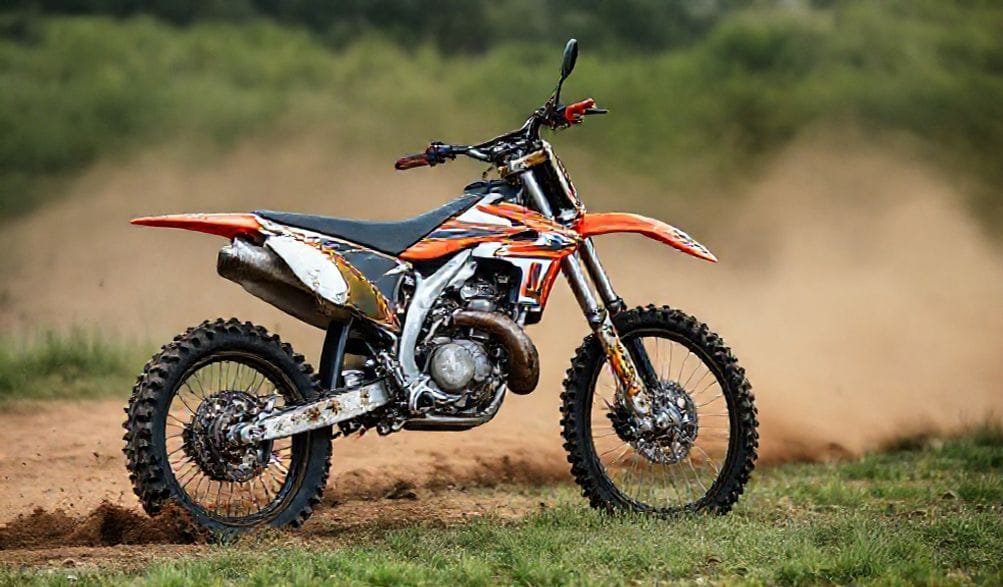
Motorbike vs. Dirt Bike: Understanding the Key Differences for Your Next Ride
You’re scrolling through listings or talking to friends, and the terms start flying: “motorbike,” “dirt bike,” “street bike,” “off-roader.” For a new rider or even an enthusiast looking to branch out, a fundamental question arises: What’s the real difference between a motorbike and a dirt bike? Aren’t they all just two-wheeled machines with an engine?
This common point of confusion can lead to a costly mistake—buying a machine utterly unsuited for your intended adventure. Drawing on decades of collective riding experience, mechanical expertise, and safety training, this guide is crafted to cut through the noise. Whether you’re trying to choose your first bike, understand the terminology, or simply satisfy your curiosity, we’re here to help.
This comprehensive comparison will dissect the motorbike vs. dirt bike debate from every angle. We’ll delve into their core designs, engineering purposes, legal landscapes, and true costs of ownership. By the end, you’ll have a clear roadmap to make an informed, confident decision for your next two-wheeled journey.
Core Definitions: What Are We Really Talking About?
Before we compare, we need to clarify. The terminology can be regional and overlapping, but in the context of this motorbike dirt bike comparison, we’ll define them by their intended purpose.
What is a Motorbike? (The Road-Legal Standard)
- Definition: In this guide, a “motorbike” (often used interchangeably with “motorcycle” or “street bike”) refers to a two-wheeled motor vehicle designed and certified for use on public paved roads.
- Primary Purpose: Transportation and recreation on paved surfaces. Its core mission is to efficiently, safely, and comfortably move a rider from Point A to Point B via public roadways, whether that’s a daily commute, a cross-country tour, or a weekend cruise through the hills.
- Key Identifying Features: Look for equipment mandated by law: headlights, tail lights, turn signals, mirrors, a horn, a speedometer/odometer, and a license plate mount. Its design prioritizes asphalt performance, rider comfort for seated positions, and integration with traffic.
What is a Dirt Bike? (The Off-Road Specialist)
- Definition: A dirt bike is a lightweight motorcycle specifically engineered for operation on unpaved terrain. Terms like “off-road motorcycle,” “motocross bike,” or “林道车” fall under this umbrella, with nuances for competition versus recreation.
- Primary Purpose: Recreation and sport on natural or constructed off-road surfaces. Its reason for being is to tackle dirt, mud, sand, gravel, and rocky trails. It’s built for agility, impact absorption, and rider control in challenging, non-paved environments.
- Key Identifying Features: The most obvious sign is its large, knobby tires designed to dig into loose surfaces. It has high ground clearance, long-travel suspension, a minimalist body (often lacking street-legal equipment like lights and mirrors), and a lightweight frame.
Head-to-Head Comparison: Design and Engineering
This is where the “tool for the job” philosophy becomes crystal clear. Every major component is optimized for a completely different world.
Frame, Suspension, and Handling
- Motorbike: The frame is built for stability at sustained high speeds on smooth pavement. Suspension travel is relatively short and stiff, optimized for handling cornering forces and minor road imperfections, not large jumps. The riding geometry balances comfort with precise steering input on asphalt.
- 越野摩托车: The frame is lightweight and nimble, allowing for quick changes in direction. The suspension is the star—it features long-travel forks and shock(s) that can absorb massive impacts from jumps, rocks, and ruts. This allows the wheels to stay in contact with uneven ground, maintaining traction and control.
Tires and Traction
- Motorbike: Equipped with smooth or lightly grooved “street” tires made of harder rubber compounds. Their wide, flat profile maximizes contact with asphalt for cornering grip and braking. They are disastrous in mud or loose dirt.
- 越野摩托车: Fitted with deep, widely spaced, knobby tires. These “knobbies” are designed to bite into and claw through soft, loose, or slippery surfaces like dirt, sand, and mud. They provide minimal contact patch on pavement, making them feel vague, unstable, and wear out extremely quickly on asphalt.
Engine and Performance Characteristics
- Motorbike: Engines are tuned for a broad, usable power band. They prioritize smooth power delivery for accelerating from a stoplight, cruising comfortably at highway speeds, and having power in reserve for passing. Many feature multiple gears closely spaced for this purpose.
- 越野摩托车: Engines are tuned for explosive torque and quick acceleration. The focus is on low-end and mid-range power to blast out of corners, climb hills, and navigate technical terrain. Motocross bikes, in particular, have “peaky” powerbands that come on strong in a specific RPM range. They are lightweight and rev quickly.
Weight and Ergonomics
- Motorbike: Typically heavier due to more components (lights, gauges, larger fuel tanks, fairings) and a focus on solidity at speed. Riding positions vary wildly: upright (standard), leaned forward (sport), leaned back (cruiser), or tall/neutral (adventure).
- 越野摩托车: Lightweight is paramount for control when manhandling the bike over obstacles. The ergonomics are designed for active riding: a narrow seat, tall handlebars, and footpeg placement that allows the rider to stand up comfortably. Standing is a fundamental technique for off-road control, allowing the legs to act as extra suspension.
Purpose, Legality, and Where You Can Ride
This is the most critical practical distinction and where confusion can have legal consequences.
The Roadway Domain of the Motorbike
A motorbike’s natural habitat is the public road network. To operate one legally, you must satisfy government requirements:
* 牌照要求: A motorcycle license (M-class endorsement) is mandatory, obtained by passing written and on-bike tests.
* Registration & Insurance: The vehicle must be registered with the state and carry minimum liability insurance.
* DOT-Approved Equipment: Every component required for road use—lights, tires, mirrors—must meet Department of Transportation (or equivalent) safety standards.
* Typical Use Cases: Commuting, highway touring, sport riding on twisty roads, cruising, and urban mobility.
The Off-Road Playground of the Dirt Bike
纯种越野摩托车专为封闭赛道和指定越野区域设计。.
* 公共道路合法性: 在原厂状态下,, 它们通常不具备道路合法性。. 它们缺少必要的设备(灯光、信号灯等),且其轮胎未通过适用于铺装路面的DOT认证。.
* Typical Use Cases: 越野摩托车赛道、越野小径系统、耐力赛、林地越野赛以及私人土地。.
* 使越野摩托车具备道路合法性(双运动/探险车型):
这是一个常见问题。该过程涉及加装全套灯光套件、喇叭、后视镜以及DOT认证的轮胎/设备,然后通过州级检查以获得道路合法所有权。. 此过程复杂,各州及国家间差异巨大,且对于专注于竞赛的车型通常无法实现。. 一个简单得多的途径是购买工厂制造的专用 双运动 或 探险摩托车。 这些摩托车出厂即具备道路合法性,同时具备适合越野的人体工程学设计、悬挂系统和轮胎,提供了真正的混合解决方案。.
成本考量:购置与维护
资金投入远不止于展厅内的购车款。.
初始购买价格
- Motorbike: 价格范围很广。你可以找到几千美元的小型二手街车,或售价远超20,000美元的新款高性能车型。品牌、发动机排量和技术是主要的价格驱动因素。.
- 越野摩托车: 通常,入门级和中端越野摩托车的初始购置成本可能低于同级别的街车。一辆新的250cc林道车起价可能低于一辆新的500cc街车。然而,高端的竞赛级越野摩托车价格不菲。.
维护与使用成本
- Motorbike: 遵循标准维护计划(换机油、调整链条、更换刹车油等)。轮胎更换是一项主要开销,高性能公路轮胎价格昂贵,但在正常道路使用下可行驶数千英里。.
- 越野摩托车: 要求 频率更高、强度更大的维护。. 发动机在尘土飞扬、高转速环境下承受压力,需要频繁更换机油和空气滤清器。由于越野骑行具有高磨损、高冲击的特性,轮胎、悬挂部件、链条和链轮磨损速度要快得多。对于活跃的骑手来说,重建前叉和减震器是常规的养护内容。.
装备与安全成本
安全装备是必须的,但类型有所不同。.
* 街车装备: 侧重于高速沥青路面滑行时的耐磨性和冲击保护。包括全盔、带护甲的皮革或纺织面料夹克/裤子、长款手套以及坚固的过踝靴。.
* 越野摩托车装备: 专为较低速度但更恶劣环境下的摔车设计。包括越野头盔(通常带有遮阳帽檐和不同的护目镜以防飞溅物)、风镜、骑行衫、带衬垫的裤子、护膝/护胫、, 胸甲、, 护肘,以及提供强大踝部支撑和防滑鞋底以利站立的专业越野靴。.
为您选择合适的摩托车:实用指南
暂时忘掉品牌或炫酷因素。先问自己这些根本问题:
- 我90%的时间会在哪里骑行? (答案应100%决定你的选择。)
- 我的主要目标是什么? (实用通勤、周末山路压弯、小径探索、还是越野摩托车竞赛?)
- 我的技能水平如何? (务必诚实。动力过大的摩托车是一位糟糕的启蒙老师。)
- 我的总预算是多少? (包括对装备、保险、维护和修理费用的现实估算。)
推荐场景
- 选择街车,如果: 你的主要需求是日常通勤,你梦想长途公路旅行,你喜欢铺装路面过弯的刺激,或者你将只在公共道路上骑行。.
- 选择越野摩托车,如果: 你有合法途径进入小径、赛道或私人土地,你追求越野技术骑行或跳跃带来的肾上腺素激增,并且你的重点纯粹是休闲运动。.
- 考虑双运动/探险摩托车,如果: 你想要一台既能合法通勤, 及 explore forest service roads or light trails on the weekend. It’s the “best compromise” for mixed use but a master of neither extreme.
常见问题解答
Q1:能在街道上骑越野摩托车吗?
答: 通常不能。大多数纯种越野摩托车并非为满足道路合法标准(灯光、信号灯、喇叭、DOT轮胎等)而制造。它们有时可以通过改装和认证,但此过程监管严格、费用高昂,且不能保证在所有司法管辖区都成功。.
Q2:骑越野摩托车和街车哪个更难?
答: 它们带来不同的挑战。越野骑行对体力要求更高,需要在松散、不可预测的路面上保持持续平衡、油门控制和“身体操控”。街道骑行则要求在交通中具备高度的情境意识,掌握更高的速度,并在高抓地力(但也更 unforgiving)的路面上进行精确控制。对于两者而言,在受控环境(街道骑行参加MSF课程,越野骑行参加骑行学校)中,从一辆合适的低功率摩托车开始是成功的关键。.
Q3:越野骑行和街道骑行哪个更危险?
答: 风险特征不同。街道骑行引入了其他车辆、道路杂物和更高撞击速度的主要危险,事故往往导致更严重的伤害。越野骑行事故由于具有挑战性的地形而更频繁,但通常发生在较低速度且无交通参与的情况下,不过因撞击地面或物体而造成严重伤害的可能性绝对存在。. 适当的培训、防护装备以及在能力范围内骑行,对这两种骑行方式都至关重要。.
Q4: What’s the best bike for a complete beginner?
答: It’s entirely terrain-dependent.
* 对于越野新手: 从一个安全、开阔的区域开始,使用一台小排量、易于驾驭的林道车(例如125cc-250cc四冲程)。.
* 对于街道新手: 从一辆轻量、低功率的摩托车开始(例如250cc-500cc),并 立即报名参加摩托车安全基金会(MSF)或同类型的新手课程。.
Q5:执照要求一样吗?
答: 要在公共道路上 驾驶任何摩托车,, 你需要标准的摩托车驾照(M类签注)。仅在私人土地或封闭赛道上骑行越野摩托车不需要政府颁发的驾照,但强烈建议接受专业培训以确保安全。.
结论
这场讨论的核心要点在于 motorbike vs. dirt bike “专车专用”原则。一种是专为铺装路面世界设计的精密仪器,合法上路,旨在柏油路上实现稳定与高速。另一种则是坚固、敏捷的专家,为征服非铺装地形而生,在其合法上路的“表亲”举步维艰的环境中游刃有余。.
This guide, rooted in practical expertise and a paramount concern for rider safety, aims to empower your decision. The right choice isn’t about which machine is “better”—it’s about which is better for you, your goals, and the terrain you’ll actually ride.
您的下一步? 亲身实践。. 参加与您兴趣相关的安全课程。走访经销商,亲身试坐不同车型。与两个领域的资深骑手交流。完美的座驾就在那里,静待与您的雄心匹配。准备好探索具体车型了吗?您深入初学者街车或强悍越野车世界的旅程,将从这些基础知识开始。.
METADATA_START—
DISPLAY_TITLE: Motorbike vs. Dirt Bike: The Rider’s Ultimate Comparison Guide
SEO_TITLE: 摩托车 vs. 越野摩托车:关键区别、合法性及如何选择
META_DESC: 在摩托车和越野摩托车之间犹豫不决?我们的详细指南对比了设计、用途、合法性和成本,助您根据骑行目标选择合适的两轮机器。.
IMG_PROMPT: 分屏图像,对比一辆流线型合法上路的摩托车行驶在铺装道路,与一辆坚固的越野摩托车在森林小径上扬起尘土,突出展示其轮胎、悬挂等关键设计差异,照片级真实感,动态抓拍。.
—METADATA_END—