
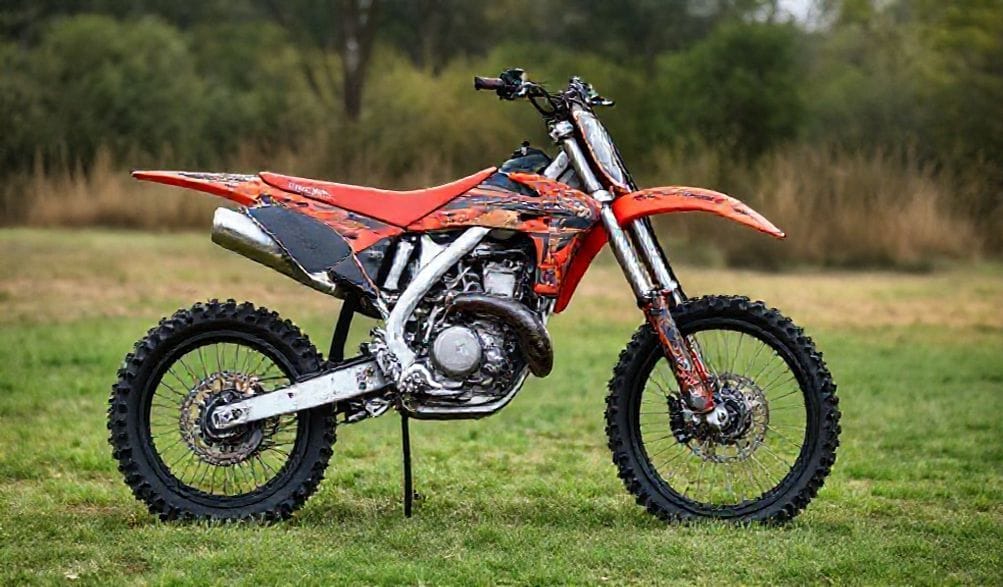
Finding a Reliable Dirt Bike for $500: A Realistic Guide for Beginners
Pendahuluan
The dream is universal: the freedom of the trails, the thrill of the ride, all without breaking the bank. It’s why searches for a “300 dollar motor trail” atau “dirt bikes for 500” are incredibly common among hopeful new riders and budget-conscious parents. This guide is written directly for you. We’re here to address that search intent with a heavy dose of honesty and years of hard-earned mechanical expertise.
Let’s be clear from the start: finding a safe, functional, and reliable dirt bike at this price point is a significant challenge. It’s the bargain-hunter’s extreme sport. But with the right knowledge, a sharp eye, and managed expectations, it’s not impossible. This isn’t just a list of bikes for sale; it’s a practical roadmap built on real-world experience. Our core mission is to steer you away from dangerous money pits and toward a smart, safe purchase that leads to genuine enjoyment. We adhere to a simple principle: safety and long-term value must always trump a tempting, too-good-to-be-true price tag. Let’s begin by understanding the landscape you’re about to enter.
Understanding the Real-World Market for Budget Dirt Bikes
Before you open a single marketplace app, you need a firm grasp on what $500 truly means in the world of dirt bikes. This isn’t about pessimism; it’s about setting a strategic foundation for your search.
The Truth About “New” Dirt Bikes Under $500
If you see an ad for a brand-new dirt bike priced at $300-$500, proceed with extreme caution. Legitimate, name-brand entry-level models from Honda, Yamaha, Kawasaki, or KTM start at nearly triple that price for a reason—engineering, materials, and safety testing cost money.
The bikes you’ll find in this ultra-cheap “new” category are typically generic, no-name brands sold on Amazon, Walmart, or other big-box retailers. From hands-on experience, these machines are fraught with risk:
- Poor Materials: Components like levers, footpegs, and frame welds are often made from brittle, low-grade metals and plastics that can snap under stress.
- Zero Parts Support: When (not if) something breaks, finding a replacement brake lever or clutch cable can be a nightmare. There’s no dealership network or standardized parts diagrams.
- Serious Safety Concerns: We’ve seen everything from throttles that stick open, to brake lines that fail, to front forks that buckle on light impacts. These are not minor inconveniences; they are crash-inducing failures.
The Experience Bottom Line: That $300 new bike will almost certainly cost you another $400 in immediate repairs, upgrades, and frustration, assuming you can even find the parts. It’s a false economy.
The Pre-Owned Market: Your Primary Hunting Ground
For a $500 budget, the used market is your only viable arena. This is where patience and knowledge become your greatest assets. A used bike from a reputable brand, even if it’s 15 years old, is almost always a better investment than a new generic bike.
To set expectations, here are typical price ranges (varying heavily by region) for common, durable entry-level bikes in different conditions:
- Project/Non-Running: $100 – $300. A major gamble requiring mechanical skill.
- Running, but Needs Work: $300 – $600. This is your target zone. The bike starts and moves, but will require immediate safety and maintenance items (tires, chain, brakes).
- Good, Ready-to-Ride Condition: $800 – $1,500+. A bike in this category is usually outside the strict $500 budget but represents a significantly better starting point.
Your mission is to find a diamond in the “Running, but Needs Work” rough. The key is knowing what to look for.
Critical Pre-Purchase Inspection Checklist (Expertise in Action)
This is the most important section. Never buy a used dirt bike based on photos or promises alone. Always inspect it in person. Bring a friend, a flashlight, and this checklist.
Safety-First Mechanical Inspection
Start with the fundamentals that keep the bike (and you) in one piece.
- Frame & Fork: Run your hands along the frame tubes, especially near welds and engine mounts. Look for any cracks, deep rust, or obvious bends. Check the front forks for straightness and any signs of major oil leakage.
- Roda & Ban: Spin both wheels. They should spin freely without wobbling side-to-side (a “wobble” indicates a bent rim). Squeeze spokes; none should be loose or missing. Tires should have decent tread left and no deep cracks or gashes.
- Rem: Pull the front brake lever and press the rear brake pedal. They should feel firm, not mushy or go all the way to the handlebar/grip. Visibly check brake pad thickness through the caliper and look at the rotor/drum for deep grooves.
- Suspensi: Push down hard on the handlebars and the seat. The suspension should compress and rebound smoothly without making nasty squeaking or clunking sounds. Look for oil residue on the fork seals or shock body.
Engine & Drivetrain Health Assessment
Now, assess the heart of the machine.
- The Cold Start: This is non-negotiable. You must hear the bike start from completely cold. A bike that “just needs a carb clean” often has deeper issues. Listen for excessive rattling, knocking, or screeching.
- Smoke & Leaks: As it starts and idles, look at the exhaust. A little white smoke (condensation) is normal. Blue smoke means the engine is burning oil—a sign of worn piston rings or valve seals, a potentially expensive fix. Look under the bike for fresh puddles or significant oil coating the engine cases.
- Transmission: With the bike warmed up and the clutch pulled in, click through the gears. It should shift without loud clunks or refusing to engage. Test the clutch engagement; it should be smooth, not grabby or slipping.
- **Rantai & Sproket:** A worn drivetrain is a telltale sign of neglect. Look at the rear sprocket teeth. If they are hooked or sharp like shark fins, it’s worn out. A rusty, stiff, or overly loose chain also needs replacement.
The All-Important Test Ride (If Possible)
If the seller allows and you are in a safe, open area, a short test ride is invaluable.
- Rem: Test them at low speed. Do they stop the bike effectively and evenly?
- Respons Throttle: Is it crisp, or does the engine bog or hesitate?
- Handling: Does the bike track straight, or does it pull to one side (indicating a bent frame or fork)?
- Listen: Beyond the engine, listen for clunks from the suspension, grinding from the brakes, or rattles from loose parts.
The Best “Budget-Friendly” Dirt Bike Models to Look For
Your $500 will go furthest if you target known, reliable platforms. These bikes were over-engineered for durability, and parts are still plentiful and affordable.
Trusted Entry-Level Models (Older Years)
Focus your search on these workhorses. A well-maintained example from the early 2000s is a far wiser purchase than a flashy, unknown bike from last year.
- Honda: The king of reliability. Look for the XR50R, XR70R, XR100R, atau varian yang lebih baru CRF50F, CRF70F, CRF100F. Sepeda motor berpendingin udara dan empat langkah ini sederhana, tangguh, dan mudah dikerjakan.
- Yamaha: Merek unggulan lainnya. PW50 adalah sepeda motor ikonik untuk pemula. TTR-90, TTR-110, dan TTR-125 adalah mesin empat langkah yang fantastis dan ramah untuk jalur trail.
- Kawasaki: The KLX110 is a direct competitor to Honda’s CRF and Yamaha’s TTR line, known for its great suspension and bulletproof engine.
Putusan Ahli: A 2005 Honda XR100 that needs a new chain and tires is a superior project to a 2022 “Amazon Special” that’s never been ridden.
Pit Bike dan Mini Bike: Catatan Peringatan
You’ll see many small “pit bikes.” There’s a crucial distinction:
* Mini Bike Bermerek: Seperti Honda CRF50 atau Yamaha PW50. Ini adalah sepeda motor berkualitas yang dibuat dalam skala lebih kecil.
* Pit Bike Generik: Seringkali merupakan klon buatan China dari desain Honda.
Kelebihan: Harganya jelas lebih murah di awal dan bisa menyenangkan untuk penggunaan santai berkecepatan rendah.
Kekurangan (Berdasarkan Pengalaman): Kontrol kualitas seperti lotere. Baut mudah rusak, sistem kelistrikan tidak andal, dan meskipun suku cadang tersedia secara online, menemukan right untuk model spesifik Anda bisa merepotkan. Nilai jualnya jarang bertahan.
Mempertimbangkan Biaya Tersembunyi dari Sepeda Motor $500
Di sinilah kepercayaan dibangun—dengan sejujur-jujurnya tentang biaya sebenarnya. Harga pembelian hanyalah biaya masuk.
Immediate “Must-Do” Repairs and Maintenance
Anggap saja sepeda motor $500 baru Anda membutuhkan hal berikut untuk keselamatan dan keandalan dasar. Anda bisa melakukan beberapa pekerjaan sendiri untuk menghemat uang.
- Penggantian Cairan: Oli mesin, filter, dan cairan pendingin (jika berpendingin cair). ~$30-$50
- Filter Udara: Bersihkan atau ganti. ~$15-$25
- Set Rantai & Sproket: Jika sudah aus. ~$60-$120
- Ban & Tube: Jika retak atau botak. ~$100-$200+
- Kampas Rem/Cairan Rem: ~$30-$60
- Lain-lain: Grip, tuas, kabel. ~$20-$50
Realistic Immediate Investment: $200 – $500+. Inilah alasan mengapa sepeda motor $300 jarang tetap menjadi sepeda motor $300.
Perlengkapan Keselamatan Penting: Pengeluaran yang Wajib
Anggaran ini terpisah dari sepeda motor dan tidak bersifat opsional. Anda bisa menemukan perlengkapan bekas berkualitas, tetapi jangan pernah membeli helm bekas.
- Helm (bersertifikat DOT/SNELL): ~$100-$250
- Kacamata: ~$30-$60
- Sarung Tangan: ~$20-$50
- Sepatu Boot (Motocross/Off-Road): ~$100-$250+
- Pelindung Dada/Jersey/Celana: ~$100-$200+
Gear Investment: $350 – $800+. Melindungi tubuh Anda jauh lebih penting daripada sepeda motor yang Anda kendarai.
Tempat Mencari dan Cara Menawar
Platform Terbaik untuk Mencari Penawaran
- Facebook Marketplace: The most active. Use saved searches for model names (e.g., “XR100”, “TTR125”).
- Craigslist: Masih merupakan sumber yang layak, seringkali dengan gangguan yang lebih sedikit.
- Forum/Klub Motocross Lokal: Sumber terbaik untuk sepeda motor yang terawat baik dari pengendara yang berpengetahuan.
Mengenali Penipuan: Avoid deals where the seller can’t meet in person, rushes you, or asks for payment upfront. “Title in hand” is a major plus.
Strategi Negosiasi yang Cerdas
Pemeriksaan Anda adalah kekuatan tawar Anda. Bersikaplah sopan tetapi faktual.
- Manfaatkan Daftar Periksa Anda: “I’m really interested, but I noticed the chain and sprockets are completely shot, and the tires are cracked. I’ll need to put about $200 into it right away. Would you consider $400?”
- Uang Tunai adalah Raja: Datang dengan membawa uang tunai pas di tangan adalah motivator yang kuat bagi penjual.
- Bersiaplah untuk Mengundurkan Diri: Jika sepeda motor memiliki cacat fatal (rangka retak, asap tebal) atau penjual tidak masuk akal, tinggalkan. Akan ada sepeda motor lain yang muncul.
Bagian FAQ
T: Bisakah saya benar-benar mendapatkan dirt bike yang aman dengan harga $300?
J: Sangat sulit dan berisiko. Pada harga itu, sebuah sepeda motor hampir pasti membutuhkan investasi tambahan yang signifikan untuk perbaikan dan suku cadang terkait keselamatan agar dapat dipercaya. Total biaya keseluruhan Anda sangat mungkin mencapai atau melebihi $500.
T: Apa masalah paling umum dengan dirt bike murah?
J: Neglect. The lack of basic maintenance—oil changes, air filter cleaning, and chain adjustment—leads to accelerated engine and drivetrain wear. This neglect is far more costly to fix than the maintenance ever was.
T: Apakah mesin 2-tak atau 4-tak lebih baik untuk sepeda motor pertama yang murah?
J: Untuk pemula mutlak dengan anggaran terbatas dan pengalaman mekanik yang minim, mesin 4-tak (seperti XR atau TTR) umumnya adalah rekomendasi yang lebih aman. Pengiriman tenaganya lebih mudah dikendalikan dan linear, lebih mudah dikendarai, serta seringkali lebih sederhana dan lebih murah untuk perawatan dasar.
T: Berapa total anggaran yang harus saya siapkan untuk sepeda motor trail bekas pertama saya?
J: Untuk mempersiapkan kesuksesan Anda, total anggaran awal yang lebih realistis adalah $800-$1,200. Ini memungkinkan untuk mendapatkan motor seharga $500-$800 serta perawatan mendesak yang penting dan perlengkapan keamanan wajib.
T: Haruskah saya menabung lebih banyak uang saja?
J: If your primary goals are safety, reliability, and immediate fun without the “project” phase, then ya, menabung lebih banyak adalah saran terbaik. Anggaran sebesar $1.200-$1.800 untuk motornya saja akan membuka dunia model-model yang lebih baru, terawat baik, siap kendarai dari merek terpercaya, memberikan pengenalan yang jauh lebih baik dan tidak terlalu membuat stres terhadap olahraga ini.
Kesimpulan
Pencarian sepeda motor trail andal sekitar $500 adalah ujian kesabaran, riset, dan kecermatan mekanik. Ini adalah proyek yang bisa sangat berharga bagi orang yang tepat. Dengan secara strategis memfokuskan pencarian pada model-model tua yang dibangun dengan baik dari merek terpercaya dan melakukan inspeksi ketat yang berfokus pada keamanan, mesin yang layak memang dapat ditemukan.
Ingatlah prinsip panduan ini: harga yang tertera hanyalah awal dari cerita keuangan. Biaya sebenarnya mencakup pekerjaan penting untuk membuat motor layak jalan dan investasi kritis pada perlindungan diri Anda. Perjalanan ini membutuhkan perpaduan belanja cerdas dan kehati-hatian mekanik. Dengan memprioritaskan rekayasa yang solid dan keamanan di atas tampilan mengilap dan murah, Anda meletakkan fondasi yang tepat. Fondasi itu—meski sudah berusia satu dekade—adalah yang benar-benar membuka kegembiraan dan kebebasan berkendara yang abadi.
METADATA_START—
DISPLAY_TITLE: Finding a Reliable Dirt Bike for $500: A Realistic Beginner’s Guide
SEO_TITLE: Can You Get a Safe Dirt Bike for $300? A Realistic Buyer’s Guide
DESK_META: Mencari sepeda motor trail $300? Panduan ahli kami mengungkap kebenaran tentang pasar anggaran, daftar periksa inspeksi kritis, biaya tersembunyi, dan cara sebenarnya menemukan sepeda motor trail bekas yang aman dan andal sekitar $500.
PROMPT_IMG: Close-up detail sepeda motor trail Honda XR100 klasik yang sedikit aus, dengan tangan mekanik bersarung menunjuk ke rantai dan sproket untuk memeriksa keausan. Motor berada di bengkel garasi dengan perkakas di latar belakang, cahaya matahari menyelinap masuk. Fotorealistis, fokus tajam.
—METADATA_END—