
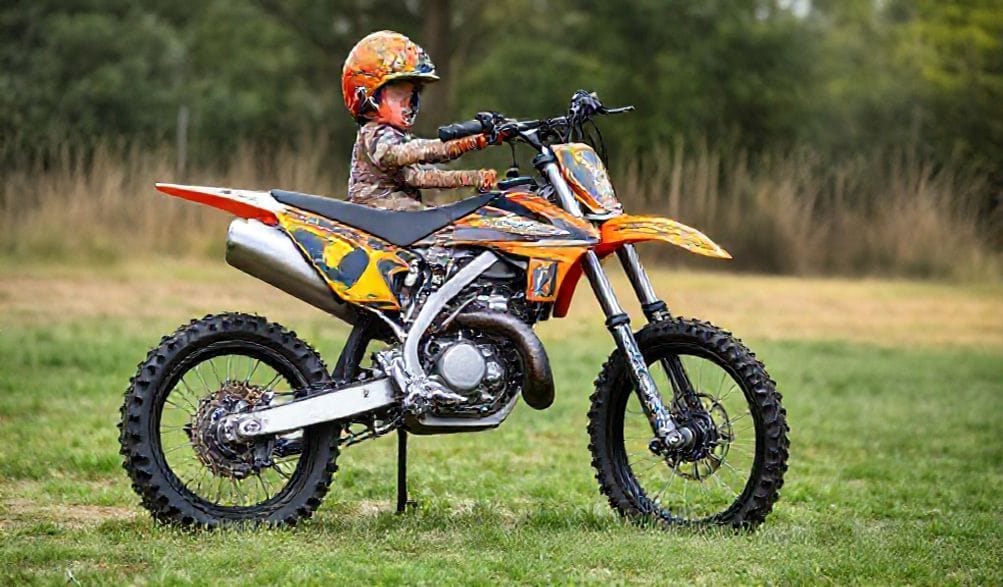
The Ultimate Parent’s Guide to Choosing a Dirt Bike for a 12-Year-Old (2024)
You see it in their eyes—that spark of excitement mixed with a dash of nervous anticipation. Your child is ready. They’ve outgrown the mini-bike and are looking at you, asking for a “real” motor trail. As a parent, your heart swells with pride, but it’s quickly followed by a wave of questions and concerns. Which bike is safe? What size is right? How do I know I’m making the best choice?
Take a deep breath. You’re not alone. This pivotal moment is a rite of passage for countless families, and getting it right is about blending that thrill of adventure with unwavering responsibility. This guide is designed to be your trusted roadmap. We’ll cut through the noise and provide clear, expert-backed advice to help you navigate the purchase of a dirt bike for a 12-year-old. We’ll cover everything from engine sizes and bike fit to top brands and non-negotiable perlengkapan keselamatan, all with one core principle in mind: Safety and proper fit are paramount. Let’s ensure this next step is confident, informed, and, above all, safe.
Understanding the Basics: Engine Size and Bike Type
Before you fall in love with a particular color or brand, you need to understand the fundamental mechanics. The engine and the bike’s design are the heart of your decision, directly impacting safety and enjoyment.
Why Engine Size (cc) is Critical for Safety
The “cc” (cubic centimeters) refers to the engine’s displacement. For a 12-year-old, common entry points are:
- 110cc-125cc: The ideal starting point for most beginners. These bikes offer manageable power for learning fundamental skills like clutch control, braking, and balance without being intimidating.
- 140cc-150cc: A great step-up for a rider with a season or two of experience, or a taller, more athletic beginner. They offer more power and torque for varied terrain.
A critical decision you’ll encounter is the engine cycle:
- 4-Stroke Engines: The standard for beginners. They provide smooth, predictable, and linear power delivery. Think of it as a steady pull. They are generally quieter, more fuel-efficient, and easier to maintain, making them the perfect learning platform.
- 2-Stroke Engines: Known for their “hit” of power—a sudden surge of acceleration when the engine reaches a certain RPM. They are lighter and have a simpler design but require more precise throttle control. These are typically better suited for experienced young riders moving into motocross.
Expert Advice: Do not be tempted to buy “a bike they can grow into” by choosing one that is too powerful. A bike with excessive power can overwhelm a new rider, leading to dangerous situations, a loss of confidence, and a stalled passion. Matching the engine size to the rider’s current skill level is the single most important safety decision you can make.
Dirt Bike vs. Pit Bike: What’s the Difference?
You’ll hear both terms, and the distinction matters for how and where your child will ride.
- Full-Size Youth Dirt Bike: These are scaled-down versions of adult machines, designed for serious trail riding or motocross. They have larger wheels (common sizes are 19-inch front/16-inch rear or 17-inch front/14-inch rear), full suspension travel, and more ground clearance. They are built for performance and handling over varied, challenging terrain.
- pit bike: Smaller, often with 10-inch to 14-inch wheels, and a more compact frame. They are fantastic for learning the very basics in a controlled environment, backyard play, or as a fun pit vehicle. However, they lack the suspension and stability for serious trail or track use.
Which is right? If your goal is trail riding at parks or learning motocross on a track, a purpose-built youth motor trail is the only safe choice. If you have private land for casual riding, a pit bike can be a fun supplement.
The #1 Rule: Getting the Fit Right
A bike that is too tall or too heavy is unsafe and un-fun. A bike that is too small will be outgrown in months. Proper fit is non-negotiable.
How to Measure Your Child for a Dirt Bike
Forget age recommendations. Go by measurements.
- Inseam: Have your child stand against a wall in their socks. Place a book snugly between their legs, spine up. Measure from the top of the book to the floor. This is their inseam.
- Tinggi Jok: This is the bike’s spec you’ll compare to. A good rule of thumb is that your child’s inseam should be at least 1-2 inches greater than the bike’s seat height.
Quick Reference Chart:
| Rider Height | Approx. Inseam | Suggested Wheel Size | Example Engine Sizes |
| :— | :— | :— | :— |
| 4’5″ – 4’10” | 24″ – 28″ | Small-Wheel (17″/14″) | 110cc, 125cc |
| 4’8″ – 5’2″ | 26″ – 30″ | Big-Wheel (19″/16″) | 125cc, 140cc, 150cc |
The “Sit Test” and Reach Check
Whenever possible, have your child sit on the bike.
* Stand-Over Height: They should be able to stand over the bike with both feet flat on the ground, with a slight bend in the knees. Being on their toes is a sign the bike is too tall.
* Reach: Their arms should be slightly bent when holding the handlebars, and they should be able to operate the clutch and brake levers comfortably without stretching.
Top Dirt Bike Brands for Young Riders (2024 Overview)
Sticking with established brands ensures quality, safety, and support.
Trusted Names in Youth Motorsports
- Honda (CRF Series): The gold standard for reliability. The CRF110F and CRF125F are legendary for their bulletproof 4-stroke engines, low maintenance, and electric start options. They inspire confidence in new riders.
- Yamaha (TT-R and YZ Series): The TT-R line (like the TT-R110E and TT-R125LE) is Honda’s direct competitor, known for similar reliability and user-friendly features. The YZ series are performance-oriented 2-strokes for experienced junior racers.
- Kawasaki (KLX Series): The KLX110 and KLX140 are fantastic options, often praised for their smooth power and robust suspension. They offer great value and capability.
- KTM (SX Series): The European choice for performance. The 85 SX and 65 SX are high-performance 2-strokes for competitive junior motocross. They are lighter and more powerful but demand more skill and maintenance.
Why Brand Matters: These brands have extensive dealer networks. This means easy access to genuine parts, qualified service technicians, and often, rider support programs. This infrastructure is invaluable for a family new to the sport.
Baru vs. Bekas: Uraian Praktis
- Kelebihan Sepeda Baru: Full manufacturer warranty, latest safety features, known history, and that unbeatable “first owner” feeling. It’s a turn-key solution for peace of mind.
- Kelebihan Sepeda Bekas: Significant cost savings, slower depreciation. A great option if you’re handy with tools or have a trusted mechanic.
Daftar Periksa Inspeksi Motor Bekas:
* Frame & Swingarm: Check for cracks, bends, or repair welds.
* Suspensi: Look for oil leaks on the forks and shock. Do they compress and rebound smoothly?
* Mesin: Start it cold. Listen for unusual knocking or rattling. Check for blue (oil-burning) or black (rich fuel) smoke from the exhaust.
* Bantalan: Lift the wheels—do they spin freely without play? Check the steering head and swingarm bearings for looseness.
* Kondisi Umum: Karat berlebihan, baut yang rusak, dan plastik retak dapat mengindikasikan perawatan yang buruk.
Essential Safety Gear: Non-Negotiable Equipment
Sepeda motor hanyalah separuh dari persamaan. Gear is not an accessory; it is mandatory equipment. Dress for the crash, not just the ride.
The Complete Safety Gear Checklist
- Helmet (DOT/SNELL Certified): This is non-negotiable. It must fit snugly without pressure points. Replace after any significant impact.
- Kacamata: Protect eyes from dirt, rocks, and branches. Look for anti-fog lenses and good ventilation.
- Pelindung Dada: Shields the torso, ribs, and back from impacts and roost from other bikes.
- Sarung Tangan: Improve grip, protect hands from blisters, and offer abrasion resistance.
- Boots (Motocross Specific): Ankle support and protection are critical. Stiff-soled motocross boots prevent twists and crush injuries that regular boots cannot.
- Pelindung Lutut/Tulang Kering: Protect these vulnerable joints from impacts with the bike and the ground.
- Jersey & Celana: Designed for mobility and durability. They wick moisture and offer some abrasion resistance.
Investing in Quality Protection
Prioritize fit and protection over flashy graphics. Brands like Fox Racing, Alpinestars, Thor, and O’Neal have extensive youth lines with proper sizing. Well-fitted gear from a reputable brand will offer far better protection than ill-fitting, cheap alternatives.
Key Features to Look For in a 12-Year-Old’s Dirt Bike
Modern youth bikes come with features that make learning safer and easier.
Electric Start vs. Kick Start: Convenience for Beginners
While kick-starting is a classic skill, electric start (e-start) is a game-changer for beginners. Stalling the bike is a normal part of learning. The ability to restart instantly with the push of a button prevents frustration, conserves energy, and helps the rider focus on skills rather than struggling to kick-start a hot engine on a hill.
Adjustable Suspension and Throttle Limiters
- Adjustable Suspension: Allows you to soften the suspension for a lighter beginner and stiffen it as they gain speed and weight. It lets the bike adapt to the rider’s growth.
- Throttle Limiters: A simple screw or collar that restricts how far the throttle can be turned. This allows you to dial down the power to a safe level while your child masters the basics, then gradually open it up as their skill improves.
Automatic Clutch vs. Manual: Easing the Learning Curve
- Semi-Automatic (Automatic Clutch): Found on many entry-level bikes (e.g., Honda CRF110F). The rider only has to shift gears; the clutch engages automatically. This removes a major point of complexity, allowing them to focus on balance, throttle, and braking.
- Manual Clutch: The standard on larger bikes. Learning to coordinate the clutch, throttle, and shifter is a key skill. For a 12-year-old moving to their first “big” bike, this is often the next step in their progression. Be prepared for a learning curve and practice in a safe, open area.
Pertanyaan yang Sering Diajukan (FAQ)
Q1: What is the best cc dirt bike for a 12-year-old beginner?
J: For a true beginner with no experience, a 110cc or 125cc 4-stroke is the ideal and safest starting point. It provides manageable power to learn fundamentals. For a child with a year or more of solid experience, a 140cc or 150cc may be appropriate. Always prioritize control and fit over maximum engine size.
Q2: How tall should a 12-year-old be for a 125cc dirt bike?
J: For a full-size 125cc with 19″/16″ wheels, a rider is typically between 4’8″ and 5’2″. However, height alone is a rough guide. Always use the inseam measurement method (inseam should be 1-2 inches greater than seat height) for an accurate fit.
Q3: Are Chinese-made dirt bikes a good option for kids?
J: While attractively priced, they often come with significant trade-offs: inconsistent long-term reliability, scarce parts availability, low resale value, and potentially lesser attention to safety standards in manufacturing. For a new rider, the proven reliability, dealer support, and safety of established Japanese or European brands are worth the investment.
T: Apa perlengkapan keselamatan yang paling penting?
J: The helmet sangat penting, karena melindungi dari cedera paling parah. Namun, perlengkapan keselamatan adalah sistem. Helm menjadi kurang efektif tanpa kacamata pelindung untuk melihat. Pergelangan kaki membutuhkan perlindungan sepatu bot sebagaimana kepala membutuhkan helm. Jangan pernah mengkompromikan helm bersertifikat, sepatu bot yang tepat, dan pelindung dada.
Q5: Di mana anak saya harus berlatih berkendara awalnya?
J: Mulailah di lingkungan off-road yang terkendali dan legal. Ini berarti tanah pribadi (dengan izin), atau taman atau sistem jalur OHV (Kendaraan Off-Highway) yang ditentukan. Hindari jalan umum, trotoar, taman, atau lahan terbuka yang tidak dikenal yang mungkin mengandung bahaya tersembunyi. Carilah area berkendara lokal yang menawarkan jalur untuk pemula.
Kesimpulan
Memilih sepeda motor trail yang sempurna untuk anak usia 12 tahun Anda bermuara pada beberapa pilar kunci: memprioritaskan ukuran yang tepat daripada kapasitas mesin, memilih merek terpercaya untuk keandalan dan dukungan, serta berinvestasi dalam perlengkapan keselamatan lengkap dan berkualitas tinggi. Pendekatan yang penuh pertimbangan ini mengubah kecemasan menjadi kegembiraan.
Langkah terbaik berikutnya adalah membawa pengetahuan ini ke dunia nyata. Kunjungi dealer powersports terpercaya bersama anak Anda. Biarkan mereka mencoba duduk di berbagai model, berbicara dengan staf yang berpengetahuan, dan merasakan secara langsung mana yang cocok. Pengalaman langsung ini tak tergantikan.
Use this guide to narrow your choices, make a safe and confident decision, and get ready for the adventure ahead. The memories you’ll create—the shared triumphs, the muddy grins, the confidence built through mastering a new skill—are what this is all about. Here’s to safe rides and endless fun on the trail.
METADATA_START—
DISPLAY_TITLE: The Ultimate Parent’s Guide to Choosing a Dirt Bike for a 12-Year-Old (2024)
SEO_TITLE: Best Dirt Bike for a 12-Year-Old | 2024 Parent’s Buying Guide
META_DESC: Pilih sepeda motor trail yang sempurna untuk anak usia 12 tahun Anda dengan percaya diri. Panduan orang tua 2024 kami mencakup ukuran mesin aman (110cc-150cc), ukuran yang tepat, merek teratas, perlengkapan & fitur keselamatan penting.
IMG_PROMPT: Seorang pengendara berusia 12 tahun yang bahagia dan mengenakan perlengkapan keselamatan lengkap, mengendarai sepeda motor trail ukuran sedang seperti Honda CRF125F di lapangan cerah, dengan seorang orang tua menyaksikan dengan bangun di latar belakang. Gambar harus menyampaikan keselamatan, kesenangan, dan petualangan keluarga.
—METADATA_END—