
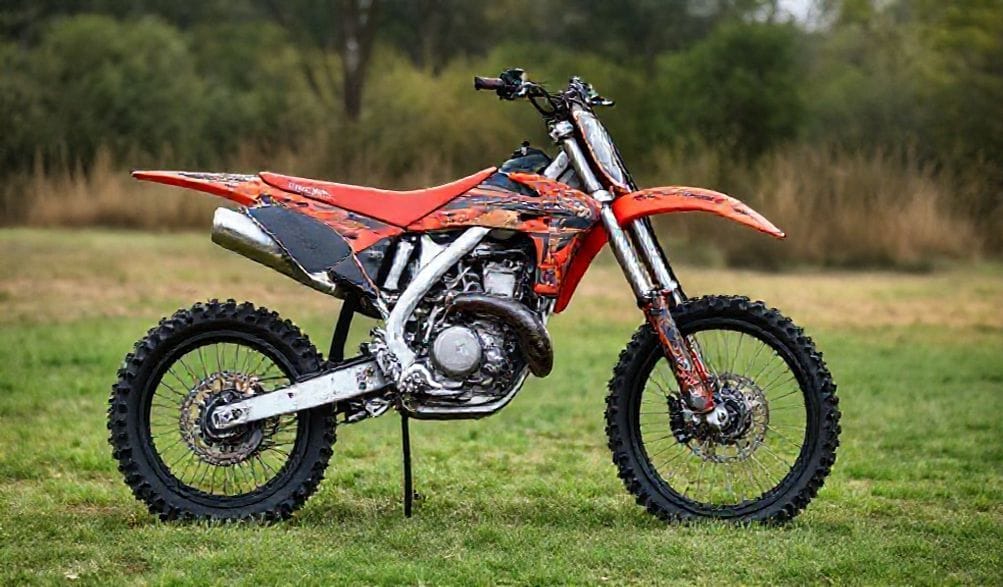
Finding a Reliable Dirt Bike for $500: A Realistic Guide for Beginners
Introduction
The dream is universal: the freedom of the trails, the thrill of the ride, all without breaking the bank. It’s why searches for a “300 dollar moto da cross” o “dirt bikes for 500” are incredibly common among hopeful new riders and budget-conscious parents. This guide is written directly for you. We’re here to address that search intent with a heavy dose of honesty and years of hard-earned mechanical expertise.
Let’s be clear from the start: finding a safe, functional, and reliable dirt bike at this price point is a significant challenge. It’s the bargain-hunter’s extreme sport. But with the right knowledge, a sharp eye, and managed expectations, it’s not impossible. This isn’t just a list of bikes for sale; it’s a practical roadmap built on real-world experience. Our core mission is to steer you away from dangerous money pits and toward a smart, safe purchase that leads to genuine enjoyment. We adhere to a simple principle: safety and long-term value must always trump a tempting, too-good-to-be-true price tag. Let’s begin by understanding the landscape you’re about to enter.
Understanding the Real-World Market for Budget Dirt Bikes
Before you open a single marketplace app, you need a firm grasp on what $500 truly means in the world of dirt bikes. This isn’t about pessimism; it’s about setting a strategic foundation for your search.
The Truth About “New” Dirt Bikes Under $500
If you see an ad for a brand-new dirt bike priced at $300-$500, proceed with extreme caution. Legitimate, name-brand entry-level models from Honda, Yamaha, Kawasaki, or KTM start at nearly triple that price for a reason—engineering, materials, and safety testing cost money.
The bikes you’ll find in this ultra-cheap “new” category are typically generic, no-name brands sold on Amazon, Walmart, or other big-box retailers. From hands-on experience, these machines are fraught with risk:
- Poor Materials: Components like levers, footpegs, and frame welds are often made from brittle, low-grade metals and plastics that can snap under stress.
- Zero Parts Support: When (not if) something breaks, finding a replacement brake lever or clutch cable can be a nightmare. There’s no dealership network or standardized parts diagrams.
- Serious Safety Concerns: We’ve seen everything from throttles that stick open, to brake lines that fail, to front forks that buckle on light impacts. These are not minor inconveniences; they are crash-inducing failures.
The Experience Bottom Line: That $300 new bike will almost certainly cost you another $400 in immediate repairs, upgrades, and frustration, assuming you can even find the parts. It’s a false economy.
The Pre-Owned Market: Your Primary Hunting Ground
For a $500 budget, the used market is your only viable arena. This is where patience and knowledge become your greatest assets. A used bike from a reputable brand, even if it’s 15 years old, is almost always a better investment than a new generic bike.
To set expectations, here are typical price ranges (varying heavily by region) for common, durable entry-level bikes in different conditions:
- Project/Non-Running: $100 – $300. A major gamble requiring mechanical skill.
- Running, but Needs Work: $300 – $600. This is your target zone. The bike starts and moves, but will require immediate safety and maintenance items (tires, chain, brakes).
- Good, Ready-to-Ride Condition: $800 – $1,500+. A bike in this category is usually outside the strict $500 budget but represents a significantly better starting point.
Your mission is to find a diamond in the “Running, but Needs Work” rough. The key is knowing what to look for.
Critical Pre-Purchase Inspection Checklist (Expertise in Action)
This is the most important section. Never buy a used dirt bike based on photos or promises alone. Always inspect it in person. Bring a friend, a flashlight, and this checklist.
Safety-First Mechanical Inspection
Start with the fundamentals that keep the bike (and you) in one piece.
- Frame & Fork: Run your hands along the frame tubes, especially near welds and engine mounts. Look for any cracks, deep rust, or obvious bends. Check the front forks for straightness and any signs of major oil leakage.
- Ruote e pneumatici: Spin both wheels. They should spin freely without wobbling side-to-side (a “wobble” indicates a bent rim). Squeeze spokes; none should be loose or missing. Tires should have decent tread left and no deep cracks or gashes.
- Freni: Pull the front brake lever and press the rear brake pedal. They should feel firm, not mushy or go all the way to the handlebar/grip. Visibly check brake pad thickness through the caliper and look at the rotor/drum for deep grooves.
- Sospensioni: Push down hard on the handlebars and the seat. The suspension should compress and rebound smoothly without making nasty squeaking or clunking sounds. Look for oil residue on the fork seals or shock body.
Engine & Drivetrain Health Assessment
Now, assess the heart of the machine.
- The Cold Start: This is non-negotiable. You must hear the bike start from completely cold. A bike that “just needs a carb clean” often has deeper issues. Listen for excessive rattling, knocking, or screeching.
- Smoke & Leaks: As it starts and idles, look at the exhaust. A little white smoke (condensation) is normal. Blue smoke means the engine is burning oil—a sign of worn piston rings or valve seals, a potentially expensive fix. Look under the bike for fresh puddles or significant oil coating the engine cases.
- Transmission: With the bike warmed up and the clutch pulled in, click through the gears. It should shift without loud clunks or refusing to engage. Test the clutch engagement; it should be smooth, not grabby or slipping.
- Catena e Pignoni: A worn drivetrain is a telltale sign of neglect. Look at the rear sprocket teeth. If they are hooked or sharp like shark fins, it’s worn out. A rusty, stiff, or overly loose chain also needs replacement.
The All-Important Test Ride (If Possible)
If the seller allows and you are in a safe, open area, a short test ride is invaluable.
- Freni: Test them at low speed. Do they stop the bike effectively and evenly?
- Throttle Response: Is it crisp, or does the engine bog or hesitate?
- Maneggevolezza: Does the bike track straight, or does it pull to one side (indicating a bent frame or fork)?
- Listen: Beyond the engine, listen for clunks from the suspension, grinding from the brakes, or rattles from loose parts.
The Best “Budget-Friendly” Dirt Bike Models to Look For
La tua $500 andrà più lontano se punti su piattaforme note e affidabili. Queste moto sono state sovradimensionate per la durata, e i ricambi sono ancora abbondanti e accessibili.
Modelli Fidati per Principianti (Anni più Vecchi)
Concentra la tua ricerca su questi cavalli di battaglia. Un esemplare ben mantenuto dei primi anni 2000 è un acquisto di gran lunga più saggio di una moto appariscente e sconosciuta dell'anno scorso.
- Honda: Il re dell'affidabilità. Cerca i modelli XR50R, XR70R, XR100R, o i più recenti CRF50F, CRF70F, CRF100F. Queste moto a quattro tempi raffreddate ad aria sono semplici, robuste e facili da riparare.
- Yamaha: Un altro marchio stellare. La PW50 è l'iconica moto per principianti. I modelli TTR-90, TTR-110 e TTR-125 sono fantastiche quattro tempi adatte al fuoristrada.
- Kawasaki: La KLX110 is a direct competitor to Honda’s CRF and Yamaha’s TTR line, known for its great suspension and bulletproof engine.
Il Verdetto dell'Esperto: A 2005 Honda XR100 that needs a new chain and tires is a superior project to a 2022 “Amazon Special” that’s never been ridden.
Pit Bike e Mini Moto: Una Nota di Cautele
You’ll see many small “pit bikes.” There’s a crucial distinction:
* Mini Moto di Marchi Affermati: Come la Honda CRF50 o la Yamaha PW50. Queste sono motociclette di qualità in scala ridotta.
* Pit Bike Generiche: Spesso cloni di design Honda prodotti in Cina.
Pro: Sono innegabilmente più economiche all'acquisto e possono essere divertenti per un uso occasionale a bassa velocità.
Svantaggi (Per Esperienza): Il controllo di qualità è una lotteria. I dispositivi di fissaggio si smussano facilmente, gli impianti elettrici sono inaffidabili e, sebbene i ricambi esistano online, trovare il right giusto per il tuo modello specifico può essere un mal di testa. Raramente mantengono il valore.
Considerare i Costi Nascosti di una Moto $500
È qui che si costruisce la fiducia—essendo brutalmente onesti sul costo reale. Il prezzo di acquisto è solo la quota d'ingresso.
Immediate “Must-Do” Repairs and Maintenance
Dai per scontato che la tua nuova moto $500 necessiti delle seguenti operazioni per sicurezza e affidabilità di base. Puoi fare alcuni lavori da solo per risparmiare.
- Cambio Fluidi: Olio motore, filtro e liquido di raffreddamento (se a raffreddamento liquido). ~$30-$50
- Filtro dell'Aria: Pulire o sostituire. ~$15-$25
- Kit Catena e Pignone/Corona: Se consumati. ~$60-$120
- Pneumatici e Camere d'Aria: Se crepati o lisci. ~$100-$200+
- Pastiglie/Liquido dei Freni: ~$30-$60
- Varie: Manopole, leve, cavi. ~$20-$50
Realistic Immediate Investment: $200 – $500+. Ecco perché una moto da $300 raramente rimane una moto da $300.
Equipaggiamento di Sicurezza Essenziale: Spese Non Negoziabili
Questo budget è separato dalla moto e non è opzionale. Puoi trovare equipaggiamento di qualità usato, ma mai un casco usato.
- Casco (certificato DOT/SNELL): ~$100-$250
- Occhiali: ~$30-$60
- Guanti: ~$20-$50
- Stivali (Motocross/Fuoristrada): ~$100-$250+
- Paraseno/Maglietta/Pantaloni: ~$100-$200+
Gear Investment: $350 – $800+. Proteggere il proprio corpo è infinitamente più importante della moto che si guida.
Dove Cercare e Come Trattare
Le Migliori Piattaforme per Trovare Affari
- Facebook Marketplace: The most active. Use saved searches for model names (e.g., “XR100”, “TTR125”).
- Craigslist: Rimane una fonte valida, spesso con meno rumore.
- Forum/Club Locali di Motocross: La migliore fonte per moto ben mantenute da parte di piloti esperti.
Individuare le Truffe: Avoid deals where the seller can’t meet in person, rushes you, or asks for payment upfront. “Title in hand” is a major plus.
Strategie Intelligenti di Negoziazione
La tua ispezione è il tuo potere contrattuale. Sii educato ma fattuale.
- Sfrutta la tua Lista di Controllo: “I’m really interested, but I noticed the chain and sprockets are completely shot, and the tires are cracked. I’ll need to put about $200 into it right away. Would you consider $400?”
- Il Contante è Re: Presentarsi con l'esatto contante in mano è un potente incentivo per un venditore.
- Sii Pronto a Andartene: Se la moto presenta un difetto irreparabile (telaio incrinato, fumo eccessivo) o il venditore è irragionevole, allontanati. Apparirà un'altra moto.
Sezione FAQ
D: Posso davvero trovare una moto da cross sicura per 300 dollari?
R: È estremamente difficile e rischioso. A quel prezzo, una moto richiederà quasi certamente un investimento aggiuntivo significativo in riparazioni e parti relative alla sicurezza per essere affidabile. Il tuo costo totale complessivo molto probabilmente raggiungerà o supererà i 500 dollari.
D: Qual è il problema più comune con le moto da cross economiche?
R: Neglect. The lack of basic maintenance—oil changes, air filter cleaning, and chain adjustment—leads to accelerated engine and drivetrain wear. This neglect is far more costly to fix than the maintenance ever was.
D: Per una prima moto economica, è meglio un 2 tempi o un 4 tempi?
R: Per un principiante assoluto con un budget limitato e poca esperienza meccanica, un 4 tempi (come una XR o TTR) è generalmente la raccomandazione più sicura. Hanno una erogazione di potenza più lineare e perdonante, sono più facili da guidare e spesso sono più semplici ed economici da mantenere a livello base.
D: Quanto dovrei budgettare in totale per la mia prima moto da cross usata?
R: Per prepararti al successo, un budget totale iniziale più realistico è di $800-$1,200. Questo permette una moto da 500-800 dollari e la manutenzione essenziale immediata e l'attrezzatura di sicurezza non negoziabile.
D: Dovrei semplicemente risparmiare più soldi?
R: If your primary goals are safety, reliability, and immediate fun without the “project” phase, then sì, risparmiare di più è il miglior consiglio. Un budget di 1.200-1.800 dollari solo per la moto aprirà un mondo di modelli più nuovi, ben mantenuti e pronti all'uso di marche affidabili, offrendo un'introduzione allo sport notevolmente migliore e meno stressante.
Conclusione
La ricerca di una moto da cross affidabile intorno ai 500 dollari è una prova di pazienza, ricerca e discernimento meccanico. È un progetto che può essere incredibilmente gratificante per la persona giusta. Concentrando strategicamente la tua ricerca su modelli più vecchi e ben costruiti di marche affidabili e conducendo un'ispezione spietata e incentrata sulla sicurezza, si può effettivamente trovare una macchina valida.
Ricorda questo principio guida: il prezzo nell'annuncio è solo l'inizio della storia finanziaria. Il costo vero include il lavoro essenziale per rendere la moto affidabile e l'investimento critico nella tua protezione personale. Questo viaggio richiede un mix di acquisto oculato e cautela meccanica. Privilegiando un'ingegneria solida e la sicurezza rispetto a una facciata luccicante ed economica, getti le basi giuste. Quelle basi—anche se datate dieci anni—sono ciò che sblocca veramente l'emozione duratura e la libertà della guida.
METADATA_START—
DISPLAY_TITLE: Finding a Reliable Dirt Bike for $500: A Realistic Beginner’s Guide
SEO_TITLE: Can You Get a Safe Dirt Bike for $300? A Realistic Buyer’s Guide
META_DESC: Cerchi una moto da cross da 300 dollari? La nostra guida esperta rivela la verità sul mercato low-cost, una lista di controllo per l'ispezione critica, i costi nascosti e come trovare effettivamente una moto da cross usata sicura e affidabile per circa 500 dollari.
IMG_PROMPT: Un primo piano dettagliato di una moto da cross Honda XR100 leggermente consumata ma classica, con una mano guantata da meccanico che indica la catena e la corona per ispezionarne l'usura. La moto è in un'officina garage con attrezzi sullo sfondo, luce del sole che filtra. Fotorealistico, a fuoco nitido.
—METADATA_END—