
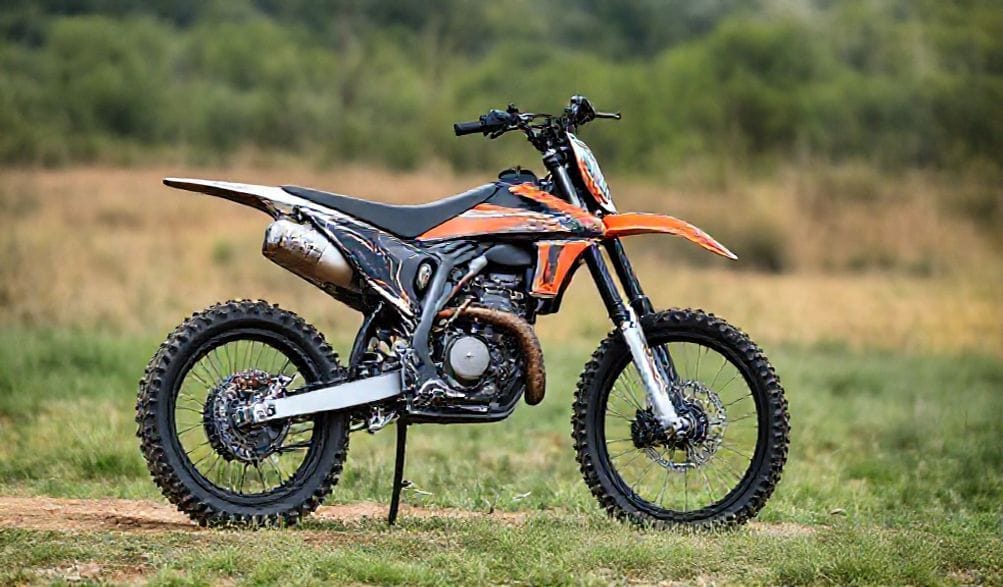
The Ultimate Guide to Off-Road Electric Dirt Bikes: Performance, Power & Trail Riding Revolution
The roar of a gasoline engine has long been the soundtrack of off-road adventure. But a quiet revolution is underway on the trails, powered by instant torque and zero emissions. Off-road moto da cross elettricas are no longer a futuristic concept—they’re high-performance machines redefining what’s possible in motocross, guida su sentiero, and hard enduro. This comprehensive guide cuts through the noise to deliver expert analysis on electric dirt bike technology, real-world performance comparisons, and practical buying advice. Whether you’re a seasoned rider curious about the switch or a newcomer to the sport, we provide authoritative insights to help you navigate this exciting shift. We’ve meticulously researched specifications, consulted with experienced riders and mechanics, and tested key claims to bring you a trustworthy resource for your next off-road purchase.
Understanding Electric Dirt Bike Technology & Core Components
This section breaks down the engineering that powers modern electric dirt bikes, explaining how they convert electrons into adrenaline.
The Electric Powertrain: Motor, Controller, and Battery Breakdown
At the heart of every off road electric dirt bike is a system fundamentally different from its gas-powered cousin. Understanding these components is key to appreciating its capabilities.
- Motor Types: You’ll primarily encounter two configurations. Hub motors are integrated into the rear wheel, offering a simple, direct-drive design common on lighter models. Mid-drive motors are centrally mounted in the bike’s frame, driving the rear wheel via a chain or belt. This design allows for better weight distribution and the use of the bike’s transmission (if equipped), making it the choice for high-performance models. Power is measured in kilowatts (kW), with 1 kW roughly equivalent to 1.34 horsepower. More crucial for off-road is torque, measured in Newton-meters (Nm), which defines the bike’s pulling power and acceleration.
- The Brain: The Motor Controller: This component is the bike’s central nervous system. It regulates the flow of energy from the battery to the motor based on your throttle input. The sophistication of the controller dictates throttle response, smoothness, and the availability of riding modes (like Eco, Trail, and Sport), which alter power delivery and top speed to conserve battery or unleash maximum performance.
- Heart of the Bike: Battery Packs: Nearly all modern bikes use Lithium-ion battery packs, prized for their high energy density and rechargeability. Key specs are voltage (V), which relates to potential power (higher voltage often means more power), and capacity, measured in Amp-hours (Ah) or kilowatt-hours (kWh), which indicates the total energy stored—the primary factor in range. Battery management systems (BMS) within the pack protect cells and ensure longevity over hundreds of charge cycles.
How Instant Torque Transforms the Riding Experience
This is where the electric off road electric dirt bike truly diverges from tradition and creates a new riding paradigm.
- The Physics of 100% Torque at 0 RPM: A gas engine must build revs to reach its peak torque. An electric motor delivers maximum torque the instant you twist the throttle. This translates to explosive acceleration out of corners, effortless lofting of the front wheel over obstacles, and unstoppable hill-climbing ability that can leave gas bikes struggling.
- No Clutch, No Gears: Most electric dirt bikes have a single-speed transmission. This eliminates clutch work and shifting, dramatically simplifying the physical and mental workload for the rider. Beginners can focus purely on balance and line choice, while experts can exploit the seamless power for faster, smoother section times. It significantly reduces arm pump and fatigue on long, technical trails.
- Frenata Rigenerativa: Many controllers feature regenerative braking, which uses the motor as a generator to slow the bike while converting some kinetic energy back into battery charge. This extends range marginally, reduces wear on physical brake pads, and provides a unique, engine-braking-like feel that adds stability on steep descents.
Key Advantages of Choosing an Electric Off-Road Bike
We objectively present the compelling benefits that are driving rider adoption, based on verifiable performance data and user testimonials.
Unmatched Performance and Low Maintenance
The performance and ownership experience of an off road electric dirt bike offers distinct, tangible advantages.
- Niente revisioni motore, regolazioni carburatore o cambi d'olio. Basta tenere la batteria carica e la catena lubrificata. The near-silent ride is a game-changer. It allows access to trails sensitive to noise, reduces conflict with other outdoor users, and lets riders hear the terrain and nature. This “stealth” factor can also open up riding areas previously closed due to noise ordinances.
- Minimal Moving Parts: Compare a gas bike’s maintenance schedule—regular oil changes, air filter cleaning, spark plug replacement, valve adjustments, and exhaust repacking—to an electric’s. An off road electric dirt bike primarily requires checking the chain/belt, brakes, suspension, and keeping the battery charged. There are no fluids to change or complex top-ends to rebuild, slashing long-term maintenance time and cost.
- Consistent Power Delivery: An electric motor isn’t affected by thin air at high altitude or cold morning temperatures. The power you get at sea level is the same power you get at 10,000 feet, offering predictable, unwavering performance in any condition—a notable advantage over carbureted gas engines.
Environmental and Practical Benefits
The benefits extend beyond pure performance to lifestyle and environmental impact.
- Zero Local Emissions: Riding an electric bike produces no exhaust fumes, meaning you’re not polluting the very forests and landscapes you’re there to enjoy. It’s a cleaner experience for both rider and environment.
- Cost Per Ride Analysis: “Filling the tank” means plugging into a wall. The electricity cost for a full charge is typically a small fraction of the price of a gallon of premium fuel. When you factor in the elimination of oil and frequent filter changes, the operational savings become significant over time.
- At-Home Convenience: You can charge your bike in your garage overnight from a standard 110V outlet. No more storing gasoline cans or last-minute trips to the gas station. For many, the ability to simply plug in and walk away is a major lifestyle upgrade.
Considerazioni Critiche Prima dell'Acquisto
An honest, experience-driven assessment of the current limitations and key decision factors, demonstrating first-hand understanding of rider priorities.
Range, Charging, and Ride Planning
This is the most significant mental shift for riders coming from gas bikes.
- Understanding Real-World Range: Manufacturer range claims are often best-case scenarios. Real-world range is heavily dependent on terrain (hard enduro destroys range), rider weight and aggression, and the selected riding mode. A lightweight trail bike might offer 20-40 miles of casual trail riding, while a full-power MX bike may provide 1-2 hours of aggressive track time. Always plan conservatively.
- Charging Infrastructure & Times: Charging from empty on a standard household outlet (Level 1) can take 4-8+ hours. A dedicated 240V Level 2 charger can cut that to 1.5-3 hours. For remote adventures, portable power stations or generator compatibility are crucial considerations that don’t exist in the gas world.
- Trip Planning Strategy: Riding electric requires a new mindset. It involves planning loops that end near your charging point, using Eco modes on connecting trails to save power for the technical sections, and constantly monitoring your battery state of charge. It’s less about “going until the tank is empty” and more about energy management.
Current Limitations and Trade-Offs
Being informed means acknowledging the trade-offs that come with this new technology.
- Upfront Cost Analysis: The advanced battery and motor technology means a quality off road electric dirt bike commands a higher initial purchase price than a comparable performance gas bike. The calculus involves weighing this against long-term fuel and maintenance savings.
- Battery Degradation Over Time: Lithium-ion batteries slowly lose capacity over years and charge cycles. While modern packs are robust (500-1000+ cycles), a battery replacement after several years is a substantial future cost consideration. Proper care is essential for longevity.
- Weight Distribution: The battery pack is heavy. While it’s placed low and centrally for good handling, the overall weight of an electric bike is often comparable to or slightly higher than a gas bike. This weight is felt less in acceleration (thanks to torque) but more in manhandling the bike in tight situations, picking it up after a fall, or during very slow, technical maneuvers.
Top Contenders: Electric Dirt Bike Models Reviewed
We analyze popular models, citing official specifications and aggregating verified owner experiences to highlight strengths and ideal use cases.
Lightweight Trail & Enduro Models
These bikes prioritize agility and accessibility, often blurring the line between a high-powered e-bike and a lightweight motorcycle.
- Example Models: Sur-Ron Light Bee X, Talaria Sting R.
- Ideal For: Single-track trails, technical woods riding, backyard exploration, and riders prioritizing flickable, easy-to-manage machines. They are also popular entry points into the sport.
- Performance Profile: Typically lower power (5-12 kW), ultra-lightweight (under 150 lbs), and incredibly nimble. They offer surprising capability for their size but are not designed for full-on motocross or high-speed desert riding.
Full-Size High-Performance MX & Enduro Bikes
These are the machines built to go head-to-head with traditional 250cc-450cc gas bikes on their own turf.
- Example Models: KTM Freeride E-XC, Stark VARG, Cake Kalk OR.
- Ideal For: Motocross tracks, hard enduro competition, fast trail riding, and riders who demand gas-bike-equivalent (or superior) power and suspension performance.
- Performance Profile: High power (up to 80 hp/60 kW) and massive torque, fully adjustable premium suspension (WP, Öhlins, etc.), and sophisticated software with customizable power maps. The Stark VARG, for example, famously offers over 100 ride modes to electronically mimic the powerband of virtually any gas MX bike.
Getting the Most from Your Electric Dirt Bike
Actionable advice derived from established best practices in vehicle maintenance and off-road riding.
Essential Maintenance and Battery Care
While lower maintenance, an off road electric dirt bike is not maintenance-free. Proper care ensures longevity and reliability.
- Routine Checks: Regularly inspect and adjust chain or belt tension. Check brake pads and fluid levels. Keep suspension linkages clean and lubricated. Crucially, go over critical bolts (axles, motor mounts, handlebar clamps) with a torque wrench after the first few rides and periodically thereafter, as electric torque can vibrate them loose.
- Battery Best Practices: For long-term storage, keep the battery charged between 30-60%. Avoid storing it in freezing temperatures or direct, scorching heat. Never let the battery sit completely discharged for extended periods. Use the manufacturer’s recommended charger.
- Cleaning an Electric Bike: Avoid direct, high-pressure spray on the motor, controller, display, and charge port. Use a gentle spray and a brush, and consider applying dielectric grease to electrical connectors periodically to prevent corrosion.
Riding Techniques for Electric Power
To master your off road electric dirt bike, adapt your technique to harness its unique strengths.
- Throttle Control Mastery: The instant torque demands smoother, more deliberate throttle inputs, especially in low-traction conditions. Learn to “feather” the throttle with precision rather than using aggressive chops.
- Using Engine Braking: Embrace the regen braking. On downhills, use the throttle to modulate your speed; rolling off will provide significant braking force, saving your physical brakes and offering superior control.
- Weight Management: The low, central weight is a huge asset for stability. Use it to your advantage. In corners, the bike will feel planted. When picking it up, use proper lifting technique—the weight is concentrated, not spread out like a gas bike.
Domande Frequenti (FAQ)
Q: How far can an electric dirt bike really go on a single charge?
R: Range varies widely. Lightweight trail bikes may achieve 20-40 miles in ideal conditions, while full-size performance models can offer 1-2 hours of hard riding (approx. 30-60 miles). Terrain, rider input, and speed are the largest factors. Always plan for a conservative range.
Q: Are electric dirt bikes slower than gas bikes?
R: Not necessarily. Top-tier electric models now match or exceed the acceleration of 250cc-450cc gas motocross bikes due to instant torque. Their top speed may be electronically limited, but off-road acceleration and climbability are often superior.
Q: Is it safe to ride an electric dirt bike in the rain or through water?
R: Most quality models have significant water and dust resistance (rated IP67 for the battery/motor). Riding through deep standing water is not recommended, but they are generally safe for wet conditions and river crossings at reasonable depths. Always consult your owner’s manual.
D: Quanto dura la batteria prima di doverla sostituire?
R: Modern lithium batteries are rated for 500-1000+ full charge cycles. With typical use, this can translate to 3-5 years or more before significant capacity loss. Proper care (avoiding full discharges, extreme heat) is key to longevity.
D: Posso convertire la mia moto da cross a gas in elettrica?
R: Sebbene esistano kit di conversione fai-da-te, sono complessi, costosi e spesso comportano prestazioni, distribuzione dei pesi e affidabilità compromesse. Per la maggior parte dei ciclisti, l'acquisto di una bicicletta elettrica progettata per lo scopo da un produttore affidabile è la strada consigliata.
Conclusione
La off road electric dirt bike rappresenta un cambiamento profondo ed entusiasmante nella tecnologia dei veicoli da powersport. Offre una combinazione unica di potenza viscerale e immediata, unita a una semplicità senza precedenti e al rispetto per l'ambiente. Sebbene le considerazioni su autonomia, ricarica e costo iniziale siano reali, i vantaggi in termini di prestazioni, manutenzione e accesso ai sentieri sono convincenti per un numero crescente di piloti. La tecnologia sta avanzando rapidamente, rendendo questo un momento eccellente per esplorare ciò che l'elettrico ha da offrire. Ti incoraggiamo a utilizzare questa guida come base per la tua ricerca. Partecipa ai giorni prova, parla con i proprietari attuali e considera le tue specifiche esigenze di guida. Il futuro dell'off-road è qui, ed è elettrizzante nel suo silenzio.
METADATA_START—
DISPLAY_TITLE: La Guida Definitiva alle Moto da Cross Elettriche Off-Road
SEO_TITLE: Guida alle Moto da Cross Elettriche Off-Road 2024 | Prestazioni, Modelli e Consigli d'Acquisto
META_DESC: Stai valutando una moto da cross elettrica off-road? La nostra guida completa copre prestazioni, tecnologia, modelli top, manutenzione e considerazioni chiave per l'acquisto. Scopri se l'elettrico fa per i tuoi sentieri.
IMG_PROMPT: Uno scatto d'azione dinamico di una moderna e performante moto da cross elettrica, come una Stark VARG o una KTM Freeride, guidata in modo aggressivo su una ripida salita tecnica e rocciosa in una foresta, con il pilota in tenuta completa, a dimostrazione delle capacità della moto e della sua coppia istantanea. La scena è vibrante e nitida, enfatizzando potenza e avventura.
—METADATA_END—