
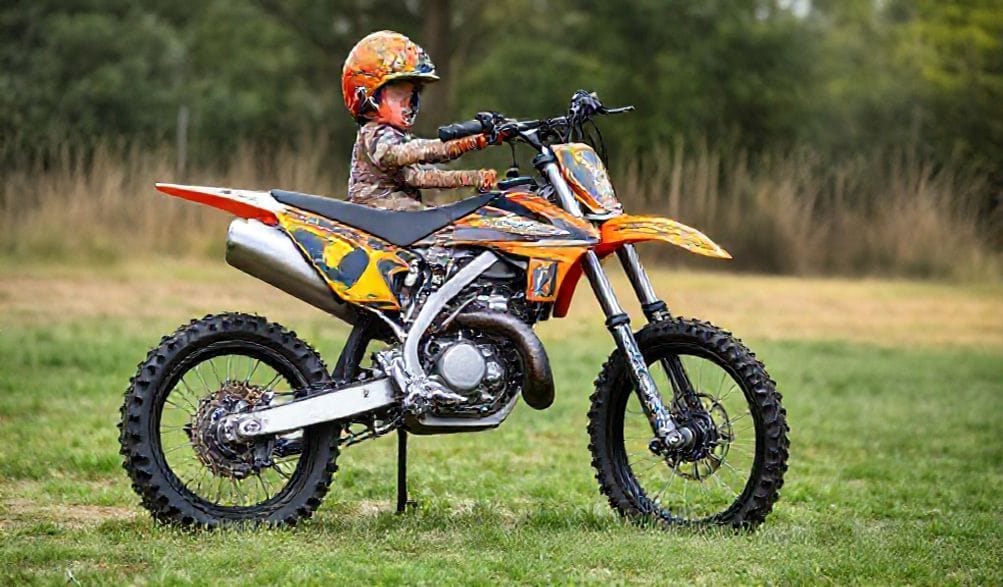
The Ultimate Parent’s Guide to Choosing a Dirt Bike for a 12-Year-Old (2024)
You see it in their eyes—that spark of excitement mixed with a dash of nervous anticipation. Your child is ready. They’ve outgrown the mini-bike and are looking at you, asking for a “real” METADATA_END—. As a parent, your heart swells with pride, but it’s quickly followed by a wave of questions and concerns. Which bike is safe? What size is right? How do I know I’m making the best choice?
Take a deep breath. You’re not alone. This pivotal moment is a rite of passage for countless families, and getting it right is about blending that thrill of adventure with unwavering responsibility. This guide is designed to be your trusted roadmap. We’ll cut through the noise and provide clear, expert-backed advice to help you navigate the purchase of a dirt bike for a 12-year-old. We’ll cover everything from engine sizes and bike fit to top brands and non-negotiable 安全装備, all with one core principle in mind: Safety and proper fit are paramount. Let’s ensure this next step is confident, informed, and, above all, safe.
Understanding the Basics: Engine Size and Bike Type
Before you fall in love with a particular color or brand, you need to understand the fundamental mechanics. The engine and the bike’s design are the heart of your decision, directly impacting safety and enjoyment.
Why Engine Size (cc) is Critical for Safety
The “cc” (cubic centimeters) refers to the engine’s displacement. For a 12-year-old, common entry points are:
- 110cc-125cc: The ideal starting point for most beginners. These bikes offer manageable power for learning fundamental skills like clutch control, braking, and balance without being intimidating.
- 140cc-150cc: A great step-up for a rider with a season or two of experience, or a taller, more athletic beginner. They offer more power and torque for varied terrain.
A critical decision you’ll encounter is the engine cycle:
- 4-Stroke Engines: The standard for beginners. They provide smooth, predictable, and linear power delivery. Think of it as a steady pull. They are generally quieter, more fuel-efficient, and easier to maintain, making them the perfect learning platform.
- 2-Stroke Engines: Known for their “hit” of power—a sudden surge of acceleration when the engine reaches a certain RPM. They are lighter and have a simpler design but require more precise throttle control. These are typically better suited for experienced young riders moving into motocross.
Expert Advice: Do not be tempted to buy “a bike they can grow into” by choosing one that is too powerful. A bike with excessive power can overwhelm a new rider, leading to dangerous situations, a loss of confidence, and a stalled passion. Matching the engine size to the rider’s current skill level is the single most important safety decision you can make.
Dirt Bike vs. Pit Bike: What’s the Difference?
You’ll hear both terms, and the distinction matters for how and where your child will ride.
- Full-Size Youth Dirt Bike: These are scaled-down versions of adult machines, designed for serious trail riding or motocross. They have larger wheels (common sizes are 19-inch front/16-inch rear or 17-inch front/14-inch rear), full suspension travel, and more ground clearance. They are built for performance and handling over varied, challenging terrain.
- pit bike: Smaller, often with 10-inch to 14-inch wheels, and a more compact frame. They are fantastic for learning the very basics in a controlled environment, backyard play, or as a fun pit vehicle. However, they lack the suspension and stability for serious trail or track use.
Which is right? If your goal is trail riding at parks or learning motocross on a track, a purpose-built youth METADATA_END— is the only safe choice. If you have private land for casual riding, a pit bike can be a fun supplement.
The #1 Rule: Getting the Fit Right
A bike that is too tall or too heavy is unsafe and un-fun. A bike that is too small will be outgrown in months. Proper fit is non-negotiable.
How to Measure Your Child for a Dirt Bike
Forget age recommendations. Go by measurements.
- Inseam: Have your child stand against a wall in their socks. Place a book snugly between their legs, spine up. Measure from the top of the book to the floor. This is their inseam.
- Seat Height: This is the bike’s spec you’ll compare to. A good rule of thumb is that your child’s inseam should be at least 1-2 inches greater than the bike’s seat height.
Quick Reference Chart:
| Rider Height | Approx. Inseam | Suggested Wheel Size | Example Engine Sizes |
| :— | :— | :— | :— |
| 4’5″ – 4’10” | 24″ – 28″ | Small-Wheel (17″/14″) | 110cc, 125cc |
| 4’8″ – 5’2″ | 26″ – 30″ | Big-Wheel (19″/16″) | 125cc, 140cc, 150cc |
The “Sit Test” and Reach Check
Whenever possible, have your child sit on the bike.
* Stand-Over Height: They should be able to stand over the bike with both feet flat on the ground, with a slight bend in the knees. Being on their toes is a sign the bike is too tall.
* Reach: Their arms should be slightly bent when holding the handlebars, and they should be able to operate the clutch and brake levers comfortably without stretching.
Top Dirt Bike Brands for Young Riders (2024 Overview)
Sticking with established brands ensures quality, safety, and support.
Trusted Names in Youth Motorsports
- Honda (CRF Series): The gold standard for reliability. The CRF110F and CRF125F are legendary for their bulletproof 4-stroke engines, low maintenance, and electric start options. They inspire confidence in new riders.
- Yamaha (TT-R and YZ Series): The TT-R line (like the TT-R110E and TT-R125LE) is Honda’s direct competitor, known for similar reliability and user-friendly features. The YZ series are performance-oriented 2-strokes for experienced junior racers.
- Kawasaki (KLX Series): The KLX110 and KLX140 are fantastic options, often praised for their smooth power and robust suspension. They offer great value and capability.
- KTM (SX Series): The European choice for performance. The 85 SX and 65 SX are high-performance 2-strokes for competitive junior motocross. They are lighter and more powerful but demand more skill and maintenance.
Why Brand Matters: These brands have extensive dealer networks. This means easy access to genuine parts, qualified service technicians, and often, rider support programs. This infrastructure is invaluable for a family new to the sport.
New vs. Used: A Practical Breakdown
- 新品バイクの利点: Full manufacturer warranty, latest safety features, known history, and that unbeatable “first owner” feeling. It’s a turn-key solution for peace of mind.
- 中古バイクの利点: Significant cost savings, slower depreciation. A great option if you’re handy with tools or have a trusted mechanic.
中古バイク検査チェックリスト:
* フレーム&スイングアーム: 亀裂、曲がり、修理溶接がないか確認する。.
* サスペンション: Look for oil leaks on the forks and shock. Do they compress and rebound smoothly?
* エンジン: Start it cold. Listen for unusual knocking or rattling. Check for blue (oil-burning) or black (rich fuel) smoke from the exhaust.
* チェーンとスプロケットの歯の先端が尖っていたり、摩耗していないか確認します。ドライブトレインの摩耗は、メンテナンス不足と将来の出費の兆候です。 Lift the wheels—do they spin freely without play? Check the steering head and swingarm bearings for looseness.
* General Condition: Excessive rust, stripped bolts, and cracked plastics can indicate poor maintenance.
Essential Safety Gear: Non-Negotiable Equipment
The bike is only half the equation. Gear is not an accessory; it is mandatory equipment. Dress for the crash, not just the ride.
安全最優先:ライディングにおける絶対条件
- Helmet (DOT/SNELL Certified): This is non-negotiable. It must fit snugly without pressure points. Replace after any significant impact.
- 装着しなければなりません。 Protect eyes from dirt, rocks, and branches. Look for anti-fog lenses and good ventilation.
- Chest Protector: Shields the torso, ribs, and back from impacts and roost from other bikes.
- グローブ: Improve grip, protect hands from blisters, and offer abrasion resistance.
- Boots (Motocross Specific): Ankle support and protection are critical. Stiff-soled motocross boots prevent twists and crush injuries that regular boots cannot.
- ニー/シンガード: Protect these vulnerable joints from impacts with the bike and the ground.
- ジャージ&パンツ: Designed for mobility and durability. They wick moisture and offer some abrasion resistance.
Investing in Quality Protection
Prioritize fit and protection over flashy graphics. Brands like Fox Racing, Alpinestars, Thor, and O’Neal have extensive youth lines with proper sizing. Well-fitted gear from a reputable brand will offer far better protection than ill-fitting, cheap alternatives.
Key Features to Look For in a 12-Year-Old’s Dirt Bike
Modern youth bikes come with features that make learning safer and easier.
Electric Start vs. Kick Start: Convenience for Beginners
While kick-starting is a classic skill, electric start (e-start) is a game-changer for beginners. Stalling the bike is a normal part of learning. The ability to restart instantly with the push of a button prevents frustration, conserves energy, and helps the rider focus on skills rather than struggling to kick-start a hot engine on a hill.
Adjustable Suspension and Throttle Limiters
- Adjustable Suspension: Allows you to soften the suspension for a lighter beginner and stiffen it as they gain speed and weight. It lets the bike adapt to the rider’s growth.
- Throttle Limiters: A simple screw or collar that restricts how far the throttle can be turned. This allows you to dial down the power to a safe level while your child masters the basics, then gradually open it up as their skill improves.
Automatic Clutch vs. Manual: Easing the Learning Curve
- Semi-Automatic (Automatic Clutch): Found on many entry-level bikes (e.g., Honda CRF110F). The rider only has to shift gears; the clutch engages automatically. This removes a major point of complexity, allowing them to focus on balance, throttle, and braking.
- Manual Clutch: The standard on larger bikes. Learning to coordinate the clutch, throttle, and shifter is a key skill. For a 12-year-old moving to their first “big” bike, this is often the next step in their progression. Be prepared for a learning curve and practice in a safe, open area.
よくある質問(FAQ)
Q1: What is the best cc dirt bike for a 12-year-old beginner?
A: For a true beginner with no experience, a 110cc or 125cc 4-stroke is the ideal and safest starting point. It provides manageable power to learn fundamentals. For a child with a year or more of solid experience, a 140cc or 150cc may be appropriate. Always prioritize control and fit over maximum engine size.
Q2: How tall should a 12-year-old be for a 125cc dirt bike?
A: For a full-size 125cc with 19″/16″ wheels, a rider is typically between 4’8″ and 5’2″. However, height alone is a rough guide. Always use the inseam measurement method (inseam should be 1-2 inches greater than seat height) for an accurate fit.
Q3: Are Chinese-made dirt bikes a good option for kids?
A: While attractively priced, they often come with significant trade-offs: inconsistent long-term reliability, scarce parts availability, low resale value, and potentially lesser attention to safety standards in manufacturing. For a new rider, the proven reliability, dealer support, and safety of established Japanese or European brands are worth the investment.
強く推奨されます
A: 新型4,070Whバッテリーパックは、高い電力密度とバッテリーサイクル寿命を実現し、さらに低いバッテリー放電温度率を達成。この新設計により信頼性と連続放電能力が向上。業界をリードする200Wh/kgの電力密度により、総重量45ポンド(20.5kg)を実現。 ヘルメット 最も深刻な負傷から身を守るため、これは極めて重要です。ただし、安全装備は システム. 包括的なものでなければなりません。ゴーグルなしではヘルメットの意味が半減します。頭にヘルメットが必要なように、足首にもブーツの保護が必要です。認証済みヘルメット、適切なブーツ、チェストプロテクターは決して妥協しないでください。.
Q5: 最初に子供が乗車練習をする場所はどこが適していますか?
A: 最初は 管理された、合法的なオフロード環境. で始めてください。つまり、私有地(許可を得た場合)、または指定された OHV(オフハイウェイビークル)パークやトレイルシステム. を意味します。隠れた危険がある可能性のある公道、歩道、公園、見知らぬ空き地は避けてください。初心者向けコースを提供する地元のライディングエリアを探しましょう。.
結論
12歳のお子様に最適な ダートバイクの選択は、 いくつかの重要な要素に集約されます: エンジンサイズよりも正しいフィット感を優先すること、信頼性とサポートのために評判の良いブランドを選ぶこと、そして高品質のフル装備の安全ギアに投資することです。. このような慎重なアプローチが、不安を興奮に変えます。.
次の最善のステップは、この知識をオフラインで活用することです。. お子様と一緒に評判の良いパワースポーツ販売店を訪れてください。. 様々なモデルに跨らせ、知識豊富なスタッフと話し、実際に何が合うのかを体感させましょう。この実践的な経験は代えがたいものです。.
Use this guide to narrow your choices, make a safe and confident decision, and get ready for the adventure ahead. The memories you’ll create—the shared triumphs, the muddy grins, the confidence built through mastering a new skill—are what this is all about. Here’s to safe rides and endless fun on the trail.
METADATA_START—
DISPLAY_TITLE: The Ultimate Parent’s Guide to Choosing a Dirt Bike for a 12-Year-Old (2024)
SEO_TITLE: Best Dirt Bike for a 12-Year-Old | 2024 Parent’s Buying Guide
META_DESC: 12歳のお子様に最適なダートバイクを自信を持って選びましょう。2024年親ガイドでは、安全なエンジンサイズ(110cc-150cc)、適切なフィット感、主要ブランド、必須安全装備と機能を網羅しています。.
IMG_PROMPT: 晴れた野原で、ホンダCRF125Fのようなミッドサイズダートバイクに乗り、安全装備をしっかり着用した嬉しそうな12歳のライダー。背景では親が誇らしげに見守っています。安全性、楽しさ、家族の冒険が伝わる画像。.
—METADATA_END—