
The Complete Guide to Electric Battery Bikes: Benefits, How They Work & How to Choose
都市の街路から田舎のトレイルまで、十数以上のモデルを実際にテストしてきた者として、私は電気自動車を取り巻く期待と疑問の両方を理解しています。 battery bikes. They’re transforming how we commute, explore, and exercise. But with so many options, it’s easy to feel overwhelmed. This guide cuts through the noise. We’ll leverage expert mechanical knowledge and real-user experiences to explain not just その an electric battery bike is, but how it can genuinely fit into your life. Whether you’re a curious commuter or a weekend adventurer, our goal is to provide the clear, trustworthy information you need to make a confident decision.
What is an Electric Battery Bike? (Demystifying the Technology)
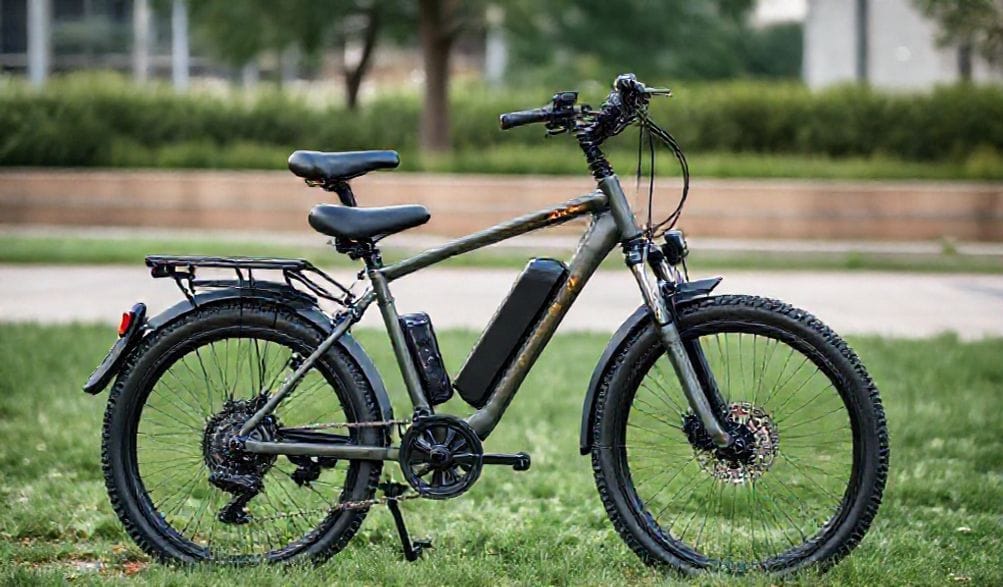
At its heart, an electric battery bike, or 電動アシスト自転車, is a bicycle equipped with an integrated electric motor and battery to provide assistance as you pedal. It’s designed to augment your power, not replace your pedaling entirely. This core principle of “pedal-assist” is what differentiates a true e-bike from an electric moped or scooter. Let’s break down the key components that make this magic happen.
Core Components: More Than Just a Bike with a Motor
Understanding these four pillars will demystify any e-bike spec sheet and help you understand what you’re really buying.
-
The Battery: The Fuel Tank. This is your bike’s energy source, almost exclusively a Lithium-ion battery due to its excellent energy density and lifespan.
- Capacity: Measured in Watt-hours (Wh). Think of this as the size of your fuel tank. A higher Wh rating generally means more potential range (e.g., a 500Wh battery is larger than a 350Wh one).
- 寿命: Batteries are rated for charge cycles (a full 0-100% charge). A quality battery typically lasts 500-1000 full cycles before its capacity degrades to about 80% of its original state, which translates to 3-5 years of regular use.
- Range Factors: The advertised range is a best-case scenario. Real-world range is affected by battery capacity, assist level, rider weight, terrain, wind, and tire pressure.
-
The Motor: The Engine. This provides the boost. There are two primary placements, each with distinct advantages:
- Hub-Drive Motor: Located in the center of the front or rear wheel. 長所: Simpler, often more affordable, and can provide a direct feeling of being pushed along. 短所: Can affect bike handling (especially front-hub), puts more strain on spokes, and is less efficient on steep, sustained climbs.
- ミッドドライブモーター: Located at the bike’s crank and bottom bracket, powering the chain. 長所: Leverages the bike’s gears, making it more efficient on hills and varied terrain. It centralizes weight for better balance and handling, and is easier on the rear wheel. 短所: Typically more expensive and can put more wear on the chain and drivetrain.
-
The Sensor: The Conductor. This tells the motor when や how much to help. There are two main types:
- Cadence Sensor: Activates assistance when it senses you are pedaling. It provides a consistent, pre-set level of power. Simpler and more common on entry-level models, but the ride can feel more “on/off” or less natural.
- Torque Sensor: Measures how hard you are pedaling and provides proportional assistance. Push harder, get more boost. This creates an intuitive, bike-like feel where the motor seamlessly amplifies your own effort. It’s the gold standard for a natural riding experience.
-
The Controller & Display: The Dashboard. This is your command center. Usually mounted on the handlebars, it allows you to select assist levels (Eco, Tour, Sport, Turbo), monitor speed, battery level, trip distance, and often connects to smartphone apps for deeper customization and navigation.
How It Feels to Ride: The “Pedal-Assist” Experience
Forget any notion of a throttle-only rocket. A proper pedal-assist e-bike feels like you have super-powered legs. On a flat road with low assist, it might simply take the edge off headwinds or a heavy backpack. On a steep hill, it transforms an exhausting grind into a manageable, even enjoyable, climb. You are always pedaling, but the motor makes every pedal stroke more effective.
Let’s address the “cheating” myth head-on. Studies consistently show that e-bike riders get significant cardiovascular exercise—often nearly as much as conventional cyclists—because they tend to ride more often, for longer distances, and with less dread of challenging routes. For many, it’s not about replacing exercise, but about removing the barriers to it: hills, distance, recovery from injury, or simply not wanting to arrive at work drenched in sweat.
Key Benefits of Owning an Electric Battery Bike
The technology is cool, but the real-world benefits are what make e-bikes a lifestyle game-changer.
Conquer Your Commute: Save Time, Money, and Stress
For urban and suburban dwellers, an e-bike is a revelation.
* Time: In congested cities, door-to-door travel times can rival or beat cars and public transport. No traffic jams, no parking lot searches.
* Money: Compare the cost: A tank of gas vs. a few cents of electricity. No parking fees, insurance premiums (for Class 1/2), or high transit fares. The upfront cost is often recouped within a year or two for a regular commuter.
* Stress: Swap road rage and crowded train cars for fresh air and a gentle boost. Arrive at your destination energized, not drained.
Unlock Fitness & Accessibility
This is perhaps the most profound benefit. E-bikes are incredible tools for inclusivity and health.
* Fitness Gateway: They allow riders of different fitness levels to ride together. They encourage people who might be intimidated by hills or distance to start cycling regularly.
* Consistent Exercise: The “moderate-intensity” exercise of e-biking is perfect for sustainable heart health. A 2019 study in the International Journal of Behavioral Nutrition and Physical Activity found e-bikers increased their cycling frequency and duration.
* Accessibility: They extend cycling to older adults, those with joint issues, or anyone recovering from injury, providing a low-impact way to stay active and mobile.
Explore Farther and Carry More
An electric battery bike expands your radius.
* Adventure: That scenic loop 30 miles away is now a feasible afternoon trip. Trail networks become more accessible.
* Practicality: Running errands? A rear rack or cargo e-bike can easily handle grocery bags, making car trips optional. It turns utilitarian tasks into pleasant outings.
An Eco-Friendly Transportation Choice
While not zero-impact (manufacturing and electricity generation have footprints), e-bikes are one of the most efficient personal transport options available. Their lifecycle emissions are a tiny fraction of a car’s, even an electric car, due to their minimal material and energy use. Choosing an e-bike over a car for short trips is a tangible way to reduce your carbon footprint.
How to Choose the Right Electric Bike for Your Needs
With the “why” covered, let’s tackle the “how” of selecting your perfect match.
Define Your Primary Use Case First
Your main purpose should dictate the bike’s design. Ask yourself: Will I primarily use it for…?
* City Commuting: Look for features like integrated lights, fenders, a rear rack, a comfortable upright position, and a belt drive or hub gears for low maintenance. A mid-drive can help with stop-and-start traffic.
* Mountain Exploring (e-MTB): Requires full or front suspension, wide, knobby tires, a powerful mid-drive motor for climbing technical trails, and durable components. Geometry is more aggressive.
* Cargo Hauling: Designed with a long wheelbase for stability, ultra-strong racks (front or rear), high-capacity batteries, and powerful motors to move heavy loads.
* Leisure & Fitness: Often resembles a comfortable hybrid bike. Prioritize a natural ride feel (torque sensor is ideal), a range suitable for long rides, and an ergonomic fit.
Critical Specifications to Compare
- Battery & Range: Don’t just look at the claimed miles. Check the Watt-hour (Wh) rating. For a commuter, 400-500Wh is a good start. For long adventures, 600Wh+ is better. Remember, you can always conserve battery by using lower assist levels on flats.
- Motor Power & Placement: Match the motor to your terrain.
- Flat city commutes: A reliable hub-drive is cost-effective.
- Hilly areas or off-road: A mid-drive is almost always worth the investment for its efficiency and control.
- Bike Fit & Geometry: This is non-negotiable. An e-bike’s weight makes fit even more critical. A poorly fitting bike will be uncomfortable and harder to handle. Visit a local shop and take a test ride. How does it feel at low speed? Can you stand over it comfortably?
- Brand & Warranty: Support matters. A reputable brand with a strong warranty (e.g., 2+ years on the frame, motor, and battery) and, crucially, a local dealer network for service, is a safer long-term bet than a direct-to-consumer mystery brand with no local support.
Understanding the Investment: Price vs. Value
- Entry-Level ($1,000 – $2,000): Functional, often with hub drives, cadence sensors, and smaller batteries. Good for flat, short trips.
- Mid-Range ($2,000 – $4,000): The sweet spot for most. Expect quality mid-drives, torque sensors, better batteries, and durable name-brand components (Shimano, Bosch, Brose, etc.).
- High-End ($4,000+): Top-tier performance, lightweight materials, cutting-edge technology, and premium components for serious enthusiasts and professionals.
検討すべきは Total Cost of Ownership: Factor in occasional maintenance (chain, brakes, tires wear faster due to weight/speed), eventual battery replacement (after 3-5 years), and any necessary accessories (lock, helmet, bags).
Maintaining Your Electric Battery Bike for Longevity
Treat it well, and it will reward you with years of reliable service.
Battery Care Best Practices
Your battery is the most expensive consumable part.
* 充電: Avoid regularly draining it to 0%. Try to keep it between 20% and 80% for daily use. Do a full 100% charge before a long planned ride.
* 収納スペース: If storing for more than a month, charge (or discharge) the battery to about 60% and store in a cool, dry place (room temperature is ideal).
* 温度: Never charge a frozen battery. Avoid leaving the bike or battery in direct, scorching sun or in a freezing car for extended periods.
Routine Mechanical Checks (Beyond the Battery)
E-bikes are heavier and faster, placing more demand on components.
* ブレーキ: Check pad wear frequently. Hydraulic disc brakes are highly recommended for their consistent, powerful stopping power.
* タイヤ: Keep them properly inflated to reduce rolling resistance and prevent pinch flats. Consider puncture-resistant tires for commuting.
* エンジンは冷えた状態で始動させます。異常なノッキング音やガタつき音がないか聞き、排気管から過度の青白い煙(オイル燃焼の兆候)が出ていないか確認します。 Clean and lubricate the chain regularly. Mid-drive bikes, in particular, require a well-maintained chain to run smoothly.
専門技術者に依頼すべき場合
基本的なメンテナンスはご自身で行うことができますが、, 以下の点については常に資格のある電動自転車技術者にご相談ください:
* 電気系統の問題(エラーコード、モーターの停止、表示画面の問題など)。.
* モーターまたはバッテリーの診断および交換。.
* フレームやサスペンションに関する複雑な作業。.
* 不確かなことがあれば。安全性が最優先です。.
よくある質問(FAQ)
Q: 充電1回でどれくらいの距離を走行できますか?
A: バッテリー容量、アシストレベル、地形、ライダーの体重により大きく異なります(20~100+マイル)。メーカーの公称値は最大値として参考にし、実際の坂道などの条件を考慮して20~30%程度を差し引くことをお勧めします。.
Q: 免許や保険は必要ですか?
A: ほとんどの地域では、クラス1(ペダルアシストのみ、最高速度20 mph)およびクラス2(スロットルアシスト、最高速度20 mph)の電動自転車については、免許、登録、保険は不要です。法律は地域によって異なりますので、特にクラス3(ペダルアシスト、最高速度28 mph)については、常に現地の規制を確認してください。.
Q: 雨の中でも乗れますか?
A: 品質の高い電動自転車の多くは、防水性に関するIP規格(例:IP54)を取得しています。小雨から中程度の雨は一般的に問題ありません。深い水たまりは避け、使用後は特に電気接続部を必ず乾燥させてください。具体的なIPX規格については取扱説明書をご確認ください。.
Q: 電動自転車は重いですか?
A: はい、モーターとバッテリーのため、通常の自転車よりも一般的に重いです(40~70ポンド)。走行中はアシスト機能によりこの重さは気になりませんが、階段での持ち運びや車のラックへの積載時には考慮すべき点です。.
Q: バッテリーはどれくらい持つ?交換が必要になるまでの期間は?
A: 適切に手入れされたリチウムイオンバッテリーは、通常、容量が明らかに減少する(約80%程度まで)前に、3~5年または500~1000回のフル充電サイクル持ちます。寿命を最大限に延ばすには、適切な保管と充電習慣が鍵となります。.
結論
電動自転車を選ぶことは、革新的な技術とあなたの個人的なライフスタイルを結びつけることです。それは単なる購入ではなく、より活動的で、アクセスしやすく、楽しい移動手段への投資です。主要コンポーネントを理解し、ご自身のニーズを正直に評価し、簡単なメンテナンスを継続することで、日々の生活の頼りになる、やりがいのある一部となる電動自転車を見つけることができます。最良のアドバイスは?まずは地元の信頼できる販売店で試乗してみることです。ペダルアシストの滑らかで力強いブーストを自ら感じてみることが、あなたの旅における最も説得力があり、エキサイティングな次の一歩となるでしょう。.
METADATA_START—
DISPLAY_TITLE: 電動自転車完全ガイド:メリットと選び方
SEO_TITLE: 2024年 電動自転車ガイド|仕組み、メリット、購入のコツ
META_DESC: 電動自転車についてお悩みですか?専門家によるガイドで、仕組み、通勤やフィットネスへの主なメリット、ニーズに合った適切な電動自転車の選び方を解説します。.
IMG_PROMPT: 近代的な電動自転車が都会のレンガ壁にもたれかかっている、シャープでプロフェッショナルな写真。自転車のバッテリーとミッドドライブモーターがはっきりと見える。カジュアルな服装の人物がハンドルバーのディスプレイを確認しながら笑顔で、ヘルメットとバッグが自転車のリアラックに載っている。明るく清潔な情景で、簡単で楽しい通勤を連想させる。.
—METADATA_END—