
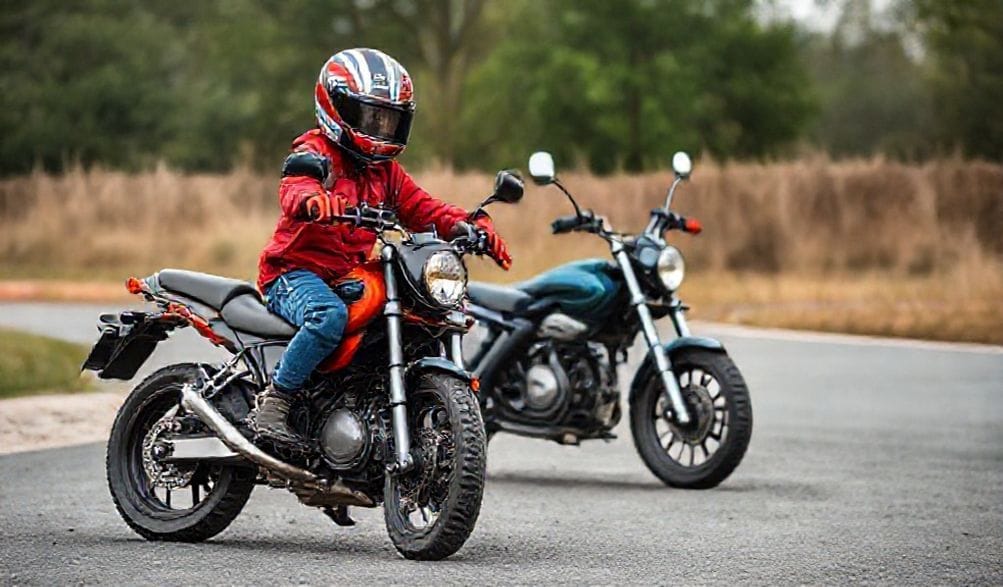
The Parent’s Complete Guide to Motorbikes for 11-Year-Olds: Safety, Selection & Getting Started
That moment your child looks up, eyes wide with a mix of excitement and pleading, and asks, “Can I have a motorbike?” is a parenting milestone. It’s a cocktail of emotions: pride in their adventurous spirit, nostalgia for your own youth, and a healthy, overwhelming dose of parental apprehension. Visions of scraped knees are quickly replaced by more serious concerns. This is completely normal. The world of youth motorbiking can seem vast, technical, and fraught with risk from the outside.
But here’s the good news: with the right knowledge and a methodical, safety-first approach, introducing your 11-year-old to motorcycling can be one of the most rewarding experiences you share. It’s not about unleashing them on a powerful machine; it’s about guided exploration, skill-building, and responsibility. This comprehensive guide is designed to transform your apprehension into confident action. We’ll walk you through every critical step—from head-to-toe safety gear and choosing the perfect beginner bike to understanding legalities and fostering the right mindset. Our goal is to ensure your child’s introduction to motorbikes for 11 year olds is positive, progressive, and, above all, safe.
Safety First: The Non-Negotiable Foundation for Young Riders
Before you even think about makes, models, or engine sizes, you must adopt this mantra: Riding begins with safety gear. This isn’t an area for compromise, budget shortcuts, or “good enough.” The protective equipment your child wears is their primary line of defense and is based on decades of research and data from motorsports safety organizations. Investing properly here is the single most important decision you will make.
Essential Protective Gear: Head-to-Toe Checklist
Think of this as your non-negotiable shopping list. Each item serves a vital purpose.
- Helmet (DOT/SNELL Certified): This is paramount. It must be specifically designed for 모토크로스/off-road use (with a chin bar and visor peak). Look for dual certification (DOT and SNELL or ECE) for the highest assurance. Most importantly, it must fit perfectly. It should be snug without pressure points, and not shift on the head when the straps are fastened. Plan to replace it after any significant impact or every few years as materials degrade.
- 고글: A clear, scratch-resistant lens is essential. Goggles protect eyes from roost (rocks and dirt kicked up by other bikes), branches, and insects. Ensure they fit securely with the helmet and offer good ventilation to prevent fogging.
- Chest Protector/Roost Defector & Jersey: A quality chest protector shields the torso, shoulders, back, and often the kidneys from impacts and debris. It should be worn over a durable, long-sleeved motocross jersey made of tear-resistant material.
- 장갑: Motocross gloves provide grip, protect hands from blisters, and offer padding and abrasion resistance in a fall.
- Knee/Shin Guards & Motocross Pants: These guards protect vulnerable joints and shins from impacts with rocks, ruts, and the bike itself. They should be worn inside durable motocross pants, which are designed to withstand abrasion.
- Boots: Do not use hiking boots or work boots. Proper motocross boots are arguably the second-most important item after the helmet. They provide ankle support, crush protection, and a structured sole for shifting and braking. They are engineered to prevent hyperextension and other common leg injuries.
The Critical Role of Adult Supervision & Training
Gear is passive protection; active safety comes from knowledge and supervision.
- Zero-Tolerance Supervision: An 11-year-old should never ride unsupervised. Your presence is not just about emergency response; it’s for coaching, encouragement, and enforcing boundaries.
- Professional Training is Invaluable: Search for a certified youth motorcycle safety course (often offered by organizations like the Motorcycle Safety Foundation or local motocross clubs). Professional instructors teach fundamental skills—clutch control, braking, balance, and falling techniques—in a controlled, progressive manner. This builds a proper foundation far faster and safer than trial-and-error.
- The Parent as Coach: Even with professional training, you are the constant coach. Start in a wide-open, flat, grassy field. Focus on the absolute basics: starting, stopping, gentle turning, and looking ahead. Celebrate small victories and keep initial sessions short and positive.
Choosing the Right Motorbike for an 11-Year-Old
With safety gear secured, you can now focus on the machine. The goal is to find a bike that builds confidence, not fear. An overpowered or oversized bike is the quickest way to create a negative, dangerous experience.
Key Factors: Size, Weight, and Engine Displacement (CCs)
Forget age recommendations for a moment. Physical size and maturity are your true guides.
- Seat Height & Weight: Your child should be able to sit on the bike with both feet flat on the ground, or at least the balls of both feet. This is crucial for stability when stopping and maneuvering at low speeds. The bike’s weight should be manageable for them to pick up from a tip-over—a guaranteed event for any new rider.
- Engine Displacement (CCs): For a complete beginner at age 11, the sweet spot is typically between 50cc and 110cc for a four-stroke engine. Four-strokes are generally more forgiving, with smoother, more predictable power delivery than two-strokes.
- 50cc: Excellent for very small or cautious first-timers. They are light and easy to manage.
- 110cc: The most popular and versatile beginner size. It offers enough power to be fun and handle mild terrain but is not intimidating. It’s also a size they can grow with for a year or two.
- 클래식 2스트로크 모토크로스 크기, 현재는 초보자용 4스트로크에도 일반적입니다. Suitable for a taller, more coordinated 11-year-old, or one with some prior experience (e.g., on a 50cc). It offers more room for growth before needing an upgrade.
- Growth-Oriented vs. Immediate Fit: Slightly favoring a bike they can “grow into” is okay, but “swimming” in a bike that’s too tall or heavy is dangerous. It’s better to buy a correctly sized beginner bike and plan to sell it in 1-2 years than to start on something that compromises control.
Types of Youth Motorbikes: Pros and Cons
- Motocross/Dirt Bikes (e.g., Honda CRF, Yamaha YZ, KTM SX): Designed for closed-course competition. They have aggressive suspension, lightweight frames, and peaky powerbands. Best for: Kids who will primarily ride at motocross tracks. Consideration: Can be less forgiving for a pure beginner on casual trails.
- Trail/Play Bikes (e.g., Honda CRF110F, Yamaha TT-R110E, Kawasaki KLX110): 해당 모델의 ideal choice for most beginners. They are built for durability, ease of use, and varied off-road terrain. They feature softer suspension, more user-friendly power delivery, and often electric start. They are low-stress and confidence-inspiring.
- Electric Motorbikes (e.g., from Razor, Segway, or Sur-Ron): A fantastic and growing category for beginners. 장점: Quiet operation (great for neighborhoods), almost zero maintenance (no oil, gas, or air filters), instant torque that’s easily controllable, and often lighter weight. 단점: Limited range per charge and potentially less robust suspension for serious trail riding.
- Pit Bikes: Smaller, recreational bikes often used around race pits. They can be fun but ensure you’re getting a quality, safe model from a known brand, not a cheaply made knock-off.
New vs. Used: What Parents Should Know
- 신품 vs 중고품: 부모가 알아야 할 사항 Comes with a warranty, latest safety features, and zero hidden wear. You know its full history. Financing and dealer support are available.
- Used Bike Considerations: Can offer significant savings, allowing you to allocate more budget to top-tier safety gear. Crucial Step: Have any used bike thoroughly inspected by a trusted mechanic before purchase. Check for frame damage, worn bearings, brake pad life, fork seal leaks, and engine compression. A well-maintained used bike from a reputable brand is often a brilliant first buy.
Preparing for the Ride: Logistics and Legalities
The bike is in the garage, the gear is on. Now, where and how can they legally and safely ride?
Understanding Local Laws and Where to Ride Legally
This is a critical and often overlooked step.
- Research Local OHV Laws: Laws governing Off-Highway Vehicles (OHVs) vary dramatically by state and country. Research the specific requirements for your location. This may include age restrictions, required safety certificates, bike registration, and spark arrestor mandates for riding on public land.
- Legal Riding Areas:
- 사유지: The simplest option, but only with the explicit, written permission of the landowner. Ensure the terrain is suitable and free of hidden hazards.
- Designated OHV Parks & Trails: State and federal lands often have managed trail systems for dirt bikes. These are fantastic, legal venues. Research them online, understand the trail difficulty ratings (stick to green/easy), and always purchase required permits.
- 모토크로스 트랙: Offer a controlled, maintained environment. Many have dedicated beginner practice days with mellower tracks.
- Street Legality: For an 11-year-old, street-legal dirt bikes are almost universally off the table. Licensing, insurance, and safety concerns make public roads a hard 아니요. The focus must remain on controlled, off-road environments.
Pre-Ride Bike Checks and Maintenance Basics
Instill a ritual. Before every ride, go through the “T-CLOCS” checklist (Tires, Controls, Lights/Oil, Chassis, Stands) adapted for a dirt bike:
- Tires: Check air pressure and look for cuts or excessive wear.
- Controls: Ensure throttle snaps back closed, levers (clutch, brake) work smoothly, and cables are not frayed.
- Chain & Sprockets: Check chain tension (should have about 1.5 inches of free play) and lubricate it. Look for hooked or broken teeth on the sprockets.
- Fluids: Check engine oil level and look for leaks.
- Brakes: Test front and rear brakes. Ensure pads have material left.
- Nuts & Bolts: Give critical fasteners (axle nuts, handlebar clamps, brake caliper bolts) a quick check for tightness.
Involving your child in this process, even just watching, teaches responsibility and connects them to the machine’s mechanics.
Fostering a Positive and Responsible Riding Mindset
Motorbiking is more than a thrill; it’s a tool for development when approached correctly.
Setting Ground Rules and Building Skills Gradually
Structure prevents overwhelm and manages risk.
- Start Simple: Master the flat, open field. Practice figure-eights, gradual stops, and controlled starts. Only progress to gentle hills, then mild trails, after fundamental control is second nature.
- Establish Clear Rules: Set non-negotiable boundaries before the first ride. Examples: “Full gear, every time.” “No riding outside of our designated area.” “Stop immediately if I signal.” “Speed is for later; control is for now.”
- Use Positive Reinforcement: Focus on what they did right. “Great job looking ahead through that turn!” builds confidence more than criticizing every mistake.
The Benefits: Confidence, Coordination, and Family Bonding
Look beyond the dirt and noise to see the profound benefits:
- Confidence & Resilience: Mastering a physical skill, picking up a fallen bike, and navigating a new trail build tremendous self-esteem and resilience.
- Physical Coordination: Riding is a full-body activity that develops fine motor skills (clutch/throttle modulation), gross motor skills (balance, body positioning), and sharpens reflexes and spatial awareness.
- Family Bonding: This can become your family’s outdoor passion. Loading up the truck, exploring new trails together, and sharing the post-ride stories creates irreplaceable memories and a unique shared interest. It gets kids outdoors, away from screens, and into nature.
자주 묻는 질문(FAQ)
Q1: 11세 아이에게 가장 적합한 입문용 오토바이는 무엇인가요?
A: 대부분의 11세 초보자에게는 적절한 출력, 관대한 주행 성질, 그리고 내구성으로 혼다 CRF110F 또는 야마하 TT-R110E 와 같은 110cc 4행정 트레일 바이크가 최적의 기준입니다. 체격이 작거나 더 신중한 라이더라면 50cc 모델이 완벽합니다. 전기 오토바이 도 유명 브랜드 제품을 간과해서는 안 되며, 이는 훌륭하고 관리가 쉬운 입문 경험을 제공합니다.
Q2: 11세 아이가 오토바이를 타기에는 나이가 충분한가요?
A: 만 나이보다는 신체 크기, 정서적 성숙도, 규칙 준수 의식이 더 중요합니다. 말을 잘 듣고, 결과를 이해하며, 운동 신경이 협응된 책임감 있는 11세 아이는 확실히 시작할 수 있습니다—하지만 오직 전문 교육, 지속적인 성인 감독, 완전한 안전 장비라는 세 가지가 모두 충족될 때만 가능합니다.
Q3: 비용은 얼마나 예상해야 하나요?
A: 전체 생태계에 대한 예산을 계획하세요:
* 바이크: $1,200 – $3,000+ (new), $800 – $2,000 (used).
* 완전한 안전 장비: $500 – $1,500+ (DO NOT skimp here).
* 교육 과정: $100 – $300.
* 정비/소모품: 타이어, 오일, 필터 등.
예산에서는 더 멋진 바이크보다 안전 장비와 교육을 우선시하세요.
Q4: 초보자에게 전기 오토바이는 좋은 선택인가요?
A: 네, 물론입니다. 훌륭한 선택입니다. 장점으로는 단순화된 조작(대개 자동, 클러치 없음), 조용한 연습(부담 감소, 이웃 친화적), 최소한의 정비, 그리고 초보자가 조종하기 쉬운 즉각적이고 선형적인 출력이 포함됩니다. 라이더가 순수하게 균형과 바이크 조종에 집중할 수 있게 해줍니다.
결론
11세 자녀의 첫 오토바이를 준비하는 여정은 중요한 일이지만, 두려워할 필요는 없습니다. 성공으로 가는 길은 단순하고 절대적인 세 가지 원칙 위에 세워집니다:
- 타협 없는 안전 장비: This is your child’s essential armor. Invest in it first and enforce its use every single time.
- 적절한 크기의 바이크: 두려움이 아닌 자신감을 키워주는 기계를 선택하세요. 의심이 들 때는 출력을 약간 낮추고 체형에 더 잘 맞는 것을 선택하세요.
- 전문 교육 & 지속적인 감독: 인증된 교육 과정이 기초를 제공하면, 여러분의 경계하며 격려하는 존재가 그 위에 다져줍니다.
연구와 투자, 경계가 필요하지만, 그 보상은 엄청납니다. 여러분은 단순히 자녀에게 동력 장난감을 주는 것이 아닙니다. 책임감, 인내, 기계에 대한 존중을 가르치는 스포츠의 문을 열어주는 것입니다. 함께하는 모험, 작은 도전을 함께 극복하며, 야외에서 단련되는 독특한 유대감을 형성할 기회를 창조하는 것입니다. 심호흡을 하고, 준비를 철저히 하며, 첫걸음을 내딛으세요. 신뢰할 수 있는 딜러십을 방문하고, 경험 많은 라이딩 부모님들과 이야기하며, 가장 첫 번째 행동으로 인증된 안전 교육 과정에 등록하세요. 긍정적이고 책임감 있는 라이딩의 세계가 기다리고 있습니다.
메타데이터_시작—
DISPLAY_TITLE: The Parent’s Complete Guide to Motorbikes for 11-Year-Olds
SEO_TITLE: Motorbikes for 11 Year Olds: A Parent’s Safety & Buying Guide
META_DESC: 11세 자녀를 위한 오토바이를 고려 중이신가요? 저희의 완벽한 부모 가이드는 필수 안전 장비, 적절한 입문용 더트 바이크 선택법, 법적 사항, 교육, 책임감 있는 라이딩 마인드 함양에 대해 다룹니다.
IMG_PROMPT: 햇살 좋은 넓은 잔디밭에서, 풀페이스 헬멧, 고글, 저지, 체스트 프로텍터, 장갑, 팬츠, 부츠 등 완전한 모토크로스 안전 장비를 갖춘 책임감 있어 보이는 11세 아이가 자신 있게 적절한 크기의 작은 더트 바이크에 타고 있고, 부모가 지원적으로 곁에 서 있는 모습.
—METADATA_END—