
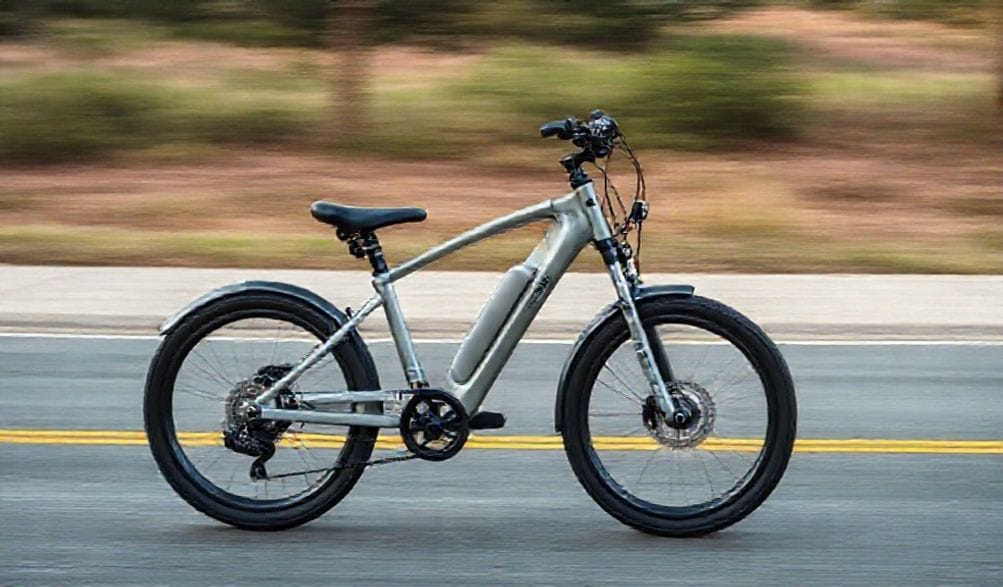
E-Bikes That Go 60 MPH: A Realistic Guide to Speed, Safety, and Legality
You’ve seen the videos. A silent, bicycle-like machine effortlessly glides past traffic, its rider grinning as the speedometer climbs to 60, 70, even 80 miles per hour. The allure is undeniable: the freedom of a bicycle, the thrill of a motorcycle, and the clean, quiet efficiency of electric power. It’s no wonder searches for “e-bikes that go 60 mph” are skyrocketing.
But here’s the critical reality check that much of the marketing hype glosses over: the vehicle you’re imagining likely isn’t an e-bike at all—at least not in the eyes of the law. As someone who has spent years testing, reviewing, and navigating the complex regulations of electric two-wheelers, my goal here isn’t to crush your dream of speed. It’s to equip you with the facts, separate the engineering marvels from the legal nightmares, and ensure your pursuit of velocity is grounded in safety, legality, and informed decision-making.
If you’re searching for 60 mph electric rides, your core need likely extends beyond a number on a dial. You’re probably seeking efficient long-distance commuting, an adrenaline-fueled thrill, or a car-alternative that doesn’t mean getting left in the dust. This guide will address that intent by exploring the entire ecosystem of ultra-fast electric two-wheelers. We’ll demystify the confusing categories, lay bare the significant legal and safety implications, examine real-world examples, and—most importantly—present practical, legal alternatives that might better suit your needs. Buckle up (or, more accurately, strap on your helmet); we’re moving past the hype and into the details.
Understanding the Category: Speed Pedelecs vs. Electric Motorcycles
The first and most crucial step is to abandon the generic term “e-bike” when discussing 60 mph. In the regulatory world, words have strict definitions, and misunderstanding them can lead to fines, impounded vehicles, or worse. Let’s build a clear taxonomy.
The Legal Definition of an “E-Bike” (Class 1, 2, 3)
In the United States, Canada, and the European Union, an electrically assisted bicycle is legally defined by a specific set of rules. These typically hinge on three factors: top motor-assisted speed, motor wattage, and whether the motor can propel the bike without pedaling (a throttle).
- Class 1: Pedal-assist only, no throttle, with assistance cutting off at 20 mph.
- Class 2: Features a throttle that can propel the bike without pedaling, also capped at 20 mph.
- Class 3: Pedal-assist only (usually, though some states allow throttles), with assistance cutting off at 28 mph.
These vehicles are generally treated as bicycles. You can ride them on bike paths and lanes, they don’t require registration, insurance, or a special license (though helmet laws may apply, especially for Class 3). The key takeaway? A vehicle capable of 60 mph is in a completely different universe from these legally recognized e-bikes.
What is a “Speed Pedelec” (Class 4 in some regions)?
This is where the waters begin to muddy. In some regions, a “Speed Pedelec” (or S-Pedelec) category exists. In Europe, these are often limited to 45 km/h (28 mph) but require registration, insurance, a helmet, and sometimes a special license. In the U.S., a few states have loosely defined “Class 4” or similar for higher-speed vehicles, but it’s not standardized.
Some high-performance models from brands like Stromer or Riese & Müller can be configured to reach speeds approaching 45 mph. However, to be street-legal, they must be registered as a moped or motorcycle. Crucially, even these high-strung, legal-speed-pedelecs rarely, if ever, are designed or certified for sustained 60 mph travel.
The Blurred Line: High-Power Electric Two-Wheelers
This brings us to the heart of the matter. The machines commonly discussed in forums and YouTube videos as “60 mph e-bikes” are, for all practical and legal purposes, 전기 오토바이 or electric mopeds.
The differentiating factors are stark:
* Power: While a Class 3 e-bike might have a 750W motor, a 60 mph machine typically uses a motor rated from 5000W to 10,000W or more.
* Pedals: Many have pedals, but they are often vestigial or non-functional, serving only as a potential legal loophole that rarely holds up under scrutiny.
* Weight & Design: They feature motorcycle or dirt-bike-style frames, suspension, and brakes, weighing 100 lbs or more, far beyond a typical bicycle.
Calling one of these an “e-bike” is like calling a Dodge Challenger Hellcat a “golf cart with a bigger engine.” The fundamental purpose, design, and legal classification have changed.
Key Considerations Before Pursuing a 60 MPH E-Bike
If you’re still intent on exploring this realm, you must proceed with your eyes wide open to the following non-negotiable considerations. Ignoring them isn’t just risky; it’s irresponsible.
Legal and Regulatory Landscape
This is the most significant hurdle. In 99% of jurisdictions, operating a 60 mph electric two-wheeler on public roads requires you to treat it as a motor vehicle. This means:
* 면허: A valid driver’s license is the bare minimum; most places require a motorcycle endorsement (passing a written and riding test).
* Registration & Plate: The vehicle must have a VIN, pass any required state inspections, and be registered with your Department of Motor Vehicles (DMV), receiving a license plate.
* 보험: Liability insurance is mandatory. Finding a provider willing to insure a custom-built or niche-brand vehicle can be difficult and expensive.
* Where You Can Ride: Forget bike paths, multi-use trails, and often even bicycle lanes. These vehicles are typically restricted to 공공 도로, where they must follow all traffic laws applicable to motorcycles. Riding an unregistered, uninsured “e-bike” at 60 mph on a public road is a serious offense.
Critical Safety Implications
The difference between crashing at 28 mph and 60 mph isn’t linear; it’s exponential. The kinetic energy involved more than quadruples.
* Gear is Non-Optional: A bicycle helmet is utterly insufficient. You need a full-face motorcycle helmet (DOT/ECE certified), armored jacket and pants, motorcycle gloves, and over-ankle boots. This gear is your only shield.
* Stopping Power & Control: Standard bicycle disc brakes will fade and fail. You need high-performance hydraulic motorcycle brakes. The suspension must be tuned for high-speed stability, not just curb hops. Tires must be motorcycle-rated to handle the forces and heat.
* Skill Required: Riding safely at 60 mph in traffic demands motorcycle-level skills: emergency braking, swerving, high-speed cornering, and hyper-awareness of road hazards (gravel, potholes, car doors) that are minor annoyances on a bicycle but potential disasters at this speed. Formal motorcycle safety training is highly recommended.
Performance and Technical Specifications
To achieve and (more importantly) sustain 60 mph, the hardware is serious:
* Motor & Controller: A 5000W+ mid-drive or hub motor paired with a high-amperage controller is standard.
* 배터리: This is the heart. Think 72V or higher battery systems with large-capacity cells (e.g., 40Ah) to deliver the massive current needed. These are not off-the-shelf packs; they are complex, high-voltage systems.
* The Great Trade-Off: Range. This is the ultimate compromise. Aerodynamic drag increases with the square of speed. A bike that gets 60 miles of range at a steady 25 mph might see that number plummet to 15-20 miles at a steady 60 mph. Speed comes at a tremendous energy cost.
Examples and Brands in the High-Speed Electric Space
Let’s apply our taxonomy to real-world products. This will help you understand what you’re actually looking at.
Established Electric Motorcycle Brands
This is the clear, legal, and engineered path to high-speed electric riding. Companies like Zero Motorcycles 와 Energica produce fully street-legal electric motorcycles with top speeds ranging from 100 to 150+ mph. They have VINs, meet DOT/EPA regulations, are sold through dealerships, and can be insured and registered like any other motorcycle. Cake offers more minimalist, off-road-focused machines that still have street-legal models. If you want 60+ mph on the road, this is the correct starting point.
“Hyper” E-Bike or Electric Dirt Bike Brands
This is the most common source of “60 mph e-bike” content. Brands like 서론(Sur-Ron) (Light Bee X), 탈라리아 (Sting R), and some models from CSC Motorcycles produce incredibly powerful, lightweight electric bikes. Be explicitly clear: These are often marketed and sold as “Off-Road Use Only” vehicles. Making them street-legal usually involves adding a mirror, lights, horn, and brake light kit (a “dot kit”), then navigating your local DMV’s process for registering an off-road vehicle for on-road use—a process that is not guaranteed and varies wildly by state. Many owners simply ride them illegally, risking severe consequences.
Custom-Built and DIY High-Power E-Bikes
The online DIY community pushes boundaries, with enthusiasts fitting massive motors and battery packs onto bicycle frames. This comes with the highest risk.
* Safety Warning: A bicycle frame is not designed for motorcycle forces. A catastrophic failure at 60 mph is life-threatening. Off-the-shelf battery packs from unknown sources are a leading cause of e-bike fires; this risk multiplies with high-power, custom setups.
* No Warranty, No Certification: You are the engineer, tester, and quality control. There is no company to hold accountable if the brakes fail or the battery management system malfunctions. If you are not an expert in electrical systems and mechanical engineering, this path is strongly discouraged.
Practical Alternatives: Fast and Legal E-Bikes
For most people, the desire for “60 mph” is really a desire for a faster, more thrilling, and capable commute. Here are fantastic alternatives that won’t land you in legal trouble.
High-Performance Class 3 E-Bikes (Up to 28 mph)
Don’t underestimate modern Class 3 e-bikes. Models from brands like Specialized Turbo Vado/Como SL, Trek Allant+, 전면 LED (상시 점등 – 끄기 스위치 없음) Gazelle Ultimate offer incredibly smooth, powerful assist up to 28 mph. They are agile, can handle hills with ease, and are fully legal on bike lanes and roads (check local laws). For urban and suburban commuting, 28 mph is often the sweet spot for safety, efficiency, and range.
Registered Speed Pedelecs (Up to 45 mph)
If 28 mph feels too slow, consider the “middle ground.” Brands like Stromer (ST7), Riese & Müller (Charger4 GT Vario), and Stealth Bicycles produce incredibly robust, high-quality machines that can reach 45 mph. The critical point: they are designed to be registered as mopeds or motorcycles. You go through the proper channels (license, registration, insurance), and you get a thrilling, premium, and compliant vehicle that can legally use roadways. This is a legitimate path for the dedicated rider.
The Commuter’s Choice: Balancing Speed, Range, and Utility
For the daily commuter, consistency and practicality often trump top speed. A quality Class 3 e-bike offers a 40-80 mile range, access to shorter bike-path routes, lower operating costs, and less cumbersome gear requirements. You arrive energized, not white-knuckled from navigating traffic at motorcycle speeds. For most, this is the winning formula.
자주 묻는 질문(FAQ)
Q: Can I legally ride a 60 mph e-bike on the road?
A: It depends entirely on your local laws. In most places, you will need to register it as a motorcycle/moped, have a valid license/endorsement, insurance, and wear a motorcycle helmet. It is almost never legal on bike paths.
Q: What’s the fastest legal e-bike I can ride without a motorcycle license?
A: In the US, a Class 3 e-bike (28 mph max with pedal assist) is typically the fastest option that doesn’t require a motorcycle license or registration, though state laws vary. Always check local regulations.
Q: 시속 60마일(약 96km/h)로 주행하는 전기 자전거는 안전한가요?
A: 안전성은 차량의 제작 방식, 운전자의 기술 및 보호 장비, 그리고 주행 환경에 크게 좌우됩니다. 신뢰할 수 있는 브랜드에서 대량 생산된 전기 오토바이는 이러한 속도에 맞게 설계되었습니다. 개조되었거나 인증되지 않은 DIY 제작 차량은 훨씬 더 높은 위험을 수반합니다.
Q: 고품질 고속 전기 오토바이/전기 자전거의 가격은 얼마인가요?
A: 가격은 매우 다양합니다. 본격적인 전기 오토바이는 약 $10,000달러 이상부터 시작합니다. Sur-Ron과 같은 브랜드의 고출력 “하이퍼” 전기 자전거는 약 $4,000~$6,000달러부터 시작합니다(도로 주행 합법화 키트 적용 전 기준이 일반적). 맞춤 제작 차량은 $5,000달러에서 $15,000달러 이상까지 범위가 넓습니다.
Q: 이러한 차량은 어디서 충전하거나 정비할 수 있나요?
A: 충전은 표준 벽면 콘센트(속도는 느림) 또는 레벨 1 EV 충전기로 가능합니다. 정비는 매우 중요한 고려 사항입니다. 고출력 시스템을 작업할 수 있는 전문 전기 자전거 매장이나, 등록된 전기 오토바이의 경우 오토바이 딜러가 필요할 수 있습니다.
결론
시속 60마일 전기 자전거의 꿈은 흥미로운 기술로 구동되지만, 엄격한 법률, 물리 법칙 및 안전성의 틀과 충돌합니다. 부인할 수 없는 사실은, 이러한 속도를 낼 수 있는 전기 이륜차는 도시 이동을 혁신하고 있는 접근성 높고 자전거 도로 주행이 합법적인 전기 자전거와는 거리가 먼 범주에 속한다는 점입니다. 기능과 법적으로 이들은 전기 오토바이입니다.
귀하의 여정은 안전과 규정 준수에 대한 확고한 의지로 시작해야 합니다. 지역 차량 법규를 이해하는 것을 최우선으로 삼고, 적절한 오토바이 등급 보호 장비에 투자하며, 자신의 운전 기술을 정직하게 평가하십시오. 더 빠르고 스릴 넘치는 통근을 원하는 압도적 다수의 라이더에게 답은 법적 회색 지대가 아닌, 합법적인 클래스 3 전기 자전거나 적절히 등록된 스피드 페달렉의 뛰어난 성능에 있습니다. 이러한 기계들은 위협적인 법적·안전적 부담 없이도 엄청난 스릴과 실용성을 제공합니다.
If the call of the open road at true motorcycle speeds is undeniable, then skip the “e-bike” marketing and begin your research with 기존 제조사에서 생산된 완전한 도로 주행 합법 전기 오토바이 from established manufacturers. It’s the responsible, and ultimately more satisfying, path to speed.
어떤 결정을 내리기 전에, 마지막 단계로 지역 자동차국(DMV)이나 교통 당국에 최종적인 법적 지침을 문의해야 합니다. 고속 전기 차량 이용에 있어서, 정보를 잘 아는 라이더가 안전하고 합법적인 라이더입니다.
메타데이터_시작—
DISPLAY_TITLE: 시속 60마일 전기 자전거의 진실: 속도, 합법성 및 안전성 설명
SEO_TITLE: 시속 60마일 주행 전기 자전거: 합법일까? 안전할까? 현실적인 가이드 (2024)
META_DESC: 시속 60마일 주행 전기 자전거를 찾고 계신가요? 전문가 가이드로 과대 광고와 현실을 구분해 드립니다. 고속 전기 주행을 위한 법적 분류, 필수 안전 장비, 주요 브랜드 및 합법적 대안에 대해 알아보세요.
IMG_PROMPT: 강력하고 미래지향적인 전기 오토바이와 세련된 클래스 3 통근용 전기 자전거가 도시 거리에 나란히 주차되어 대비되는 디자인을 강조하고, 배경에 시속 60마일을 가리키는 속도계가 흐릿하게 보이는 초현실적 사진.
—METADATA_END—