
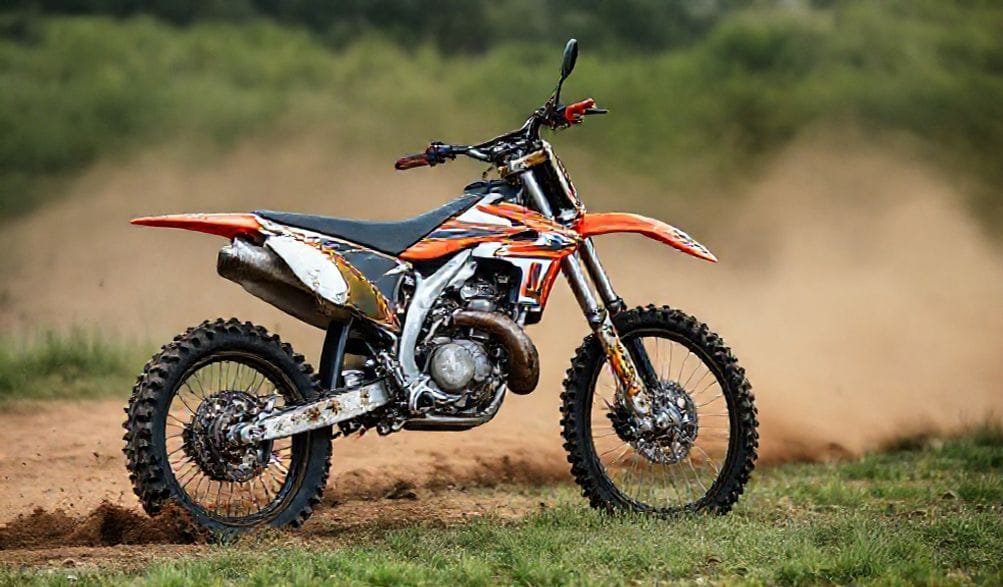
Motorbike vs. Dirt Bike: Understanding the Key Differences for Your Next Ride
You’re scrolling through listings or talking to friends, and the terms start flying: “motorbike,” “dirt bike,” “street bike,” “off-roader.” For a new rider or even an enthusiast looking to branch out, a fundamental question arises: What’s the real difference between a motorbike and a dirt bike? Aren’t they all just two-wheeled machines with an engine?
This common point of confusion can lead to a costly mistake—buying a machine utterly unsuited for your intended adventure. Drawing on decades of collective riding experience, mechanical expertise, and safety training, this guide is crafted to cut through the noise. Whether you’re trying to choose your first bike, understand the terminology, or simply satisfy your curiosity, we’re here to help.
This comprehensive comparison will dissect the motorbike vs. dirt bike debate from every angle. We’ll delve into their core designs, engineering purposes, legal landscapes, and true costs of ownership. By the end, you’ll have a clear roadmap to make an informed, confident decision for your next two-wheeled journey.
Core Definitions: What Are We Really Talking About?
Before we compare, we need to clarify. The terminology can be regional and overlapping, but in the context of this motorbike dirt bike comparison, we’ll define them by their intended purpose.
What is a Motorbike? (The Road-Legal Standard)
- Definition: In this guide, a “motorbike” (often used interchangeably with “motorcycle” or “street bike”) refers to a two-wheeled motor vehicle designed and certified for use on public paved roads.
- Primary Purpose: Transportation and recreation on paved surfaces. Its core mission is to efficiently, safely, and comfortably move a rider from Point A to Point B via public roadways, whether that’s a daily commute, a cross-country tour, or a weekend cruise through the hills.
- Key Identifying Features: Look for equipment mandated by law: headlights, tail lights, turn signals, mirrors, a horn, a speedometer/odometer, and a license plate mount. Its design prioritizes asphalt performance, rider comfort for seated positions, and integration with traffic.
What is a Dirt Bike? (The Off-Road Specialist)
- Definition: A dirt bike is a lightweight motorcycle specifically engineered for operation on unpaved terrain. Terms like “오프로드 오토바이,” “motocross bike,” or “trail bike” fall under this umbrella, with nuances for competition versus recreation.
- Primary Purpose: Recreation and sport on natural or constructed off-road surfaces. Its reason for being is to tackle dirt, mud, sand, gravel, and rocky trails. It’s built for agility, impact absorption, and rider control in challenging, non-paved environments.
- Key Identifying Features: The most obvious sign is its large, knobby tires designed to dig into loose surfaces. It has high ground clearance, long-travel suspension, a minimalist body (often lacking street-legal equipment like lights and mirrors), and a lightweight frame.
Head-to-Head Comparison: Design and Engineering
This is where the “tool for the job” philosophy becomes crystal clear. Every major component is optimized for a completely different world.
Frame, Suspension, and Handling
- Motorbike: The frame is built for stability at sustained high speeds on smooth pavement. Suspension travel is relatively short and stiff, optimized for handling cornering forces and minor road imperfections, not large jumps. The riding geometry balances comfort with precise steering input on asphalt.
- Dirt Bike: The frame is lightweight and nimble, allowing for quick changes in direction. The suspension is the star—it features long-travel forks and shock(s) that can absorb massive impacts from jumps, rocks, and ruts. This allows the wheels to stay in contact with uneven ground, maintaining traction and control.
Tires and Traction
- Motorbike: Equipped with smooth or lightly grooved “street” tires made of harder rubber compounds. Their wide, flat profile maximizes contact with asphalt for cornering grip and braking. They are disastrous in mud or loose dirt.
- Dirt Bike: Fitted with deep, widely spaced, knobby tires. These “knobbies” are designed to bite into and claw through soft, loose, or slippery surfaces like dirt, sand, and mud. They provide minimal contact patch on pavement, making them feel vague, unstable, and wear out extremely quickly on asphalt.
Engine and Performance Characteristics
- Motorbike: Engines are tuned for a broad, usable power band. They prioritize smooth power delivery for accelerating from a stoplight, cruising comfortably at highway speeds, and having power in reserve for passing. Many feature multiple gears closely spaced for this purpose.
- Dirt Bike: Engines are tuned for explosive torque and quick acceleration. The focus is on low-end and mid-range power to blast out of corners, climb hills, and navigate technical terrain. Motocross bikes, in particular, have “peaky” powerbands that come on strong in a specific RPM range. They are lightweight and rev quickly.
Weight and Ergonomics
- Motorbike: Typically heavier due to more components (lights, gauges, larger fuel tanks, fairings) and a focus on solidity at speed. Riding positions vary wildly: upright (standard), leaned forward (sport), leaned back (cruiser), or tall/neutral (adventure).
- Dirt Bike: Lightweight is paramount for control when manhandling the bike over obstacles. The ergonomics are designed for active riding: a narrow seat, tall handlebars, and footpeg placement that allows the rider to stand up comfortably. Standing is a fundamental technique for off-road control, allowing the legs to act as extra suspension.
Purpose, Legality, and Where You Can Ride
This is the most critical practical distinction and where confusion can have legal consequences.
The Roadway Domain of the Motorbike
A motorbike’s natural habitat is the public road network. To operate one legally, you must satisfy government requirements:
* 일 수 있습니다. A motorcycle license (M-class endorsement) is mandatory, obtained by passing written and on-bike tests.
* 일반 자동차 면허로는 부족할 수 있으며, 오토바이 인증(M 클래스)이 필요한 경우가 많습니다. The vehicle must be registered with the state and carry minimum liability insurance.
* DOT-Approved Equipment: Every component required for road use—lights, tires, mirrors—must meet Department of Transportation (or equivalent) safety standards.
* Typical Use Cases: Commuting, highway touring, sport riding on twisty roads, cruising, and urban mobility.
The Off-Road Playground of the Dirt Bike
A pure dirt bike is designed for closed courses and designated off-road areas.
* Legality on Public Roads: In stock form, they are generally not street-legal. They lack the required equipment (lights, signals, etc.) and their tires are not DOT-approved for pavement.
* Typical Use Cases: Motocross tracks, off-road trail systems, enduro competitions, hare scrambles, and private land.
* Making a Dirt Bike Street Legal (Dual-Sport/Adventure Bikes):
This is a common question. The process involves adding a full lighting kit, horn, mirrors, and DOT-approved tires/equipment, then passing a state inspection for a road-legal title. This process is complex, varies dramatically by state and country, and is often not possible for competition-focused models. A far easier path is to buy a purpose-built dual-sport 또는 adventure bike from the factory. These are motorcycles that come street-legal but with off-road-capable ergonomics, suspension, and tires, offering a true hybrid solution.
Cost Considerations: Purchase and Upkeep
The financial commitment extends far beyond the showroom floor.
Initial Purchase Price
- Motorbike: The price range is vast. You can find small-used street bikes for a few thousand dollars or new high-performance models well over $20,000. Brand, engine size (displacement), and technology are key price drivers.
- Dirt Bike: Generally, entry-level and mid-range dirt bikes can be less expensive upfront than their street counterparts. A new 250cc trail bike might start lower than a new 500cc street bike. However, high-end competition motocross bikes command premium prices.
Maintenance and Operating Costs
- Motorbike: Follows standard maintenance schedules (oil changes, chain adjustment, brake fluid, etc.). Tire replacement is a major cost, with high-performance street tires being expensive but lasting thousands of miles under normal road use.
- Dirt Bike: Demands higher-frequency, more intensive maintenance. Engines are stressed in dusty, high-RPM environments, requiring frequent oil and air filter changes. Tires, suspension components, chains, and sprockets wear out much faster due to the abrasive, high-impact nature of off-road riding. Rebuilding forks and shocks is a regular part of ownership for active riders.
The Cost of Gear and Safety
Safety gear is non-negotiable, and the type differs.
* Motorbike Gear: Focuses on abrasion resistance and impact protection for high-speed asphalt slides. Think full-face helmets, armored leather or textile jackets/pants, gauntlet-style gloves, and sturdy over-ankle boots.
* Dirt Bike Gear: Designed for crashes at lower speeds but in rougher environments. Includes motocross helmets (often with a sun peak and different visor for roost protection), goggles, jerseys, padded pants, knee/shin guards, chest protectors, elbow guards, and specialized off-road boots that offer immense ankle support and a grippy sole for footing.
Choosing the Right Bike for You: A Practical Guide
Forget brands or cool factor for a moment. Ask yourself these foundational questions:
- Where will I ride 90% of the time? (The answer should dictate 100% of your choice.)
- What is my primary goal? (Practical transportation, weekend canyon carving, trail exploration, motocross competition?)
- What is my skill level? (Be brutally honest. A powerful bike is a terrible first teacher.)
- What is my total budget? (Include a realistic estimate for gear, insurance, maintenance, and repairs.)
Recommendation Scenarios
- Choose a Motorbike if: Your primary need is daily transport, you dream of long road trips, you love the thrill of paved cornering, or you’ll exclusively be on public roads.
- Choose a Dirt Bike if: You have legal access to trails, tracks, or private land, you seek the adrenaline of off-road technical riding or jumping, and your focus is purely recreational sport.
- Consider a Dual-Sport/Adventure Bike if: You want one machine to legally commute 와 explore forest service roads or light trails on the weekend. It’s the “best compromise” for mixed use but a master of neither extreme.
자주 묻는 질문(FAQ)
Q1: Can you ride a dirt bike on the street?
A: Typically, no. Most pure dirt bikes are not manufactured to meet road-legal standards (lights, signals, horn, DOT tires, etc.). They can sometimes be modified and certified, but this process is heavily regulated, expensive, and not guaranteed to be successful in all jurisdictions.
Q2: Is it harder to ride a dirt bike or a motorbike?
A: They present different challenges. Dirt biking is more physically demanding, requiring constant balance, throttle control, and “body English” on loose, unpredictable surfaces. Street motorcycling demands intense situational awareness in traffic, mastery of higher speeds, and precise control on a high-traction (but unforgiving) surface. Starting on an appropriate, low-power bike in a controlled environment (MSF course for street, a riding school for dirt) is the key to success for both.
Q3: Which is more dangerous, dirt biking or street motorcycling?
A: The risk profiles are different. Street riding introduces the major hazard of other vehicles, road debris, and higher impact speeds, often leading to more severe injuries in accidents. Dirt biking accidents are more frequent due to the challenging terrain but often occur at lower speeds and without traffic, though serious injuries from impacts with the ground or objects are absolutely possible. Proper training, protective gear, and riding within your limits are critical for both disciplines.
Q4: What’s the best bike for a complete beginner?
A: It’s entirely terrain-dependent.
* For off-road beginners: Start with a low-displacement, manageable trail bike (e.g., 125cc-250cc four-stroke) in a safe, open area.
* For street beginners: Start with a lightweight, low-power motorcycle (e.g., 250cc-500cc) and immediately enroll in a Motorcycle Safety Foundation (MSF) or equivalent beginner course.
Q5: Are the licensing requirements the same?
A: 모든 오토바이를 운전하려면 공공 도로에서, 표준 오토바이 면허(M등급 인가)가 필요합니다. 사유지나 폐쇄된 코스에서만 오프로드 바이크를 탈 경우 정부 발급 면허는 필요하지 않지만, 안전을 위해 전문적인 교육을 받는 것이 매우 권장됩니다.
결론
이 논쟁에서 근본적인 요점은 motorbike vs. dirt bike “목적에 맞는 도구” 원칙입니다. 하나는 포장된 도로를 위해 설계된 정밀 기기로, 공공 도로에서 합법적이며 아스팔트 위에서 안정성과 속도를 위해 만들어졌습니다. 다른 하나는 비포장 지형을 정복하기 위해 제작된 튼튼하고 민첩한 전문가로, 도로 주행용 사촌이 힘들어할 환경에서 빛을 발합니다.
This guide, rooted in practical expertise and a paramount concern for rider safety, aims to empower your decision. The right choice isn’t about which machine is “better”—it’s about which is better for you, your goals, and the terrain you’ll actually ride.
다음 단계는 무엇인가요? 직접 체험하세요. 관심사에 맞는 안전 교육 과정에 등록하세요. 대리점을 방문하여 다양한 바이크에 앉아 보세요. 두 커뮤니티의 경험 많은 라이더들과 이야기하세요. 완벽한 라이딩은 여러분의 야망과 맞닿아 있을 것입니다. 구체적인 모델을 탐색할 준비가 되셨나요? 초보자용 스트리트 바이크나 능력 있는 트레일 머신의 상세한 세계로의 여정은 이 기초 지식에서 시작됩니다.
메타데이터_시작—
DISPLAY_TITLE: Motorbike vs. Dirt Bike: The Rider’s Ultimate Comparison Guide
SEO_TITLE: 오토바이 대 오프로드 바이크: 주요 차이점, 합법성 및 선택 방법
META_DESC: 오토바이와 오프로드 바이크 사이에서 고민 중이신가요? 저희 상세 가이드는 디자인, 목적, 합법성 및 비용을 비교하여 여러분의 라이딩 목표에 맞는 올바른 두 바퀴 차량을 선택하는 데 도움을 드립니다.
IMG_PROMPT: 포장된 도로 위의 매끄럽고 도로 주행이 합법적인 오토바이와 숲길에서 흙을 날리는 튼튼한 오프로드 바이크를 대비하는 분할 화면 이미지, 타이어와 서스펜션과 같은 주요 설계 차이점을 강조, 사실적, 역동적인 액션 샷.
—METADATA_END—