
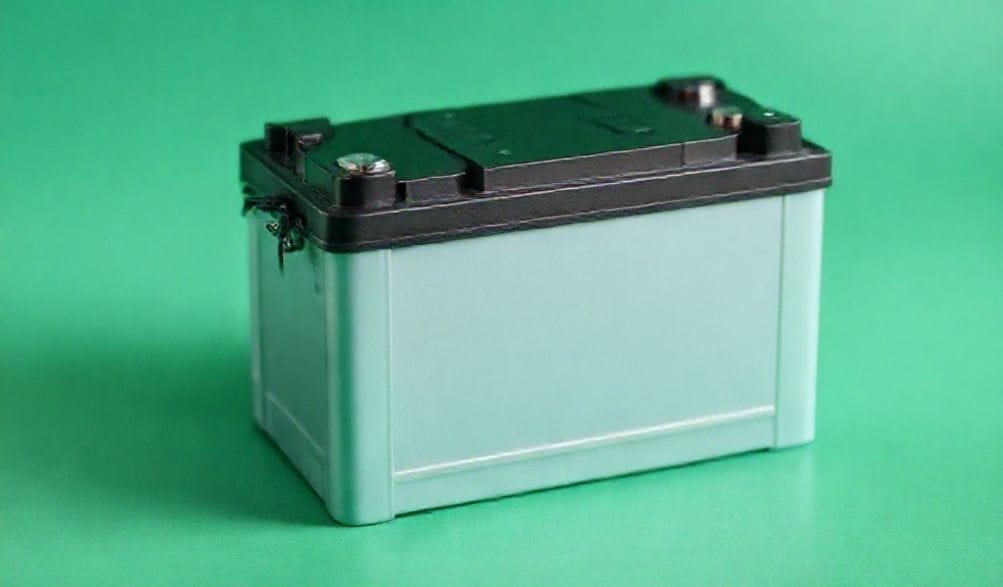
The Complete Guide to 72V Lithium Batteries: Power, Performance, and Practicality
The race for more powerful, efficient, and reliable energy is on. From 电动摩托车 that rival their gas-powered counterparts to industrial equipment that runs longer on a single charge, the demand for robust power solutions is surging. At the heart of this revolution lies advanced battery technology, moving beyond the heavy, slow-charging limitations of the past. While traditional lead-acid batteries have served us for decades, the shift to lithium-ion represents a fundamental leap forward—nowhere more impactful than in high-voltage systems designed for serious performance.
于是, 72V lithium battery: a high-voltage energy storage pack engineered to deliver the intense power and sustained energy that modern applications demand. Whether it’s propelling an 电动车 at higher speeds, storing solar energy for a home, or powering heavy-duty industrial machinery, the 72V lithium battery is becoming the go-to choice for those who need more than just basic functionality.
This guide is designed to be your definitive, expert-driven resource. We’ll move beyond marketing hype to provide a comprehensive, unbiased look at 72V lithium battery technology. We’ll break down the complex chemistry, compare it fairly to other options, explore its ideal applications, and arm you with the knowledge to make an informed purchase. Our goal is to synthesize technical specifications, industry standards, and practical user considerations into one clear, actionable roadmap.
We’ll start by demystifying the technology inside these powerful packs, then compare them to lead-acid and lower-voltage lithium alternatives. We’ll detail the key applications where 72V truly shines, dissect the critical specifications on a data sheet, and finally, provide a step-by-step framework for choosing the right battery for your needs, with a strong emphasis on safety and longevity.
Understanding 72V Lithium Battery Technology
Core Chemistry: What’s Inside a 72V Lithium Battery?
At its core, every lithium-ion battery operates on the same principle: lithium ions move from a negative electrode (anode, typically graphite) to a positive electrode (cathode) through an electrolyte during discharge, and back when charging. This flow of ions creates the electrical current we use. The critical differences—in energy, power, lifespan, and safety—are largely determined by the cathode material.
In the world of 72V batteries, three cathode chemistries dominate:
- LiFePO4 (LFP – Lithium Iron Phosphate): The champion of safety and longevity. LFP chemistry is exceptionally thermally stable, meaning it’s far more resistant to thermal runaway (a chain reaction leading to fire). It boasts an impressive cycle life, often rated for 3,000 to 5,000+ cycles, and maintains performance well across a wide temperature range. The trade-off is a slightly lower energy density (Wh/kg) compared to NMC/NCA, meaning an LFP pack may be physically larger or heavier for the same energy capacity.
- NMC (Lithium Nickel Manganese Cobalt Oxide): The balanced performer. NMC offers a compelling blend of high energy density and good power density, making it popular for applications like electric vehicles where range and compact size are priorities. It has a solid cycle life (typically 1,000 to 2,000 cycles) but requires more sophisticated battery management for optimal safety and longevity compared to LFP.
- NCA (Lithium Nickel Cobalt Aluminum Oxide): The energy density leader. Similar to NMC but with higher nickel content, NCA pushes the boundaries of energy storage in a small, lightweight package. It’s commonly used in premium electric vehicles. However, this comes with increased cost and demands the highest level of monitoring and thermal management control.
专家见解: The choice isn’t about “best,” but “best for the job.” For industrial equipment, solar storage, or any application where safety, cycle life, and total cost of ownership are paramount, LiFePO4 is often the authoritative recommendation. For high-performance vehicles where maximizing range and minimizing weight are critical, NMC or NCA may be the chosen path, assuming a robust Battery Management System (BMS) is in place.
How a 72V System is Configured
A single lithium-ion cell has a nominal voltage of about 3.2V (for LFP) or 3.6V-3.7V (for NMC/NCA). A “72V” battery is not a single cell but a 购买 created by connecting many of these cells in series. For example, a 72V LiFePO4 pack typically consists of 24 cells in series (24 x 3.2V = 76.8V, which is often labeled as a 72V system). This series connection sums the voltage while the capacity (in Amp-hours) is determined by the parallel grouping of cells.
The unsung hero of any lithium battery pack is the 电池管理系统. This electronic “brain” is non-negotiable for safety and performance. A quality BMS performs several critical functions:
* 保护功能: Prevents over-charging and over-discharging of individual cells, which can cause permanent damage or safety hazards.
* 均衡: Ensures all cells in the series string charge and discharge evenly over time.
* 状态监控: Tracks voltage, current, and temperature, and can communicate this data to the user or host device.
* Control: Can shut down the battery if unsafe conditions are detected.
To understand a battery’s capability, you need to speak its language:
* 电压(V): The electrical “pressure” of the system (72V in this case).
* Capacity (Ah): The total charge the battery can deliver. A 50Ah battery can theoretically deliver 50 amps for one hour.
* Energy (Wh): The total work the battery can do (Voltage x Amp-hours). This is the best metric for comparing batteries of different voltages. A 72V 50Ah pack holds 3,600 Wh (72 x 50).
* C-Rate: A measure of charge/discharge current relative to capacity. A 1C discharge for a 50Ah battery is 50A. A 3C discharge is 150A. This defines the battery’s power capability.
72V Lithium vs. Other Battery Types
72V Lithium vs. Lead-Acid: A Transformational Upgrade
Replacing a lead-acid battery bank with a 72V lithium solution isn’t just an upgrade; it’s a transformation. The differences are stark:
| Feature | 72V Lithium (LiFePO4) | 72V Lead-Acid | Advantage |
| :— | :— | :— | :— |
| Weight & Size | Up to 70% lighter, 50% smaller | Very heavy and bulky | Lithium: Enables better vehicle design, higher payloads. |
| Cycle Life | 3,000 – 5,000+ cycles (to 80% DoD) | 300 – 500 cycles (to 50% DoD) | Lithium: Lasts 5-10x longer. |
| Efficiency | ~95-98% efficient | ~70-85% efficient | Lithium: More energy in = more usable energy out. Less heat. |
| 充电时间 | 1-3 hours (fast charge capable) | 6-12+ hours | Lithium: Dramatically reduces downtime. |
| | 加速性能 | 良好 | 优异(瞬时扭矩) | | Essentially zero maintenance | Requires regular watering, cleaning, equalization | Lithium: Set-and-forget convenience. |
| Depth of Discharge | Can safely use 80-100% of capacity | Should not exceed 50% for longevity | Lithium: Effectively doubles usable capacity. |
| Cost Over Time | Higher upfront, much lower per cycle | Lower upfront, very high long-term cost | Lithium: Superior Total Cost of Ownership (TCO). |
该车型 总拥有成本 argument is decisive. While the initial purchase price of lithium is higher, its longevity, lack of maintenance, and full usable capacity mean it costs significantly less per cycle and per kilowatt-hour over its lifespan. Furthermore, the weight savings directly translate to increased range for vehicles and reduced strain on components.
72V vs. Lower Voltage Lithium (e.g., 48V, 60V)
The primary reason to choose 72V over a common 48V or 60V system boils down to **功率**. According to the fundamental electrical formula Power (Watts) = Voltage (Volts) x Current (Amps), for a given amount of current, higher voltage delivers more power.
This makes 72V systems necessary or highly beneficial for applications that require:
* Higher Top Speeds: Electric motorcycles and scooters use 72V systems to achieve highway-capable speeds.
* Greater Torque & Acceleration: Instant torque is key for performance vehicles, ATVs, and industrial machines that need to climb steep hills or move heavy loads.
* Running High-Power Accessories: Operating multiple high-wattage components (e.g., heaters, powerful winches, industrial motors) simultaneously is more efficient at higher voltage, as it requires lower current for the same power, reducing heat loss in wiring.
The trade-offs for choosing 72V include a potentially higher system cost, increased complexity in sourcing compatible 72V motors and speed controllers, and the need for more cells in series, which places greater importance on the BMS’s balancing capabilities.
Key Applications for 72V Lithium Batteries
High-Performance Electric Vehicles
This is the most visible arena for 72V power.
* Electric Motorcycles, Scooters, and Mopeds: 72V lithium packs are the standard for performance models, enabling ranges of 60-120+ miles and speeds exceeding 60-70 mph, effectively replacing gas-powered commuter bikes.
* Golf Carts & Utility Vehicles (UTVs): For resorts, large campuses, or farms, a 72V lithium conversion or upgrade provides exceptional hill-climbing torque and all-day runtime without the voltage sag of lead-acid, reducing downtime for charging.
* All-Terrain Vehicles (ATVs) and Snowmobiles: The burst power needed for quick acceleration in off-road conditions and the ability to perform reliably in cold temperatures—where lithium vastly outperforms lead-acid—makes 72V lithium an ideal choice for electrifying recreational and utility terrain vehicles.
Renewable Energy & Industrial Uses
Beyond mobility, 72V finds a strong home in stationary and specialized applications.
* Solar Energy Storage Systems: A 72V battery bank is an efficient voltage for many off-grid and backup power inverters. LiFePO4’s long cycle life, safety, and ability to handle daily deep cycling make it perfect for storing solar energy.
* Industrial Machinery: Large floor scrubbers, sweepers, and material handling equipment (like pallet jacks) benefit from the rapid charging, zero maintenance, and consistent power delivery of 72V lithium packs, increasing operational uptime.
* Marine Applications: For trolling motors on fishing boats or as the primary power source for small electric boats, a 72V lithium battery provides quiet, long-lasting, and fume-free propulsion with a huge weight advantage over lead-acid.
Expert Advisory: It is critical to use batteries engineered for the specific application. A battery designed for an electric vehicle with high burst currents may not be optimized for the slow, deep cycles of a solar system, and vice versa. Always verify the battery’s intended use case with the manufacturer.
Critical Specifications and What to Look For
Decoding the Spec Sheet
Navigating a product spec sheet is key to avoiding disappointment. Here’s what to focus on:
* Capacity: Prefer 瓦时 over Amp-hours (Ah) for true energy comparison. A “72V 50Ah” pack (3,600 Wh) holds more energy than a “48V 80Ah” pack (3,840 Wh).
* 循环寿命: Look for the cycle count at a specified Depth of Discharge (DoD). “2000 cycles at 100% DoD” is far more valuable than “3000 cycles” with an unspecified DoD.
* Charge/Discharge Rates: Confirm the continuous 及 真正的越野摩托电动自行车应具备长前叉倾角、高置把手以及为动态骑行设计的坐垫。车架应使骑手感觉融入车辆而非置身其上。 discharge current (in Amps or as a C-rate). Ensure it exceeds your application’s maximum draw. Similarly, check the recommended charge current.
* The BMS Specs: This is where quality is defined. The BMS should explicitly list protections for over-voltage, under-voltage, over-current, and short circuit. Cell balancing (passive or active) is mandatory. Communication ports (like CAN bus or RS485) are a plus for advanced monitoring.
Safety and Durability Features
Specifications on paper must be backed by physical build quality.
* Intrinsic Chemistry Safety: As discussed, LiFePO4 (LFP) is the safest lithium chemistry commercially available, a major reason for its dominance in many 72V markets.
* 制造质量: Inquire about cell grade—”A-grade” cells from reputable manufacturers (e.g., CATL, EVE, BYD) ensure consistency and performance. Spot-welded or laser-welded connections are superior to soldering. A sturdy casing with a good 大多数车型都具备防雨、防积水及应对潮湿路面的能力。请查看其 (e.g., IP65 for dust-tight and water jet resistance) is crucial for demanding environments.
* 热管理系统: For high-power applications, check if the pack has provisions for thermal management, such as cooling fins or even liquid cooling plates.
Practical Expert Advice: Always use the manufacturer-provided charger. Store batteries at a partial state of charge (30-60%) in a cool, dry place if not used for extended periods. Never physically modify, puncture, or expose a battery pack to fire. If a battery is damaged, swollen, or behaving abnormally, discontinue use and contact the supplier.
How to Choose the Right 72V Lithium Battery
Matching the Battery to Your Application
Start with a needs assessment checklist:
1. 电压: Must be 72V (confirm your motor/controller compatibility).
2. Energy Needs: Calculate your required Watt-hours. Estimate daily usage or consult your vehicle’s manual for typical consumption.
3. Power Needs: Determine the maximum continuous and peak current (in Amps) your application draws. Choose a battery whose discharge rating exceeds this.
4. Physical Constraints: Measure the available space (L x W x H).
5. Weight Limits: Know how much weight your vehicle or system can accommodate.
6. 环境: Consider the operating temperature range. Will it be used in extreme heat or cold?
The single most important step: Consult the manufacturer of your electric vehicle, inverter, or equipment. They can often provide the exact battery specifications or recommend compatible models.
Evaluating Brands and Suppliers
With your requirements in hand, evaluate suppliers with a critical eye:
* Reputation & Reviews: Research the brand. Look for established companies with a track record. Read user reviews focusing on longevity and customer service experiences.
* 保修: A strong warranty (e.g., 3-5 years) is a sign of confidence. Read the terms: Does it cover capacity loss? What is the claim process?
* 认证标准: Look for essential safety certifications like 优先选择列有公认安全认证的电池。关键认证包括 (mandatory for transportation), (锂电池运输强制性认证)、, 或称 (欧洲健康、安全和环境保护符合性认证),以及 listings. These indicate independent testing.
* Transparency & Support: A reputable supplier provides detailed, easily accessible spec sheets, user manuals, and wiring diagrams. Test their pre-sales technical support with your specific questions. Responsive, knowledgeable support is a strong positive indicator.
常见问题解答
Q1: How long does a 72V lithium battery last?
答: Lifespan is measured in two ways. Cycle life refers to charge/discharge cycles; a quality LiFePO4 battery can last 3,000 to 5,000 cycles (often 8-10+ years of daily use) before reaching 80% of its original capacity. Calendar life is its age-based lifespan, typically 10+ years. Proper charging and avoiding full 100% discharges for storage maximize both.
Q2: How long does it take to charge a 72V battery?
答: Charge time depends on battery capacity and charger output. Use the formula: Charge Time (hours) ≈ Battery Capacity (Ah) / Charger Current (A). For example, a 50Ah battery charged with a 10A charger takes about 5 hours (50/10). A 20A charger would cut that to ~2.5 hours. Always use a charger matched to the battery’s specifications.
Q3: Are 72V lithium batteries safe?
答: Modern 72V lithium batteries, particularly those using LiFePO4 chemistry and equipped with a high-quality Battery Management System (BMS), are designed to be very safe for their intended uses. They are engineered with multiple layers of protection. Safety also depends on the user: always follow manufacturer guidelines for charging, storage, and installation, and avoid physical damage to the pack.
Q4: Can I replace my lead-acid batteries with a 72V lithium battery?
答: Often, yes—but it’s not always a direct “drop-in.” You must ensure voltage compatibility (a 72V lithium pack will have a different charging voltage profile than lead-acid). You will absolutely need a lithium-specific charger. You may also need to adjust settings on your vehicle’s motor controller for optimal performance. Consulting a professional or the vehicle manufacturer is highly recommended.
Q5: What is the typical warranty for a 72V lithium battery?
答: Warranties vary, but for reputable brands, expect 2 to 5 years. Many warranties are pro-rata and include a guaranteed capacity retention at the end of the term—for example, “5-year warranty, guaranteeing at least 70% of original capacity at the end of the warranty period.” Always read the warranty document carefully.
结论
The 72V lithium battery stands as a cornerstone of modern high-power electrification, offering a compelling combination of lightweight design, long cycle life, rapid charging, and robust performance. Among the options, LiFePO4 chemistry has emerged as a particularly strong contender for its exceptional safety profile and longevity, making it an authoritative choice for a wide range of demanding applications, from vehicles to energy storage.
The path to the right battery is not about finding a generic “best” but about meticulously matching the battery’s specifications to your application’s unique requirements. Prioritize your needs for runtime (Wh), power (A), physical size, and environmental conditions over brand names alone.
As a final piece of expert guidance, we strongly recommend investing in a battery from a reputable supplier that offers clear technical documentation, a robust and understandable warranty, and accessible customer support. Proper installation, using the correct charger, and adhering to basic maintenance guidelines are the final, crucial steps to ensuring you reap the full benefits of this powerful technology for years to come. The future of energy storage is bright, with ongoing advancements in lithium technology promising even greater performance and accessibility, solidifying the 72V lithium battery