
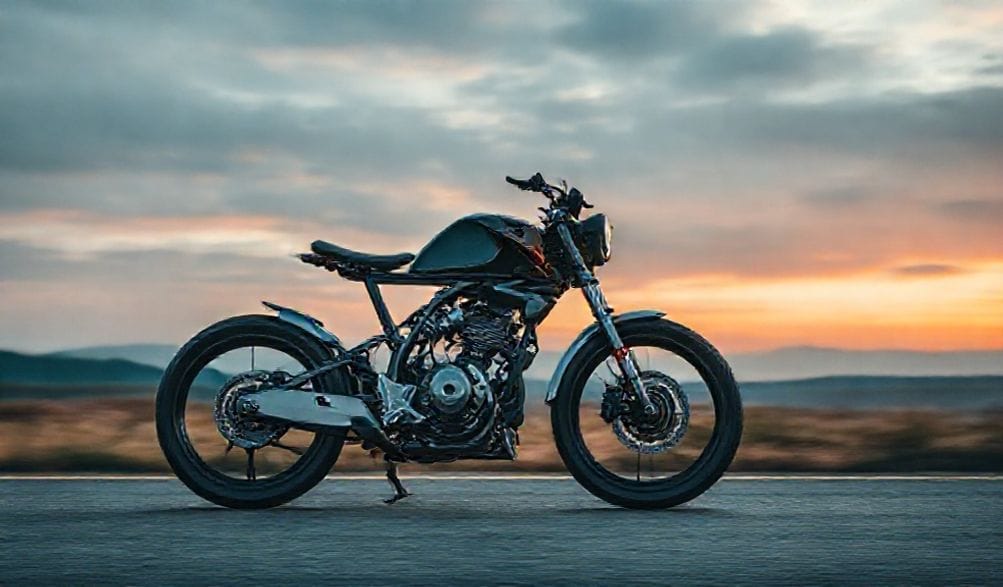
The 100mph E-Bike: Ultimate Speed Machine or Legal Liability? A Complete Guide
The fantasy is undeniably alluring: the nimble, open-air feel of a bicycle fused with the neck-snapping acceleration and triple-digit speed of a sport motorcycle. In recent years, viral videos of stealthy, bicycle-like machines silently screaming past traffic have rocketed the concept of the “100mph e-bike” into the public consciousness. These machines promise a thrilling, almost futuristic form of personal mobility that captures the imagination of speed enthusiasts and tech tinkerers alike.
But what is the reality behind the headlines? This article serves as a factual, safety-focused, and legally-informed deep dive into the world of ultra-high-speed electric bicycles. Our purpose is not to sensationalize or endorse, but to provide a clear-eyed analysis that separates exhilarating engineering from sobering responsibility. We’ll address the spectrum of reader intent—from the performance-curious enthusiast to the commuter wondering about legality, to the safety-conscious individual seeking the unvarnished truth.
Here is the core thesis: While mechanically possible to build an electric bicycle capable of 100mph, these vehicles exist in a profound gray area of regulation, present monumental safety risks, and are fundamentally different from the e-bikes designed for use on public roads, bike paths, and trails. Understanding this distinction is crucial for anyone considering stepping into this high-stakes arena.
What Exactly is a “100mph E-Bike”? Defining the Machine
At first glance, a 100mph e-bike might look like a beefed-up mountain bike. But under the surface, it shares far more DNA with an 电动摩托车 than with the e-bike you’d buy at a local shop. It’s essential to define what we’re talking about, as the term “e-bike” becomes a severe misnomer at this performance tier.
Blurring the Lines: E-Bike vs. Electric Motorcycle
The difference lies in the specifications, which blow past any legal or practical definition of a bicycle:
- 电机功率: A typical Class 1, 2, or 3 e-bike for road use features a motor rated between 250 watts and 750 watts (with 1,000W being an occasional high limit). A machine targeting 100mph often utilizes a motor of 5,000 watts (5kW) or more. Some DIY builds exceed 15,000 watts.
- Battery Voltage & Capacity: Standard e-bikes run on 36V or 48V battery systems. A 100mph-capable machine typically requires a 72伏, 84V, or even higher voltage system with a massive capacity (often 30Ah+) to deliver the immense, sustained current needed for that speed.
- Weight & Construction: Where a commuter e-bike might weigh 50-70 lbs, these speed machines, with their oversized batteries and reinforced components, often tip the scales at 120 lbs or more. Their frames, while sometimes based on bicycle designs, are heavily reinforced or are custom-built from the ground up to handle the stresses.
These specifications don’t just exceed common sense—they exceed the law. In virtually every jurisdiction in the United States, Canada, and Europe, a “low-speed electric bicycle” is legally defined by a motor under 750W (1hp) and a maximum assisted speed of 20mph or 28mph. A 100mph vehicle falls so far outside this definition that it ceases to be a “bicycle” in the eyes of the law.
Core Technology Behind the Speed
Building a two-wheeled electric vehicle that can hit 100mph requires a specific and high-performance approach to its core systems:
- High-Output Motors: At this power level, high-torque direct-drive hub motors are common for their simplicity and ability to handle massive wattage. Some performance builds use powerful mid-drive motors, but the focus is on thermal management and sustained high-RPM output, not just hill-climbing torque.
- Massive Battery Packs: The battery isn’t just large; it’s engineered for extreme discharge. It uses high-quality lithium-ion cells (like 21700 or high-discharge 18650 cells) arranged in series for high voltage and in parallel for high current. The Battery Management System (BMS) must be robust enough to prevent catastrophic failure under this load.
- Performance Tuning & Controllers: The electronic speed controller (ESC) is the brain. Stock controllers on commercial e-bikes are limited. Reaching 100mph almost always involves installing an aftermarket, programmable high-voltage controller that can unlock the full potential of the motor and battery, often by removing speed limiters and increasing current flow.
The Legal Landscape: Where (If Anywhere) Can You Ride One?
This is the most critical section for any prospective owner. The thrill of speed is immediately tempered by the complex and unforgiving world of vehicle regulation.
Understanding E-Bike Classifications (Class 1, 2, 3)
Most regions use a three-class system to regulate e-bikes:
* 第一类: 仅踏板助力,最高时速20英里。.
* 第二类: 油门助力,最高时速20英里。.
* 第三类: 仅踏板助力,最高时速28英里。.
These classes determine where you can ride (e.g., bike paths, roads) and whether you need a license, registration, or insurance. A 100mph e-bike is not a Class 1, 2, or 3 e-bike. It is an entirely different category of vehicle.
It’s Likely an Unregistered Motor Vehicle
In legal terms, a 100mph e-bike will almost certainly be classified as a 轻便摩托车、踏板车或摩托车. This classification triggers a host of requirements that do not apply to bicycles:
- Registration & Titling: 车辆必须在您所在州的机动车管理局(DMV)注册并悬挂车牌。.
- 保险: Liability insurance is mandatory for registered motor vehicles.
- 驾驶执照: You must possess a valid driver’s license, and often a * 持有驾照上的 。.
- Vehicle Certification: To be registered, a motor vehicle must typically have certification from the Department of Transportation (DOT) for safety components (lights, brakes, etc.) and possibly the Environmental Protection Agency (EPA). Custom-built or modified bikes almost never have this certification.
State-by-State Nuances: While specific laws vary, the universal principle is that no state allows an unlicensed, unregistered, and uninsured vehicle capable of highway speeds (let alone 100mph) to be operated on public roads. Riding one on the street is an invitation for severe legal penalties: hefty fines, impoundment of the vehicle, and even misdemeanor charges.
Off-Road and Private Property Use
This is the sole domain where operating a 100mph e-bike 可能 be legal. The key requirements are:
* 私人财产: You have the explicit permission of the landowner.
* Closed Courses: Sanctioned race tracks, motocross parks, or other off-road venues that permit such vehicles.
* Racing Events: Organized competitions for electric vehicles.
Even in these settings, waivers and strict safety gear rules are the norm. The machine’s legality is tied to the land’s designation, not the machine’s design.
Critical Safety Considerations: Beyond the Speedometer
The legal consequences are serious, but the safety risks are existential. Operating a bicycle-derived vehicle at motorcycle speeds creates a cascade of engineering compromises that can have fatal results.
Bicycle Components at Motorcycle Speeds
This is the most dangerous misconception. Parts designed for 28mph are catastrophically inadequate at 100mph.
- 3.3. 电池与电气系统安全 即使是高端型号,标准的自行车液压碟刹也并非为反复耗散120磅以上(含骑手)车辆在100英里/小时速度下的巨大动能而设计。存在极高的热衰减和失效风险。配备更大刹车盘和更精密卡钳的摩托车级制动系统是最基本要求。.
- 车架与前叉完整性: 自行车车架的设计仅能承受自行车速度下的踩踏力和颠簸。100英里/小时下的高速摆动、紧急制动和冲击所产生的应力,可能导致金属疲劳以及焊接点或铝/碳纤维部件的突然灾难性失效。.
- 轮胎: 自行车轮胎不像摩托车轮胎那样有速度等级认证。它们并非为承受持续100英里/小时行驶所产生的离心力、热量积聚和磨损模式而设计。在该速度下发生爆胎几乎必然导致致命后果。.
骑手安全装备不容妥协
若以摩托车速度行驶,则需摩托车级别的防护。标准自行车头盔在100英里/小时的碰撞中毫无用处。.
* DOT认证的全盔(越野摩托车头盔)最为理想。它能保护您的头部、下颌和面部免受冲击和碎屑伤害。 A 需佩戴通过DOT/Snell认证的全覆式摩托车头盔。 是强制性的。它保护的不仅是你的头骨,还有你的下巴和面部。.
* 护具: 需穿着带有CE认证护具(肩、肘、背、髋、膝)的摩托车夹克和裤子。.
* 自行车车架在摩托车级压力下可能弯曲失效,此类设备需要坚固的摩托式车架。 耐磨的摩托车手套及过踝靴子对于在滑倒时保护四肢至关重要。.
风险的严峻现实
参考数据:根据美国国家公路交通安全管理局(NHTSA)统计,在摩托车事故中,每行驶车辆英里的死亡率 几乎是乘用车的 29倍。在100英里/小时的电动自行车上,你将面临摩托车手同等的暴露风险和脆弱性,且平台通常更不稳定,部件也未针对该任务认证。容错率为零,事故后果将是重伤或死亡。.
谁真正制造这些?市场选择与注意事项
100英里/小时电动自行车的市场很小众,主要分为DIY改装者和少数专业制造商。.
DIY / “Sur-Ron” 改装路线
相当一部分超高速电动自行车是改装而非直接购买的。爱好者通常以 Sur-Ron Light Bee XSur-Ron(一种轻量、强劲的电动越野自行车)等平台为基础,通过改装售后电池、控制器和电机,将其速度远远提升至原厂45+英里/小时的限制之上。.
- 强调经验: 此路径 仅适用于技术高度娴熟的专家。. 需要对高压直流系统、电池管理、机械和制造有深刻理解。任何接线错误或电池不匹配都可能导致火灾或故障。.
小众及高性能品牌
少数公司服务于这一极端性能细分市场,例如 Stealth Bicycles HPC(Hi-Power Cycles,拥有B-52轰炸机等型号)、, 及其他品牌。它们销售完整的、性能惊人的机器,堪称工程奇迹。 透明度说明:.
- 仔细审视其营销宣传至关重要。该领域信誉良好的品牌通常会包含明确免责声明,例如: "仅限封闭赛道竞赛使用" “禁止在公共道路上使用”。” 或 “忽视这些免责声明将使购买者面临法律和人身危险。” 信誉经销商与保修的重要性.
对没有实体服务网络的 obscure 在线卖家或品牌需极度警惕。如果5kW电机或84V电池出现问题,你需要专家支持。此外,
若车辆在, 法律不允许的公共道路上使用或为追求更高性能而进行改装, 任何保修将立即失效。.
给极端电动自行车爱好者的负责任替代方案
若你对速度和电力的渴望强烈,仍有更安全、合法且能带来激情的途径可供探索。.
高性能(但合法)的3类电动自行车
现代3类电动自行车,特别是来自Specialized、Trek等品牌或搭载Bosch系统的高性能型号,能提供充足的刺激感。凭借750W的助力将你推至28英里/小时(加上自身踩踏在下坡时可更快),它们能在道路和合适的小径上提供快速、振奋且合法的骑行体验。.
电动摩托车与电动轻便摩托车世界
如果你真正的渴望是摩托车级别的速度和性能,请选择正确的工具。. 来自 Zero等公司的 优势: 或 通过联邦认证(符合FMVSS标准),配备车辆识别码,可注册投保,且专为高速公路速度下的安全性、稳定性和可靠性设计。 电动摩托车经过DOT认证,可购买保险、注册登记,并且从设计之初就保证了在公路速度下的安全性。它们在合法且经工程设计的安 全框架内提供了你所追求的速度和刺激。对于稍低的速度,可注册的 电动轻便摩托车.
也是极佳的城市选择。
安全体验速度:赛道日与赛车俱乐部
* 探索高速电动车辆极限的最安全方式是在受控环境中进行。可寻找: 电动摩托车赛道日:.
* 许多赛道会举办此类活动,你可以在其中高速骑行合法上路的电动摩托车。 电动自行车/电动摩托车竞赛系列:.
常见问题解答
一些组织正专门为电动越野自行车和性能电动自行车组建竞赛系列,提供一个经认可、有竞争性的释放途径。
答: 问:100英里/小时的电动自行车能合法上路吗?.
在公共道路上作为自行车使用几乎肯定不合法。要合法上路,它需要作为机动车(很可能是摩托车)进行认证、注册和投保,并且你需要持有有效的摩托车驾照。 且合法 问:我能在路上骑行的最快
答: 电动自行车是什么?.
在大多数地区,3类电动自行车(提供最高28英里/小时的踏板助力)是无需注册即可上路使用的最快合法选择。请务必查询你所在州和地区的具体法律。
答: 问:一辆能达到100英里/小时的电动自行车价格是多少?.
价格差异巨大。基于Sur-Ron的DIY改装起步价约为6,000-8,000美元。性能品牌的完整小众型号很容易达到10,000至20,000美元以上。这还不包括全套摩托车安全装备的费用。
问:我能改装现有的电动自行车以达到100英里/小时吗?. 答:强烈不建议这样做,且极其危险。.
消费级电动自行车的车架、刹车、前叉和轮胎并非为此类速度设计。尝试改装将导致部件发生灾难性失效的严重且迫在眉睫的风险,会使所有保修失效,并且上路使用仍然是非法的。
答: 唯一安全的场所是获得土地所有者明确许可的私人领地,或是具备完善安全规程与紧急救援服务的正规封闭赛道赛事。.
结论
时速100英里的电动自行车是电力推进技术与爱好者工程的非凡见证。从机械角度看,它无疑是一台令人印象深刻的机器。然而,它存在于一个深刻的灰色地带——既是法律难题,也是安全悖论。就其所有功能实质而言,它等同于电动摩托车,却通常缺乏相应的认证标准、设计完整性与合法地位。.
作为负责任的信息来源,我们的立场必须将安全与法律合规置于首位。本次深度剖析旨在提供有依据的决策参考,而非追求轰动效应。一个严峻的现实是:对于99.9%的骑行者而言,在自行车平台上追求如此极端的速度,将带来不可接受的风险等级与法律隐患。.
最终建议: 对于那些寻求电动自行车乐趣与实用性的用户,充满活力且合法、安全、极具驾驶乐趣的1类、2类及3类车型市场,是明确且值得的选择。而对于真正热衷极致高速电动性能的爱好者,负责任的选择应直接指向通过DOT认证的电动摩托车,以及刺激且受控的赛道环境。.
行动号召: 在追求任何高性能电动交通工具前,请遵循以下步骤:1) 彻底研究您所在地的车辆法规与交通法律。. 2) 投资于高质量、经过认证的安全装备——这是您最重要的组成部分。. 3) 始终将您自身的长远安全,以及与您共享道路、小径或赛道的他人的安全置于首位。.
METADATA_START—
显示标题:时速100英里电动自行车:终极速度机器还是法律隐患?
搜索引擎优化标题:100英里时速电动自行车指南:法律风险、安全与真相 | 2024年评测
元描述:100英里时速电动自行车能否合法上路?我们揭示超高速电动自行车的安全风险、法律规定与实际性能真相。完整指南。.
图片生成提示:一张超写实照片,展现一辆外观未来感、动力强劲的电动自行车,配备大型电池与电机,停靠在赛道边缘,座位上放置着一个全罩式摩托车头盔。画面同时传达出高速潜力与严肃的安全考量。.
—METADATA_END—