
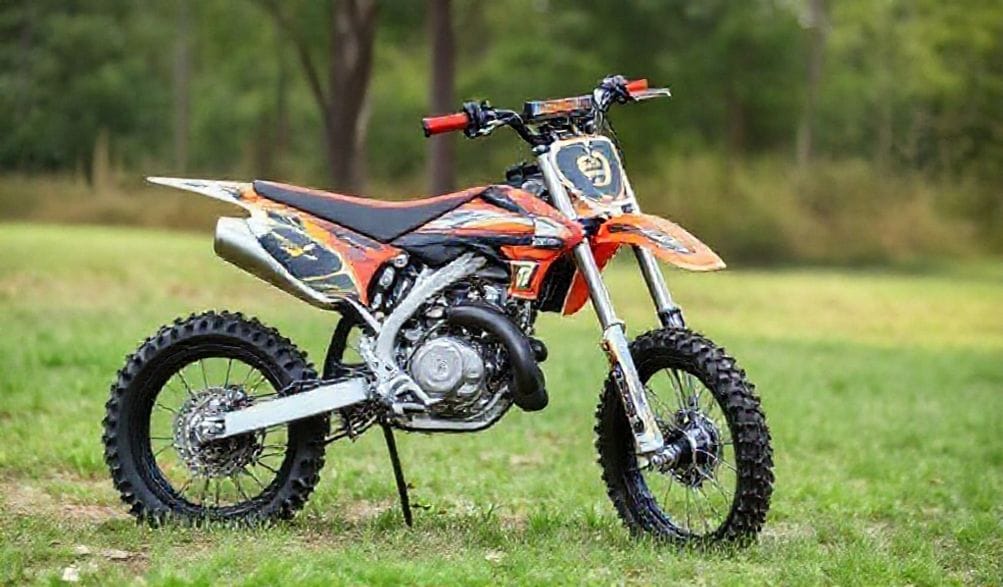
The Ultimate Guide to Finding the Best Kids Dirt Bike for Your Young Rider
Choosing your child’s first motociklo is an exciting milestone, a passport to adventure, independence, and the great outdoors. But for a parent, it can also feel overwhelmingly complex. Stroll through any dealership or scroll through endless online listings, and you’re bombarded with options: 50cc or 110cc? Gas or electric? Which brand is trustworthy? How do you know what actually fits?
As parents and lifelong off-road enthusiasts, we’ve been exactly where you are. We understand this isn’t just about buying a toy; it’s a significant investment in your child’s safety, skill development, and joy. Getting it wrong can lead to frustration, fear, or worse. Getting it right can ignite a lifelong passion.
This guide is built on hands-on experience, meticulous research, and consultations with riding coaches and safety experts. We’ll cut through the marketing jargon and provide clear, actionable advice to help you navigate every step. Our goal isn’t just to list products, but to empower you with the knowledge to confidently select the best kids dirt bike for your young rider’s age, size, and skill level.
Why Choosing the Right Kids Dirt Bike is Critical
Purchasing a dirt bike is fundamentally different from buying a bicycle. The stakes are higher, and the machine demands respect. This decision lays the foundation for your child’s entire riding journey, making it a critical juncture where safety and psychology intersect.
Safety First: The Non-Negotiable Priority
Let’s be unequivocal: an improperly sized or overpowered dirt bike is dangerous. The most crucial factor in preventing injuries isn’t just the Šalmas (though that’s vital), but the bike itself.
- The Fit-Injury Correlation: A bike that is too tall forces a child to tiptoe or lean excessively when stopped, leading to drops and falls. A bike that is too powerful can react faster than a beginner’s reflexes, resulting in loss of control. Proper fit—primarily standover height—is your first and most effective safety feature.
- The Risk of “Growing Into It”: The temptation to buy a bike that’s slightly too big to get an extra year out of it is strong. Resist it. An oversized bike increases risk exponentially. Control, confidence, and safe riding mechanics are all built on a platform of proper fit.
Building Confidence and Skill (Not Fear)
A dirt bike should be a tool for empowerment, not intimidation. The right bike fosters progressive learning.
- The Confidence Cycle: A correctly sized, manageable bike allows a child to experience small successes—mastering the clutch, navigating a turn, tackling a small bump. Each success builds confidence, which encourages more practice and skill development. This positive cycle fosters a genuine love for the sport.
- The Impact of a Bad Match: Conversely, a bike that’s too challenging creates a negative feedback loop. Struggling to touch the ground, stalling constantly, or being scared of the throttle leads to frustration, anxiety, and a desire to quit. The goal is to create a rider, not to scare one away.
How to Size a Dirt Bike for Your Child: The Golden Rule
Forget age-based charts as your primary guide. Every child grows differently. The single most reliable method for finding the best kids dirt bike is based on one simple measurement: your child’s inseam.
The Inseam Measurement Method (Forget Age Alone!)
This is your most important pre-purchase task.
- How to Measure: Have your child stand straight against a wall, barefoot, with their feet shoulder-width apart. Place a hardcover book snugly up into their crotch, simulating a bike seat. Mark the wall at the top of the book, then measure from the floor to the mark. That’s their true inseam.
- The Standover Height Rule: This is the golden rule. When shopping for a bike, find its sėdynės aukštis specification. Your child should be able to stand over the bike’s frame (not the seat) with both feet planted flat on the ground, with a slight bend in the knee. This stable, confident stance is non-negotiable for control when stopping and maneuvering at low speeds.
Engine Size (cc) Guidelines by Age & Experience
Once you have inseam and standover height locked down, engine size (cubic centimeters, or cc) determines the power. Use this as a secondary guideline to the primary rule of physical fit.
| Age Range (Typical) | Inseam (Approx.) | Engine Size (cc) | Experience Level & Notes |
| :— | :— | :— | :— |
| 3 – 5 years | 14″ – 18″ | Electric (12v-24v) or 50cc (4-stroke) | Absolute Beginner. Balance bikes, then low-power electric or throttle-limited 50cc (e.g., Yamaha PW50). |
| 6 – 9 years | 20″ – 24″ | 50cc – 110cc (4-stroke) | Beginner to Intermediate. The 110cc class (Honda CRF110F, Kawasaki KLX110) is a hugely popular, manageable step up. |
| 10 – 12 years | 24″ – 28″ | 110cc – 125cc (4-stroke) | Intermediate. Larger 125cc four-strokes offer more power and size for growing riders. Small 2-strokes may appear here for competitive kids. |
4-Stroke vs. 2-Stroke for Beginners: Always start with a 4-stroke engine. They provide linear, predictable power (torque), are easier to ride, and are more forgiving. 2-stroke engines have a “power band”—sudden, explosive power that can be difficult for beginners to manage. They are for advanced, competitive riders.
Weight of the Bike Matters
A lightweight bike is a controllable bike. A child struggling to lift a 150-pound machine off the ground after a tip-over is a child who is learning to fear the bike. Lighter bikes are:
* Easier to Maneuver: They change direction more easily.
* Less Intimidating: Kids feel more in command.
* Safer in a Fall: They can push it away or get out from under it.
Electric bikes often have a weight advantage here, as do models with aluminum frames versus steel.
Types of Kids Dirt Bikes: Understanding Your Options
The landscape has evolved. You now have three main paths, each with distinct pros and cons.
Gas-Powered Dirt Bikes: For Performance and Growth
These are the traditional, authentic dirt bikes.
* Privalumai: Longer ride time (just refuel), widespread dealer network, superior performance for varied/rough terrain, and a clear, graduated path for growth (50cc, 110cc, 125cc, etc.). They teach full machine management.
* Trūkumai: Require regular maintenance (oil changes, air filter cleaning), are louder (not neighborhood-friendly), and you must mix oil with fuel for 2-strokes. They have a higher initial skill requirement.
* Best for: Families already into off-roading, riders with access to open land or trails, and kids who will ride frequently and are ready for the full mechanical experience.
Electric Dirt Bikes: The Quiet, Low-Maintenance Choice
The silent revolution in youth riding.
* Privalumai: Nearly zero maintenance (no oil, gas, or filters), instant and controllable torque, whisper-quiet operation (perfect for backyards), and often lighter. They allow kids to focus purely on balance and control.
* Trūkumai: Limited run time (30-60 mins typical), can have a long recharge time (several hours), and often lack the top-speed thrill of gas bikes. Battery life degrades over years.
* Best for: Absolute beginners, practice in residential areas, indoor/outdoor riding facilities, and as a complementary practice bike. Brands like Stacyc and Oset are leaders.
Balance Bikes (No Pedals): The Foundation for Toddlers
Don’t overlook this critical first step.
* The Skill Translator: A pedal-less balance bike teaches the single most important motorcycle skill: balancing on two wheels. Kids learn to lean, steer, and control speed with their feet—instincts that translate directly to a throttle-based dirt bike.
* Best for: Ages 18 months to 5 years. It’s the safest, most natural way to build the core competency for future riding.
Top Features to Look for in a Quality Kids Dirt Bike
Beyond size and type, specific features separate a good bike from a great—and safe—one.
Adjustable Controls: For Growth and Custom Fit
A quality bike grows with your child.
* Throttle Limiters: A screw or dial that physically limits how far the throttle can twist, effectively capping top speed. Essential for beginners.
* Clutch and Brake Levers: Should be adjustable to fit smaller hands, allowing for proper one- or two-finger operation.
Suspension Quality: Handling Bumps and Landings
Good suspension isn’t just about comfort; it’s about keeping the tires on the ground for control.
* Front Forks & Rear Shock: Look for bikes with actual spring suspension, not just pogo-stick style forks. Adjustable preload on the rear shock is a premium feature that lets you tune the bike for your child’s weight.
Safety Components: What Should Be Standard
- Kill Switches: Both a tether kill switch (clips to the rider’s jersey and kills the engine if they fall off) and a manual kill button on the handlebars are mandatory.
- Chain Guard: A full-case guard that prevents little fingers or clothing from getting caught in the drive chain.
- Durable Brakes: Reliable, responsive disc or drum brakes are a must. Test them.
Build Quality and Brand Reputation
This is where you get what you pay for.
* Established Brands: Stick with known names like Yamaha (PW50), Honda (CRF50F/110F), Kawasaki (KLX110), KTM, and Cobra for gas. For electric, Razor, Stacyc, and Oset have proven track records. They offer parts availability, dealer support, and better resale value.
* Warning Signs: Be extremely wary of ultra-cheap, no-name bikes from big-box stores or random online sellers. They often use inferior materials, have poor welding, lack safety features, and are impossible to get parts for. They are frequently referred to as “disposable” bikes.
Essential Safety Gear: Non-Negotiable Equipment
The bike is only half the equation. Gear is not optional. Budget for it upfront—it’s cheaper than a hospital bill.
The Complete Safety Gear Checklist
Every ride requires this full kit:
1. Helmet: DOT certified at a minimum; SNELL arba ECE certification is better. It must fit snugly.
2. Apsauginiai akiniai: With a shatter-proof lens to protect eyes from dirt, rocks, and branches. Get multiple tear-offs for muddy days.
3. Pirštinės: Protect hands from blisters, branches, and falls. Motocross-specific gloves offer padding and grip.
4. Batai: Motocross boots are critical. They protect ankles from twists and breaks, and feet from impact. Do not use hiking boots.
5. Krūtinės apsauga: Guards the torso, ribs, and back from roost (rocks kicked up by other bikes) and impacts.
6. Knee/Elbow Pads: Simple, lightweight protection for joints during falls.
7. Kidney Belt/Neck Brace: For more serious riding, a kidney belt supports the back, and a modern neck brace (like Leatt) can help prevent catastrophic neck injuries.
Why Each Piece of Gear is Vital
- Helmet: Prevents traumatic brain injury. The most important piece.
- Batai: Ankle injuries are one of the most common in dirt biking. Stiff boots are a cast you can walk in.
- Krūtinės apsauga: A rock to the sternum at speed can end a day—or worse. This is basic impact protection.
- Neck Brace: Designed to transfer impact forces away from the cervical spine to the stronger torso.
Getting Started: First Rides and Parental Guidance
You have the perfect bike and all the gear. Now, set the stage for success.
Choosing the Right Practice Environment
- Start Flat & Open: A huge, empty grass field or a smooth, hard-packed dirt lot is ideal. No hills, no traffic, no obstacles.
- Designated ORV Parks: Many have beginner-specific areas. The terrain is managed, and other riders expect newcomers.
- Control the Variables: The first few rides are about the controls, not the terrain. Eliminate distractions and hazards.
Basic Skills to Teach Before Hitting the Trail
- Starting & Stopping Drill: Practice from a standstill: start, ride 20 feet, stop smoothly with both brakes, put a foot down. Repeat until it’s automatic.
- Body Position: Teach them to stand up on the footpegs with knees bent and elbows up. This is the “attack position” for control.
- Clutch Control (for manual bikes): Find the friction zone. Have them practice walking the bike slowly using only the clutch, no throttle.
- Kill Switch Drill: Make them demonstrate how to use the kill switch until it’s muscle memory. “If in doubt, shut it out.”
Dažniausiai užduodami klausimai (DUK)
Q1: What is the best age for a child to start riding a dirt bike?
A: There’s no single perfect age, as it depends on the child’s physical coordination, maturity, and interest. Many start on balance bikes as toddlers. For gas-powered bikes, a common starting point is between 5-7 years old with a 50cc bike, provided they have the requisite strength, balance, and attention to follow safety rules.
Q2: Are electric dirt bikes a good choice for beginners?
A: Yes, electric bikes are an excellent choice for many beginners. They are simpler to operate (no gears or clutch on most models), quiet, and have smooth, controllable power delivery, which helps build confidence. They allow kids to focus purely on balance and control.
Q3: How much should I expect to spend on a good kids dirt bike?
A: For a new, quality entry-level gas or electric bike from a reputable brand, expect a range of $300 to $1,800. Price varies significantly with size, power, and features. A name-brand 50cc gas bike starts around $1,500. Remember to budget an additional $300-$800 for essential, high-quality safety gear.
Q4: Can I buy a slightly bigger bike for my child to “grow into”?
A: We strongly advise against this. A bike that is too large is intimidating, difficult to control, and significantly more dangerous. It hinders skill development. It’s better to buy the correctly sized bike, let your child master it, and then sell it (quality bikes hold value well) to upgrade to the next size.
Q5: What are the most trusted brands for kids’ dirt bikes?
A: For gas bikes, the “Japanese Big Four” are legendary: Yamaha PW50, Honda CRF50F/110F, Kawasaki KLX110, and Suzuki DR-Z50/110. KTM and Cobra are top-tier for performance. For electric bikes, Stacyc, Oset, and Razor are well-regarded. Always research model-specific reviews and dealer support in your area.
Išvada
Geriausios 72V elektrodviračio baterijos best kids dirt bike is a rewarding process that blends excitement with diligent research. By anchoring your decision in the golden rule of inseam-based sizing, understanding the distinct advantages of gas versus electric power, and insisting on a full suite of high-quality safety gear, you do more than just make a purchase. You make an investment—in your child’s confidence, skill, and safety.
The right bike becomes a trusted partner in adventure, a tool that builds competence with every successful start, every navigated turn, and every small obstacle overcome. It’s the key to unlocking a world of outdoor exploration, personal responsibility, and those priceless, mud-splattered family memories that last a lifetime. Take your time, involve your child in the learning process, and prioritize quality and fit above all else. Now, gear up, start smart, and get ready for the trail ahead.
METADATA_START—
DISPLAY_TITLE: The Ultimate Guide to Finding the Best Kids Dirt Bike for Your Young Rider
SEO_TITLE: Best Kids Dirt Bike Guide 2024: Safety, Sizing & Top Picks
META_DESC: Choosing the best kids dirt bike? Our expert parent guide covers safe sizing by inseam, gas vs. electric, top brands, must-have features & essential safety gear for confident young riders.
IMG_PROMPT: A happy, fully geared-up child aged 8-10 standing confidently next to a appropriately sized blue dirt bike in a sunny, grassy field, with a parent kneeling beside them, both smiling. The child’s feet are flat on the ground, demonstrating perfect bike fit. The image conveys safety, joy, and family adventure.
—METADATA_END—