
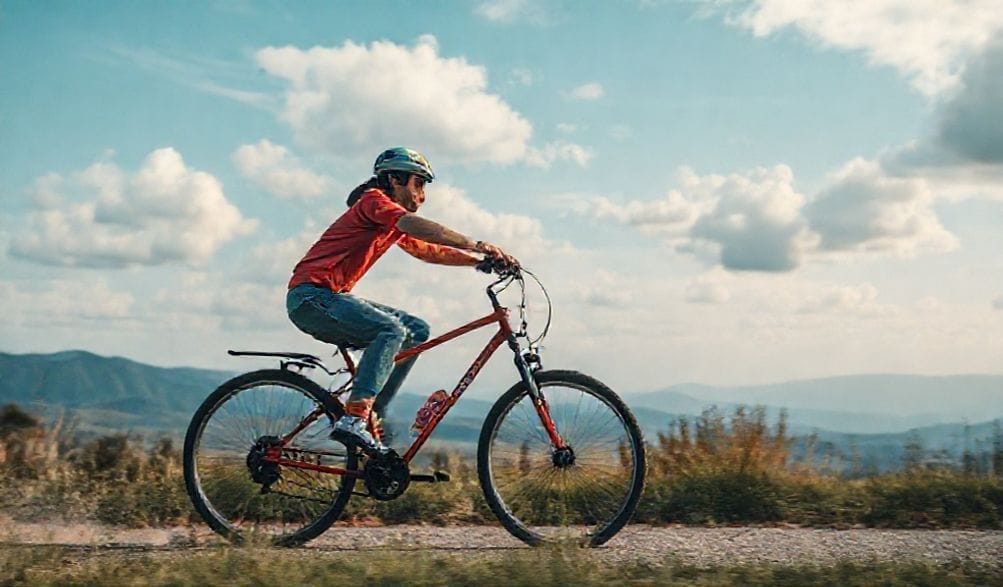
The Ultimate Guide to Ride E-Bike: Benefits, Tips, and How to Get Started
Remember the simple, unadulterated joy of riding a bike as a kid? The wind in your hair, the sense of freedom, the world passing by at just the right speed. Now, imagine recapturing that feeling, but amplified. Picture yourself gliding up a steep hill without gasping for breath, arriving at work energized instead of sweaty, or keeping pace with friends on a weekend adventure regardless of fitness level. This isn’t a fantasy; it’s the everyday reality offered by the elektrinis dviratis, or e-dviratis.
An e-bike is, at its heart, a traditional bicycle integrated with an electric motor and battery to provide pedal assistance. It’s not a scooter or a motorcycle—you still pedal, but with a powerful, silent partner sharing the load. This subtle augmentation is revolutionizing how we think about personal mobility, fitness, and recreation. It’s breaking down barriers and opening up roads, trails, and cities to more people than ever before.
This guide is designed to be your comprehensive manual for everything e-bike. Drawing on extensive research, rider testimonials, and practical expertise, our goal is to demystify the technology, clarify the choices, and equip you with the knowledge to confidently choose, ride, and enjoy an e-bike. Whether you’re seeking a greener commute, a fitness boost, or simply more fun on two wheels, we’ll cover the key benefits, how to select the perfect model, essential riding techniques, and crucial maintenance tips. Let’s dive in.
Why Choose to Ride an E-Bike? Key Benefits Explored
The decision to ride an e-bike is often driven by a single, specific need—a daunting commute, a physical limitation, or a desire for adventure. However, new riders quickly discover a cascade of unexpected advantages that make e-biking a transformative lifestyle choice.
Effortless Commuting and Conquering Terrain
For many, the daily commute is the first domain an e-bike conquers. It transforms a long, sweaty, or traffic-choked journey into a fast, predictable, and enjoyable trip. With pedal assist, you can maintain a consistent 15-20 mph pace without overexerting yourself, often arriving faster than by car in urban areas. The true magic, however, is the elimination of “hill anxiety.” That intimidating incline between you and your destination becomes a minor bump, conquered with a smile. An e-bike flattens your world, making previously challenging routes not just possible, but pleasant.
Boost Your Health and Fitness
A common misconception is that e-bikes are “cheating.” The science tells a different story. A 2019 study published in the International Journal of Behavioral Nutrition and Physical Activity found that e-bike users rode longer and more frequently than conventional cyclists, resulting in significant cardiovascular and metabolic benefits. The beauty of an e-bike is its scalability. It’s a powerful tool for rehabilitation or for those with joint issues, as it allows you to control the level of exertion precisely. It also builds cycling confidence, enabling riders to gradually increase their fitness by adjusting the assist level down as their stamina improves. You get to decide your workout intensity every time you ride.
Economic and Environmental Advantages
The financial logic is compelling. Compared to car ownership, the costs are minuscule: pennies per charge versus dollars per gallon, no insurance premiums (in most regions), and minimal parking fees. Even compared to public transit, an e-bike can pay for itself within a year or two. Environmentally, the impact is profound. E-bikes are one of the most energy-efficient vehicles on the planet. By replacing car trips, even occasionally, you directly reduce carbon emissions, traffic congestion, and noise pollution, contributing to cleaner air and quieter neighborhoods.
Accessibility and Inclusivity
This may be the most profound benefit. E-bikes democratize cycling. They open the activity to older adults, those returning from injury, or individuals who may not have considered themselves “cyclists.” They level the playing field, allowing friends, partners, or families with differing fitness levels to ride together comfortably. A grandparent can now join the family bike tour; a partner new to cycling can keep up with an experienced rider. E-bikes are about inclusion, community, and shared experience.
Your First E-Bike: A Buyer’s Guide to the Perfect Match
With the “why” clear, let’s tackle the “which one.” The e-bike market is vast, but finding your perfect match is straightforward when you know what to look for.
Understanding E-Bike Classes (1, 2, and 3)
In North America, e-bikes are generally categorized into three classes, which dictate where you can legally ride them:
* Class 1: Pedal-assist only (no throttle). The motor provides assistance only when you are pedaling and cuts off at 20 mph. These are permitted anywhere a traditional bicycle is allowed.
* Class 2: Feature a throttle (allowing propulsion without pedaling) ir pedal-assist, with motor cutoff at 20 mph. Laws for these can vary more, especially on bike-only paths.
* Class 3: Pedal-assist only, but with a motor that cuts off at a higher speed, typically 28 mph. These are often treated more like mopeds and may be restricted from bike paths, requiring helmet use and rider age limits.
Always check your local and state regulations. A reputable dealer will know the laws in your area.
Motor and Battery Basics: What Matters Most
The motor and battery are the heart and soul of your e-bike.
* Motor Placement: Mid-drive motors, located at the bike’s crank, leverage the bicycle’s gears. This provides natural, balanced power, excellent hill-climbing torque, and better overall efficiency, especially on varied terrain. Hub-drive motors, located in the front or rear wheel, are simpler and often less expensive. They provide direct power but can feel less integrated and affect bike handling.
* Battery: Look at watt-hours (Wh)—a combination of voltage (V) and amp-hours (Ah)—for the best measure of capacity. A 500Wh battery will generally offer more range than a 400Wh one. Real-world range is highly variable (see FAQ), but a mid-capacity battery (500Wh) is a great starting point for most riders.
Matching E-Bike Style to Your Riding Purpose
Your primary use should dictate the style:
* Commuter/City: Upright geometry, integrated lights, fenders, a rack, and a chain guard. Built for practicality and comfort.
* Mountain (e-MTB): Full or front suspension, knobby tires, and robust frames. Designed to handle technical trails with amplified power.
* Cargo: Long wheelbases and reinforced frames to carry heavy loads, kids, or groceries. A car replacement for local errands.
* Folding: Compact design for multi-modal commuting (train/bus) or easy apartment storage.
* Cruiser: Laid-back comfort, perfect for leisurely rides on flat paths and boardwalks.
Essential Features and Test Ride Checklist
Beyond the basics, prioritize:
* Display & Controls: Intuitive and easy to read while riding.
* Brakes: Hydraulic disc brakes are the gold standard for consistent, powerful stopping in all conditions.
* Gearing: A wide-range cassette is helpful, even with a motor.
* Suspension: A front suspension fork smooths out urban imperfections; full suspension is for serious off-road.
Vienas pats svarbiausias patarimas: IŠBANDYKITE VAŽIUODAMI. Apsilankykite vietinėje dviračių parduotuvėje (LBS), turinčioje gerą reputaciją dėl elektrinių dviračių. Kaip dviratis atrodo— jo balansas, galios perdavimas ir patogumas — yra tai, ko jokia specifikacijų lentelė negali perteikti.
Kaip važiuoti elektiniu dviračiu: technika, sauga ir etiketas
Važiavimas elektiniu dviračiu yra intuityvus, tačiau keli pagrindiniai metodai padidins jūsų malonumą, saugą ir akumuliatoriaus tarnavimo laiką.
Pedalo pagalbos ir gazo režimų įvaldymas
Pradėkite nuo žemo pedalo pagalbos lygio (PAS 1 arba Eco), kad priprastumėte prie galios padidėjimo. Įjunkite vidutinę pavarą ir pedalųokite sklandžiai. Esmė yra numatymas: padidinkite savo PAS lygį prieš lipant į kalną, o ne tada, kai jau kovojate. Naudokite aukštesnius lygius prieš vėją, kalnuose ar kai norite sumažinti pastangas, o žemesnius lygius, kad padidintumėte nuvažiuojamą atstumą ir gautumėte daugiau mankštos. Jei jūsų dviratis turi gazą, naudokite jį taupiai — pradedant nuo šviesoforo arba trumpam leisdami kojoms pailsėti, visiškai nestabdant pedalavimo.
Būtina saugaus važiavimo įranga ir patikrinimai prieš važiuojant
Jūsų saugumas yra svarbiausias.
* Įranga: Visada dėvėkite CPSC sertifikuotą dviračio šalmą. Apsvarstykite galimybę įsigyti MIPS technologiją turintį modelį, kad būtų geresnė apsauga. Naudokite ryškių, atspindinčių šviesą drabužių ir galingus priekinius bei galinius žibintus, net ir dieną.
* Greitasis patikrinimas prieš važiuojant (ABC): AOros (padangos tinkamai pripūstos), BStabdžiai (patikrinkite spaudžiant svirtis), CGrandinė (švari ir sua Quick releases (wheels and seat post are secure).
Rules of the Road and Trail Etiquette
You are a vehicle operator. Obey all traffic laws: stop at signs and lights, signal turns, and ride with traffic. Your increased speed means you must be extra vigilant and predictable. On shared paths, control your speed. Use a bell or a friendly “on your left” well before passing pedestrians or other cyclists. Yield appropriately. For e-MTBs, know the trail rules—many natural surface trails have specific regulations for Class 1 e-bikes only.
Battery Management and Security Tips
- Battery: Charge regularly but avoid leaving it at 100% for weeks on end. Store in a cool, dry place. Extreme heat and cold are a battery’s enemy. For maximum lifespan, try to keep it between 20% and 80% charge for daily use.
- Security: E-bikes are valuable. Use a high-quality U-lock or heavy-duty chain lock (rated Sold Secure Gold or higher) to secure the frame ir rear wheel to an immovable object. Consider a secondary cable for the front wheel. Remove the battery if parking for extended periods.
Maintaining Your E-Bike for Longevity and Performance
While e-bikes have electrical components, 90% of maintenance is familiar bicycle care.
Routine Cleaning and Mechanical Checks
Never use a high-pressure hose, which can force water into motor bearings and electrical connections. Use a damp cloth and mild soap. Keep the drivetrain (chain, cassette) clean and lubricated. Regularly check brake pad wear, tire pressure, and ensure all bolts (especially on racks and fenders) are tight.
Battery Care Best Practices
This is your most expensive component. For daily use, partial charges are fine. If storing the bike for a month or more, charge the battery to about 60% and store it in a cool place (ideally 50-70°F). Re-check the charge every few months.
When to Seek Professional Service
You can handle basic cleaning, tire changes, and bolt checks. However, for issues with the motor, battery, display, or internal wiring, go to your authorized dealer. They have the proprietary diagnostics tools and expertise. This is also crucial for maintaining your warranty. For complex mechanical work like hydraulic brake bleeds or suspension service, a professional mechanic is your best bet.
Frequently Asked Questions (FAQ) About Riding E-Bikes
Q: Do I need a license, insurance, or registration to ride an e-bike?
A: For Class 1 and 2 e-bikes (20 mph max), you typically do not need a license, insurance, or registration in most U.S. states and Canadian provinces. Class 3 e-bikes (28 mph) may have age restrictions or require a helmet. Laws vary significantly by municipality, so checking your local regulations is essential.
Q: How far can I really go on a single charge?
A: Manufacturer claims are “best-case scenario.” Real range depends on: battery capacity (Wh), pedal-assist level used, terrain (hills kill range), rider weight and cargo, wind, and tire pressure. A realistic spectrum is 20 to 70 miles on a single charge for most mainstream e-bikes. Using lower assist on flat ground can double your range versus high assist on hilly routes.
Q: Are e-bikes safe to ride in the rain?
A: Yes, most modern e-bikes are built to IPX4 or IPX5 standards, meaning they can handle rain and puddles. However, avoid submerging the motor or battery. After a wet ride, wipe down electrical connections and don’t charge the battery until it’s fully dry to the touch.
Q: Can I get a workout on an e-bike, or is it just lazy?
A: You absolutely can get a great workout. Research confirms that e-bikers often get more total moderate-to-vigorous physical activity because they ride more often and for longer durations. The pedal assist allows you to control your heart rate and exertion, making it possible to complete rides that would be too difficult on a regular bike, thereby increasing overall calorie burn and fitness.
K: Kokia yra geros kokybės elektrodviračio vidutinė kaina?
A: Pradinio lygio modelius galite rasti jau nuo maždaug $1 000, tačiau norint įsigyti patikimą, gerai aprūpintą elektrodviratį iš žinomos markės, turinčios tiekėjo palaikymą, reikėtų skirti nuo $1 800 iki $3 500. Aukšto našumo ar specializuoti modeliai (elektromountainbikai, kroviniai dviračiai) gali kainuoti nuo $4 000 iki $10 000 ir daugiau. Mokate už akumuliatoriaus kokybę, variklio našumą, komponentų patvarumą ir bendrą inžinerinį lygį.
Išvada
Choosing to ride an e-bike is about choosing possibility. It’s a tool that redefines your relationship with distance, hills, and effort. We’ve explored its remarkable benefits—from effortless commuting and inclusive fitness to tangible economic and environmental savings. We’ve navigated the buying landscape, emphasizing the irreplaceable value of a local test ride to find your perfect match. And we’ve equipped you with the techniques and knowledge to ride safely, courteously, and with confidence.
Remember, an e-bike doesn’t replace the ride; it enhances it. It turns “I can’t” into “I can,” and “I could” into “I do.” The best way to understand this transformation is to experience it firsthand.
Kitas jūsų žingsnis? Apsilankykite vietinėje dviračių parduotuvėje. Pakalbėkite su ekspertais, išbandykite kelis modelius ir patys pajuskite pagalbą. Palaikykite vietos verslą ir gaukite profesionalų pritaikymą prie mašinos, kuri taps jūsų keliu į nuotykius, laisvę ir linksmybes.
Have you recently started your e-bike journey? What was your “aha!” moment? Share your experiences or any lingering questions in the comments below—let’s keep the conversation rolling!
METADATA_START—
RODOMO_PAVADINIMAS: Galutinis elektrodvirčio važiavimo gidas: Nauda, patarimai ir kaip pradėti
SEO_TITLE: How to Ride an E-Bike: Complete Beginner’s Guide & Tips | [Your Brand]
META_APRAŠAS: Galvojate įsigyti elektrodviratį? Mūsų galutiniame guide apžvelgiama, kaip saugiai važiuoti elektrodvirčiu, pagrindiniai privalumai, kaip pasirinkti tinkamą modelį, priežiūros patarimai ir DUK. Pradėkite savo elektrinę kelionę jau šiandien!
IMG_UŽDUOTIS: Laiminga, įvairialytė suaugusiųjų grupė važiuoja moderniais elektriniais dviračiais saulėtu miesto dviračių taku, vienas dviratininkas rodo į vaizdingą panoramą. Elektrodviračiai atrodo elegantiškai ir prieinamai, dviratininkai su šalmais, perteikia džiaugsmą, laisvę ir lengvą judumą.
—METADATA_END—