
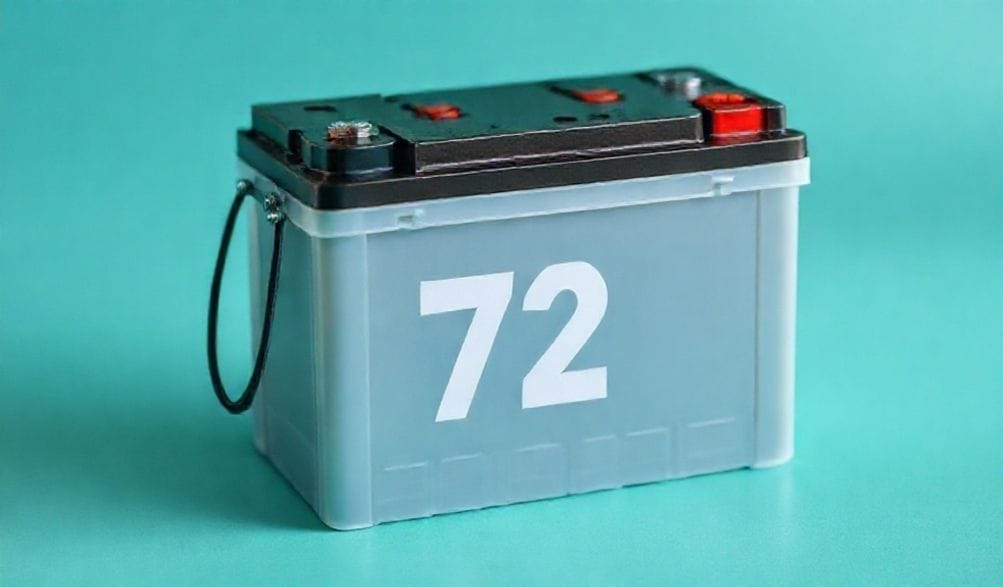
The Ultimate Guide to 72V Batteries: Power, Performance, and Practical Applications
引言
You’re halfway up a steep hill on your electric golf cart, and you feel it—that dreaded lag in power. Or perhaps, during a critical nighttime outage, your home’s backup system blinks off, unable to sustain the load. These moments of power failure aren’t just inconvenient; they highlight a fundamental mismatch between our energy demands and the power source supplying them. In the world of robust, high-demand applications, the 72V battery system emerges as a formidable solution, offering the necessary “muscle” where lower-voltage systems fall short.
With over a decade of hands-on experience in renewable energy system design and electric vehicle conversions, I’ve integrated, tested, and sometimes wrestled with battery packs of all voltages. This guide is born from that practical experience in the workshop and the field, synthesized with current technical data to cut through the marketing hype. My goal is to provide you with a comprehensive, unbiased resource. Whether you’re an EV enthusiast, a homeowner planning an off-grid system, or an operations manager for a fleet of industrial equipment, this guide will help you understand if a 72V battery is right for you and how to select, use, and maintain it safely and effectively.
We’ll start by demystifying the core technology, explore where these batteries truly excel, and then walk through a practical buyer’s checklist. Finally, we’ll cover the critical, non-negotiable practices for installation, maintenance, and safety. Let’s dive into the high-voltage world of reliable power.
What is a 72V Battery? Understanding the Core Technology
At its heart, a 72V battery is an energy storage device that provides a nominal voltage of 72 volts. But that number alone doesn’t tell the full story. It represents a specific tier in electrical systems, chosen for its optimal balance of power delivery, efficiency, and manageable complexity for high-performance applications.
Voltage Explained: Why 72 Volts?
Think of voltage as electrical “pressure.” A higher voltage system can deliver the same amount of power (watts) as a lower voltage system but with less current (amps). This is crucial because of the formula: Power (Watts) = Voltage (Volts) x Current (Amps).
To deliver 7200 watts of power:
800-1200次完整充放电循环。 12V system would need to push a staggering 600 amps.
800-1200次完整充放电循环。 72V system only needs 100 amps.
Lower current means you can use thinner, lighter, and less expensive wiring. It also reduces energy loss as heat (since heat loss is proportional to the square of the current, I²R). This makes 72V a “sweet spot” for medium-to-large applications—it provides high power without the extreme safety challenges and component costs associated with the very high currents of lower-voltage systems or the ultra-high voltage complexities of automotive EV systems (often 400V+).
Common Chemistries: From Lead-Acid to Lithium-Ion
The “72V” label tells us the pressure, but the chemistry determines the battery’s personality—its energy density, lifespan, safety, and cost.
-
Lithium-Ion (LiFePO4 & NMC): This is the modern standard for new high-performance systems. Within this family, Lithium Iron Phosphate (LiFePO4 or LFP) is the star for most 72V applications.
- 优点: Exceptional cycle life (3,000 to 5,000+ cycles), superior thermal and chemical stability (inherently safer), high efficiency (near 99% round-trip), lightweight, and maintenance-free. It can also be regularly discharged to 80-90% of its capacity without significant degradation.
- 缺点: Higher upfront cost per kWh compared to lead-acid.
- NMC (Nickel Manganese Cobalt) variants offer slightly higher energy density (more range in a smaller pack) but often at the expense of cycle life and thermal stability compared to LiFePO4.
-
Sealed Lead-Acid (SLA/AGM): The legacy technology, still found in many older systems.
- 优点: Very low initial purchase cost and simple charging requirements.
- 缺点: Extremely heavy, low energy density, short cycle life (300-500 cycles if deeply discharged), slow charging, and significant performance loss in cold weather. They also require careful management to avoid sulfation and must typically not be discharged below 50% State of Charge (SOC) for longevity.
- 最适合: Extremely tight budgets where weight and space are not concerns, or as a direct replacement in an existing system not worth converting to lithium.
| Chemistry | Pros | Cons | Best For |
| :— | :— | :— | :— |
| LiFePO4 (Lithium) | Long life, safe, lightweight, efficient, deep discharge capability. | Higher upfront cost. | Most new applications: EVs, solar storage, marine—where performance & TCO matter. |
| SLA/AGM (Lead-Acid) | Low initial cost, simple. | Very heavy, short life, poor efficiency, sensitive to deep discharge. | Legacy/budget systems: Where the existing infrastructure and minimal cost are paramount. |
Key Components: BMS, Cells, and Housings
A 72V battery pack is more than just a collection of cells.
- 电芯: These are the fundamental building blocks. A 72V LiFePO4 battery is typically built by connecting many 3.2V nominal cells in series. For example: 72V / 3.2V ≈ 22.5 cells. In practice, this is achieved with 24 cells in series (24S) to reach 76.8V nominal, which is commonly marketed as a 72V system.
- 电池管理系统(BMS): This is the essential brain and guardian of a lithium battery. A quality BMS is non-negotiable. It performs several critical functions:
- 电芯均衡: Ensures all individual cells charge and discharge evenly, preventing any single cell from being over-stressed.
- 保护功能: Monitors for over-voltage, under-voltage, over-current, and short circuits, disconnecting the battery to prevent damage or danger.
- Temperature Management: Prevents charging in freezing conditions (which can permanently damage Li-ion cells) and monitors for overheating.
- 通讯系统: Often provides data (SOC, health, errors) via display screens or Bluetooth apps.
- Housing and Connectors: A robust metal or hard plastic case protects the cells from physical impact and the elements. Look for an IP(侵入保护)等级。 (e.g., IP65) which indicates dust and water resistance. High-quality, high-current terminals (like Anderson SB connectors or M8 bolts) are also vital for safe and reliable connections.
Primary Applications: Where 72V Battery Systems Excel
72V isn’t for powering a flashlight; it’s for applications that demand serious, sustained power. Here’s where they shine.
Electric Vehicles (EVs) and Mobility
This is the most dynamic and growing sector for 72V packs.
* E-Motorcycles & High-Performance Scooters: 72V provides the ideal power-to-weight ratio for thrilling acceleration and highway-capable speeds. It’s the voltage of choice for many premium electric dirt bikes, cafe racers, and delivery scooters.
* Golf Carts & Low-Speed Vehicles (LSVs): Upgrading from 48V to 72V in a golf cart or neighborhood electric vehicle (NEV) translates directly to better hill-climbing torque, higher top speed, and longer range per charge, especially with a lithium upgrade.
* Automotive EV Conversions: For DIY enthusiasts converting classic cars or kit cars to electric, 72V is a popular and manageable voltage tier. It offers a great balance of power for decent performance while keeping the electrical system within the realm of the skilled hobbyist (as opposed to the 300V+ systems in production EVs).
Renewable Energy Storage
For off-grid and backup power, 72V systems offer substantial energy capacity.
* Off-Grid and Backup Solar Systems: A 72V battery bank is well-suited for powering a full home or critical sub-panel. It can store enough energy from solar panels to get through nights and cloudy days. An important note: most common off-grid inverters are designed for 48V battery banks. To use a 72V battery, you must either:
1. Find a specific inverter that accepts a 72V DC input (less common).
2. Use a high-power DC-DC converter to step the 72V down to 48V for the inverter.
3. Connect two separate 48V and 24V systems in a specific configuration (more complex).
并非通用解决方案;它是应对严苛任务的专用工具。
Reliability and runtime are money in commercial operations.
* Floor Cleaning Machines, Forklifts, Tow Tractors: Replacing lead-acid with a 72V LiFePO4 pack in a scrubber or forklift can eliminate midday charging, reduce downtime, and cut maintenance costs, as the equipment can often run for multiple full shifts.
* Marine and RV Applications: For larger boats and RVs, a 72V bank can efficiently power “hotel” loads (lighting, appliances, HVAC) for extended periods. It’s also the preferred voltage for powerful electric bow thrusters or auxiliary drives on sailboats.
How to Choose the Right 72V Battery: A Buyer’s Checklist
Armed with an understanding of the “why” and “where,” the next step is selecting the right unit. Don’t just buy the biggest or cheapest one. Match it to your needs.
Capacity (Ah/kWh): Calculating Your Energy Needs
Capacity tells you how much energy is in the “tank.” It’s measured in Amp-hours (Ah) or, more usefully for comparison, Kilowatt-hours (kWh). 1 kWh = 1000 Watts for 1 hour.
Simple Formula: (Total Wattage of Load * Hours of Use) / System Voltage = Approximate Amp-Hours (Ah) Needed
示例: You want to run a 1500W motor for 2 hours on a 72V system.
(1500W * 2h) / 72V = 41.7 Ah
Crucial Buffer: For battery health (especially lithium), you should not regularly use 100% of the rated capacity. Always add a 20-30% buffer. In this case, you’d want a battery with at least ~54 Ah (41.7 Ah * 1.3).
需要对比的关键规格
Look beyond the voltage and capacity on the sales page.
* Continuous & Peak Discharge Current (A): This is the battery’s “breathing capacity.” The continuous rating must exceed your motor or inverter’s normal operating draw. The 车架几何与人体工程学:越野姿态 (or surge) rating must handle short bursts of power, like an EV accelerating or a motor starting up. Exceeding these ratings will trigger the BMS to shut down or cause damage.
* Cycle Life & Warranty: A cycle is one full charge and discharge. A quality LiFePO4 battery rated for 3,500 cycles to 80% Depth of Discharge (DoD) will last far longer than one rated for 2,000 cycles to 100% DoD. The warranty (often 3-10 years) is a manufacturer’s confidence signal.
* Charging Specifications: What charger is compatible? What is the max charge current (A)? Most importantly, note the operating and charging temperature range. Charging a standard lithium-ion battery below 0°C (32°F) can cause permanent, dangerous internal plating.
* Weight and Dimensions: For mobile applications, every pound matters. A 72V 100Ah LiFePO4 pack might weigh ~120 lbs, while a comparable lead-acid bank could weigh over 600 lbs.
Brand Reputation and Supplier Vetting
This is where due diligence pays off in safety and longevity.
* 调研: Look for brands with a multi-year track record. Read independent reviews on forums and industry sites, not just the testimonials on the seller’s website.
* 认证: Legitimate safety certifications are vital. Look for UL 1973 (standard for stationary storage), UL 2580 (for vehicle batteries), 优先选择列有公认安全认证的电池。关键认证包括 (mandatory for transportation), and (锂电池运输强制性认证)、 (for the European market). These indicate rigorous testing.
* Major Caution: The online marketplace is flooded with incredibly cheap, no-name lithium batteries. These are a significant safety risk. They often use inferior, recycled, or mismatched cells and have inadequate or counterfeit BMS units. The old adage holds true: “Buy nice, or buy twice.” With high-voltage batteries, the second purchase might be for a fire extinguisher or a new vehicle.
为拥有良好电池管理系统和优质电芯的知名品牌/供应商付费,是对安全性和可靠性的投资。
A top-tier battery can be compromised by poor installation or neglect. Follow these guidelines religiously.
专业安装与自行安装
- Professional Installation (Strongly Recommended For): Whole-home energy storage systems, complex EV conversions, and any integration with household AC wiring or complex solar arrays. The risks of high-voltage DC are real, and a certified electrician or system integrator will ensure code compliance and safety.
- DIY (For the Knowledgeable Enthusiast): If you have a solid understanding of DC electrical systems, Ohm’s Law, and proper circuit protection, you may tackle projects like upgrading a golf cart or building a simple off-grid power box. Prerequisites include: Insulated tools, a multimeter, correctly rated fuses/breakers, and proper wiring guides.
常规维护以延长使用寿命
- For Lithium (LiFePO4): Maintenance is minimal but crucial.
- Monitor: Use the BMS communication (app or display) to regularly check cell balance and overall health.
- Keep it Clean & Dry: Ensure terminals are tight and free of corrosion.
- 储存: If storing for months, charge to about 50-60% SOC and store in a cool, dry place. Check voltage every few months.
- For Lead-Acid:
- Watering: For flooded models, check and top up electrolyte levels with distilled water regularly.
- Equalization: Perform periodic equalization charges to prevent sulfation.
- Terminals: Clean terminals to prevent corrosion and ensure good connections.
Non-Negotiable Safety Protocols
- Fuse It! 务必 install a properly rated fuse or DC circuit breaker as close to the battery positive terminal as possible. This is your first line of defense against a short circuit, which can cause catastrophic fires.
- 安全固定: The battery must be firmly secured to prevent movement, especially in vehicles. Vibration can break connections and damage cells.
- Environment: Store and operate in a well-ventilated area, protected from direct sunlight, moisture, and extreme temperatures (both hot and cold).
- 个人防护装备: When working on connections, wear safety glasses and insulated gloves. A loose metal wrench across battery terminals at 72V can instantly weld itself, cause severe burns, or create an arc flash.
Frequently Asked Questions (FAQ) About 72V Batteries
Q1: How long does a 72V lithium battery last?
答: In terms of years, a quality LiFePO4 battery can last 8 to 15 years depending on usage. More technically, it’s rated for 3,000 to 7,000+ full charge cycles. If you use 80% of its capacity daily, that’s over 3,000 days of use—more than 8 years. Depth of discharge and operating temperature are the biggest factors in lifespan.
Q2: Can I use a 72V battery with a 48V motor or inverter?
这是关键一点。一个. Connecting a 72V source to a 48V device will almost certainly destroy it immediately due to over-voltage. To make them compatible, you must use a DC-DC step-down converter that is specifically rated to handle the input voltage (72V+) and the power (in watts) that your 48V device requires.
Q3: What’s the real cost difference between lithium and lead-acid?
答: You must consider 总拥有成本. While a 72V 100Ah LiFePO4 pack may cost 2-3x more upfront than a lead-acid bank of the same 您的实际续航里程将因以下因素大幅缩减:1)**多山/技术性地形**,2)**更高的骑手体重+装备**,3)**使用更高档位的踏板辅助或持续使用油门**,以及4)**寒冷天气**。对于激烈的越野骑行,750-1000Wh的电池可能提供15-30英里续航,而温和使用则可能翻倍。 capacity, the lead-acid bank has only about half the usable capacity (if you don’t want to kill it quickly). More importantly, the lithium pack will last 4-8x longer, requires zero maintenance, and is 15-30% more efficient (so you pay less to charge it). Over 10 years, the lithium battery is almost always the cheaper option.
Q4: Are 72V batteries dangerous?
答: Any concentrated energy source demands respect. A 72V DC system can deliver a dangerous, potentially lethal shock. However, a properly engineered lithium battery (especially LiFePO4) with a robust BMS, correctly installed ,行程为 fusing, and maintained according to guidelines, is a very safe and reliable component. The primary dangers arise from physical damage (puncturing), improper charging (using the wrong charger), extreme temperatures, or—most commonly—using cheap, uncertified batteries with poor quality control.
结论
The 72V battery represents a powerful tool in the modern energy toolkit, perfectly positioned to meet the demands of high-performance electric mobility, robust renewable energy storage, and demanding commercial applications. Its dominance is increasingly tied to the superior safety, longevity, and efficiency of Lithium Iron Phosphate (LiFePO4) chemistry.
As we’ve explored, the key to a successful project lies not in seeking the absolute lowest price, but in carefully matching the battery’s specifications—capacity, discharge rate, chemistry, and quality—to your specific application’s true power needs. Prioritize reputable brands with legitimate safety certifications and a proven track record.
Final Call to Action: If you’re planning a system, especially one tied to your home, vehicle, or business, consulting with a certified electrician or professional system integrator is the wisest first step. For those continuing their research, delve deeper into topics like [Solar Battery Sizing Calculations] and [How to Interpret BMS Data and Alarms].
Investing in a reliable 72V battery system is more than a purchase; it’s an investment in performance, independence, and, above all, safety and peace of mind. Power your projects wisely.
记住关键点:了解原厂坐垫的局限,让您的骑行风格指导购买,安全安装,并妥善维护。无论您是在劈弯、探索小径,还是穿梭城市街道,合适的坐垫能让您专注于骑行,而非疼痛。投资于您的舒适。在漫长而精彩的骑行结束时,未来的您会感谢自己。
DISPLAY_TITLE: The Ultimate Guide to 72V Batteries: Power, Performance & Uses
SEO_TITLE: 72V Battery Guide: LiFePO4, EVs, Solar Storage & How to Choose