
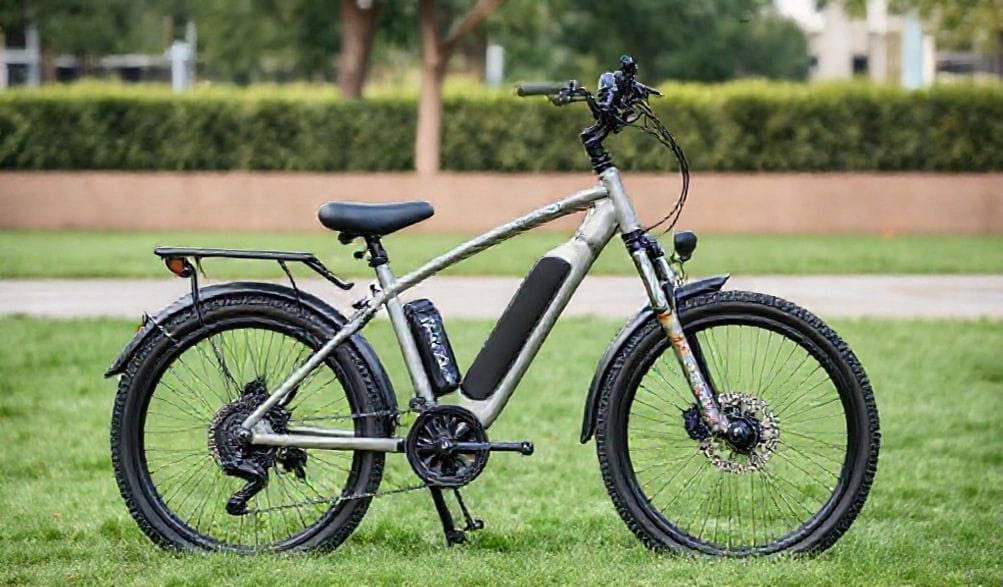
The Complete Guide to 72 Volt Electric Bikes: Power, Performance, and Practicality
You’re searching for “72 volt electric bike” because you’ve outgrown the ordinary. The promise of standard e-bikes has faded, replaced by a desire for more—more hill-flattening torque, more adrenaline-pumping speed, more untethered range. You’re not just looking for transportation; you’re seeking an experience. But the world of high-voltage e-bikes is shrouded in technical jargon and marketing hype. Is a sistema de 72V the ultimate upgrade or an impractical overcomplication?
This guide is built on hands-on experience with high-voltage systems, not just theory. We’ll cut through the noise to give you a clear, expert-backed analysis of what 72 volts truly means for your ride. We’ll explore its undeniable advantages, confront its significant drawbacks head-on, and help you determine if this powerhouse is the right tool for your needs. Whether you dream of conquering mountain trails, hauling serious cargo, or simply crave top-tier performance, this is your roadmap to making an informed, confident decision.
What is a 72 Volt Electric Bike? Understanding the Core Technology
At its heart, an electric bike is a simple system: a battery provides energy to a motor via a controller. Voltage is the key variable that defines the character of that system. A 72V e-bike operates on a significantly higher electrical “pressure” than the common 36V, 48V, or even 52V bikes, fundamentally changing its performance envelope.
Voltage Explained: The “Pressure” Behind the Power
Think of your e-bike’s electrical system like a water hose.
* Voltage is the water pressure in the hose. Higher pressure (72V) means water can be pushed with more force.
* Amperage (Current) is the flow rate of the water. It’s how much electricity is moving.
* Wattage (Power) is the overall result: Pressure x Flow. Volts x Amps = Watts.
A 72V system achieves high wattage (power) by increasing the “pressure” (voltage). This is more efficient than a lower-voltage system trying to achieve the same wattage by pushing a massive “flow” (amperage), which generates excessive heat.
Here’s a quick comparison of typical system performances:
| System Voltage | Typical Power Range | Common Use Case |
| :— | :— | :— |
| 36V | 250W – 500W | Casual commuting, light leisure riding |
| 48V | 500W – 1000W | Mainstream commuting, moderate hills, entry-level off-road |
| 52V | 750W – 1500W | Performance commuting, serious hill climbing, trail riding |
| 72V | 1500W – 5000W+ | High-performance off-road, extreme hill climbing, speed-focused builds |
Key Components of a 72V E-Bike System
This voltage doesn’t work in isolation. It requires specific, robust components designed to handle it.
-
The Motor: Hub vs. Mid-Drive
While powerful hub motors exist, mid-drive motors are often the superior partner for a 72V system. Why? A mid-drive motor leverages the bike’s gears. The 72V system provides high rotational speed (RPM) to the motor, and the bike’s cassette multiplies that into massive torque at the rear wheel. This makes it exceptionally efficient for technical climbing and variable terrain. A high-wattage hub motor can deliver brutal acceleration and top speed but may struggle with heat dissipation on long, steep climbs without the benefit of gearing. -
The Battery: The Heart of the System
The 72V battery is the most significant and expensive component. It’s a pack comprised of many lithium-ion cells (like 18650 or 21700) wired in series to achieve 72V. The Battery Management System (BMS) is non-negotiable. A quality BMS protects the pack from over-charging, over-discharging, and monitors cell balance. For a 72V pack, a high-quality BMS from a reputable brand is your primary safety device. -
The Controller: The Unsung Hero
If the battery is the heart and the motor is the muscles, the controller is the brain. This unit dictates how power from the battery is delivered to the motor. For a 72V system, the controller must be specifically rated for that voltage and matched to the motor’s amp draw. A high-quality controller offers smooth, programmable acceleration (current limiting), regenerative braking options, and robust thermal management. This is the component where cheap builds fail spectacularly.
Advantages of Choosing a 72 Volt E-Bike
Why go through the complexity and cost? The benefits are tangible and transformative for the right rider.
Unmatched Power and Torque for Challenging Terrain
This is the #1 reason to choose 72V. The torque delivery is visceral. It transforms impossible climbs into manageable inclines. For the off-roader, it means crawling over obstacles and powering up root-strewn or loose, steep trails without hesitation. For the utility user, it means moving heavy cargo or towing a trailer with ease, even from a dead stop on a hill.
Higher Top Speed and Improved Acceleration
Physics is clear: higher voltage allows a motor to spin faster. A well-configured 72V system can propel a bike to speeds of 40, 50, or even 60+ mph, depending on motor winding and gearing. More importantly, the acceleration is breathtaking. The bike pulls hard from zero, offering a motorcycle-like experience. Crucial Context: These speeds almost always exceed legal e-bike limits for public roads, confining this performance to private land or closed courses.
Potential for Greater Range (Efficiency at Speed)
This is a nuanced point. If you ride a 48V system at its absolute limit (full throttle up hills), it operates inefficiently, generating heat and draining the battery quickly. A 72V system can deliver the same or more power while operating at a lower percentage of its capacity, often more efficiently. For high-power riding styles, a 72V system paired with a large battery (e.g., 72V 30Ah) can deliver longer range than a lower-voltage system struggling to keep up.
Reduced Heat and System Strain
Recall the formula: Power (Watts) = Volts x Amps. To achieve 3000 watts:
* A 52V system needs about 58 amps.
* A 72V system needs only about 42 amps.
Lower amperage means less heat generated in the motor windings, controller FETs, and wiring. Cooler running temperatures enhance reliability and component longevity, especially during sustained high-load use.
Important Considerations and Potential Drawbacks
A 72V e-bike is not a universal solution. Its power comes with significant compromises that must be respected.
Weight and Physical Size
A 72V battery pack is substantial. It can weigh 15-25 lbs (7-11 kg) or more and is often the size of a small briefcase. This weight, mounted on the frame, dramatically changes the bike’s center of gravity and handling. It makes the bike cumbersome to carry upstairs or lift onto a car rack. The bike itself will often be built on a heavy-duty frame, leading to total weights of 80+ lbs.
Cost: A Premium Investment
You pay for performance. A quality pre-built 72V e-bike from a reputable brand starts around $3,500 and easily exceeds $6,000. For DIY, a reliable 72V battery pack alone can cost $800-$1,500. Add a high-torque mid-drive or powerful hub motor ($500-$1,000), a programmable controller ($200-$400), and supporting components (heavy-duty brakes, tires, reinforced wheels), and the budget escalates quickly.
Legal and Regulatory Landscape
This is the most critical consideration. In most jurisdictions, a 72V e-bike is not legally an “e-bike” for use on public bike paths or lanes.
* USA: Federal and state laws typically define e-bikes as having a motor under 750W (1hp) and a max speed of 20mph (Class 1/2) or 28mph (Class 3) com pedal assist. A 72V system almost always exceeds 750W.
* Canada & EU: Regulations are similarly strict, with 500W limits common.
A 72V e-bike may be classified as an electric motorcycle or moped, requiring registration, insurance, a driver’s license, and helmet, and is prohibited from bicycle infrastructure. You are responsible for knowing and obeying your local laws.
Safety and Maintenance Demands
The power demands respect.
* Freios: Cable disc brakes are insufficient. Hydraulic disc brakes with large rotors (203mm+) are mandatory.
* Pneus & Rodas: You need robust, high-quality tires with strong casings and wheels built to handle the speed and torque. Frequent pressure checks are a must.
* Frame Integrity: The frame and fork must withstand immense torque and higher speeds. Quality aluminum or steel frames are essential; cheap department-store bikes are dangerous platforms.
* Electrical Safety: Working on a 72V system requires more care than a 48V system. Connectors must be secure, wiring must be of adequate gauge, and you must understand how to safely disconnect the battery.
Who is a 72 Volt E-Bike Really For? (Matching Needs to Power)
The Off-Road and Trail Enthusiast
For riders on private trails, mountain passes, or open backcountry, a 72V mid-drive e-bike is a game-changer. It provides the torque to conquer any incline and the power to cover vast distances of challenging terrain.
The Performance Seeker and Speed Aficionado
If your thrill comes from acceleration and top speed on closed circuits or private property, a 72V system delivers an electrifying, motorcycle-adjacent experience that lower-voltage bikes cannot touch.
The Heavy Hauler and Commercial User
For businesses using cargo bikes for deliveries or individuals regularly moving heavy loads (e.g., hunting gear, farm supplies), the effortless torque of a 72V system makes practical work much easier.
Who Should Avoid a 72V System?
- The Casual Commuter: If your ride is under 15 miles on paved paths with moderate hills, a 48V or 52V bike is simpler, lighter, cheaper, and legal.
- The Budget-Conscious Buyer: The value proposition is poor if you don’t need the extreme performance.
- The First-Time E-Bike User: The learning curve, weight, and power can be overwhelming and dangerous. Start with a standard e-bike.
How to Choose a Quality 72 Volt Electric Bike or Conversion Kit
Buying Pre-Built: What to Look For
- Transparent Specs: The brand should list the exact motor model (e.g., Bafang M620), battery cell type (e.g., Samsung 50E), and controller specs.
- Frame Quality: Look for reputable aluminum alloys (6061, 7005) or chromoly steel from known bike manufacturers.
- Component Branding: Name-brand brakes (Shimano, Magura, Tektro), drivetrain, and suspension.
- Garantia e Suporte: A meaningful warranty on the frame and battery (2+ years) and accessible customer service.
The DIY Route: Key Components for a Conversion
If building, compatibility is key. Use this checklist:
* Motor: Ensure it’s rated for 72V continuous.
* Controller: Match voltage (72V) and ensure its max amp rating is within the motor’s and battery’s capabilities.
* **Bateria:** Verifique Voltage (72V) e Amp-Hour (Ah) for capacity. Critically, verify its Continuous Discharge Rating (CDR in Amps). The CDR must exceed the controller’s max amp draw.
* Fiação e Conectores: Use 10- or 12-gauge wiring for main lines and high-quality, waterproof connectors like XT90 or Anderson Powerpoles.
Red Flags and Warning Signs
- Marketing Vago: “72V 5000W” sem especificar o modelo do motor ou controlador.
- Origens Desconhecidas da Bateria: Nenhuma menção à marca das células (Samsung, LG, Panasonic) ou detalhes do Sistema de Gerenciamento de Bateria (BMS).
- Preço Suspeitamente Baixo: Uma bicicleta elétrica 72V completa por menos de $2.000 quase certamente utiliza componentes perigosos e de baixa qualidade.
- Ausência de Aviso Legal: Um vendedor responsável esclarecerá a classificação legal do veículo.
Perguntas Frequentes (FAQ) Sobre Bicicletas Elétricas de 72 Volts
P: Qual a velocidade máxima de uma bicicleta elétrica de 72 volts?
A: Capaz de atingir 64-88+ km/h, dependendo da potência do motor (wattagem), configurações do controlador, peso do ciclista e relação de transmissão. No entanto, é crucial entender que atingir essas velocidades em vias públicas é ilegal na maioria das áreas. Sempre conduza com responsabilidade e dentro dos limites legais da sua localidade.
P: Qual a autonomia de uma bicicleta elétrica 72V?
A: A autonomia é determinada pela capacidade da bateria e pelo estilo de condução. Primeiro, calcule a energia total: Tensão (72V) x Ampère-Hora (Ah) = Watt-Hora (Wh). Um pacote de 72V 20Ah tem 1.440 Wh. Se você pedalar a uma média de 500 watts, a autonomia teórica é de ~2,9 horas ou, a 48 km/h, ~140 km. Uma condução agressiva (1000W+) pode reduzir isso pela metade. Um pacote maior (ex.: 72V 30Ah = 2.160 Wh) estende significativamente a autonomia.
P: As bicicletas elétricas de 72V são legais para uso urbano?
A: Normalmente, não, Não, para uso como bicicleta padrão em ciclovias e faixas públicas. Na maior parte da América do Norte e Europa, elas excedem os limites legais de potência e/ou velocidade para bicicletas elétricas. Podem ser regulamentadas como motocicletas ou ciclomotores elétricos, exigindo registro, seguro e licença. Você deve verificar as leis específicas do seu estado/província e localidade.
P: Um sistema de 72V é exagero para mim?
A: Se suas necessidades são atendidas por uma bicicleta de qualidade de 48V ou 52V—como deslocamentos abaixo de 45 km/h, subidas moderadas ou trilhas leves—então sim, 72V é exagero. Adiciona custo, peso, complexidade e problemas legais desnecessários.
P: Quanto custa uma boa bicicleta elétrica 72V?
A: Para um modelo pré-montado confiável de uma marca respeitável, espere investir $3.500 a $7.000+. Uma conversão DIY segura e robusta, usando componentes de qualidade em uma bicicleta doadora adequada, normalmente começará em torno de $2.000 a $3.500.
Conclusão
A bicicleta elétrica de 72 volts está no auge da mobilidade elétrica pessoal, oferecendo uma combinação de torque, velocidade e capacidade que beira o sobrenatural para o transporte de duas rodas. É a ferramenta definitiva para o praticante sério de off-road, o entusiasta de performance em propriedade privada e o usuário com necessidades extremas de carga.
No entanto, esse poder é uma faca de dois gumes. Exige um investimento premium, tolerância a um peso significativo, compromisso com manutenção e segurança rigorosas e, mais importante, uma compreensão clara de seu status legal. Para a grande maioria dos ciclistas, uma bicicleta elétrica de alta qualidade de 48V ou 52V continua sendo o ponto ideal de desempenho, praticidade e legalidade.
Se, após este guia, seu caso de uso estiver alinhado com o potencial bruto de 72 volts, sua jornada está apenas começando. Seus próximos passos devem ser meticulosos: pesquise fabricantes ou fornecedores de kits respeitáveis com histórico comprovado, invista nos melhores componentes que puder pagar e faça da compreensão das leis de veículos da sua área sua missão. Construída e conduzida com respeito, uma bicicleta elétrica 72V não é apenas uma compra; é uma entrada em um nível totalmente novo de experiência de pilotagem.
METADATA_START—
DISPLAY_TITLE: O Guia Completo das Bicicletas Elétricas de 72 Volts: Potência, Desempenho e Praticidade
SEO_TITLE: Guia da Bicicleta Elétrica de 72 Volts: Potência Máxima, Velocidade e Autonomia Explicadas
META_DESC: Guia especializado para bicicletas elétricas 72V. Conheça os prós (potência, velocidade, autonomia) e contras (custo, legalidade, peso) reais. Descubra quem precisa de uma e como escolher com segurança.
IMG_PROMPT: Uma fotografia dinâmica e profissional de uma bicicleta elétrica de montanha robusta e de alta gama com uma grande bateria 72V montada no tubo inferior, estacionada em uma trilha de montanha íngreme e rochosa ao pôr do sol, transmitindo potência e capacidade off-road.
—METADATA_END—