
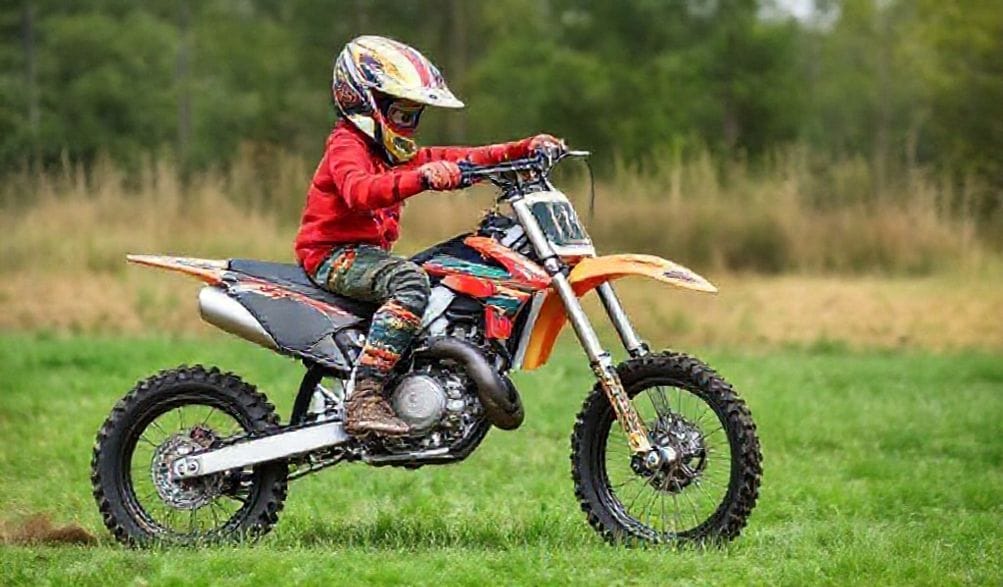
The Ultimate Parent’s Guide to Dirt Bikes for 7-Year-Olds (2024)
That moment your seven-year-old looks up from a video or points excitedly at a trail, declaring, “I want to do that!” is equal parts thrilling and terrifying. As a parent, you see the potential for incredible outdoor adventure, physical confidence, and priceless family memories. But you also hear the internal alarm bells: Is it safe? Where do I even start? What if they get hurt?
Take a deep breath. That cautious concern is your greatest asset. Introducing your child to motorized riding is a significant step, but with the right knowledge, it can be the start of a rewarding and safe lifelong passion. This guide is crafted not just from product specs, but from a foundation of industry safety standards, mechanic advice, and hard-won lessons from parents who’ve been in your shoes. Our goal is to transform your apprehension into confident action.
By the end of this guide, you will have a clear roadmap. You’ll understand the non-negotiable safety protocols, know exactly how to choose a bike that fits your child e your family’s needs, and have a shortlist of trusted models to consider. Let’s shift gears from worry to preparation.
Safety First: Non-Negotiables for Your Young Rider
Before we discuss a single make or model, we must establish this foundational truth: Safety is not a part of the dirt biking experience; it is the prerequisite for it. A positive, fun, and confidence-building introduction to riding is impossible without an unwavering commitment to protection and a controlled environment. This isn’t about wrapping kids in bubble wrap; it’s about providing the appropriate armor and framework so they can learn, fall, and succeed with managed risk.
Essential Protective Gear (The Head-to-Toe Kit)
Think of gear as your child’s primary safety feature—more important than any bike’s brand or engine size. Never compromise on quality or fit. This is a one-time investment that travels with them from bike to bike.
- Capacete: This is non-negotiable. It must be a **Capacete:** Um capacete motorcycle helmet (bicycle helmets are insufficient). SNELL certification is an even higher standard for serious youth riders. The fit is critical: snug but not painful, with no side-to-side or front-to-back rocking when you hold the chin bar. Let your child wear it in the store for 10+ minutes to check for pressure points.
- Óculos de Proteção: These protect eyes from dirt, rocks, and branches. Look for a comfortable, anti-fog lens with a wide field of view. They should fit securely with the helmet.
- Protetor de Peito/Defletor de Projéteis (Roost Deflector): This piece absorbs impacts to the torso and back from falls or debris kicked up by other riders. It’s a crucial layer of protection for the core.
- Gloves, Knee/Elbow Pads, and Riding Boots: Gloves improve grip and protect hands. Proper motocross boots are arguably the second-most important item after the helmet. They provide ankle support and crush protection that hiking boots cannot. Knee and elbow pads guard joints during tumbles.
- Long-Sleeve Jersey and Pants: Durable, breathable motocross-specific clothing is designed to withstand abrasion and provide some padding. Never let them ride in shorts and a t-shirt.
Choosing the Right Riding Environment
Where your child learns is as important as what they learn on. The first environment should be boringly safe.
- Start in Controlled, Open Areas: Think empty fields, flat pastures, or large, smooth dirt lots. The goal is zero obstacles—no trees, trails, hills, or water. They need space to focus solely on operating the bike without navigational hazards.
- Adult Supervision at All Times: This means an adult present, focused, and ready to intervene. Not inside reading a book, not on their phone. Active, engaged supervision is your most powerful safety tool.
- Consider Formal Training: Organizações como a Um curso para iniciantes da Motorcycle Safety Foundation (MSF) or local motocross schools offer beginner clinics. A professional instructor can teach fundamentals in a structured way, often accelerating learning and ingraining safe habits from day one.
How to Choose the Perfect Dirt Bike for a 7-Year-Old
Now, with the safety mindset firmly established, we can turn to the bike itself. Choosing the right one isn’t about finding the “coolest” model; it’s about matching a machine to your child’s specific physical development and complete lack of experience. A poorly sized or overly powerful bike will scare them, frustrate them, and create danger.
The #1 Rule: Correct Bike Size and Fit
Forget engine size (CCs) for a moment. The single most important factor is physical fit.
- Why Seat Height is Critical: A child must be able to stabilize the bike with their feet. If they are tiptoeing or leaning excessively to one side, they cannot control a stall or a tip-over confidently.
- The “Touch Test”: When sitting on the bike in riding position, the child should be able to place the balls of both feet flat on the ground. If they can get full feet down, even better for a beginner. This stable base is essential for building initial confidence.
- Weight Matters: A 7-year-old needs to be able to maneuver the bike slightly, pick it up from a tip-over (with help/instruction), and not feel overwhelmed by its mass. Lighter is almost always better for a first bike.
Gas vs. Electric Dirt Bikes: A Detailed Comparison
This is the modern parent’s big question. Each has distinct advantages for the beginner stage.
Gas-Powered Dirt Bikes:
* Vantagens: Offer the traditional riding experience, sound, and smell. They typically have longer ride times (just refuel) and can grow with the child through mods. They are the standard for progression into sport riding.
* Desvantagens: Require regular maintenance (oil changes, air filter cleaning, carburetor care). They are louder (consider neighbors), produce fumes, and can be harder for a small child to start via kickstart. The power delivery can be more abrupt.
Electric-Powered Dirt Bikes:
* Vantagens: Ideal for absolute beginners. They are quiet, with zero fumes, making them neighborhood and parent-friendly. They require almost no maintenance (no oil, gas, or filters). Instant, linear torque makes them incredibly easy to control and learn throttle modulation. They start with the push of a button.
* Desvantagens: Limited run time (typically 30 mins to 2 hours depending on model and use). Recharge time can be a few hours. They lack the “traditional” feel some families seek. Top-tier performance models can be expensive.
Expert Recommendation: Por uma true 7-year-old beginner with no prior experience, an electric dirt bike is often the superior choice. It removes the complexities of engine management and allows the child (and you) to focus 100% on balance, control, and fun. For a child who has mastered a balance bike or electric bike, or for a family deeply embedded in motocross culture, a mild gas-powered bike like a PW50 or CRF50F is a fantastic, time-tested option.
Key Features to Look For
Once you’ve chosen a power type and confirmed the size, look for these beginner-friendly features:
- Engine Size (CCs): For gas bikes, 50cc is the universal starting point for 7-year-olds. Some larger or more experienced kids can handle 110cc bikes, but these are the exception, not the rule. For electric, look at motor wattage (e.g., 350W to 1000W) and voltage (24V, 36V, 48V), which correlate to power.
- Automatic Clutch: Most beginner gas bikes (like the Yamaha PW50) have an automatic transmission. This is a huge benefit, allowing the child to focus on throttle and braking without mastering clutch and gear shifting.
- Adjustable Throttle Limiters/Speed Controllers: Many electric bikes and some gas bikes have a screw or dial that physically limits how far the throttle can twist. You can start it at a walking-pace crawl and gradually increase power as skill improves.
- Safety Kill Switches: A remote kill switch (a wireless tether you clip to your child) is a brilliant safety add-on for beginners. If they fall off, it instantly cuts the engine. A standard manual kill switch on the handlebar is also mandatory.
Top Recommended Dirt Bikes for 7-Year-Olds
Based on the criteria above, here are some of the most reliable and popular models that fit the bill for a 7-year-old beginner. Always prioritize fit over brand.
Melhores Motos de Dirt Bike Elétricas para Iniciantes
- Razor MX350 or MX650: The quintessential entry-level electric. Affordable, lightweight, and simple. The MX350 is very mild (14 mph max), perfect for total novices in a backyard. The MX650 offers more power and air-filled tires for slightly rougher terrain. They are a low-risk way to gauge interest.
- Segway Dirt eBike X160: A significant step up in quality and performance. Features a full-size dirt bike frame, suspension, hydraulic disc brakes, and three power modes adjustable via an app. It’s a “real” dirt bike experience in electric form, ideal for a kid ready to progress.
- KTM SX-E 5: The high-performance option. This is essentially the electric version of KTM’s legendary gas-powered mini bike. It’s for the serious young rider in a motocross family, offering power and adjustability that can mimic a 50cc race bike. Pricey, but top-of-the-line.
Best Gas-Powered Dirt Bikes to Start On
- Honda CRF50F: The gold standard of reliability. Known as the “Fifty,” it’s bulletproof, easy to maintain, and holds its value incredibly well. It has a manual clutch (unlike the PW50), which can be a pro or con depending on your teaching goals. A timeless first bike.
- Yamaha PW50: The iconic beginner bike. Its automatic transmission, ultra-low seat height, and simple, tamper-proof throttle limiter make it arguably the easiest gas bike for a small child to learn on. It’s forgiving, durable, and has a cult following for a reason.
- Kawasaki KLX110: A slightly larger and more capable option. Best for a tall or more physically advanced 7-year-old who has outgrown the “toddler” size of a PW50/CRF50F. It has a manual clutch and more suspension travel, offering a longer growth path before the next upgrade.
Getting Started: Pre-Ride Checklist and First Lessons
You have the gear, the perfectly sized bike, and a safe field. Now, let’s talk about the first session. Keep it short, simple, and positive.
The Pre-Ride Bike Inspection (Do This Together)
Faça disso um ritual. Ensina responsabilidade e garante segurança mecânica.
* Pneus: Check pressure and for any damage.
* Freios: Squeeze the levers. Do they feel firm? Do the wheels stop?
* Corrente: On gas bikes, check for proper tension and lubrication.
* Controles: Ensure throttle moves smoothly and snaps back, and that the kill switch works.
* Fixadores: Give key bolts (axles, handlebar clamp) a check for tightness.
Teaching the Basic Controls
With the bike off and on a stand, have your child sit on it.
1. Identify Everything: Point out the throttle, front brake (hand lever), rear brake (foot pedal), and kill switch.
2. Drill “Stop First”: Before they ever use the throttle, have them practice squeezing the front brake and pressing the rear brake. The first muscle memory must be how to stop.
3. Posição Corporal: Teach them to look ahead (not at the front wheel), keep elbows up, and grip the bike with their knees.
Planning the First Riding Session
- Keep it Short: 20-30 minutes is plenty. Fatigue leads to mistakes.
- Pressure-Free Zone: No expectations. The goal is not mastery; it’s a positive association.
- Simple Drills:
- Power Walking: With the bike on and in the lowest power mode, have them walk it around using their feet, getting a feel for the throttle’s “friction zone.”
- Straight Lines: Have them ride 50 feet in a straight line, then stop smoothly. Repeat.
- Large Figure Eights: Once straight lines are comfortable, introduce gentle, wide turns.
Celebrate every small success. A high-five for a smooth stop is more valuable than criticism for a wobbly turn.
Perguntas Frequentes (FAQ)
Q1: What size dirt bike is best for a 7-year-old?
A: Focus on seat height, not engine size. Most 7-year-olds will fit best on bikes with a seat height between 19 and 23 inches. They must be able to place the balls of both feet flat on the ground while seated.
Q2: Is my 7-year-old too young for a dirt bike?
A: A idade é menos importante do que a maturidade, o tamanho físico e a capacidade de seguir instruções. Muitas crianças começam entre os 5 e 7 anos. Se o seu filho é coordenado, consegue andar de bicicleta com pedais sem rodinhas e ouve bem os comandos de segurança, é provável que esteja pronto para uma introdução supervisionada numa mota de tamanho adequado para principiantes.
Q3: Quanto devo esperar gastar numa primeira mota de todo-o-terreno?
A: Para uma mota nova de nível de entrada, orçamento 400€ a 1.200€ para modelos elétricos, e 1.200€ a 2.500€ para novos modelos a gasolina de marcas principais (Honda, Yamaha, etc.). Lembre-se, equipamento de segurança de alta qualidade custará um adicional de 300€ a 600€ ou mais..
Q4: As motas de todo-o-terreno usadas são uma boa opção para principiantes?
A: Sim, podem ter uma excelente relação qualidade-preço, pois as motas para principiantes são frequentemente substituídas com pouco uso. No entanto, deve ter cautela. Inspecione-a minuciosamente (ou leve um amigo entendido), verifique se há danos no chassi, certifique-se de que funciona corretamente e considere os potenciais custos de manutenção imediata. Marcas como Honda e Yamaha são conhecidas pela sua durabilidade no mercado de usados.
Q5: What’s more important, the bike or the safety gear?
A: O equipamento de segurança, sem dúvida. Pode colocar um principiante na mota mais perfeitamente dimensionada e mais suave disponível, mas sem um capacete, botas e protetor de peito adequados, ele estará em risco significativo. O equipamento é a base não negociável.
Q6: How can I maintain my child’s dirt bike?
A: For motas elétricas: Mantenha-a limpa e seca, verifique a pressão dos pneus e garanta que a bateria é carregada/armazenada conforme o manual. Para motas a gasolina: A manutenção regular inclui mudar o óleo, limpar o filtro de ar, verificar/mudar a vela de ignição e manter a tensão e lubrificação corretas da corrente. Crie um calendário simples baseado nas horas de utilização.
Conclusão
Escolher e introduzir uma primeira mota de todo-o-terreno para o seu filho de 7 anos é um projeto significativo que combina praticidade, segurança e a promessa de aventura. O caminho certo não passa por encontrar a máquina mais rápida ou chamativa; passa por um equilíbrio ponderado entre a estatura física da criança, as suas habilidades nascentes e um compromisso inabalável com equipamento de proteção e um ambiente de aprendizagem controlado.
Quer escolha a simplicidade silenciosa e "plug-and-play" de uma mota elétrica, quer a sensação tradicional de uma mini mota a gasolina, lembre-se que esta primeira mota tem um trabalho principal: construir confiança e acender o amor pela pilotagem num quadro de segurança. O seu papel como treinador paciente, preparado e envolvido é o componente mais crítico de todos. Seja o seu maior apoiante nas paragens suaves e nas curvas controladas. Os saltos e os trilhos podem esperar.
A jornada de mil milhas começa com uma única volta segura e divertida num campo plano. Aqui fica o início da sua.
METADATA_START—
DISPLAY_TITLE: The Ultimate Parent’s Guide to Dirt Bikes for 7-Year-Olds (2024)
SEO_TITLE: Melhores Motos de Dirt para Crianças de 7 Anos | Guia para Iniciantes e Dicas de Segurança 2024
META_DESC: Escolha com confiança a primeira mota de todo-o-terreno perfeita para o seu filho de 7 anos. O nosso guia de 2024 compara gasolina vs. elétrico, cobre equipamento de segurança essencial, dicas de dimensionamento e recomendações dos melhores modelos para principiantes.
IMG_PROMPT: Uma criança feliz de 7 anos, totalmente equipada, sentada com confiança numa pequena mota de todo-o-terreno amarela, num campo de relva aberto e ensolarado, com um dos pais de joelhos ao seu lado, ambos a sorrir. A criança usa um capacete colorido, óculos, protetor de peito e botas de motocross.
—METADATA_END—