
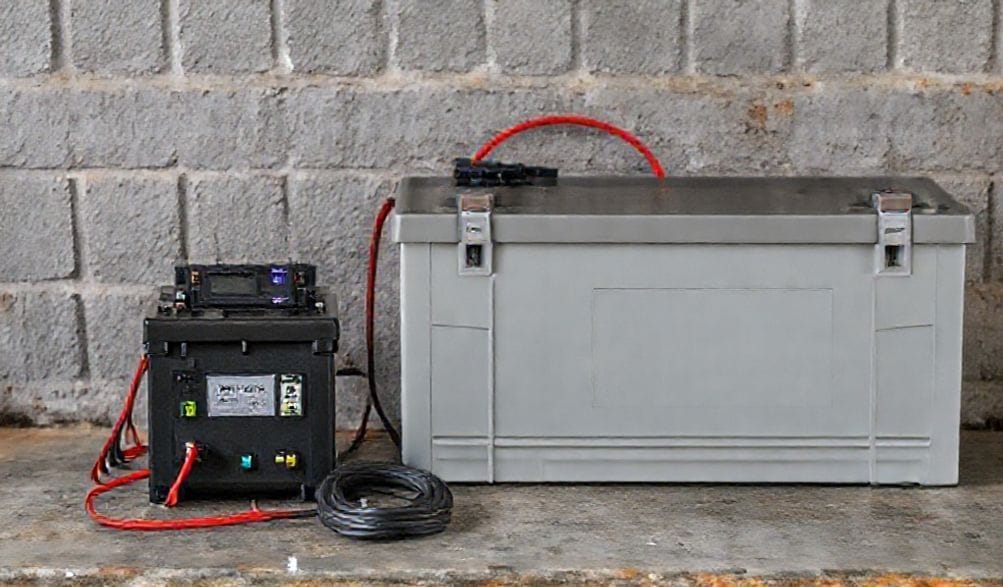
The Complete Guide to 72V Battery and Controller Systems for Electric Vehicles
Welcome, builders and enthusiasts. Whether you’re pushing the boundaries of an e-bike, engineering a high-performance electric scooter, or crafting a custom EV from the ground up, the heart of your project lies in its power system. This comprehensive guide is born from electrical engineering principles and countless hours in the workshop, soldering, testing, and tuning 72V systems. My goal is to translate that hands-on experience into reliable, actionable knowledge for you. Understanding the symbiotic relationship between your baterie 72V și o motor controller isn’t just technical jargon—it’s the difference between a thrilling, reliable machine and a costly, potentially dangerous disappointment. We’ll delve deep into how these components work, how to choose them, and how to integrate them safely to unlock superior power, range, and efficiency.
Understanding 72V Battery Systems: Core Components and Specifications
A 72V battery pack is more than just a power source; it’s the energy reservoir for your entire vehicle. The “72V” refers to its nominal voltage—the average operating voltage. A fully charged lithium-based 72V pack can actually reach over 84V. This higher voltage is key, as it allows your system to deliver more power (Watts) without demanding excessively high current (Amps), leading to better efficiency and less heat.
Battery Chemistry Breakdown: Lithium-ion vs. LiFePO4 for 72V Applications
Your first critical choice is chemistry. The two main contenders for 72V EV applications are Lithium-ion (Li-ion, often NMC or NCA) and Lithium Iron Phosphate (LiFePO4 or LFP).
- Lithium-ion (NMC/NCA): This is the champion of energy density. You get more Watt-hours (Wh) per kilogram, meaning a lighter, more compact pack for a given range. This makes it ideal for performance applications like electric motorcycles or high-speed e-bikes where weight and space are at a premium. The trade-offs? It has a more sensitive chemistry, requiring a robust Battery Management System (BMS). Its lifespan is typically shorter (500-1000+ cycles), and it is more susceptible to thermal runaway if damaged or improperly charged.
- Lithium Iron Phosphate (LiFePO4): This is the champion of safety and longevity. LiFePO4 chemistry is inherently more stable, dramatically reducing fire risk. It boasts an exceptional cycle life (2000-5000+ cycles), making it perfect for daily drivers, utility vehicles, or any project where long-term reliability is paramount. The downsides are lower energy density (heavier/bulkier packs) and a lower nominal cell voltage, requiring more cells in series to reach 72V.
Verdict: Choose Li-ion for maximum performance and lightness; choose LiFePO4 for maximum safety, lifespan, and total cost of ownership.
Key Specifications: Capacity (Ah), Energy (Wh), and C-Rating
Reading a battery spec sheet is essential:
* Capacity (Ah): Think of this as the size of your fuel tank. A 72V 20Ah battery can theoretically deliver 20 amps for one hour before depleting. Higher Ah = more range.
* Energy (Wh): This is the true measure of total stored energy, calculated as Voltage (V) x Capacity (Ah). A 72V 20Ah pack stores 1440Wh. This number is crucial for comparing different voltage systems and estimating range.
* Continuous & Peak C-Rating: This defines the battery’s current delivery capability. A “C” is equal to the pack’s Ah rating. A 20Ah battery with a 2C continuous rating can safely deliver 40A continuously. A 5C peak rating means it can handle 100A in short bursts (e.g., for acceleration). Matching this to your controller’s current draw is non-negotiable.
Battery Management Systems (BMS): The Guardian of Your 72V Pack
The BMS is the silent, intelligent protector inside your battery pack. A quality BMS is non-negotiable for safety and longevity. Its core functions include:
* Cell Balancing: Ensures all individual cells in the 72V series string charge and discharge evenly, preventing weak cells from being overstressed.
* Overcharge/Over-discharge Protection: Cuts off current to prevent cells from exceeding safe voltage limits, the primary cause of lithium battery failure.
* Over-current & Short-Circuit Protection: Acts as a high-speed electronic fuse to protect against dangerous current spikes.
* Temperature Monitoring: Disables charging/discharging if cell temperatures exceed safe operating windows.
Never use a 72V lithium battery pack without a fully functional, appropriately rated BMS.
72V Motor Controllers: The Brain of Your Electric Drive System
If the battery is the heart, the motor controller is the brain and nervous system. It’s a sophisticated electronic switchboard that takes DC power from your battery and converts it into precisely timed AC pulses to drive a brushless DC (BLDC) or AC induction motor.
How Motor Controllers Work: PWM and Phase Currents Explained
At its core, a controller uses Pulse Width Modulation (PWM). Imagine flipping a power switch on and off thousands of times per second. By varying the width of the “on” pulse, the controller varies the average voltage and current sent to the motor. A 50% duty cycle delivers half the average power of a 100% duty cycle. This is how it controls speed smoothly.
For a 3-phase brushless motor, the controller doesn’t just send power—it orchestrates it. Using feedback from hall sensors in the motor, it sequentially energizes pairs of the three phase wires (A, B, C) in a rotating pattern. This creates a rotating magnetic field that “pulls” the motor’s permanent magnets, producing torque. The sophistication of this phase current control directly impacts smoothness, efficiency, and torque.
Matching Controller to Motor: Phase Amps, Battery Amps, and Voltage Limits
Compatibility is critical. Mismatching can instantly destroy components.
* Voltage Rating: Your controller must be rated for at least 72V nominal. Ideally, its maximum voltage should exceed your battery’s full charge voltage (~84V for Li-ion).
* Battery Current (Amps): This is the current drawn from the battery pack. The controller’s rated battery amps must be within the battery pack’s continuous discharge rating (C-Rating x Ah).
* Phase Current (Amps): This is the current the controller can deliver to the motor. It is typically 2-3 times higher than the battery current due to the controller’s internal modulation. This phase current rating must not exceed your motor’s maximum current rating, as it determines peak torque.
Simple Rule: Battery Voltage & Current specs must align with your battery. Phase Current specs must align with your motor.
Programmable Controllers vs. Fixed Settings: Flexibility and Optimization
Basic controllers come with fixed parameters. Programmable controllers, accessed via USB or Bluetooth, are a game-changer for DIY and performance projects. They allow you to tune:
* Current Limits: Fine-tune battery and phase amps to match your exact components.
* Throttle Response: Map throttle input to power output (linear, exponential, etc.).
* Low-Voltage Cutoff (LVC): Set the exact voltage at which the controller shuts down to protect your battery.
* Regenerative Braking: Enable and adjust the strength of energy recovery during braking.
* Soft Start & Field Weakening: Improve low-speed smoothness or enable higher top speeds at the expense of efficiency.
This programmability lets you optimize for torque, top speed, efficiency, or a balanced profile, tailoring the system to your exact needs.
System Integration: Pairing Your 72V Battery with the Right Controller
Now comes the moment of truth: connecting everything into a cohesive, safe, and functional system.
The Voltage-Current-Power Relationship: Calculating Your Needs
Use these fundamental formulas to plan your build:
* Power (Watts) = Voltage (Volts) x Current (Amps).
* Example: A system drawing 50A from a 72V battery is using 72V x 50A = 3600W of power.
* To estimate required battery capacity: Determine your desired range and average Wh/mile consumption (research your vehicle type). Battery Wh Needed = Desired Range (mi) x Avg. Wh/mi.
* To size your controller: Decide on your target power. Controller Battery Amp Rating ≥ (Target Power in Watts / Battery Nominal Voltage).
Wiring, Connectors, and Safety Considerations for High-Voltage Systems
72V systems demand professional-grade practices:
* Wire Gauge: Use a wire gauge chart. For main battery-to-controller lines carrying 50-100A, you’ll likely need 8 AWG to 4 AWG silicone-coated, high-strand-count wire.
* Connectors: Use XT90, Anderson Powerpole, or similar high-current connectors. Avoid cheap plastic connectors that can melt. Always solder and heat-shrink connections.
* Fusing: An appropriately rated DC fuse or circuit breaker must be installed on the positive battery lead, as close to the battery terminal as possible. This is your primary fire safety device.
* Switching: A main contactor or heavy-duty switch is essential for safely disconnecting the high-voltage line. Never connect/disconnect live high-current connectors.
Throttle and Hall Sensor Compatibility: Ensuring Seamless Communication
The control signals are just as important as the power lines:
* Throttle: Most use a 0-5V analog signal or a 1-4V signal. Ensure your controller’s throttle input matches your throttle’s output type. Some use a hall-effect sensor, others a potentiometer.
* Hall Sensors: The three thin wires from your motor provide rotor position feedback. The connector must match the controller’s socket. If they don’t match, you can re-pin the connector, but the wire color code must be correctly identified through testing.
* Testing: Before final assembly, perform a “bench test” with wheels off the ground to verify motor direction, throttle operation, and brake cutoff functionality.
Performance Optimization and Real-World Applications
With a functioning system, you can now fine-tune for your specific goals.
Maximizing Range vs. Maximizing Power: Configuring Your System
These are often competing priorities:
* For Max Range: Use a lower current limit on your controller (e.g., 30A instead of 50A). This reduces peak power draw, minimizing voltage sag and energy waste as heat. Program a gentle throttle response and utilize regen braking if available. Prioritize a higher Ah battery (more Wh) and maintain moderate speeds.
* For Max Power: Use a high current limit and select a controller with a high phase current multiplier for explosive torque. This will drastically increase consumption and heat generation. You’ll need a battery with a very high C-rating to support the current draw without sagging or overheating. Thermal management becomes critical.
Common Applications: E-Bikes, Scooters, Motorcycles, and Custom Projects
- High-Power E-Bikes: 72V is the realm of “hyper bikes.” Expect speeds of 40-60+ mph. Focus on high-C-rate Li-ion packs, programmable controllers for torque tuning, and exceptionally robust brakes and frames.
- Electric Scooters/Mopeds: Ideal for achieving highway-capable speeds (50-70 mph). Requires motorcycle-grade components, proper suspension, and lighting systems. LiFePO4 is a great choice here for durability.
- Electric Motorcycles: 72V is a common voltage for light to medium-duty electric motorcycles. System integration is complex, involving CAN bus communication, dashboards, and OEM-level safety systems.
- Custom Projects (Carts, ATVs, Boats): The principles are the same. Focus on matching the motor’s torque/RPM characteristics (KV rating) to your vehicle’s gearing and weight.
Thermal Management: Keeping Your 72V System Cool Under Load
Heat is the enemy of electronics and batteries.
* Controllers: Mount in a location with airflow. Use aluminum mounting plates as a heat sink. For sustained high loads, consider a controller with a built-in fan or add an external cooling fan.
* Batteries: Do not enclose batteries in airtight boxes. Provide ventilation slots. For extreme performance, some builders use temperature sensors connected to the BMS or a separate alarm. Active liquid cooling is rare but exists in top-tier systems.
* Monitor Temperatures: After hard runs, feel the components (carefully!). If they’re too hot to touch for more than a few seconds (>60°C/140°F), you need better cooling or to reduce current limits.
Maintenance, Safety, and Troubleshooting
A 72V system is an investment. Protect it with proper care.
Routine Maintenance Checklist for 72V Battery Packs
- Monthly: Visually inspect all high-current connections for tightness, corrosion, or melting.
- Every 10-20 Cycles: Check individual cell group voltages via the BMS balance lead (if accessible) to ensure the pack is staying balanced.
- Depozitare: If storing for >1 month, charge or discharge the battery to ~50% State of Charge (3.7V per cell for Li-ion, ~3.3V for LiFePO4). Store in a cool, dry place.
- Încărcare: Always use the manufacturer-specified charger. Charge in a fire-safe area and never leave unattended for extended periods.
Diagnosing Common Issues: Voltage Sag, Controller Faults, and Error Codes
- Severe Voltage Sag Under Load: Indicates a battery problem—either a poor connection, a failing cell group, or a battery with insufficient C-rating for your controller’s current draw.
- Controller Cuts Out/Resets: Could be over-temperature protection, un low-voltage cutoff triggered by sag, or a loose hall sensor/throttle connection.
- Motor Stutters or Jerks: Often a hall sensor issue. Check the hall connector and wiring. Can also be a phase wire connection problem.
- Error Codes: Refer to your controller’s manual. Common codes relate to over-current, over-temperature, hall sensor faults, or throttle errors.
Long-Term Storage and Battery Lifespan Preservation
- Avoid Full Discharges: Never routinely run your battery down to the controller’s cutoff. This stresses cells.
- Avoid 100% Charge for Storage: Lithium batteries degrade fastest when held at full charge for long periods.
- Temperature is Key: Avoid exposing batteries to extreme heat (like a hot car in summer) or charging them when frozen.
- Follow the 80/20 Rule (for longevity): If you don’t need the full range daily, charge to only 80-90% and discharge to only 20-30%. This can double or triple the cycle life of the pack.
Secțiunea Întrebări Frecvente
Q1: Is a 72V system dangerous compared to lower voltage systems?
R: All electrical systems require respect, but 72V is generally considered extra-low voltage (ELV) and non-lethal under normal dry conditions. However, it can deliver dangerous current and cause severe arc flashes that can start fires or cause burns. Proper insulation, fusing, and disconnects are mandatory. Always treat it with the same caution as mains electricity.
Q2: Can I use a 60V controller with a 72V battery?
A: Absolutely not. Exceeding the controller’s maximum voltage rating will instantly destroy its capacitors and MOSFETs, often in a dramatic, smoky failure that creates a serious fire hazard. Always ensure the controller’s voltage rating matches or exceeds the battery’s nominal and maximum charge voltage.
Q3: How do I calculate the approximate range of my 72V system?
R: Use the energy-based formula: Range (miles) = [Battery Watt-hours (Wh)] / [Average Watt-hours per mile (Wh/mi)]. For example, a 72V 20Ah battery (1440Wh) on a vehicle using 30 Wh/mi would provide ~48 miles. A heavier motorcycle using 50 Wh/mi would only get ~29 miles. Terrain, weight, speed, and riding style drastically affect consumption.
Q4: What is regenerative braking, and does my 72V controller support it?
R: Regenerative braking recovers kinetic energy during braking by turning the motor into a generator, sending current back to the battery. It requires a controller and BMS specifically designed for bi-directional current flow. Not all 72V systems have this feature; you must check your controller’s specifications before assuming it’s available.
Q5: How often should I balance the cells in my 72V lithium battery pack?
R: It depends on usage and BMS quality. With a good, active-balancing BMS, it may require minimal intervention. A general rule is to perform a full, slow balance charge every 10-20 full cycles or if you notice a significant reduction in range. Many chargers have a dedicated “balance” mode. Always refer to your battery manufacturer’s specific recommendations.
Concluzie
Successfully implementing a 72V battery and controller system is a rewarding engineering challenge that blends careful planning, a solid grasp of electrical principles, and meticulous attention to detail. This guide has walked you through the journey—from selecting the right battery chemistry and decoding controller specs, to the critical steps of safe integration and long-term maintenance. Remember, investing in quality components from reputable manufacturers and triple-checking all compatibility specifications is not just about achieving peak performance; it’s the foundation of a safe and reliable vehicle. For complex or high-power projects, don’t hesitate to consult with a qualified electric vehicle technician. By applying the knowledge here responsibly, you are now equipped to harness the significant power, efficiency, and range advantages that a well-designed and properly tuned 72V system offers. Build smart, ride safe, and enjoy the electric revolution.
METADATA_START—
DISPLAY_TITLE: The Complete Guide to 72V Battery and Controller Systems for EVs
SEO_TITLE: 72V Battery and Controller Guide | Performance, Safety & Integration
META_DESC: Master your EV build with our complete 72V battery and controller guide. Learn to select, integrate, and optimize for safety, range, and max power. DIY tips included.
IMG_PROMPT: A detailed, professional photograph of a high-performance 72V lithium battery pack and a programmable motor controller sitting on a workbench, with thick gauge wiring and connectors nearby. The style should be technical, clean, and well-lit, emphasizing the engineering components.
—METADATA_END—