
The Ultimate Parent’s Guide to Dirt Bikes for 6-Year-Olds (Safety, Selection & Getting Started)
That moment when your child’s eyes light up at the sound of a dirt bike, mirroring your own passion for riding, is pure magic. It sparks dreams of weekend adventures, shared trails, and passing on a love for motorsports. But for a parent, that excitement is almost instantly followed by a wave of questions and concerns. Is my child ready? How do I keep them safe? What on earth is the right bike? If you’re navigating these feelings, you’re in the right place.
This guide is designed to be your comprehensive, safety-first handbook for introducing your 6-year-old to the world of dirt bikes. We’ve distilled expert advice from seasoned riding instructors, manufacturer specifications, and hard-won wisdom from parents who’ve been in your shoes. Our goal is simple: to replace your anxiety with knowledge, empowering you to make a confident, informed decision that prioritizes your child’s safety and enjoyment. We’ll walk you through assessing readiness, decoding critical safety features, comparing electric and gas-powered options, and laying the groundwork for a positive first riding experience. Let’s get started on this journey the right way.
Is Your 6-Year-Old Ready for a Dirt Bike? Assessing Physical & Mental Readiness
Before you even look at a bike, the most important assessment happens at home. Readiness isn’t just about age; it’s a combination of physical capability and mental maturity.
Physical Requirements: Size, Strength, and Coordination
A dirt bike is not a toy; it’s a vehicle that requires specific physical skills. The most critical rule is the “flat-foot rule.” When sitting on the bike, your child should be able to place the balls of both feet flat on the ground comfortably. This is non-negotiable for a beginner, as it provides essential stability for stopping, balancing, and preventing tip-overs. For most 6-year-olds, this translates to a bike with a seat height between 19 and 22 inches.
Beyond height, consider:
* Throttle Control: Can they operate a twist-grip throttle with control, not just a jerky, all-or-nothing motion? Their hand should be large and strong enough to manage it.
* Brake Lever Reach: They must be able to pull the brake levers (especially the front brake, which requires more effort) with at least two fingers while maintaining a grip on the handlebars.
* Core & Leg Strength: They need enough strength to hold the bike upright at a stop and to use their legs to grip the bike while riding.
* General Coordination: Basic balance, the ability to look ahead while managing controls, and solid motor skills are foundational.
Maturity and Mindset: Following Instructions and Risk Awareness
This is often the deciding factor. A physically capable child who won’t listen is at extreme risk.
* Rule Adherence: Can your child listen to and follow specific safety instructions, even when excited? “Always wear your helmet,” “Stop when I say stop,” and “Stay within this boundary” are commands that must be obeyed instantly.
* Focus and Respect: Riding requires constant attention to the terrain, the bike, and instructions. They need to understand that the bike is powerful and must be respected.
* Risk Awareness & Cause/Effect: A basic understanding that actions have consequences—like twisting the throttle hard makes the bike lunge, or not braking in time leads to a crash—is crucial. They should demonstrate a cautious, not reckless, approach to new physical challenges.
Critical Safety Features for a First Dirt Bike
Once you’ve established readiness, the bike itself becomes your primary tool for safety. These features are not optional extras for a beginner.
Engine Type & Size: Why CCs and Power Limiters Matter
For 6-year-old beginners, less power is unequivocally more.
* Engine Size (CCs): The sweet spot is a 50cc engine. Some larger or more experienced 6-year-olds may handle a 110cc, but only if it has a throttle limiter. Never start a true beginner on anything larger. Cubic Centimeters (cc) refers to engine displacement; more cc generally means more power and speed.
* Power Limiters: This is your best friend. Look for bikes with a screw-type throttle limiter or adjustable power modes (common on electric bikes). This allows you to restrict top speed to a safe crawl (e.g., 5-10 mph) for initial practice, gradually opening it up as skill develops.
* Electric vs. Gas: We’ll dive deeper later, but note that electric motors deliver instant, silent torque. A limiter or speed controller is just as vital on an e-bike.
Essential Bike Components: Brakes, Tires, and Suspension
- Transmission: An automatic clutch (or no clutch, like on many electric bikes) is ideal. It lets the child focus on balance, throttle, and braking without the complexity of shifting. Manual clutches come later.
- Frâne: Functional front and rear brakes are mandatory. Disc brakes typically offer better, more consistent stopping power than drum brakes, especially in wet or muddy conditions.
- Tires: Proper knobby, off-road tires provide the necessary grip on dirt, grass, and gravel. Street-style tires are dangerous for off-road use.
- Suspensia: At minimum, the bike should have front forks and a rear shock. This absorbs impacts from small bumps, keeping the bike stable and saving your child’s spine. Adjustable suspension is a bonus for fine-tuning the ride as they grow.
The Non-Negotiables: Safety Gear Head-to-Toe
The bike is one part of the equation; your child’s personal protective equipment (PPE) is the other. Gear is not where you cut corners or buy used (except maybe jerseys).
1. Cască: Must be DOT-certified at a minimum; SNELL sau ECE certification is better. It must fit snugly without pressure points. A motocross-style helmet is designed for this sport.
2. Ochelari de Protecție: Protect eyes from roost, dirt, and branches. Get a pair with a tear-off system and good ventilation to prevent fogging.
3. Ghete: Motocross-specific boots are critical. They protect ankles from twists and breaks, provide support, and have grip for the footpegs. High-top sneakers are utterly insufficient.
4. Mănuși: Improve grip, protect hands from blisters, and offer abrasion resistance in a fall.
5. Chest Protector: Shields the torso, ribs, and back from impacts and handlebar jabs.
6. Knee/Shin Guards & Elbow Pads: These are often integrated into riding pants and jerseys. They prevent the most common beginner scrapes and impacts.
Types of Dirt Bikes for 6-Year-Olds: Electric vs. Gas-Powered
The great debate for modern parents. Each has its place, and the “best” choice depends on your specific situation.
Electric Dirt Bikes: Pros, Cons, and Top Considerations
Pros:
* Quiet Operation: Perfect for practicing in backyards or suburban areas without disturbing neighbors.
* Low Maintenance: No gas, oil, air filters, or spark plugs. Just charge the battery.
* Instant, Controllable Power: Smooth, linear torque is easier for some beginners to manage.
* Indoor/Close-Quarters Practice: Can be used in a garage or driveway for very basic drills.
Cons:
* Limited Ride Time: Battery life typically ranges from 30 minutes to 2 hours, followed by a long recharge. Not ideal for a full day at the trails.
* Less “Authentic” Feel: Doesn’t teach engine management, clutch control, or the mechanics of a gas bike, which can make a later transition trickier.
* Top Speed & Power: Check specs carefully. Look for voltage (e.g., 24V, 36V) și o wattage. A 500W+ e-bike can be very powerful and needs a speed limiter.
Gas-Powered Dirt Bikes: Pros, Cons, and Engine Basics
Pros:
* Authentic Riding Experience: Teaches the fundamentals of motorcycle operation from the start.
* Longer Ride Time: A tank of gas lasts much longer than most e-bike batteries, with a quick refuel.
* Skill Progression: Easier to transition to larger bikes as skills improve, as the controls and mechanics are the same.
* Wider Community & Support: The aftermarket and dealer network for brands like Honda and Yamaha is vast.
Cons:
* Noise & Fumes: Can be loud and produces exhaust. Requires ventilation and consideration for others.
* Regular Maintenance: Requires periodic oil changes, air filter cleaning, and spark plug checks.
* Fuel Handling: Requires safe storage and handling of gasoline.
Engine Note: For beginners, a 4-stroke engine is standard. It’s more forgiving, with smoother, predictable power and a simpler maintenance routine than a peaky 2-stroke engine.
How to Choose the Perfect Fit: A Step-by-Step Selection Guide
Measuring Your Child and Reading Bike Specs
- Get the Inseam: Have your child stand against a wall in their socks. Place a book snugly up into their crotch, parallel to the floor. Measure from the top of the book to the floor. This is their inseam.
- Compare to Seat Height: The bike’s seat height (listed in specs) should be 1-3 inches less than your child’s inseam. This ensures they can flat-foot it.
- Consider Weight: The bike’s wet weight (with fluids) should not be more than 40-50% of your child’s body weight. A bike that’s too heavy is hard to control and dangerous if it falls.
**Nou vs. Second-Hand: Ce Trebuie să Știe Părinții**
- Avantaje Motocicletă Nouă: **Garanție, istoric cunoscut, cele mai recente caracteristici de siguranță și suport de la dealer.** Plătești pentru liniștea sufletească.
- **Lista de Verificare pentru Motociclete Second-Hand:** Dacă cumperi second-hand, fii meticulos. Verifică:
- **Alinearea Cadrului și a Furcii:** Fără fisuri, îndoituri sau suduri.
- **Funcționarea Frânelor:** Pârghiile sunt ferme, plăcuțele au material rămas.
- Suspensia: Se mișcă lin fără scurgeri de ulei.
- **Motorul:** Pornește ușor, funcționează fără fum sau zgomote stranii.
- **Comenzi:** Mânerul accelerației se întoarce rapid în poziția închisă, toate cablurile sunt intacte.
- **Anvelope și Roți:** Bandă de rulare bună, fără fisuri, roțile se învârt fără balans.
**Sfat Crucial:** Dacă nu te pricepi la mecanică, adu un prieten cunoscător sau angajează un mecanic să o inspecteze.
**Modele și Mărci Recomandate cu Reputație de Încredere**
(Notă: Acestea sunt exemple de modele respectate în industrie, cunoscute pentru fiabilitate și prietenie cu începătorii, nu recomandări plătite.)
- **Cu Motor pe Benzină:**
- **Honda CRF50F:** Standardul de aur. 4-tacte ultra-fiabil, ambreiaj automat, limitator de accelerație și înălțime scăzută a șei.
- **Yamaha PW50:** Un alt model legendar pentru începători. Transmisie automată simplă, injecție de ulei pentru alimentare ușoară și un unic “limitator de accelerație cu comutator de pornire”.
- **Electrice:**
- **Razor MX350/MX650:** Puncte de intrare populare și accesibile. Bune pentru o utilizare foarte ușoară și pentru a simți echilibrul.
- **Oset Bikes:** Motociclete electrice serioase pentru trial. Putere și viteză extrem de reglabile, calitate fantastică de construcție pentru dezvoltarea abilităților.
**Mărci de Încredere de Cercetat:** Honda, Yamaha, Kawasaki, KTM (pentru benzină); Oset, Segway, Sur-Ron (pentru electrice).
**Prima Plimbare: Configurarea pentru Succes și Dezvoltarea Abilităților**
Ziua cea mare a sosit. Succesul depinde de pregătire și răbdare.
**Pregătirea și Verificarea de Siguranță înainte de Plimbare**
Fă din asta un ritual. Folosește lista de verificare **T-CLOCS** prietenoasă pentru copii:
* **T – Anvelope și Roți:** Presiunea în anvelope este bună? Fără tăieturi sau deteriorări?
* **C – Comenzi:** Se mișcă pârghiile și mânerul accelerației liber și se întorc rapid?
* **L – Lumini/Ulei și Lichide:** (Pentru benzină) Nivelurile de benzină și ulei sunt bune? (Pentru electric) Bateria este complet încărcată?
* **O – Lanț și Transmisie:** Lanțul este curat, uns și are tensiunea corectă?
* **C – Șasiu și Suporturi:** Există șuruburi slăbite? Motocicleta pare dreaptă?
* **S – Suporturi:** Suportul lateral funcționează? (Dacă este echipat).
**Găsirea Mediului Potrivit pentru Exersare**
Începe în cel mai "plictisitor" loc posibil: un **teren deschis, plat, cu iarbă** fără obstacole, trafic sau distrageri. Un teren viran, un colț sigur al unei ferme sau o zonă special destinată începătorilor într-un parc OHV este perfect. **Niciodată** nu începe pe o pistă publică, stradă, sau oriunde există dealuri, pietre sau alți motocicliști.
**Exerciții de Bază și Instruire Profesională**
- **Exerciții pentru Ziua 1:** Cu motorul oprit, exersează urcatul/coborâtul, mersul pe lângă motocicletă, apăsarea frânelor. Cu motorul pornit (și limitatorul activat), exersează pornirea, oprirea și rularea ușoară în linie dreaptă. Apoi, treci la opt-uri largi și ușoare.
- **Recomandarea de Aur:** **Înscrieți-vă copilul într-un curs certificat pentru începători.**. Un instructor profesionist (precum cei de la Motorcycle Safety Foundation sau școlile locale de motocross) predă tehnici corecte din prima zi – poziția corpului, frânarea, virajul – într-un mediu controlat. Aceasta este cea mai bună investiție pe care o puteți face pentru siguranța și plăcerea lor pe termen lung.
Secțiunea Întrebări Frecvente
**Î: Ce dimensiune de motocicletă de teren este cea mai bună pentru un copil de 6 ani?**
R: Potrivirea este mai importantă decât un anumit model. În mod tipic, un copil de 6 ani se va potrivi pe o motocicletă cu Înălțimea șei de 48-56 cm și un motor de 50 cm³. Utilizați întotdeauna “regula piciorului plat” ca ghid principal.
Î: Motocicletele electrice pentru teren accidentat sunt mai sigure decât cele pe benzină pentru începători?
R: Acestea prezintă profile de risc diferite. Motocicletele electrice sunt mai silențioase și au mai puține piese mecanice, dar pot fi totuși rapide și necesită același respect. Motocicletele pe benzină introduc elemente legate de combustibil și întreținere. În final, supravegherea, echipamentul adecvat și o motocicletă cu limitator de putere sunt cele care fac orice bicicletă mai sigură pentru un începător.
Q3: Cât ar trebui să anticipez că voi cheltui pe o motocicletă enduro pentru începători și echipament?
R: Pentru o motocicletă cu motor termic nouă motocicletă pe benzină, buget 1.200 – 1.800 de unități monetare. O motocicletă cu motor termic nouă motocicletă electrică de calitate variază între 400 – 1.500+ unități monetare. Echipamentul de siguranță esențial (cască, ochelari de protecție, cizme, protector toracic, mănuși, plăci de protecție) reprezintă un cost suplimentar obligatoriu de 500 – 1.000+ unități monetare pentru articole noi și de calitate. Motocicletele second-hand pot reduce costul bicicletei la jumătate, dar nu faceți compromisuri niciodată cu privire la echipament.
Î: Care este cel mai important element de echipament de protecție?
R: Aceasta Casca este cel mai critic element, deoarece protejează împotriva leziunilor traumatice ale capului. Cu toate acestea, priviți echipamentul de siguranță ca pe un sistem. Cizmele previn accidentările debilitante ale gleznei, iar un protector toracic apără organele vitale. Toate componentele sunt esențiale.
Î: Unde este legal ca copilul meu să conducă o motocicletă pentru teren accidentat?
R: Trebuie să verificați ordonanțele locale și de stat. În general, este ilegal să conduci pe drumuri publice, trotuare sau în parcuri. Conducerea legală este de obicei limitată la proprietate privată (cu permisiune explicită) sau zonele desemnate pentru vehicule off-road (OHV), trasee și piste de motocross.
Concluzie
Introducerea copilului dumneavoastră de 6 ani în lumea motocicletelor pentru teren accidentat este o călătorie care ar trebui definită de zâmbete, încredere și progres în siguranță – nu de frică sau frustrare. Evaluând cu atenție pregătirea acestuia, insistând asupra caracteristicilor de siguranță critice și a echipamentului de la cap la picioare, alegând o motocicletă care se potrivește perfect (nu una în care să “crească”), și începând educația acestuia cu ghidare profesională, puneți cea mai solidă fundație posibilă.
Amintiți-vă, aceasta este despre experiența lor. Luați-vă timp. Vizitați dealeri de încredere și puneți-vă copilul să stea pe diferite motociclete. Discutați cu alți părinți din cluburile locale de motociclism. Lăsați procesul să fie la fel de distractiv ca și conducerea însăși. Dați prioritate siguranței și confortului în fața vitezei sau a unui design strălucitor. Când faceți acest lucru, nu cumpărați doar o motocicletă; deschideți ușa către o viață de aventură, îndemânare și amintiri de familie partajate pe traseu.
Următorul pas: Găsiți și înscrieți-vă astăzi într-un curs certificat pentru începători. Este cea mai bună treaptă întâi pe care o puteți cumpăra.
METADATA_START—
DISPLAY_TITLE: Ghidul Ultimate pentru Părinți: Motociclete pentru Teren Accidentat pentru Copii de 6 Ani
SEO_TITLE: Motociclete pentru Teren Accidentat pentru Copii de 6 Ani: Un Ghid pentru Părinți din 2024 despre Siguranță și Cumpărare
META_DESC: Sunteți confuz în legătură cu motocicletele pentru teren accidentat pentru copii de 6 ani? Ghidul nostru de specialiști acoperă echipamentul de siguranță, electric vs. benzină, modele de top precum Honda CRF50F și cum să vă asigurați un început sigur și distractiv. Aflați cum să alegeți potrivirea corectă astăzi.
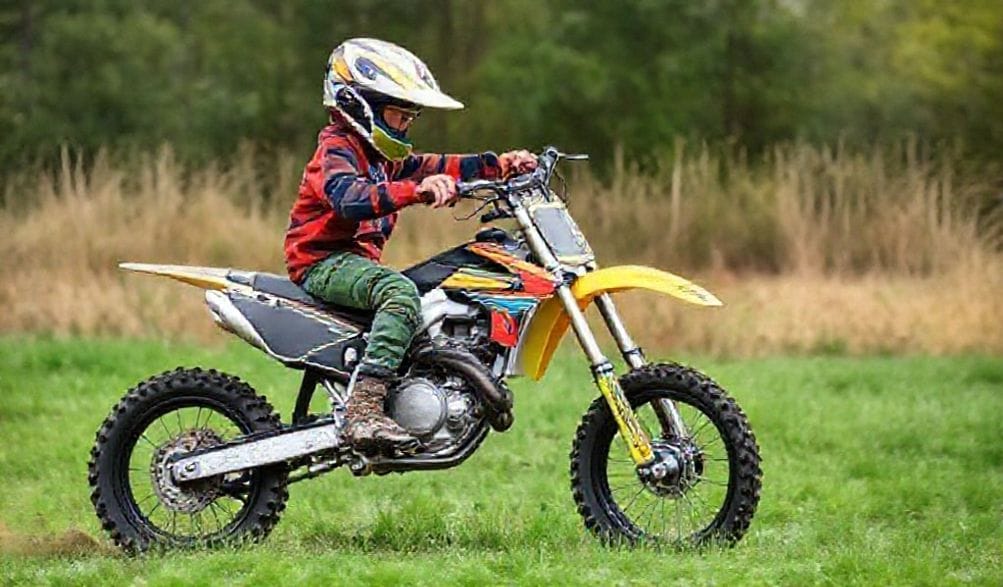
IMG_PROMPT: Un copil fericit de 6 ani, complet echipat cu cască, ochelari de protecție și protector toracic, șezând încrezător pe o mică motocicletă pentru teren accidentat de culoare galbenă, într-un câmp însorit cu iarbă, cu un părinte îngenuncheat lângă el făcând semnul de aprobare cu degetul mare.
—METADATA_END—