
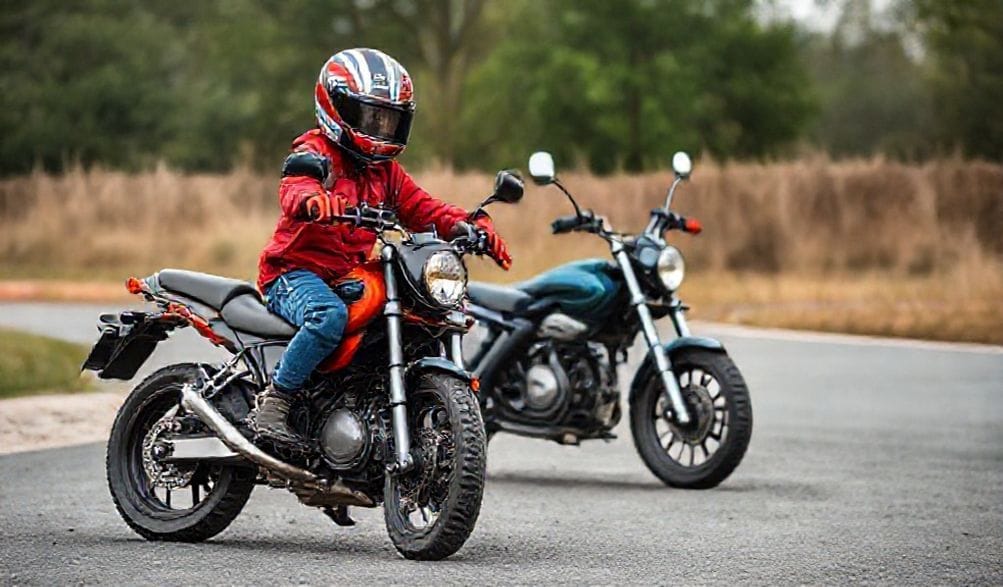
The Parent’s Complete Guide to Motorbikes for 11-Year-Olds: Safety, Selection & Getting Started
That moment your child looks up, eyes wide with a mix of excitement and pleading, and asks, “Can I have a motorbike?” is a parenting milestone. It’s a cocktail of emotions: pride in their adventurous spirit, nostalgia for your own youth, and a healthy, overwhelming dose of parental apprehension. Visions of scraped knees are quickly replaced by more serious concerns. This is completely normal. The world of youth motorbiking can seem vast, technical, and fraught with risk from the outside.
But here’s the good news: with the right knowledge and a methodical, safety-first approach, introducing your 11-year-old to motorcycling can be one of the most rewarding experiences you share. It’s not about unleashing them on a powerful machine; it’s about guided exploration, skill-building, and responsibility. This comprehensive guide is designed to transform your apprehension into confident action. We’ll walk you through every critical step—from head-to-toe safety gear and choosing the perfect beginner bike to understanding legalities and fostering the right mindset. Our goal is to ensure your child’s introduction to motorbikes for 11 year olds is positive, progressive, and, above all, safe.
Safety First: The Non-Negotiable Foundation for Young Riders
Before you even think about makes, models, or engine sizes, you must adopt this mantra: Riding begins with safety gear. This isn’t an area for compromise, budget shortcuts, or “good enough.” The protective equipment your child wears is their primary line of defense and is based on decades of research and data from motorsports safety organizations. Investing properly here is the single most important decision you will make.
Essential Protective Gear: Head-to-Toe Checklist
Think of this as your non-negotiable shopping list. Each item serves a vital purpose.
- Helmet (DOT/SNELL Certified): This is paramount. It must be specifically designed for motocross/off-road use (with a chin bar and visor peak). Look for dual certification (DOT and SNELL or ECE) for the highest assurance. Most importantly, it must fit perfectly. It should be snug without pressure points, and not shift on the head when the straps are fastened. Plan to replace it after any significant impact or every few years as materials degrade.
- Ochelari de Protecție: A clear, scratch-resistant lens is essential. Goggles protect eyes from roost (rocks and dirt kicked up by other bikes), branches, and insects. Ensure they fit securely with the helmet and offer good ventilation to prevent fogging.
- Chest Protector/Roost Defector & Jersey: A quality chest protector shields the torso, shoulders, back, and often the kidneys from impacts and debris. It should be worn over a durable, long-sleeved motocross jersey made of tear-resistant material.
- Mănuși: Motocross gloves provide grip, protect hands from blisters, and offer padding and abrasion resistance in a fall.
- Knee/Shin Guards & Motocross Pants: These guards protect vulnerable joints and shins from impacts with rocks, ruts, and the bike itself. They should be worn inside durable motocross pants, which are designed to withstand abrasion.
- Ghete: Do not use hiking boots or work boots. Proper motocross boots are arguably the second-most important item after the helmet. They provide ankle support, crush protection, and a structured sole for shifting and braking. They are engineered to prevent hyperextension and other common leg injuries.
The Critical Role of Adult Supervision & Training
Gear is passive protection; active safety comes from knowledge and supervision.
- Zero-Tolerance Supervision: An 11-year-old should never ride unsupervised. Your presence is not just about emergency response; it’s for coaching, encouragement, and enforcing boundaries.
- Professional Training is Invaluable: Search for a certified youth motorcycle safety course (often offered by organizations like the Motorcycle Safety Foundation or local motocross clubs). Professional instructors teach fundamental skills—clutch control, braking, balance, and falling techniques—in a controlled, progressive manner. This builds a proper foundation far faster and safer than trial-and-error.
- The Parent as Coach: Even with professional training, you are the constant coach. Start in a wide-open, flat, grassy field. Focus on the absolute basics: starting, stopping, gentle turning, and looking ahead. Celebrate small victories and keep initial sessions short and positive.
Choosing the Right Motorbike for an 11-Year-Old
With safety gear secured, you can now focus on the machine. The goal is to find a bike that builds confidence, not fear. An overpowered or oversized bike is the quickest way to create a negative, dangerous experience.
Key Factors: Size, Weight, and Engine Displacement (CCs)
Forget age recommendations for a moment. Physical size and maturity are your true guides.
- Seat Height & Weight: Your child should be able to sit on the bike with both feet flat on the ground, or at least the balls of both feet. This is crucial for stability when stopping and maneuvering at low speeds. The bike’s weight should be manageable for them to pick up from a tip-over—a guaranteed event for any new rider.
- Engine Displacement (CCs): For a complete beginner at age 11, the sweet spot is typically between 50cc and 110cc for a four-stroke engine. Four-strokes are generally more forgiving, with smoother, more predictable power delivery than two-strokes.
- 50cc: Excellent for very small or cautious first-timers. They are light and easy to manage.
- 110cc: The most popular and versatile beginner size. It offers enough power to be fun and handle mild terrain but is not intimidating. It’s also a size they can grow with for a year or two.
- 125cc: Suitable for a taller, more coordinated 11-year-old, or one with some prior experience (e.g., on a 50cc). It offers more room for growth before needing an upgrade.
- Growth-Oriented vs. Immediate Fit: Slightly favoring a bike they can “grow into” is okay, but “swimming” in a bike that’s too tall or heavy is dangerous. It’s better to buy a correctly sized beginner bike and plan to sell it in 1-2 years than to start on something that compromises control.
Types of Youth Motorbikes: Pros and Cons
- Motocross/Dirt Bikes (e.g., Honda CRF, Yamaha YZ, KTM SX): Designed for closed-course competition. They have aggressive suspension, lightweight frames, and peaky powerbands. Best for: Kids who will primarily ride at motocross tracks. Consideration: Can be less forgiving for a pure beginner on casual trails.
- Trail/Play Bikes (e.g., Honda CRF110F, Yamaha TT-R110E, Kawasaki KLX110): Aceasta ideal choice for most beginners. They are built for durability, ease of use, and varied off-road terrain. They feature softer suspension, more user-friendly power delivery, and often electric start. They are low-stress and confidence-inspiring.
- Electric Motorbikes (e.g., from Razor, Segway, or Sur-Ron): A fantastic and growing category for beginners. Pros: Quiet operation (great for neighborhoods), almost zero maintenance (no oil, gas, or air filters), instant torque that’s easily controllable, and often lighter weight. Cons: Limited range per charge and potentially less robust suspension for serious trail riding.
- Pit Bikes: Smaller, recreational bikes often used around race pits. They can be fun but ensure you’re getting a quality, safe model from a known brand, not a cheaply made knock-off.
New vs. Used: What Parents Should Know
- Avantaje Motocicletă Nouă: Comes with a warranty, latest safety features, and zero hidden wear. You know its full history. Financing and dealer support are available.
- Used Bike Considerations: Can offer significant savings, allowing you to allocate more budget to top-tier safety gear. Crucial Step: Have any used bike thoroughly inspected by a trusted mechanic before purchase. Check for frame damage, worn bearings, brake pad life, fork seal leaks, and engine compression. A well-maintained used bike from a reputable brand is often a brilliant first buy.
Preparing for the Ride: Logistics and Legalities
The bike is in the garage, the gear is on. Now, where and how can they legally and safely ride?
Understanding Local Laws and Where to Ride Legally
This is a critical and often overlooked step.
- Research Local OHV Laws: Laws governing Off-Highway Vehicles (OHVs) vary dramatically by state and country. Research the specific requirements for your location. This may include age restrictions, required safety certificates, bike registration, and spark arrestor mandates for riding on public land.
- Legal Riding Areas:
- Proprietate Privată: The simplest option, but only with the explicit, written permission of the landowner. Ensure the terrain is suitable and free of hidden hazards.
- Designated OHV Parks & Trails: State and federal lands often have managed trail systems for dirt bikes. These are fantastic, legal venues. Research them online, understand the trail difficulty ratings (stick to green/easy), and always purchase required permits.
- Motocross Tracks: Offer a controlled, maintained environment. Many have dedicated beginner practice days with mellower tracks.
- Street Legality: For an 11-year-old, street-legal dirt bikes are almost universally off the table. Licensing, insurance, and safety concerns make public roads a hard nu. The focus must remain on controlled, off-road environments.
Pre-Ride Bike Checks and Maintenance Basics
Instill a ritual. Before every ride, go through the “T-CLOCS” checklist (Tires, Controls, Lights/Oil, Chassis, Stands) adapted for a dirt bike:
- Tires: Check air pressure and look for cuts or excessive wear.
- **Comenzi:** Ensure throttle snaps back closed, levers (clutch, brake) work smoothly, and cables are not frayed.
- Chain & Sprockets: Check chain tension (should have about 1.5 inches of free play) and lubricate it. Look for hooked or broken teeth on the sprockets.
- Fluids: Check engine oil level and look for leaks.
- Frâne: Test front and rear brakes. Ensure pads have material left.
- Nuts & Bolts: Give critical fasteners (axle nuts, handlebar clamps, brake caliper bolts) a quick check for tightness.
Involving your child in this process, even just watching, teaches responsibility and connects them to the machine’s mechanics.
Fostering a Positive and Responsible Riding Mindset
Motorbiking is more than a thrill; it’s a tool for development when approached correctly.
Setting Ground Rules and Building Skills Gradually
Structure prevents overwhelm and manages risk.
- Start Simple: Master the flat, open field. Practice figure-eights, gradual stops, and controlled starts. Only progress to gentle hills, then mild trails, after fundamental control is second nature.
- Establish Clear Rules: Set non-negotiable boundaries before the first ride. Examples: “Full gear, every time.” “No riding outside of our designated area.” “Stop immediately if I signal.” “Speed is for later; control is for now.”
- Use Positive Reinforcement: Focus on what they did right. “Great job looking ahead through that turn!” builds confidence more than criticizing every mistake.
The Benefits: Confidence, Coordination, and Family Bonding
Look beyond the dirt and noise to see the profound benefits:
- Confidence & Resilience: Mastering a physical skill, picking up a fallen bike, and navigating a new trail build tremendous self-esteem and resilience.
- Physical Coordination: Riding is a full-body activity that develops fine motor skills (clutch/throttle modulation), gross motor skills (balance, body positioning), and sharpens reflexes and spatial awareness.
- Family Bonding: This can become your family’s outdoor passion. Loading up the truck, exploring new trails together, and sharing the post-ride stories creates irreplaceable memories and a unique shared interest. It gets kids outdoors, away from screens, and into nature.
Întrebări Frecvente (FAQ)
Î1: Care este cea mai bună motocicletă de început pentru un copil de 11 ani?
R: Pentru majoritatea începătorilor de 11 ani, o motocicletă trail în 4 timpi de 110cc, precum Honda CRF110F sau Yamaha TT-R110E este standardul de aur datorită puterii ușor de controlat, caracterului iertător și durabilității. Pentru un pilot mai mic sau mai precaut, un model de 50cc este perfect. Nu neglija motocicletele electrice de la mărci de încredere, care oferă o introducere excelentă și cu întreținere redusă.
Î2: Este copilul meu de 11 ani suficient de mare pentru o motocicletă?
R: Vârsta cronologică este mai puțin importantă decât dimensiunea fizică, maturitatea emoțională și respectul pentru reguli. Un copil de 11 ani responsabil, care ascultă bine, înțelege consecințele și este coordonat, poate cu siguranță începe – dar numai cu întreaga triadă esențială: instruire profesională, supraveghere adultă constantă și echipament complet de siguranță.
Î3: Cât ar trebui să anticipez că voi cheltui?
R: Bugetați pentru întregul ecosistem:
* Motocicleta: $1,200 – $3,000+ (new), $800 – $2,000 (used).
* Echipament complet de siguranță: $500 – $1,500+ (DO NOT skimp here).
* Curs de instruire: $100 – $300.
* Întreținere/Consumabile: Anvelope, ulei, filtre etc.
Prioritizați echipamentul și instruirea în buget, în locul unei motociclete mai luxoase.
Î4: Sunt motocicletele electrice o opțiune bună pentru începători?
R: Da, absolut. Sunt o alegere excelentă. Beneficiile includ funcționarea simplificată (adesea automată, fără ambreiaj), antrenament liniștit (mai puțină presiune, mai prietenos cu vecinii), întreținere minimă și putere instantanee, liniară, mai ușor de controlat pentru un novice. Permit pilotului să se concentreze pur și simplu pe echilibru și controlul motocicletei.
Concluzie
A vă lansa în aventura de a cumpăra prima motocicletă pentru copilul dumneavoastră de 11 ani este o sarcină semnificativă, dar nu trebuie să fie una descurajantă. Calea către succes este construită pe o trilogie simplă și non-negociabilă:
- Echipament de Siguranță Fără Compromisuri: This is your child’s essential armor. Invest in it first and enforce its use every single time.
- O Motocicletă cu Dimensiuni Adecvate: Alegeți o mașină care construiește încredere, nu frică. Când aveți îndoieli, optați pentru puțin mai puțină putere și o potrivire mai bună.
- Instruire Profesională și Supraveghere Constantă: Un curs acreditat oferă fundația; prezența dumneavoastră vigilentă și încurajatoare construiește pe această bază.
Deși necesită cercetare, investiție și vigilență, recompensa este imensă. Nu îi oferiți copilului dumneavoastră doar o jucărie motorizată; deschideți o poartă către un sport care învață responsabilitatea, perseverența și respectul pentru mașinării. Creați oportunități pentru aventuri împărtășite, pentru a învinge mici provocări împreună și pentru a construi o legătură unică, forjată în aer liber. Luați o gură adâncă de aer, faceți-vă temele și faceți primul pas. Vizitați un dealer de încredere, vorbiți cu părinți cu experiență în domeniu și înscrieți-vă într-un curs acreditat de siguranță ca primul vostru pas. Lumea plăcută și responsabilă a motociclismului vă așteaptă.
METADATA_START—
DISPLAY_TITLE: The Parent’s Complete Guide to Motorbikes for 11-Year-Olds
SEO_TITLE: Motorbikes for 11 Year Olds: A Parent’s Safety & Buying Guide
META_DESC: Luați în considerare motociclete pentru copilul dumneavoastră de 11 ani? Ghidul nostru complet pentru părinți acoperă echipamentul esențial de siguranță, cum să alegeți motocicleta de teren potrivită pentru începători, aspectele legale, instruirea și cultivarea unei mentalități responsabile de condus.
IMG_PROMPT: Un copil responsabil de 11 ani, îmbrăcat în echipament complet de siguranță pentru motocross (cască, ochelari de protecție, jerseu, protector toracic, mănuși, pantaloni, cizme), stând încrezător pe o motocicletă de teren mică, de dimensiuni adecvate, pe un câmp ierbos deschis și însorit, cu un părinte stând aproape, oferind sprijin.
—METADATA_END—