
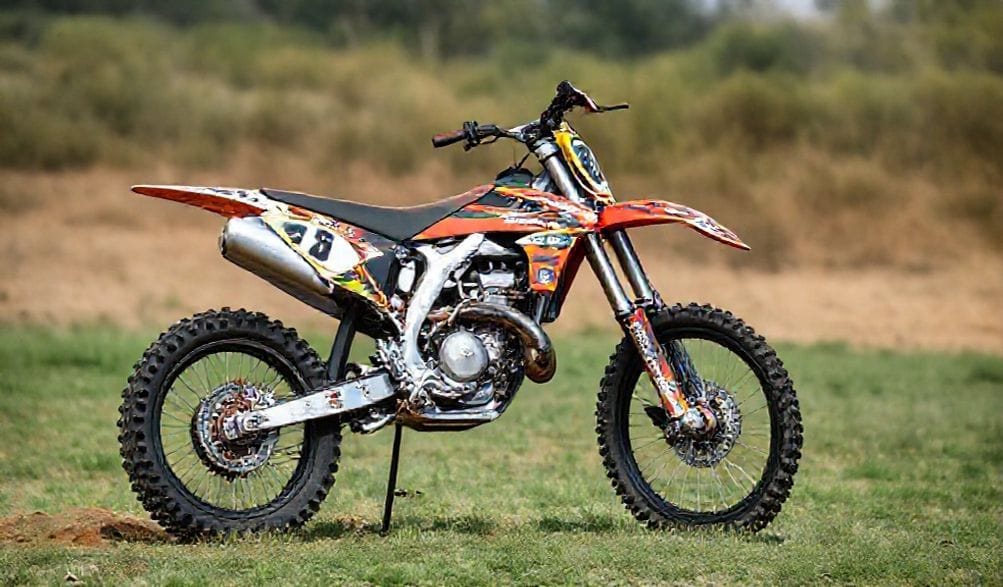
Is a $300 Dirt Bike Realistic? Your Complete Guide to Budget Off-Roading
If you’re typing “внедорожный мотоцикл 300 dollars” into a search bar, you’re likely fueled by a familiar dream: the wind in your face, the thrill of a trail, and the freedom of two wheels, all without draining your savings. That dream is powerful, and the hunt for an ultra-cheap bike is a rite of passage for many aspiring riders. But the results of that search can be a confusing mix of tantalizing ads and sobering warnings.
Let’s be honest with each other right from the start. Finding a safe, reliable, ready-to-ride dirt bike for a flat $300 is like searching for a unicorn—possible in theory, but incredibly rare in practice. More often, that price tag is a doorway into the world of project bikes, mechanical puzzles, and potential money pits. But that doesn’t mean your dream is dead. It just needs a strategy.
This guide isn’t here to crush your budget hopes. It’s here to equip you with the hard-won, transparent knowledge from seasoned riders and mechanics who’ve been in your garage, scratching their heads over a “great deal.” We’ll peel back the curtain on what $300 truly buys, arm you with an essential inspection checklist, explore smarter alternatives, and hammer home the non-negotiable priorities of safety. While the path to a $300 dirt bike is fraught with challenges, this guide will help you navigate it with your eyes wide open, ensuring your first investment leads to adventure, not regret.
The Reality of the $300 Dirt Bike Market
Before you jump in the car to check out that too-good-to-be-true listing, it’s crucial to calibrate your expectations. The $300 price point exists in a specific, often gritty, corner of the market.
What You Can Realistically Expect for This Price
For three hundred dollars, you are almost certainly not shopping for a motorcycle. You are shopping for a проект,. Here’s what typically falls into this bracket:
- The Non-Running “Project Bike”: This is the most common find. The seller’s ad will say, “Ran when parked,” “Just needs a carb clean,” or “Needs a little TLC.” In reality, it likely has significant mechanical issues—a seized engine, a cracked case, or a failed transmission. It’s a box of parts that vaguely resembles a dirt bike.
- The Vintage Relic: You might find a bike that’s 20, 30, or even 40 years old. While some old bikes are legendary for their durability, parts availability is a nightmare. A simple gasket or brake lever can become a months-long scavenger hunt on eBay.
- The Bike with Hidden Catastrophic Damage: The price is low because the seller knows something you don’t: a hairline crack in the frame near the steering head, a bent swingarm, or a cylinder with a hole in it. These are critical, structural failures that are expensive and sometimes impossible to fix safely.
- The Questionable Mini/Pit Bike: You may find small, Chinese-made pit bikes at this price. While they might even start, their build quality, suspension, and braking components are often terrifyingly inadequate for anything beyond puttering around a flat yard. They are not designed for trail riding or jumps.
Major Risks and Red Flags to Avoid
Ignoring these warnings can turn a “bargain” into a disaster:
- Safety Hazards: This is paramount. A cracked frame can snap under stress. Worn-out steering bearings can cause you to lose control. Spongy or non-existent brakes are a direct ticket to the emergency room. Your first inspection is a safety audit.
- The Bottomless Money Pit: The “$300 bike that just needs a spark plug” is a classic tale. What starts as a simple fix uncovers a chain of failures. That $300 purchase can easily demand another $500-$1000 in parts, specialty tools, and machine shop work before it ever touches dirt.
- The Stolen Bike: If you’re looking at a street-legal dual-sport or an older bike, the lack of a title or a VIN that appears filed off is a massive red flag. You cannot legally register it, and law enforcement can impound it.
- False Economy: Even if you get it running, the total cost of ownership (initial price + immediate repairs + gear + maintenance) of a $300 basket case will almost always exceed the cost of a well-chosen $800 bike that’s ready to ride.
A Strategic Buyer’s Guide: Inspecting a Budget Dirt Bike
If you’ve weighed the risks and are still determined to pursue a budget bike, your success hinges on a ruthless, systematic inspection. Never buy a bike at night or in the rain.
Pre-Purchase Checklist: Questions to Ask the Seller
How the seller answers these questions can tell you more than the bike itself:
1. “Why are you selling it?” Listen for evasiveness. A genuine answer like “upgraded” or “lost interest in the project” is better than a mumbled “just need it gone.”
2. “When did it last run, and what specifically is wrong with it?” Pin them down. “Not sure” is a bad sign. “Won’t start, has spark and compression but the carb is gunked up” shows they’ve done some diagnosis.
3. “Do you have the title (if applicable) and any maintenance records?” No title for a street-legal model is a deal-breaker. Receipts for parts are a good sign.
4. “Can I see a cold start?” If it’s advertised as running, insist on this. A bike that starts easily from stone-cold is a healthy bike. Be wary of one that’s already warm when you arrive.
The Essential “Must-Check” Mechanical Inspection
Bring a flashlight and don’t be shy about getting dirty.
-
Frame & Suspension:
- Run your fingers along all frame welds, especially around the steering head, swingarm pivot, and foot pegs. Feel for cracks or bumpy, amateur repair welds.
- Compress the forks and look for oily residue on the fork tubes—leaking fork seals are a common repair.
- Lift the front wheel off the ground and turn the handlebars. The steering should move smoothly without any notchiness or binding, which indicates worn steering bearings.
-
Engine & Drivetrain:
- Compression: If you can, bring a compression gauge. Otherwise, feel the resistance when slowly kicking the engine over. It should have a firm, springy push-back. If it kicks over with no resistance, the engine has major problems.
- Listen: When kicking it over, listen for any loud knocking, grinding, or metallic slapping sounds.
- Sprockets & Chain: Look at the teeth on the front and rear sprockets. If they are hooked, pointed, or look like shark fins, they’re shot. A rusty, stiff chain needs immediate replacement.
-
Critical Controls:
- Throttle: Twist the throttle. It should snap back closed crisply and smoothly. Any stickiness is a hazard.
- Тормоза: Squeeze the front lever and press the rear pedal. They should feel firm, not mushy or go all the way to the handlebar/grip.
- Wheels & Bearings: Lift each wheel and spin it. It should spin freely without wobbling or grinding noises. Try to wiggle the wheel side-to-side; any play indicates bad wheel bearings.
Smart Alternatives to a $300 Purchase
Sometimes the best way to get what you want is to adjust your approach. Consider these often-overlooked paths.
Increasing Your Budget Slightly: The $500-$800 Sweet Spot
This is the single best piece of financial advice for a new rider. An extra $200-$500 works absolute magic in the used market. It moves you from the “non-running project” category into the “running, older but functional” category. Here, you can find early 2000s models from legendary, reliable lines like:
* Honda XR/CRF: The XR200R, XR250R, or early CRF230F are famously bulletproof, air-cooled, and simple to maintain.
* Yamaha TTR: The TTR-225, TTR-230, and TTR-125 are fantastic, low-stress trail bikes with great parts support.
These bikes are exponentially safer, more reliable, and will actually let you ride while you learn maintenance.
Considering a Dirt Bike “Frame” or Rolling Chassis
This is a “project” path, but a more honest one. A rolling chassis is a complete bike—frame, suspension, wheels, brakes—but without an engine.
* Преимущества: You know the frame is straight (you can inspect it thoroughly), and you’re not paying for a blown engine. It’s a fantastic way to learn how every part of a bike goes together.
* Недостатки: Sourcing a compatible, running engine is difficult and expensive. Engine mounts, wiring harnesses, and carburetion must all match. This is generally only advisable if you already have a donor engine.
Renting, Borrowing, or Joining Group Rides First
This is the highest-reward, lowest-risk alternative.
* Renting: For the cost of repairing a $300 bike, you could rent a modern, professionally maintained dirt bike for a weekend. You get to experience what a good bike feels like, which informs your future purchase.
* Borrowing (Responsibly): Got a friend with a bike? Offer to pay for gas, oil, and a deep clean in exchange for a supervised ride.
* Group Rides: Find a local riding club or Facebook group. Go to a beginner-friendly ride day. The community is full of experienced riders who love to help newcomers. You’ll learn more in an afternoon than in months of online research, and you might even find a member selling a perfect starter bike for a fair price.
Safety and Responsibility: Non-Negotiables for New Riders
If you take only one thing from this guide, let it be this section. Riding a dirt bike is an inherently risky activity. Mitigating that risk is not optional.
The Hidden Costs of Riding: Gear is Mandatory
Your budget must include protective equipment. The gear is more important than the bike. A $3000 bike with no gear is far more dangerous than a $300 bike with full gear.
* Шлем (сертифицированный DOT/SNELL): $100-$250
* Motocross Boots: $100-$300
* Перчатки: $20-$50
* Очки/маска: $20-$60
* Chest Protector/Roost Guard: $50-$150
A proper gear package will easily exceed your $300 bike budget. This is the core of the financial reality. Riding a questionable machine without this protection is an unacceptable gamble with your health.
Learning Basic Maintenance is Part of the Deal
When you buy a budget bike, you are also signing up to be its mechanic. This isn’t a downside—it’s a rewarding part of the hobby—but you must embrace it.
* Essential skills include: changing engine oil, cleaning an air filter, adjusting chain slack, lubricating cables, and replacing brake pads.
* Invest in resources: Download the official service manual for your specific model. Follow reputable YouTube channels run by certified mechanics. This hands-on knowledge (Опыт) is what transforms a money pit into a valuable learning experience and a source of pride.
Часто задаваемые вопросы (ЧЗВ)
Q: Can I actually find a running dirt bike for $300?
О: It is extremely rare. Any bike advertised as “running” at this price requires the most stringent inspection possible. It is far more likely to be a mini-bike, a misrepresented project, or have a major issue waiting to fail. Assume it is a non-running project until proven otherwise.
Q: What are the best dirt bike brands to look for on a tight budget?
О: Prioritize reliability and parts availability. Older Honda XR series (XR200, XR250) and Yamaha TTR series (TTR225, TTR230) are top choices for their simple, air-cooled engines and rugged construction. Kawasaki’s KLX series is also a solid contender. Avoid obscure or discontinued brands.
Q: Is it cheaper to build or buy a dirt bike?
О: With very rare exceptions, it is always cheaper to buy a complete, running used bike. Building from a frame-up or a non-running project involves sourcing dozens of individual parts, which incurs shipping costs, “small lot” premiums, and inevitable incorrect purchases. The total almost always surpasses the cost of a bike that’s already together.
Q: What should I do if I buy a $300 bike and it breaks immediately?
О: Welcome to the club! Don’t despair. First, diagnose the problem accurately. Then, use this as your hands-on learning project. Seek help from model-specific online forums—they are treasure troves of information. Local riding groups often have knowledgeable members willing to help. Remember, the $300 was just the entry fee; factor in repair costs from the beginning.
Заключение
The search for a “dirt bike 300 dollars” is a journey that teaches realism, mechanics, and patience. While finding a turn-key machine at that price is a monumental challenge, it’s not impossible—it just requires a project-minded attitude, a meticulous eye, and a firm commitment to safety.
The responsible guidance here, rooted in real experience, prioritizes your long-term enjoyment and well-being over a fleeting “steal.” The true goal isn’t just to own a dirt bike; it’s to embark on a safe, sustainable, and thrilling riding journey.
Therefore, our strongest recommendation is to recalibrate your budget. Save until you can afford a bike in the $500-$800 range, which opens the door to safer, more reliable, and actually rideable options. And never, ever forget that the cost of non-negotiable safety gear is a fundamental part of your total investment.
Ready to move forward? Your best next step isn’t scrolling through more classifieds. It’s to присоединиться к местному мотосообществу. Найдите региональный форум или группу в Facebook, представьтесь и начните учиться. Сделки, которые вы там найдете, и полученные советы будут бесконечно ценнее любого анонимного онлайн-предложения. Удачи, и увидимся на трассе.
METADATA_START—
DISPLAY_TITLE: Реален ли внедорожный мотоцикл за $300? Правда о бюджетном офф-роудинге
SEO_TITLE: Поиск внедорожного мотоцикла за $300: Реалистичное руководство, риски и альтернативы | [Название вашего сайта]
META_DESC: Мечтаете о внедорожном мотоцикле за $300? Наше экспертное руководство раскрывает суровую реальность, чек-листы для осмотра, разумные альтернативы и объясняет, почему защитная экипировка обязательна. Узнайте, как ориентироваться на рынке сверхбюджетных подержанных мотоциклов.
IMG_PROMPT: Потрёпанный, нерабочий винтажный внедорожный мотоцикл, прислонённый в слабо освещённом гараже, вокруг разбросаны инструменты, рядом на верстаке аккуратно лежат сияющий новый шлем и перчатки, кинематографическое освещение.
—METADATA_END—