
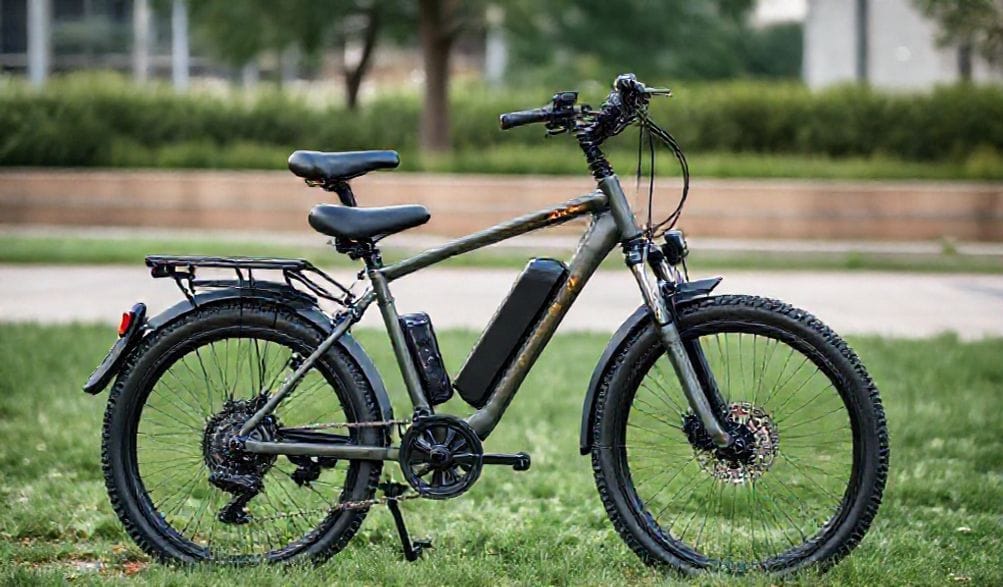
The Complete Guide to Electric Battery Bikes: Benefits, How They Work & How to Choose
As someone who has tested over a dozen models on city streets and country trails, I understand the excitement—and the questions—surrounding electric battery bikes. They’re transforming how we commute, explore, and exercise. But with so many options, it’s easy to feel overwhelmed. This guide cuts through the noise. We’ll leverage expert mechanical knowledge and real-user experiences to explain not just что an electric battery bike is, but how it can genuinely fit into your life. Whether you’re a curious commuter or a weekend adventurer, our goal is to provide the clear, trustworthy information you need to make a confident decision.
What is an Electric Battery Bike? (Demystifying the Technology)
At its heart, an electric battery bike, or электровелосипед, is a bicycle equipped with an integrated electric motor and battery to provide assistance as you pedal. It’s designed to augment your power, not replace your pedaling entirely. This core principle of “pedal-assist” is what differentiates a true e-bike from an electric moped or scooter. Let’s break down the key components that make this magic happen.
Core Components: More Than Just a Bike with a Motor
Understanding these four pillars will demystify any e-bike spec sheet and help you understand what you’re really buying.
-
The Battery: The Fuel Tank. This is your bike’s energy source, almost exclusively a Lithium-ion battery due to its excellent energy density and lifespan.
- Capacity: Measured in Watt-hours (Wh). Think of this as the size of your fuel tank. A higher Wh rating generally means more potential range (e.g., a 500Wh battery is larger than a 350Wh one).
- Срок службы: Batteries are rated for charge cycles (a full 0-100% charge). A quality battery typically lasts 500-1000 full cycles before its capacity degrades to about 80% of its original state, which translates to 3-5 years of regular use.
- Факторы, влияющие на запас хода: The advertised range is a best-case scenario. Real-world range is affected by battery capacity, assist level, rider weight, terrain, wind, and tire pressure.
-
The Motor: The Engine. This provides the boost. There are two primary placements, each with distinct advantages:
- Hub-Drive Motor: Located in the center of the front or rear wheel. Преимущества: Simpler, often more affordable, and can provide a direct feeling of being pushed along. Недостатки: Can affect bike handling (especially front-hub), puts more strain on spokes, and is less efficient on steep, sustained climbs.
- Mid-Drive Motor: Located at the bike’s crank and bottom bracket, powering the chain. Преимущества: Leverages the bike’s gears, making it more efficient on hills and varied terrain. It centralizes weight for better balance and handling, and is easier on the rear wheel. Недостатки: Typically more expensive and can put more wear on the chain and drivetrain.
-
The Sensor: The Conductor. This tells the motor when и how much to help. There are two main types:
- Cadence Sensor: Activates assistance when it senses you are pedaling. It provides a consistent, pre-set level of power. Simpler and more common on entry-level models, but the ride can feel more “on/off” or less natural.
- Torque Sensor: Measures how hard you are pedaling and provides proportional assistance. Push harder, get more boost. This creates an intuitive, bike-like feel where the motor seamlessly amplifies your own effort. It’s the gold standard for a natural riding experience.
-
The Controller & Display: The Dashboard. This is your command center. Usually mounted on the handlebars, it allows you to select assist levels (Eco, Tour, Sport, Turbo), monitor speed, battery level, trip distance, and often connects to smartphone apps for deeper customization and navigation.
How It Feels to Ride: The “Pedal-Assist” Experience
Forget any notion of a throttle-only rocket. A proper pedal-assist e-bike feels like you have super-powered legs. On a flat road with low assist, it might simply take the edge off headwinds or a heavy backpack. On a steep hill, it transforms an exhausting grind into a manageable, even enjoyable, climb. You are always pedaling, but the motor makes every pedal stroke more effective.
Let’s address the “cheating” myth head-on. Studies consistently show that e-bike riders get significant cardiovascular exercise—often nearly as much as conventional cyclists—because they tend to ride more often, for longer distances, and with less dread of challenging routes. For many, it’s not about replacing exercise, but about removing the barriers to it: hills, distance, recovery from injury, or simply not wanting to arrive at work drenched in sweat.
Key Benefits of Owning an Electric Battery Bike
The technology is cool, but the real-world benefits are what make e-bikes a lifestyle game-changer.
Conquer Your Commute: Save Time, Money, and Stress
For urban and suburban dwellers, an e-bike is a revelation.
* Time: In congested cities, door-to-door travel times can rival or beat cars and public transport. No traffic jams, no parking lot searches.
* Money: Compare the cost: A tank of gas vs. a few cents of electricity. No parking fees, insurance premiums (for Class 1/2), or high transit fares. The upfront cost is often recouped within a year or two for a regular commuter.
* Stress: Swap road rage and crowded train cars for fresh air and a gentle boost. Arrive at your destination energized, not drained.
Unlock Fitness & Accessibility
This is perhaps the most profound benefit. E-bikes are incredible tools for inclusivity and health.
* Fitness Gateway: They allow riders of different fitness levels to ride together. They encourage people who might be intimidated by hills or distance to start cycling regularly.
* Consistent Exercise: The “moderate-intensity” exercise of e-biking is perfect for sustainable heart health. A 2019 study in the International Journal of Behavioral Nutrition and Physical Activity found e-bikers increased their cycling frequency and duration.
* Accessibility: They extend cycling to older adults, those with joint issues, or anyone recovering from injury, providing a low-impact way to stay active and mobile.
Explore Farther and Carry More
An electric battery bike expands your radius.
* Adventure: That scenic loop 30 miles away is now a feasible afternoon trip. Trail networks become more accessible.
* Practicality: Running errands? A rear rack or cargo e-bike can easily handle grocery bags, making car trips optional. It turns utilitarian tasks into pleasant outings.
An Eco-Friendly Transportation Choice
While not zero-impact (manufacturing and electricity generation have footprints), e-bikes are one of the most efficient personal transport options available. Their lifecycle emissions are a tiny fraction of a car’s, even an electric car, due to their minimal material and energy use. Choosing an e-bike over a car for short trips is a tangible way to reduce your carbon footprint.
How to Choose the Right Electric Bike for Your Needs
With the “why” covered, let’s tackle the “how” of selecting your perfect match.
Define Your Primary Use Case First
Your main purpose should dictate the bike’s design. Ask yourself: Will I primarily use it for…?
* City Commuting: Look for features like integrated lights, fenders, a rear rack, a comfortable upright position, and a belt drive or hub gears for low maintenance. A mid-drive can help with stop-and-start traffic.
* Mountain Exploring (e-MTB): Requires full or front suspension, wide, knobby tires, a powerful mid-drive motor for climbing technical trails, and durable components. Geometry is more aggressive.
* Cargo Hauling: Designed with a long wheelbase for stability, ultra-strong racks (front or rear), high-capacity batteries, and powerful motors to move heavy loads.
* Leisure & Fitness: Often resembles a comfortable hybrid bike. Prioritize a natural ride feel (torque sensor is ideal), a range suitable for long rides, and an ergonomic fit.
Critical Specifications to Compare
- Battery & Range: Don’t just look at the claimed miles. Check the Вт·ч (Вт·ч) rating. For a commuter, 400-500Wh is a good start. For long adventures, 600Wh+ is better. Remember, you can always conserve battery by using lower assist levels on flats.
- Motor Power & Placement: Match the motor to your terrain.
- Flat city commutes: A reliable hub-drive is cost-effective.
- Hilly areas or off-road: A mid-drive is almost always worth the investment for its efficiency and control.
- Bike Fit & Geometry: This is non-negotiable. An e-bike’s weight makes fit even more critical. A poorly fitting bike will be uncomfortable and harder to handle. Visit a local shop and take a test ride. How does it feel at low speed? Can you stand over it comfortably?
- Brand & Warranty: Support matters. A reputable brand with a strong warranty (e.g., 2+ years on the frame, motor, and battery) and, crucially, a local dealer network for service, is a safer long-term bet than a direct-to-consumer mystery brand with no local support.
Understanding the Investment: Price vs. Value
- Entry-Level ($1,000 – $2,000): Functional, often with hub drives, cadence sensors, and smaller batteries. Good for flat, short trips.
- Mid-Range ($2,000 – $4,000): The sweet spot for most. Expect quality mid-drives, torque sensors, better batteries, and durable name-brand components (Shimano, Bosch, Brose, etc.).
- High-End ($4,000+): Top-tier performance, lightweight materials, cutting-edge technology, and premium components for serious enthusiasts and professionals.
Consider Total Cost of Ownership: Factor in occasional maintenance (chain, brakes, tires wear faster due to weight/speed), eventual battery replacement (after 3-5 years), and any necessary accessories (lock, helmet, bags).
Maintaining Your Electric Battery Bike for Longevity
Treat it well, and it will reward you with years of reliable service.
Лучшие практики по уходу за аккумулятором
Аккумулятор — ваша самая дорогая расходная часть.
* Зарядка: Avoid regularly draining it to 0%. Try to keep it between 20% and 80% for daily use. Do a full 100% charge before a long planned ride.
* Хранение: If storing for more than a month, charge (or discharge) the battery to about 60% and store in a cool, dry place (room temperature is ideal).
* Температура: Never charge a frozen battery. Avoid leaving the bike or battery in direct, scorching sun or in a freezing car for extended periods.
Routine Mechanical Checks (Beyond the Battery)
E-bikes are heavier and faster, placing more demand on components.
* Тормоза: Check pad wear frequently. Hydraulic disc brakes are highly recommended for their consistent, powerful stopping power.
* Покрышки: Keep them properly inflated to reduce rolling resistance and prevent pinch flats. Consider puncture-resistant tires for commuting.
* Drivetrain: Clean and lubricate the chain regularly. Mid-drive bikes, in particular, require a well-maintained chain to run smoothly.
When to Seek a Professional Technician
While you can handle basic maintenance, always consult a qualified e-bike technician for:
* Any electrical issue (error codes, motor cut-outs, display problems).
* Motor or battery diagnostics and replacement.
* Complex frame or suspension work.
* Если вы когда-либо не уверены. Безопасность превыше всего.
Часто задаваемые вопросы (ЧЗВ)
В: Какое расстояние может проехать электровелосипед на одном заряде?
О: Оно сильно варьируется (20–100+ миль) в зависимости от размера аккумулятора, уровня поддержки, рельефа местности и веса райдера. Мы рекомендуем рассматривать оценку производителя как максимум и вычитать 20–30% для реальных условий, таких как холмы.
В: Нужны ли лицензия или страховка для его использования?
О: В большинстве регионов для электровелосипедов Класса 1 (только педальная помощь, до 20 миль/ч) и Класса 2 (с ручным приводом, до 20 миль/ч) не требуется лицензия, регистрация или страховка. Законы различаются, поэтому всегда уточняйте местные нормативные акты, особенно для Класса 3 (педальная помощь до 28 миль/ч).
В: Можно ли ездить на электровелосипеде под дождем?
О: Большинство качественных электровелосипедов имеют рейтинг IP для защиты от воды (например, IP54). Легкий или умеренный дождь, как правило, не страшен. Избегайте глубоких луж и всегда вытирайте велосипед насухо после поездки, особенно электрические соединения. Уточните в руководстве конкретный рейтинг IPX вашей модели.
В: Электровелосипеды тяжелые?
О: Да, они обычно тяжелее (18–32 кг), чем обычные велосипеды, из-за мотора и аккумулятора. При езде с поддержкой этот вес практически не ощущается, но его стоит учитывать при подъеме по лестнице или установке на автомобильный багажник.
В: Как долго служит аккумулятор до необходимости замены?
О: За литий-ионным аккумулятором, за которым правильно ухаживают, обычно служит 3–5 лет или 500–1000 полных циклов зарядки до того, как его емкость заметно уменьшится (до ~80%). Правильное хранение и привычки зарядки являются ключом к максимальному продлению срока его службы.
Заключение
Выбор электровелосипеда — это вопрос сочетания инновационных технологий с вашим личным образом жизни. Это не просто покупка; это инвестиция в более активный, доступный и приятный способ перемещения по вашему миру. Понимая ключевые компоненты, честно оценивая свои потребности и следуя простым правилам обслуживания, вы сможете найти электровелосипед, который станет надежной и полезной частью вашей повседневной жизни. Лучший совет? Начните с пробных поездок у местных авторитетных дилеров — ощутить плавную, придающую сил поддержку педального ассистента на собственном опыте — это самый убедительный и волнующий следующий шаг в вашем путешествии.
METADATA_START—
DISPLAY_TITLE: Полное руководство по электровелосипедам: Преимущества и как выбрать
SEO_TITLE: Руководство по электровелосипедам 2024 | Принцип работы, преимущества, советы по покупке
META_DESC: Запутались в электровелосипедах? Наше экспертное руководство объясняет, как они работают, их ключевые преимущества для поездок на работу и фитнеса, и как выбрать подходящий электровелосипед под ваши нужды.
IMG_PROMPT: Четкое, профессиональное фото современного электровелосипеда, прислоненного к городской кирпичной стене. Аккумулятор и мотор центрального привода велосипеда хорошо видны. Человек в повседневной одежде улыбается, смотря на дисплей на руле, на заднем багажнике велосипеда лежат шлем и сумка. Сцена яркая, чистая и передает ощущение легкой, приятной поездки на работу.
—METADATA_END—