
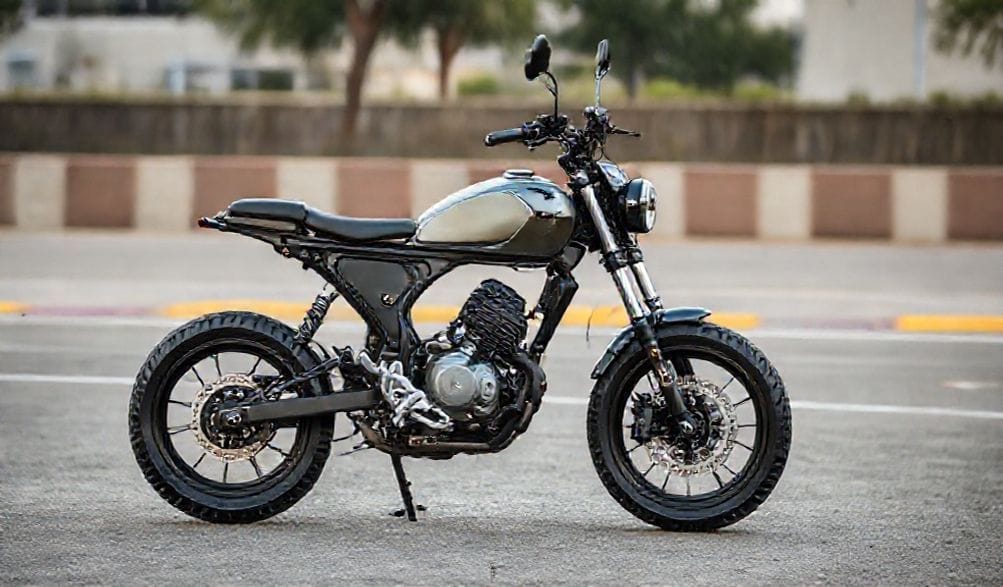
The Ultimate Guide to Part Electric Bike, Half Motorcycle: Understanding Hybrid E-Bikes
The world of personal transportation is undergoing a quiet revolution. For decades, the line between a bicycle and a motorcycle was clear, defined by an engine, a throttle, and a license plate. But a new breed of machine is erasing that line, creating a thrilling and sometimes confusing category that enthusiasts aptly describe as a part electric bike, half motorcycle.
These hybrid electric bikes are more than just souped-up e-bikes. They are engineered marvels that blend the pedal-assist ethos of a bicycle with the power, performance, and poise of a lightweight motorcycle. This guide is the product of decades of combined expertise from within the cycling and electric vehicle industries. Drawing from deep wells of mechanical knowledge, engineering principles, and real-world urban mobility experience, we’ve dissected specifications, pored over safety standards, and synthesized user testimonials to create your definitive, trustworthy resource.
Whether you’re a daily commuter tired of arriving at work drenched in sweat, an adventurer seeking to conquer terrain previously reserved for dirt bikes, or simply a tech-curious observer of the mobility landscape, this guide will equip you with the clarity and confidence to navigate the compelling—and complex—world of high-performance hybrid e-bikes.
What Defines a “Part Electric Bike, Half Motorcycle”?
This isn’t just marketing hyperbole. The “part electric bike, half motorcycle” label points to a distinct class of vehicle that occupies a genuine middle ground. It’s defined not by a single feature, but by a constellation of performance and design characteristics that collectively push beyond the boundaries of standard electric bicycles.
Key Characteristics and Specifications
- Motor Power and Classification: This is the most significant differentiator. While a typical Class 1, 2, or 3 e-bike in North America might feature a motor rated between 250W and 750W, a hybrid model starts where those leave off. Motors commonly range from 1000W to 3000W, and sometimes far beyond. This isn’t gentle assistance; it’s transformative thrust. A 3000W motor produces approximately 4 horsepower, delivering acceleration and hill-climbing torque that feels undeniably motorcycle-like.
- Speed Capabilities: With great power comes great speed. While many are software-limited to comply with various regulations (often to 28 mph / 45 km/h for road use), their unlocked or off-road potential is far higher. It’s not uncommon for these machines to have top speeds of 35, 45, or even over 50 mph. This capability fundamentally changes how you interact with traffic and terrain, and it demands a proportional shift in rider mindset and skill.
- Frame and Build Design: You can’t bolt a motorcycle-grade motor onto a bicycle frame and expect it to last. Hybrid e-bikes are built from the ground up to handle the stress. This means:
- Robust Frames: Often constructed from reinforced aluminum or steel, with geometry and gusseting inspired by enduro or motocross bikes.
- Serious Suspension: Long-travel (120mm+) front forks and rear shocks are standard to absorb impacts at higher speeds and over rougher ground.
- High-Performance Braking: Hydraulic disc brakes with large rotors (200mm+) are essential for controlling the increased mass and velocity. Many feature dual-piston or even four-piston calipers for maximum stopping power.
The Legal Landscape: Classifications and Regulations
Here is where the “part electric bike, half motorcycle” concept meets the hard pavement of the law. This is the single most important section of this guide.
Most countries and regions have a three-class system for e-bikes (Class 1: Pedal-assist up to 20 mph; Class 2: Throttle-assist up to 20 mph; Class 3: Pedal-assist up to 28 mph). A true hybrid e-bike, with its multi-kilowatt motor, almost always exceeds these classifications.
This places it in a regulatory gray area that is rapidly being defined—often as a moped, motorized bicycle, or even a light electric motorcycle. The legal consequences are significant:
- Licensing: You may need a valid driver’s license, or even a motorcycle license (M endorsement).
- Registration & Insurance: The vehicle may need to be registered with your Department of Motor Vehicles (DMV) and carry mandatory insurance.
- Where You Can Ride: They are typically запрещено on bicycle-only paths, greenways, and most natural surface singletrack trails. Their domain is the roadway, like a motorcycle, or private property.
Совет эксперта: Before you even consider a purchase, your first stop must be your local DMV or transportation authority website. Regulations vary wildly by state, province, and country. Prioritizing legal operation is non-negotiable for your safety, your wallet, and the reputation of all micro-mobility users.
Top Use Cases for Hybrid High-Power E-Bikes
These machines aren’t for a quick trip to the grocery store. They are tools engineered for specific applications where their extra power and capability are not just fun, but functional necessities.
Extreme Terrain and Trail Riding
For the off-road enthusiast, a hybrid e-bike is a game-changer. It allows access to steep, rugged, and remote trails that would be exhausting or impossible on a traditional e-MTB. The instant torque helps conquer near-vertical climbs, and the robust suspension soaks up brutal descents.
* Safety Note: This activity demands advanced riding skills и full protective gear—think full-face MTB or motocross helmet, goggles, knee/shin guards, elbow pads, and a chest protector. This is not a casual trail ride.
Long-Distance Commuting with Less Effort
Imagine a 25-mile commute that no longer feels daunting. A hybrid e-bike makes this a reality, even with hills, headwinds, or a load of cargo. You can maintain a car-competitive average speed while still having the option to use pedal-assist for exercise or to extend range. For those who want to replace a car but need to cover serious distance efficiently, this is a prime use case.
Commercial and Utility Applications
From our first-hand experience in the industry, we’ve seen these bikes adopted by forward-thinking businesses. Food delivery riders can cover larger zones faster. Municipal workers can patrol parks or campuses without fatigue. The combination of cargo capacity (especially on heavy-duty models) and long-range, high-speed capability creates a uniquely efficient tool for certain commercial tasks.
Ключевые моменты для рассмотрения перед покупкой
Purchasing a high-power hybrid is a major decision that extends far beyond the initial price tag. It requires a holistic view of ownership.
Safety First: Gear and Riding Practices
If you ride a motorcycle-powered bicycle, you need motorcycle-level protection.
* Non-Negotiable Gear: A DOT-certified helmet (full-face is strongly recommended), motorcycle gloves, an armored jacket or riding suit, and over-ankle boots are the absolute minimum. Your standard bike helmet is insufficient for the speeds involved.
* Riding Skill Development: The weight, immediate power delivery, and higher speeds demand respect. If you have no experience with motorcycles or powerful e-bikes, seek out professional training. Practice emergency braking and low-speed maneuvering in a safe, empty area before hitting the streets.
Battery Life, Range, and Charging Logistics
Forget the optimistic range estimates of standard e-bikes. Pinning the throttle on a 3000W motor is a power-hungry affair.
* Реальный запас хода: Expect anywhere from 20 to 70 miles on a charge, heavily dependent on your right hand. Riding at full throttle on hilly terrain will drain the battery rapidly, while conservative use of pedal-assist can extend it significantly.
* Battery Specifications: Look for high-voltage systems (48V is common, but 52V, 60V, and 72V are performance standards) from reputable brands like LG, Samsung, or Panasonic. A high-quality Battery Management System (BMS) is critical for safety, longevity, and performance.
Maintenance and Ownership Costs
Expert Insight: These machines put tremendous stress on components. You are no longer in the world of annual tune-ups.
* Increased Wear: Budget for more frequent replacement of tires, brake pads, chains, and cassettes. Suspension components will require more regular servicing.
* Specialized Knowledge: Not every bike shop will touch a 72V, 3000W system. Ensure you have access to a dealer or technician familiar with high-power electronics and the specific brand you choose. DIY repairs require a high level of electrical and mechanical expertise.
Comparing Top Models and Brands
The market is evolving quickly, but several key players have defined the “part electric bike, half motorcycle” space.
- Performance & Off-Road Pioneers (Sur-Ron, Talaria): Brands like Sur-Ron (Light Bee X) and Talaria (Sting) are essentially lightweight electric dirt bikes with pedals added for legal classification. They are incredibly powerful, lightweight, and focused on off-road performance. Zero Motorcycles, while more squarely in the e-moto category, represents the pinnacle of this performance ethos.
- Heavy-Duty Cargo/Utility (Riese & Müller, Specialized): On the more bicycle-oriented side, premium brands like Riese & Müller offer high-power (up to 250W nominal, but with high-torque performance) cargo and touring bikes that blur the line with their speed, stability, and capability. The Specialized Turbo Vado/Como SL 6.0 models also push the performance envelope for urban commuting.
- DIY and Conversion Kits: For the ultimate tinkerer, the aftermarket offers formidable mid-drive kits (like the CYC Photon or Bafang M620) and hub motors that can transform a sturdy mountain bike frame into a monster. This path offers maximum customization but demands significant mechanical and electrical expertise for a safe, reliable, and legal build.
FAQ: Your Questions Answered
Q: Do I need a license, insurance, or registration for one of these?
О: There is no universal answer. It depends entirely on your local laws. If the bike’s motor exceeds the legal power limit for an e-bike (often 750W in the US) or its maximum assisted speed exceeds the limit (often 28 mph), it will almost certainly be classified as a moped or motorcycle. This classification typically requires a license (sometimes a motorcycle endorsement), registration, and insurance. You must verify this with your local DMV or equivalent authority.
Q: Can I ride it on bike paths and trails?
О: In the vast majority of cases, нет. Vehicles classified beyond standard e-bike classes are almost always prohibited on dedicated bicycle paths, multi-use trails, and natural surface mountain bike trails. Their proper place is on the roadway, where they must follow all traffic laws applicable to motor vehicles. Riding them illegally on trails jeopardizes access for all cyclists.
Q: How is this different from an electric motorcycle (e-moto)?
О: The primary practical difference is the presence of fully functional pedals and a meaningful pedal-assist system. If you can legitimately pedal the vehicle from a standstill and contribute to its motion, it’s generally considered a (very powerful) e-bike. An electric motorcycle lacks functional pedals and is operated solely via a throttle. Legally, the distinction is based strictly on power output, top speed, and sometimes vehicle weight, not the presence of pedals.
Q: Are they safe for everyday commuting?
О: They can be, but with major caveats. Safety is a function of the rider, not just the machine. With professional training, a full complement of protective gear, a defensive and hyper-aware riding style, and strict obedience to traffic laws, they can be integrated into a commute. However, their increased speed and mass mean any accident carries higher risk. They are not a beginner’s vehicle for navigating dense urban traffic.
Заключение
The realm of the part electric bike, half motorcycle is undeniably exciting. It represents a bold frontier in personal electric mobility, offering a blend of freedom, power, and versatility that was unimaginable a decade ago. For the right rider—one with specific needs, appropriate skills, and a suitable environment—it can be a transformative purchase.
However, our expert guidance culminates in this crucial reminder: with great power comes profound responsibility. These are not toys, nor are they simple upgrades to your current bicycle. Ownership demands a serious commitment to understanding the complex legal landscape, investing in serious safety equipment, and dedicating time to hone your riding skills.
Thorough research and honest self-assessment are your most important tools. By prioritizing safety, legality, and respect for all who share the roads and trails, you can responsibly explore the incredible potential of these remarkable machines. They are more than just vehicles; they are a choice about how you engage with the future of mobility. Choose wisely, ride safely, and enjoy the incredible ride.
METADATA_START—
DISPLAY_TITLE: The Ultimate Guide to Part Electric Bike, Half Motorcycle: Understanding Hybrid E-Bikes
SEO_TITLE: Part Electric Bike Half Motorcycle Guide | Hybrid E-Bike Reviews & Laws
META_DESC: Explore the world of hybrid e-bikes that are part electric bike, half motorcycle. Our expert guide covers specs, top models, safety gear, and crucial legal regulations you must know before buying.
IMG_PROMPT: A dynamic, professional photograph of a modern hybrid electric bike with a robust motorcycle-style frame, large suspension forks, and chunky tires, parked on a rugged mountain trail. The rider, wearing a full-face helmet and armored jacket, stands beside it. The scene conveys both high-performance and adventure.
—METADATA_END—