
The Ultimate Guide to Sur Ron Sprockets: Performance, Compatibility & Upgrades
Is your Sur Ron not delivering the acceleration you crave, or is the top speed not what you expected? You’ve tweaked the controller settings, maybe even looked at battery upgrades, but the secret to a transformative change often lies in a small, unassuming, and mighty component: the звёздочная. This single gear is the final arbitrator of how your bike’s power is delivered to the ground, dramatically affecting its entire character.
Whether you’re a trail rider seeking more grunt for steep, technical climbs or a street rider chasing a higher top speed on pavement, understanding sprocket selection is a fundamental performance skill. Swapping sprockets is one of the most cost-effective and impactful mechanical upgrades you can make. This comprehensive guide leverages expert mechanical knowledge and real-world rider experience to demystify sprockets. We’ll help you make an informed upgrade decision that aligns perfectly with your riding style, ensuring you extract the maximum performance and value from your электрический велосипед.
Understanding Sprockets: The Heart of Your Sur Ron’s Drivetrain
Before swapping parts, it’s crucial to understand what a sprocket does and why its size matters so much. This isn’t just about bolting on a new piece of metal; it’s about re-engineering your bike’s personality.
What is a Sprocket and How Does it Work on a Sur Ron?
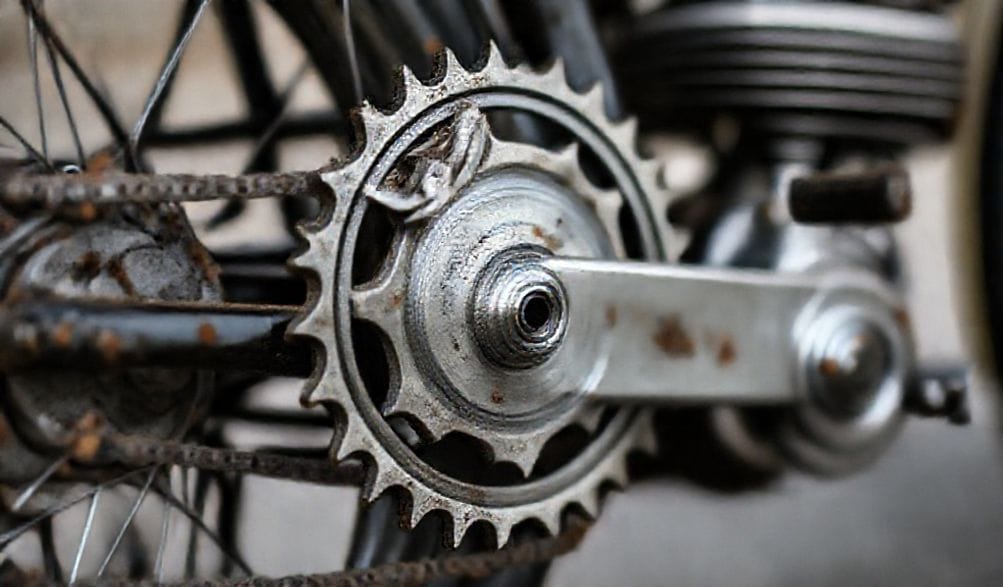
At its core, a sprocket is a toothed wheel designed to mesh with a цепь, transferring rotational force from one point to another. On your Sur Ron, the system is elegantly simple. Power from the electric motor spins a front sprocket (also called the countershaft or drive sprocket). This sprocket is connected via a heavy-duty motorcycle chain to the rear sprocket, which is bolted directly to your rear wheel hub.
This creates a single-speed reduction drive. The motor spins at a very high RPM, and the sprocket combination’s job is to reduce that speed while multiplying torque to a level that can propel the bike and rider. The ratio between these two sprockets—the final drive ratio—is the key to everything. Change this ratio, and you change the fundamental experience of riding your Sur Ron.
The Critical Role of Tooth Count: Torque vs. Speed
The magic—and the math—is all in the tooth count. Think of it like the gears on a bicycle. A smaller front gear and a larger rear gear make it very easy to pedal up a steep hill, but you’ll spin out quickly on the flat. Conversely, a large front gear and a small rear gear make you work harder to get going but allow for much higher speeds once you’re moving.
The same principle applies directly to your Sur Ron sprocket setup. The rule is straightforward:
- More Teeth on the Rear Sprocket (or Fewer on the Front): This creates a lower (shorter) gear ratio. The motor has to work less to turn the rear wheel, resulting in more torque and wheel power at low speeds. You get explosive acceleration, better hill-climbing ability, and more controllable power in technical terrain. The trade-off is that the motor will reach its RPM limit sooner, reducing your potential top speed.
- Fewer Teeth on the Rear Sprocket (or More on the Front): This creates a higher (taller) gear ratio. The motor has to work harder to turn the wheel, which recreases low-end torque and acceleration. However, it allows the motor to spin at a lower RPM for a given road speed, which can increase your potential top speed before hitting the motor’s electronic or physical limits.
In short: More teeth = more torque, less top speed. Fewer teeth = less torque, higher top speed. Your upgrade path depends entirely on which side of that equation you want to favor.
Choosing the Right Sur Ron Sprocket for Your Ride
Now that you understand the theory, let’s apply it to real-world riding. The “best” sur ron sprocket doesn’t exist in a vacuum—it’s the one that best matches your terrain and goals.
Stock Configuration Analysis: What You Get from the Factory
Sur Ron ships its bikes with a sprocket size chosen as a general-purpose compromise. For the popular Light Bee X (LBX), the standard setup is typically a 12-tooth front sprocket and a 56-tooth rear sprocket. This provides a balanced feel suitable for a mix of trail riding and light street use. The Storm Bee often comes with a similar or slightly varied ratio to account for its increased power and weight. This factory gearing is designed to be a safe, usable starting point for most riders, but it’s rarely optimized for any specific extreme.
Upgrade Scenarios: Matching Sprocket Size to Your Terrain
Here’s where you can tailor your bike. Let’s break down the ideal upgrades for different riding styles:
-
For Technical Trails & Hill Climbing: If your playground is steep, rocky, root-infested singletrack where control and low-end grunt are king, you want more torque.
- Recommendation: Increase the size of your rear sprocket. A jump to a 58T, 60T, or even 62T rear sprocket is common. This lower gearing gives you incredible pulling power from a standstill, allows you to crawl over obstacles with precise throttle control, and makes steep climbs feel effortless. The bike will feel more “flickable” and responsive in tight situations.
-
For Street & Top Speed: If you primarily ride on pavement, fire roads, or open areas and want to reduce the “buzzy” high-RPM feeling at speed, you want a taller gear.
- Recommendation: Decrease the size of your rear sprocket (e.g., to a 52T or 54T) или increase the size of your front countershaft sprocket (to a 13T or 14T). Changing the front sprocket is often simpler and has a more pronounced effect per tooth change. This gearing lets the motor relax at cruising speeds, reduces wear, and can unlock 5-10+ mph of additional top speed, depending on the change and your bike’s setup. Be prepared for noticeably softer acceleration from a stop.
-
For Mixed Use & Balanced Performance: If you want a subtle nudge in one direction without sacrificing too much of the other, opt for a minor change.
- Recommendation: A -1 tooth change on the front sprocket (from 12T to 11T) is a popular, low-cost mod that gives a noticeable bump in torque across the range for better trail manners while only slightly impacting top speed. Conversely, a +1 front / -2 rear change can slightly calm the bike down for more street-biased mixed use.
Material and Build Quality: Aluminum vs. Steel
Not all sprockets are created equal. The two main materials you’ll encounter are:
- Steel Sprockets: The workhorse choice. Heavier but incredibly durable and long-lasting. Steel sprockets can withstand a tremendous amount of abuse, grit, and poor chain maintenance before showing significant wear. They are almost always the most cost-effective option over the long term, especially for off-road riders. The added weight is negligible for most riders compared to the durability benefit.
- Aluminum Sprockets: The performance choice. Significantly lighter than steel, which reduces unsprung rotational mass. This can translate to a slightly more responsive feel in acceleration and suspension action. However, aluminum is a softer metal and will wear out much faster, particularly if run with a dirty or poorly maintained chain. They are often more expensive.
Our Recommendation: For 90% of riders, a high-quality steel sprocket is the smartest buy. The longevity is superior, and the performance difference from the minimal weight savings of aluminum is hard to perceive for most. Save aluminum for dedicated race bikes where every gram counts and the sprocket will be replaced frequently as part of maintenance.
Step-by-Step: How to Replace Your Sur Ron Sprocket
Ready to make the swap? With basic tools and patience, this is a very manageable DIY job. Here’s a trusted, first-hand method.
Tools You’ll Need for the Job
- Rear stand or a way to securely lift and support the rear of the bike.
- Correct size socket/wrench for the rear axle nut (typically 22mm or 24mm).
- Hex keys (Allen wrenches) for the sprocket bolts (typically 8mm).
- Socket or wrench for the brake caliper bolts (if caliper removal is needed for clearance).
- Chain tool (for breaking and riveting the chain, if replacing it).
- Torque wrench (highly recommended for critical bolts).
- Gloves, rag, and brush for cleaning.
- Threadlocker (blue Loctite) for sprocket and axle bolts.
Safe Removal of the Rear Wheel and Old Sprocket
- Secure the Bike: Place the bike on a sturdy rear stand so the rear wheel is off the ground.
- Release Chain Tension: Locate the chain tensioners on the swingarm. Loosen the locknuts and back off the adjustment bolts to provide maximum slack in the chain.
- Remove the Chain: Slide the chain off the rear sprocket. You may need to break the chain with your chain tool if you are replacing it.
- Remove the Rear Wheel: Loosen the axle nut. You may need to loosen the brake caliper bolts and slide the caliper off the rotor for clearance. Support the wheel and pull the axle out completely. Carefully lower the wheel out of the swingarm, minding the brake rotor and spacers.
- Remove the Old Sprocket: Secure the wheel. Using the correct hex key, remove the 4-6 bolts holding the sprocket to the hub carrier. The sprocket should now lift off. Note the orientation of any spacers or washers.
Installation, Alignment, and Chain Tensioning
- Install the New Sprocket: Place the new sprocket onto the hub, ensuring it seats fully against any registration lip. Apply a drop of blue Loctite to the threads of the sprocket bolts and tighten them down evenly in a criss-cross pattern. Torque to the manufacturer’s specification (if unknown, a good general rule is 25-30 ft-lbs).
- Re-install the Rear Wheel: Carefully lift the wheel back into the swingarm, aligning the chain and ensuring the brake rotor slots into the caliper (if you removed it). Re-insert the axle and hand-tighten the nut.
- Set Chain Tension: This is critical. Push the wheel forward and begin tightening the chain tensioner bolts evenly on both sides. You want about 20-30mm (3/4 to 1 inch) of total up-and-down play at the midpoint of the lower chain run. Use a ruler to measure precisely. Uneven tensioners will misalign the wheel.
- Check Alignment: Look directly from behind the bike. The front and rear sprockets should be in perfect vertical alignment. Many riders use a straightedge or a laser tool. Misalignment causes rapid chain and sprocket wear.
- Final Torque: Once alignment and tension are perfect, torque the rear axle nut to spec (typically 80-100 ft-lbs). Re-torque the sprocket bolts after your first short ride, as they can settle.
Maximizing Your Investment: Maintenance & Compatibility
A new sprocket is an investment. Protect it with proper care and ensure everything works together harmoniously.
Sprocket and Chain Care for Longevity
- Clean Regularly: After muddy or dusty rides, clean your chain and sprocket with a dedicated chain cleaner or a brush and degreaser. Grit is the number one enemy of drivetrain components.
- Lubricate Properly: Once clean and dry, apply a quality motorcycle chain lube. Wipe off excess to avoid attracting more dirt.
- Inspect for Wear: A worn chain will destroy a new sprocket in no time. Check for “stretch” (using a chain wear tool) and look for “hooked” or sharply pointed teeth on the sprocket. If you see hooked teeth, the sprocket and chain should be replaced as a set.
Important Compatibility Considerations
- Шаг и ширина цепи: The Sur Ron uses a #420 chain. This number specifies the pitch (distance between pins) and width. Do not attempt to use a different size chain (like a #428 or #520). When buying a new chain, ensure it is a high-quality #420 O-ring or X-ring chain for longevity.
- Bolt Pattern: The Sur Ron hub uses a specific bolt circle diameter (BCD) and bolt count. Most aftermarket sprockets are made to this standard, but always verify before purchasing. The standard is typically a 4-bolt pattern.
- Rotor Clearance: This is crucial for large rear sprocket upgrades (60T+). The larger diameter of the sprocket can come dangerously close to or even contact the rear brake rotor or caliper. Always do a dry fit and spin the wheel to check for clearance before riding. Some setups may require a small rotor spacer.
Раздел часто задаваемых вопросов (FAQ)
Q: Will changing my sprocket void my Sur Ron warranty?
A: Modifying the drivetrain could affect warranty coverage for related components (chain, motor output shaft, bearings) if a failure is directly attributed to the modification. It is always best to check with your specific dealer or Luna Cycle for their official policy. Modifications that dramatically increase stress (like a huge rear sprocket for extreme hill climbing) carry more risk than a simple 1-tooth change.
Q: How much top speed can I gain with a smaller sprocket?
A: The change is proportional. A rough estimate is that a 1-tooth decrease on the rear sprocket (e.g., 56T to 55T) might increase theoretical top speed by 1-2 mph. A more common change, like going from a 56T to a 52T rear, could yield a 5-8 mph increase, provided the motor has enough power to overcome the taller gearing and aerodynamic drag at those speeds.
Q: Do I need to change my chain when I change the sprocket?
A: It is highly recommended, especially if your chain has significant mileage. A new sprocket meshing with an old, worn (stretched) chain will not seat properly, causing accelerated wear on both components—a false economy. If your chain is verified to be within wear limits and you are making a minimal tooth change, you can often adjust the length with a chain tool.
Q: Can I change the front sprocket (countershaft sprocket) instead of the rear?
A: Absolutely. This is often a simpler and cheaper first step, as it doesn’t require wheel removal. Remember the rule: Increasing front teeth is like decreasing rear teeth (for more speed), and decreasing front teeth is like increasing rear teeth (for more torque). A 1-tooth change on the front has a much greater impact on the ratio than a 1-tooth change on the rear.
Q: My acceleration feels sluggish after a sprocket change for top speed. What’s wrong?
A: Nothing is wrong—this is the fundamental, expected trade-off. You’ve altered the final drive ratio to favor higher speed by giving the motor a “taller” gear to pull. It now has less mechanical advantage (torque multiplication) at the rear wheel, so launches will feel less punchy. You’ve traded low-end snap for high-end legs.
Заключение
Choosing the right sur ron sprocket is more than a simple parts swap; it’s an exercise in customizing your bike’s soul. By understanding the core relationship between tooth count, torque, and speed, you move beyond guesswork into the realm of informed tuning. Whether you seek the tractor-like pull for conquering mountains or the longer legs for stretching out on backroads, the perfect sprocket is out there.
Remember, the best upgrade is the one that serves your specific riding style. There is no single “best” sprocket for everyone. Prioritize a quality component from a reputable manufacturer, pair it with a fresh, properly maintained chain, and install it with care and precision. Now, armed with this knowledge, you’re ready to make a confident change. Go bolt on that new gear and experience your Sur Ron in a whole new light.
METADATA_START—
DISPLAY_TITLE: The Ultimate Guide to Sur Ron Sprockets: Tune Torque & Top Speed
SEO_TITLE: Sur Ron Sprocket Guide: How to Choose for Torque or Speed | DIY Upgrade
META_DESC: Master your Sur Ron’s performance with our complete sprocket guide. Learn how tooth count affects torque & speed, choose the right upgrade for trails or street, and get step-by-step DIY installation instructions.
IMG_PROMPT: A detailed, close-up photo of a shiny new steel sprocket with sharp teeth next to the worn stock sprocket from a Sur Ron electric dirt bike, with a clean #420 motorcycle chain laid alongside them, all on a workshop bench with tools in the background.
—METADATA_END—