
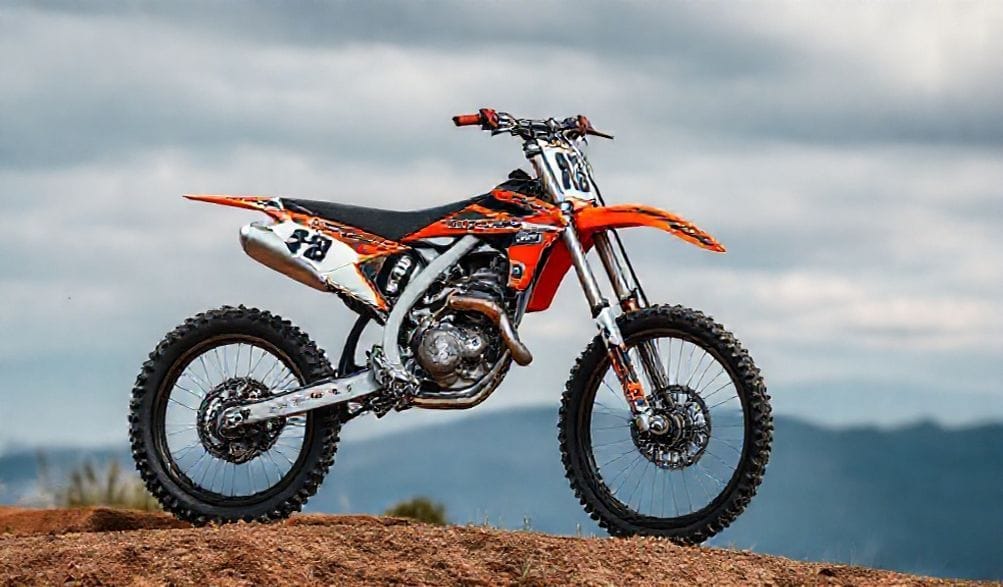
The Ultimate Guide to Choosing the Best MX Bike for Your Riding Style
The gate drops. A wall of sound erupts as thirty engines scream to life. Your heart pounds in sync with the thrum of the motor beneath you. The first corner approaches in a blur of adrenaline and focus. This is motocross—a pure, unadulterated test of skill, courage, and machine. You’re ready to hit the track, but is your bike ready for you?
Choosing the right motocross bike isn’t about picking the one with the most championship stickers or the highest price tag. It’s a deeply personal decision that can mean the difference between a frustrating, expensive mistake and finding the perfect extension of your riding ambition. The term “best MX bike” is thrown around constantly, but in reality, it’s a meaningless phrase without context. The best bike for a seasoned pro is a terrifying liability for a weekend warrior, and the ideal beginner machine would hold back an intermediate rider.
This guide exists to cut through the marketing hype and tribal brand loyalty. Compiled from years of rider experience, mechanic consultations, and performance data, it provides a practical, data-driven framework for your decision. We’ll break down the modern MX landscape, compare top contenders, and give you the tools to evaluate what truly matters for your skill level, terrain, and budget. Consider this your trusted roadmap to a confident, informed purchase that will maximize your fun, progression, and safety on the track.
Understanding the MX Bike Landscape: It’s Not One-Size-Fits-All
Before diving into specific models, you must understand the fundamental categories that define a motocross bike. Ignoring this step is like choosing a vehicle without knowing if you need a sports car, a pickup truck, or a minivan.
Engine Displacement & Class: 250 vs. 450 and Beyond
The engine is the heart of the machine, and its size and type dictate its personality.
- 250cc 4-Strokes: The modern standard for agility and high-RPM power. These bikes are lighter (typically 220-230 lbs wet) and require the rider to carry more momentum and use the clutch to keep the engine in its potent powerband. They reward precise technique and are less physically demanding to maneuver than 450s, making them fantastic for skill development and riders of lighter stature.
- 450cc 4-Strokes: The powerhouse class. A modern 450 produces staggering, tractor-like torque from very low RPMs all the way to its rev limit. This makes them deceptively easy to ride fast in a straight line, as they can pull a taller gear out of any corner. However, their increased weight (235-245 lbs wet) and brutal power can mask poor technique and fatigue a rider quickly. They demand respect and a high level of fitness.
- 125/250cc 2-Strokes: Experiencing a passionate resurgence. Two-strokes are significantly lighter (205-220 lbs) and have a distinct, explosive “hit” in the powerband. They are simpler mechanically, cheaper to rebuild, and force a rider to be active with the clutch and throttle. Many riders love their playful, demanding nature, especially in sand or on tighter tracks. The 250 two-stroke is often seen as a direct, lighter-weight alternative to a 450 four-stroke.
The Rider Match: Beginners should almost universally start with a 250 four-stroke or a 125 two-stroke. Intermediates can thrive on either a well-ridden 250F or step up to a 450F if they have the strength and control. Experts and pros choose based on track conditions and personal preference for finesse (250) vs. brute force (450).
Skill Level Alignment: From Beginner to Pro
Honest self-assessment is your most important tool.
- Novice/Beginner: Your primary focus is learning fundamentals—body position, braking, cornering—without fighting the bike. You need forgiving power delivery (linear, not explosive), softer, compliant suspension that absorbs mistakes, and a focus on low maintenance costs. A full-race 450 is dangerous overkill; its power can easily overwhelm an inexperienced rider, leading to crashes and shattered confidence.
- Intermediate: You clear most jumps, understand lines, and want to go faster. You benefit from a bike with good suspension adjustability to fine-tune for different tracks, a broader, more potent powerband to drive out of corners, and a chassis that inspires confidence at higher speeds. Both 250 and 450 platforms can work here, depending on your physicality and aggression.
- Expert/Pro: You are chasing tenths of a second. You need a bike with top-tier, highly tunable suspension, an engine that delivers maximum horsepower where you need it, and a precise, rigid chassis that provides absolute feedback. You have the skill to handle aggressive power and the budget for frequent, performance-focused maintenance.
Primary Use Case: Track Weapon vs. Versatile Performer
How will you use the bike 90% of the time?
- Dedicated Motocross Racer: This bike is optimized for 30-minute motos of maximum intensity. It will have stiffer suspension valving for big jumps and hard landings, close-ratio transmission gearing for acceleration between obstacles, aggressive engine mapping for peak power, and lightweight components that may sacrifice some durability.
- Versatile Practice/Cross-Country Bike: If you’ll also ride trails, hare scrambles, or open practice tracks, you might prioritize a slightly softer suspension setup for comfort over chop, a flywheel weight or tamer map for traction, a skid plate for protection, and an 18-inch rear wheel (vs. the standard MX 19-inch) for better flat resistance. Some “cross-country” or “RX” models from brands like KTM and Husqvarna are built with this duality in mind.
2024 Contenders: Breaking Down the Best MX Bikes by Category
With the landscape mapped, let’s examine current standouts. Remember, “best” is filtered through the lens of our previous categories.
Best Overall MX Bike for Most Riders: The Balanced Performer
- Proposed Model: KTM 450 SX-F
- Analysis: The KTM 450 SX-F consistently wins this category due to its holistic excellence. It doesn’t always have the absolute peak horsepower, but its power delivery is incredibly usable and broad. It pairs this with a chassis and WP suspension package that offers a blend of razor-sharp cornering and high-speed stability that few can match. It comes stock with electric start, a hydraulic clutch, and extensive adjustability via its handlebar-mounted map switch. Its reliability is proven at the highest levels of the sport.
- Ideal Rider: The serious intermediate to expert rider who demands a bike that performs at a high level in every area—power, cornering, suspension, and features—straight off the showroom floor.
Best 250cc MX Bike: The Rider’s Choice
- Proposed Model: Kawasaki KX250
- Analysis: Kawasaki has relentlessly refined the KX250 into a weapon. Its engine character is often praised as one of the strongest and most responsive in the class, rewarding an aggressive riding style. The chassis is incredibly nimble, making it a favorite for riders who prioritize corner speed and flickability. The Showa suspension provides a plush, controlled feel, and the overall package is known for its crisp, connected handling. It’s a bike that makes a fast rider feel even faster.
- Ideal Rider: The intermediate to expert rider who is physically fit, prefers a high-RPM, aggressive style, and wants a bike that excels at cornering and feeling light on the track.
Best Value MX Bike: Performance on a Budget
- Proposed Model: Suzuki RM-Z250
- Analysis: Suzuki has often positioned the RM-Z250 as the value leader. While it may not have the latest electronic aids of its rivals, it offers a potent engine with a strong mid-range hit and a chassis renowned for its sublime cornering ability—a trait carried over from its two-stroke heritage. For a rider who doesn’t need launch control or multiple engine maps, the RM-Z250 delivers exceptional core performance (engine and handling) at a more accessible price point. The used market for previous-generation, well-maintained Japanese bikes is also a treasure trove of value.
- Ideal Rider: The budget-conscious intermediate rider or savvy beginner who values fundamental handling and power over cutting-edge electronics and is willing to shop smart.
Best MX Bike for Beginners: Building Confidence
- Proposed Model: Yamaha YZ250F
- Analysis: The YZ250F is the benchmark for user-friendly, high-quality performance. Its engine is famously tractable and linear, producing smooth, predictable power that is easier to manage than a more “explosive” feel. The Kayaba suspension is universally praised for its balanced, plush, and forgiving nature right out of the crate—perfect for learning proper technique. Yamaha’s legendary reliability means lower long-term anxiety and cost. Crucially, no bike replaces professional instruction. Investing in a riding school is the single best upgrade for a beginner’s speed and safety.
The Critical Evaluation Framework: Beyond Brand Loyalty
When comparing bikes within your chosen category, look past color and look at these core performance pillars.
Engine Character: Linear vs. Explosive Power
Don’t just look at peak horsepower. How in where the power is delivered is key. Read rider reviews that describe the “hit.” A linear powerband (like the Yamaha YZ-F) builds smoothly, aiding traction and control. An explosive powerband (like a KTM 250 SX two-stroke) hits hard in the mid-range, requiring more clutch and throttle control. Modern fuel-injected four-strokes often have selectable engine maps that can soften or sharpen this response.
Chassis & Handling: Cornering vs. Stability
This is about feel. Japanese bikes like Kawasaki and Suzuki have traditionally prioritized quick-turning, agile chassis for corner speed. Austrian bikes (KTM, Husqvarna, GasGas) and Honda have often focused on high-speed stability and straight-line composure. Frame material (aluminum vs. steel) and engineered flex points create these distinct personalities. There’s no right answer, only what feels right to you.
Suspension Performance: The Unsung Hero
This is arguably the most important factor for comfort and speed. Identify the stock components (e.g., Kayaba SSS on Yamaha, Showa on Kawasaki/Honda, WP Xact on KTM). Research their standard tuning. Understand that unless you are the exact weight and skill level of the factory test rider, you will likely need a re-spring and possibly a re-valve—a worthwhile investment that transforms the bike.
Ergonomics & Feel: The Human-Bike Connection
You must feel at home on the bike. Seat height, handlebar bend and position, peg placement, and the slimness of the frame at the knees all contribute to rider confidence. A bike that feels too tall or too wide will hinder your movement. If possible, sit on the contenders at a dealership. The one that makes you feel most in control and comfortable is often the right choice.
The Real Cost of MX Ownership: A Transparent Look
The purchase price is just the entry fee. Responsible ownership requires planning for the ongoing investment.
Initial Purchase Price vs. Long-Term Value
MSRPs are a starting point. Factor in freight, setup, and taxes. Research resale value; brands like Yamaha and Honda typically hold value exceptionally well due to their reliability reputation. A used bike can offer tremendous value but requires a more diligent inspection.
Maintenance Schedule & Associated Costs
Motocross is hard on machinery. Adherence to the manufacturer’s service schedule, as outlined in the official owner’s manual, is non-negotiable for performance and longevity.
* Oil & Filter Changes: Every 5-10 hours of ride time ($50-100 in materials if DIY).
* Air Filter Service: Every ride, or every other ride in dusty conditions.
* Piston/Ring Replacement (Top-End): Varies widely. A 250F ridden aggressively may need one every 25-50 hours. A 450F or 2-stroke may go 40-80 hours. Cost: $300-$800+ in parts, plus labor if not DIY.
* Valve Clearance Checks: For 4-strokes, typically every 15-30 hours.
Essential Aftermarket Upgrades & Recurring Expenses
Budget for:
* Protection: Skid plate, handguards, radiator braces.
* Consumables: Tires ($200+ per set), chains & sprockets ($150+), brake pads.
* Tuning: Suspension re-spring/re-valve ($500-$1000).
* Recurring: Track entry fees ($20-$40/day), fuel, transportation.
Making Your Decision & Next Steps
The Pre-Purchase Checklist
- Final Fit: Have you sat on it? Does it feel right?
- Local Support: Is there a reputable dealer or mechanic for that brand nearby? Are parts readily available?
- Research Deep Dive: Spend time on owner forums. Look for common issues or praises for your shortlisted models over the long term.
Where to Buy: New, Used, or Demo?
- New: Peace of mind, full warranty, latest tech. Highest cost.
- Used: Best value. Requires mechanical knowledge or a trusted mechanic’s inspection. Red flags: stripped fasteners, cracked/bent frame, milky oil (coolant leak), unwillingness to start cold.
- Demo: A great middle ground—often well-maintained, slightly broken-in, and sold at a discount by dealerships.
First 10 Hours: The Break-In & Setup Period
Follow the manual’s break-in procedure meticulously. It sets the stage for engine longevity. After the first few rides, check all bolts for tightness. Plan for your first suspension tuning session once you’ve gotten a feel for the bike; this is when a tuner can best tailor it to your weight, speed, and preferences.
Pogosta vprašanja (FAQ)
Q: What is the most reliable MX bike brand?
O: While all modern bikes are well-built, brands like Yamaha and Honda have longstanding reputations for exceptional durability and lower maintenance demands, making them a top choice for riders prioritizing reliability. However, regular maintenance is the single biggest factor in any bike’s longevity.
Q: Should I buy a 2-stroke or a 4-stroke MX bike?
O: Pri večini sodobnih motokros koles so 4-taktni motorji standard zaradi svoje obvladljive moči in širokega navora. 2-taktni motorji so lažji, enostavnejši in cenejši za obnovo, zaradi česar so odlični za lažje kolesarje, peščene steze ali tiste z omejenim proračunom. Na to izbiro vplivata vaš slog vožnje in lokalne steze.
V: Koliko naj porabim za svoje prvo motokros kolo?
O: Ne namenite celotnega proračuna za nakup. Za prvo kolo razmislite o rabljenem modelu v dobrem stanju z ugledne znamke. Tako lahko denar porabite za bistveno varovalno opremo (čelada, čevlji, prsni ščit), osnovna orodja za vzdrževanje in vstopnine na steze.
V: Kako pogosto potrebuje motokros kolo obnovo zgornjega dela motorja?
O: To se močno razlikuje glede na motor (2-taktni v primerjavi s 4-taktnim), slog vožnje (profesionalec v primerjavi z začetnikom) in vzdrževanje. Kot splošno vodilo lahko agresivni kolesarji na 250F štirih taktih potrebujejo servis bata vsakih 25-50 ur, medtem ko 450F ali 2-taktni motor lahko zdrži 40-80 ur. Vedno se posvetujte z navodili lastnika za specifična priporočila proizvajalca.
V: Ali lahko za motokros uporabljam terensko kolo?
O: Lahko, vendar ni idealno. Terenska kolesa so težja, imajo mehkejše vzmetenje, ki ni zasnovano za skoke, in drugačno prestavno razmerje. Uporaba na motokros stezi je lahko nevarna in bo verjetno povzročila pospešeno obrabo. Za redno uporabo na stezi se močno priporoča namensko motokros kolo.
Zaključek
Iskanje najboljšega motokros kolesa se ne konča z enim samim imenom modela, temveč z jasnim razumevanjem vaše lastne enačbe: Vaše spretnosti + Vaša namenska uporaba + Vaš proračun = Vaše popolno kolo. Če ste začetnik, dajte prednost prizanesljivi moči in zanesljivosti. Če ste napredni kolesar, ki želi hitrost, se osredotočite na kakovost vzmetenja in upravljanje, ki ustreza vašemu slogu.
Uporabite ta vodnik kot svojo osnovo. Nato naredite naslednji korak: obiščite prodajalne, usedite se na kolesa in se pogovorite z izkušenimi kolesarji na vaši lokalni stezi. Ocenite ergonomijo, vprašajte o vzdrževanju in si predstavljajte sebe na stroju. Pravo kolo ne bo le nakup; bo vaš partner na motokros poti, ki vas bo spodbudil k novim veščinam in vam prinesel neprimerljivo razburljivost, ki jo lahko ponudi samo motokros. Zdaj pa pojdite ven, vozite pametno in uživajte.
METADATA_START—
DISPLAY_TITLE: Ultimativni vodnik za izbiro najboljšega motokros kolesa (2024)
SEO_TITLE: Najboljše motokros kolo 2024: Ultimativni vodnik za začetnike in profesionalce | Poglobljene ocene
META_DESC: Težko se odločate za najboljše motokros kolo? Naš strokovni vodnik za leto 2024 primerja najboljše modele za začetnike, napredne in profesionalce. Poiščite svoj popolni par glede na spretnosti, proračun in slog vožnje na stezi.
IMG_PROMPT: Dinamičen, visokoločljiv posnetek v akciji sodobnega motokros kolesa, kot sta KTM 450 SX-F ali Yamaha YZ250F, med skokom na sončni dirkaški stezi, kolesar v polni opremi, z majhno globinsko ostrino, ki poudarja detajle kolesa na zamegljenem ozadju steze.
—METADATA_END—