
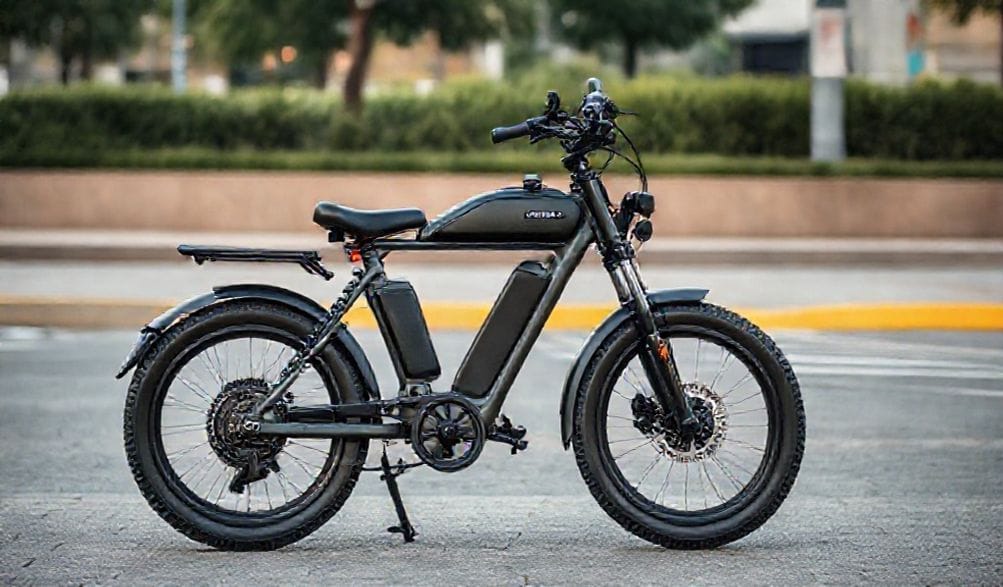
Is the Sur Ron Electric Bike Street Legal? A Complete 2024 Guide
Ta Sur Ron Light Bee has taken the electric two-wheel world by storm. Its lightweight design, impressive power, and relatively affordable price tag have made it a favorite for trail riders and urban adventurers alike. But as its popularity soars, so does a cloud of confusion. A quick scroll through online forums reveals the most pressing, and most commonly misunderstood, question: “Can I legally ride my Sur Ron on the street?”
The short answer is frustratingly complex: It depends entirely on where you live. A stock Sur Ron Light Bee is not primeren za cesto. However, in many jurisdictions, it can be made street legal through a specific process of modifications and bureaucratic navigation. This guide exists to cut through the hype and speculation, providing a clear, authoritative breakdown of Sur Ron street legality. We’ll dissect official vehicle classifications, outline the state-by-state process, and give you a realistic look at the costs and challenges involved.
Our analysis is based on a thorough review of Department of Motor Vehicles (DMV) documents, state vehicle codes, and manufacturer specifications. This guide is regularly updated by industry experts to reflect the ever-evolving landscape of electric vehicle law. We understand your core need: you want to know if you can ride your Sur Ron on public roads and exactly what you must do to make it happen.
Here’s the concise preview: For most riders in the US, the stock Sur Ron Light Bee is classified as an off-road vehicle. Making it street legal is often possible but is a non-trivial process involving specific hardware modifications, a stack of paperwork, and successful passage of state inspections. Success is not guaranteed and varies dramatically from state to state. Let’s dive into the details.
Understanding Vehicle Classifications: eBike, Moped, or Motorcycle?
Before you can navigate the path to legality, you must understand what the law sees when it looks at your Sur Ron. Misunderstanding these classifications is the root of most legal trouble.
How the Law Defines Electric Vehicles
In the United States, electric two-wheelers are primarily defined by three key factors: motor power, maximum speed, and operational method (pedal-assist vs. throttle).
-
The 3-Class E-Bike System: Adopted from federal Consumer Product Safety Commission (CPSC) guidelines and enacted into law by most states, this system defines low-speed electric bicycles.
- Class 1: Pedal-assist only, with no throttle. Motor stops assisting at 20 mph.
- Class 2: Throttle-assisted, but motor also stops at 20 mph.
- Class 3: Pedal-assist only, with motor ceasing assistance at 28 mph.
These vehicles are generally treated as bicycles, requiring no license, registration, or insurance.
-
Key Differentiators: The critical limits are a 750-watt motor (in most states) and a maximum assisted speed of 20 or 28 mph. Vehicles that exceed these specs, especially those operated solely by a throttle, typically graduate into more regulated categories like mopeds or motorcycles.
-
Why the Sur Ron Falls Outside: As you’ll see in its specifications, the Sur Ron immediately fails to qualify as a standard e-bike due to its power and speed. Its lack of functional pedals (on the stock Light Bee models) further removes it from the bicycle classification.
The Sur Ron Light Bee’s Official Specifications
Let’s look at the machine itself. The popular Sur Ron Light Bee X (and similar models) typically features:
* Motor Power: A nominal 6,000W peak-rated motor. Even its continuous power rating far exceeds the 750W e-bike limit.
* Največja hitrost: Capable of 45+ mph in stock configuration, and often much higher with aftermarket controllers or sprockets.
* Operational Method: Throttle-controlled, with no pedals for primary propulsion.
When a state DMV evaluates these specifications against its legal definitions, the Sur Ron almost always aligns with categories like:
* Moped/Motorized Bicycle: Often defined by an engine size under 50cc (or equivalent electric power) and a top speed between 20-30 mph. The Sur Ron’s speed typically pushes it beyond this.
* Motor-Driven Cycle or Motorcycle: This is the most common classification for a street-legal Sur Ron. It’s defined by its power, speed, and weight, requiring a motorcycle license, registration, insurance, and adherence to all Federal Motor Vehicle Safety Standards (FMVSS).
The Critical Role of the Manufacturer’s Statement of Origin (MSO)
Every new Sur Ron comes with a Manufacturer’s Statement of Origin (MSO), which is like its birth certificate. This document is the single most important piece of paper for street legalization. For US-bound Sur Ron Light Bees, the MSO is almost universally marked “For Off-Road Use Only” or with a similar designation.
This label dictates its initial classification. You cannot simply ignore it. The entire process of making the bike street legal involves using this MSO, along with proof of modifications, to apply for a new, on-road title. The MSO is your starting point, and its “off-road” designation is the primary hurdle you must legally overcome.
The Path to Street Legality: A State-by-State Process
There is no single “Sur Ron street legal kit” that works everywhere. The process is dictated by your state’s vehicle code. Regulations can be loosely grouped into three categories.
States Where Street Legalization is More Feasible
Some states have established, albeit detailed, procedures for titling and plating off-road vehicles or “specially constructed vehicles” (SPCV). These are often your best bet.
* Arizona & Vermont: Known for relatively straightforward processes for registering off-road vehicles, often requiring a state patrol or DMV safety inspection.
* South Dakota: Has gained a reputation for being accommodating to vehicle registrations, including for non-residents in some cases.
* Other States: Many states in the Midwest, South, and Mountain West have processes that, while paperwork-intensive, are possible if you meticulously follow the rules.
In these states, the path is clear: complete the required modifications, pass a safety inspection, submit the correct paperwork (MSO, bill of sale, application for title), pay fees and taxes, obtain insurance, and receive your plate.
States with Major Hurdles or Bans
Conversely, some states have regulatory walls that are nearly impossible to scale.
* California: Perhaps the most challenging. Beyond safety standards, the California Air Resources Board (CARB) requires emissions certification for on-road vehicles. Since Sur Ron does not have a CARB executive order for its models as on-road vehicles, registration is effectively blocked. The “Special Construction” vehicle process is also notoriously difficult for vehicles not originally intended for the road.
* New York & New Jersey: These states have strict vehicle codes and inspection regimes that make registering an off-road motorcycle for on-road use extremely difficult.
* Pennsylvania & Others: Some states explicitly prohibit titling any vehicle designated “for off-road use only” on their MSO.
In these states, attempting a standard street legal conversion is likely to end in frustration and rejection at the DMV.
The Universal Steps for Street Legal Conversion
If your state allows it, you will generally need to follow this multi-step process:
-
Required Modifications (The “Street Legal Kit”): You must equip the bike to meet Federal Motor Vehicle Safety Standards (FMVSS) and state requirements. A typical kit includes:
- Lighting: DOT-approved headlight (high/low beam), tail/brake light, and turn signals (front and rear) with audible/visual flasher indicators.
- Safety Equipment: Horn, rearview mirrors (usually left and right).
- Pnevmatike: DOT-approved tires marked for highway use.
- Instrumentation: A speedometer/odometer.
- Other: Properly functioning brakes, and sometimes reflectors.
-
The Paperwork Trail: This is as crucial as the hardware. You’ll need:
- The original MSO.
- A Bill of Sale.
- Your state’s specific application forms (often for a “specially constructed vehicle,” “reconstructed vehicle,” or a standard motorcycle title application).
- Receipts for major parts (like the frame/motor) and modification kits.
-
The Inspection: Most states require a physical inspection by the DMV, State Police, or a licensed inspection station. They will verify the VIN matches the MSO and check that all required safety equipment is present and functional.
-
Insurance, Registration, and Titling: Once you pass inspection, you submit the signed-off paperwork to the DMV. You must obtain a motorcycle insurance policy, pay all applicable title, registration, and sales tax fees, and finally receive your license plate and new, on-road title.
Expert Insights: Costs, Challenges, and Considerations
Going into this process with realistic expectations is key to avoiding costly mistakes.
Real-World Cost Breakdown
The “street legal Sur Ron” is more than just the bike’s purchase price.
* Modification Kit: A comprehensive, quality street legal kit from a reputable supplier (e.g., Luna Cycle, MotoTec) typically costs $500 – $1,200.
* DMV & Government Fees: Title application, registration, and sales/use tax. This can range from $100 to over $500, depending on your state’s tax rate and fees.
* Zavarovanje: Motorcycle insurance for a vehicle like this may cost $200 – $600 per year.
* Labor: If you cannot install the kit yourself, mechanic labor could add $200 – $500.
* Total: Beyond the bike itself, budget a minimum of $800 – $2,000+ for a proper conversion, not including your time navigating bureaucracy.
Common Legal Pitfalls to Avoid
- Beware of “Third-Party Registration Services”: Some online services promise a plate for your Sur Ron from a “friendly” state. This often involves obtaining a plate without a proper physical inspection or by misrepresenting the vehicle. This can constitute fraud, lead to plate revocation, and void insurance.
- Honesty is the Only Policy: Never lie on state forms or during an inspection about the bike’s origins or modifications. Getting caught can result in permanent denial, fines, and legal trouble.
- Local Ordinances: Even with a state plate, check city or county laws. Some municipalities prohibit motorcycles on certain paths or have noise ordinances that a Sur Ron might violate.
Riding a Non-Street-Legal Sur Ron on Public Roads
This cannot be overstated: Riding an unregistered, non-street-legal Sur Ron on public roads is illegal and carries significant risk.
* Legal Consequences: You can face hefty fines, points on your driver’s license (if you have one), and immediate impoundment of the bike.
* Financial & Safety Catastrophe: In an accident, you will be 100% at fault from an insurance and liability perspective. Your auto insurance will not cover you, and you will be personally liable for all property damage and medical bills. Any injury you sustain will also not be covered.
Pogosta vprašanja (FAQ)
Q: Can I just add pedals to make my Sur Ron a legal e-bike?
O: No. The addition of pedals does not change its core specifications. Its motor power (6,000W peak) and potential speed (45+ mph) will never meet the legal definition of a Class 1, 2, or 3 e-bike in any US state.
Q: Does Sur Ron make a factory street-legal model?
O: Sur Ron has introduced the Storm Bee in some international markets, which is designed as a road-legal model with larger wheels, different lighting, and a different frame. However, its availability and legal status in the United States are currently limited and vary by state. The popular Light Bee X/SE remains primarily an off-road platform.
Q: How long does the street legal process take?
O: It varies wildly. From purchasing a kit to receiving your plate, it can take anywhere from a few weeks to several months. The delay is usually in DMV processing times, scheduling inspections, and correcting paperwork errors.
Q: Will my street-legal Sur Ron be allowed in bike lanes?
O: Almost certainly not. Once registered as a moped or motorcycle, it is a motor vehicle. You must follow all rules of the road for that vehicle class, which includes riding in traffic lanes, not in bicycle lanes or on sidewalks (unless specifically permitted for motorcycles, which is rare).
Q: Where can I find my state’s exact laws?
O: Go directly to the source. We strongly recommend visiting your state’s official DMV or Department of Transportation (DOT) website. Search for terms like “specially constructed vehicle title,” “motor-driven cycle registration,” or “off-road vehicle conversion.” This guide provides a framework, but laws and procedures change; your state’s website is the only authoritative source.
Zaključek
Navigating the street legality of a Sur Ron electric bike is a journey through a complex patchwork of state laws and regulations. The key takeaways are clear: legality is not inherent, it is state-specific, it requires significant investment in modifications and paperwork, and success is never guaranteed.
Our final recommendation is emphatic: Thoroughly research your own state’s laws and consult directly with your local DMV še purchasing a Sur Ron if your primary goal is on-road riding. Understand the exact process, required modifications, and likelihood of success. The allure of the ride must be balanced with a commitment to legal and responsible operation.
Promoting safe and legal riding protects not only you but also the growing community of electric vehicle enthusiasts. By respecting the law, we help ensure positive perceptions and sensible regulations for the future of personal electric transportation.
Have you attempted to make a Sur Ron street legal in your state? Share your experiences or questions in the comments below to help build a community knowledge base. (Disclaimer: Comments are user-generated and do not constitute legal advice. Always consult official state authorities for legal guidance.)
METADATA_START—
DISPLAY_TITLE: Is the Sur Ron Electric Bike Street Legal? The 2024 Guide
SEO_TITLE: Sur Ron Street Legal Guide 2024 | State Laws & Conversion Process
META_DESC: Confused about Sur Ron street legality? Our complete 2024 guide explains state laws, the conversion process, required kits, costs, and how to make a Sur Ron Light Bee road legal.
IMG_PROMPT: A Sur Ron Light Bee electric bike parked on a suburban street, equipped with a street legal kit including turn signals, mirrors, and a license plate, with a blurred DMV building in the background, photorealistic style.
—METADATA_END—