
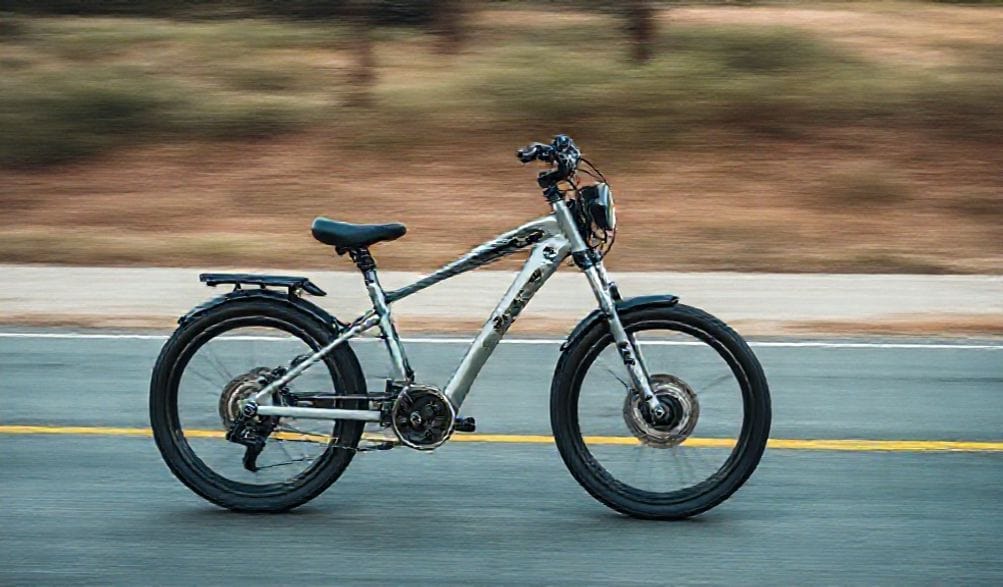
E-Bikes Capable of 60 MPH: Performance, Legality, and Safety Explained
The idea is undeniably thrilling: the quiet hum of an electric motor, the rush of acceleration, and the open road blurring past at a mile a minute. Searches for “e bike 60 mph” are driven by a potent mix of curiosity and a desire for extreme, unadulterated performance. It taps into a vision of two-wheeled freedom that pushes far beyond the everyday commute or trail ride. But what lies behind this enticing speedometer reading? The world of ultra-high-speed electric bicycles is a complex intersection of cutting-edge technology, murky legal definitions, and profound safety implications.
This guide is crafted from insights gathered from high-performance e-bike enthusiasts, technical analysts, and industry observers. Our expertise here is focused squarely on demystifying the technical specifications, navigating the intricate legal frameworks, and underscoring the critical safety considerations—not on encouraging illegal or dangerous activity. Information is compiled from manufacturer specifications, government transportation documents, and safety organization guidelines. Our goal is trustworthiness: to provide a clear-eyed view of what a “60 mph e-bike” truly represents, the significant legal gray areas it inhabits, and the paramount safety knowledge required. This post will demystify the world of ultra-high-speed electric bicycles, covering the technology that enables them, the complex legal landscape they operate in, and the essential safety knowledge required for anyone considering this extreme segment of personal electric vehicles.
What Does “E-Bike 60 MPH” Really Mean? Beyond the Marketing
The term “e-bike” carries specific legal and technical meanings that are fundamentally shattered by the number 60. Understanding this dissonance is the first step in grasping the reality of these machines.
Classifying High-Speed Electric Vehicles: E-Bike vs. Electric Motorcycle
In the United States, a widely adopted three-class system defines electric bicycles:
- 第1类: Pedal-assist only, with no throttle, and assistance cuts off at 20 mph.
- 第2类: Throttle-assisted, with motor power ceasing at 20 mph.
- 第3类: Pedal-assist only (typically), with assistance cutting off at 28 mph.
These classes are enshrined in many state laws and grant e-bikes access to bicycle paths and lanes, exempting them from requirements like licensing, registration, and insurance. A key federal guideline from the Consumer Product Safety Commission (CPSC) defines a “low-speed electric bicycle” as having a maximum motor-powered speed of 20 mph.
A vehicle capable of 60 mph exists in an entirely different universe. It exceeds these definitions not just incrementally, but categorically, in terms of:
* Power: While legal e-bikes often cap at 750W (or 1,000W in some states), 60 mph machines frequently use motors rated from 3,000W to 10,000W or more.
* 速度: 60 mph is more than double the speed of the fastest legally-defined Class 3 e-bike.
* Function: Many of these ultra-fast vehicles lack meaningful pedaling functionality, with pedals serving as a legal formality or not being present at all.
Technically and functionally, a 60 mph electric two-wheeler has crossed over into the territory of electric mopeds or 电动摩托车s. This reclassification is not semantic; it brings with it a host of legal requirements, including a vehicle title, registration, a driver’s license (often a motorcycle endorsement), insurance, and adherence to Department of Transportation (DOT) equipment standards.
Key Technologies Enabling 60+ MPH Speeds
Reaching and sustaining 60 mph on two wheels requires a complete departure from standard e-bike engineering. Here’s what powers these extreme machines:
- High-Output Motors: These are not your typical 250W mid-drives. To achieve such speeds, builders use powerful hub motors (often direct-drive for high-speed efficiency) or robust mid-drive systems. Power ratings are typically measured in kilowatts (kW), with 3kW (≈4,000W) being a common starting point for 60 mph capability. These motors generate immense torque and heat, requiring robust construction and cooling.
- 电池容量与电压: The motor is only as good as its power source. Standard e-bikes run on 36V or 48V systems. High-speed models almost universally utilize high-voltage battery packs—72V, 84V, or even higher. This higher voltage allows the system to deliver massive power (Watts = Volts x Amps) to the motor efficiently, enabling sustained high-speed performance. These packs also have enormous capacity, measured in amp-hours (Ah), to provide any meaningful range.
- Frame and Component Engineering: A bicycle frame and components are not designed for motorcycle forces. At 60 mph, stability, braking, and control are life-critical systems. These vehicles require:
- Motorcycle-Grade Brakes: High-performance hydraulic disc brakes with large rotors are mandatory. Mechanical disc or rim brakes are utterly insufficient for safe stopping from such speeds.
- Reinforced Frames: Frames must be built to handle the stress of high torque, high speed, and potential impacts. Often, they are based on downhill mountain bike or purpose-built motorcycle geometries.
- Advanced Suspension: Quality front and rear suspension is crucial for maintaining tire contact with the road and managing bumps at high velocity.
- High-Speed Tires: Standard bicycle tires are not rated for sustained 60 mph travel. Proper, speed-rated motorcycle or moped tires are essential to prevent blowouts.
The Critical Legal Landscape of Ultra-Fast E-Bikes
This is where the fantasy of a “60 mph e-bike” often collides with reality. The legal framework in most jurisdictions does not have a welcoming category for such a vehicle.
Federal and State Regulations in the United States
As mentioned, the CPSC’s definition of a “low-speed electric bicycle” caps motor-powered speed at 20 mph. Any product sold as a “bicycle” that exceeds this may not meet federal safety standards for a bicycle. More importantly, state laws govern vehicle operation on public roads.
Most states have adopted or adapted the three-class e-bike system. A device capable of 60 mph will almost certainly fail to qualify as any of these classes due to its excessive power and speed. Consequently:
* It is explicitly prohibited from bicycle paths, multi-use trails, and bike lanes intended for human-powered or low-speed electric travel.
* On public roads, it is likely classified as a motor-driven cycle, moped, or motorcycle, depending on its specific characteristics (like having a VIN, brake horsepower, etc.).
* Operating it on public roads without the proper classification is illegal and can result in fines, impoundment of the vehicle, and even misdemeanor charges.
Where Can You Legally Ride a 60 MPH Electric Vehicle?
The avenues for legal operation are narrow and specific:
- On Private Property: With the landowner’s permission, you can operate any vehicle you wish. This is the only domain where a 60 mph electric vehicle can be used free from road-legal concerns.
- On Public Roads, Properly Registered: To ride on public streets, the vehicle must be made street-legal. This process typically involves:
- Registration & Titling: The vehicle must have a Vehicle Identification Number (VIN) and be registered with your state’s DMV as a motorcycle or moped.
- 驾驶执照: You will need a valid driver’s license, and in most cases, a motorcycle endorsement (earned by passing a written and on-cycle test).
- 保险: 强制责任保险。.
- DOT-Compliant Equipment: The vehicle must be equipped with standard motorcycle features: specific lighting (headlight, brake light, turn signals), mirrors, horn, and speedometer. Many “high-speed e-bikes” sold online lack these.
Strong Disclaimer: Laws vary dramatically by state, county, and city. The information here is a general overview. You must consult your local Department of Motor Vehicles (DMV) and state vehicle code for definitive, legally-binding guidance. Assuming a 60 mph electric vehicle is a “bike” is a serious and potentially dangerous legal mistake.
高速行驶时的首要安全考量
任何车辆以60英里时速行驶都带有固有风险。对于一辆轻便、两轮且碰撞保护极少的车辆而言,这些风险会呈指数级放大。安全必须是绝对的首要关注点,甚至应超越对速度的追求。.
骑手安全装备不容妥协
在20英里时速下保护骑行者的装备,在60英里时速下毫无意义。你需要摩托车级别的防护。.
* 头盔: A 全盔式摩托车头盔 (必须通过DOT或ECE认证)是强制性的。在高速碰撞中,自行车头盔对你的下巴、颌骨和面部不提供任何保护。.
* 服装: 一辆 带护具的摩托车夹克 (配备肩部、肘部和背部护具)、, 摩托车手套、, 骑行裤 (配备膝部/胫骨护具)、以及 坚固的过踝靴 are the baseline. This gear is designed for abrasion resistance (“road rash”) and impact protection.
* 为何重要: 在60英里时速的碰撞中,沥青路面如同砂带打磨机。普通衣物会瞬间解体。专业安全装备是你唯一的护盾。.
车辆安全与维护
高速行驶对机械性能的要求极为严苛。忽视维护将直接导致故障。.
* 骑行前检查: 每次骑行前,检查胎压和轮胎状况,测试刹车功能和刹车片磨损情况,检查所有关键螺栓(车轴、立管、车把)是否已正确紧固,并确保车灯工作正常。.
* 专业级维护: 零部件磨损速度会快得多。刹车片、轮胎、链条和轴承需要频繁检查和更换。高压电气系统的复杂性通常需要专业知识进行诊断和维修。.
* 电池安全: 这些大容量、高压锂离子电池组功率强大,一旦损坏、过充或储存不当,则具有潜在危险。务必使用制造商指定的充电器,在阴凉干燥处存放,并定期检查是否有损坏。.
骑行技能与风险意识
安全操控自行车所需的技能,并不能直接转化为控制时速60英里电动车辆的能力。这需要 摩托车骑行技能。.
* 制动距离: 从60英里时速刹停所需的距离, 几乎是从30英里时速刹停距离的 四倍,并且需要专业、渐进的刹车操作以避免车轮抱死和摔车。.
* 逆操舵: 要在高速下入弯,必须有意识地朝你希望转弯的方向推压车把——这对大多数骑行者而言是一种陌生的技术。.
* 危险意识与容错空间: 以60英里时速行驶,每秒前进88英尺。反应时间急剧减少。砂石、坑洼、湿滑落叶或突然驶出的汽车都成为严重威胁,而留给你的反应时间微乎其微。容错空间几乎为零。.
常见问题:关于时速60英里电动自行车的常见疑问
问题1:我能合法购买到现成的时速60英里的电动自行车吗?
答: You can purchase vehicles marketed as such online, but they are almost never legally classified or operable as a “bicycle” on public roads straight out of the box. They are often sold as “off-road only” or for private land use. Making them street-legal usually requires significant modification and a successful registration process with your DMV.
Q2: Do I need a driver’s license or insurance for a 60 mph e-bike?
答: 如果你的目标是在公共道路上骑行,那么几乎可以肯定 需要。. 一旦你所在州将其归类为机动车(轻便摩托车或摩托车),所有关于驾照、注册和保险的标准法律都将适用。无证无保险骑行是违法的,并且在发生事故时,你将个人承担所有损失赔偿责任。.
问题3:一辆性能可靠的 时速60英里电动自行车 价格是多少?
答: 价格差异很大。使用大功率套件和坚固车架进行的DIY改装,起价约为 $4,000 – $6,000. 专业制造商生产的预装高性能车型,价格通常在 8000至15000美元或更高,, 具体取决于零部件和电池容量。.
Q4: What’s the real-world range at top speed?
答: 由于空气阻力和功耗呈指数级增加,在最高速度下续航里程会急剧下降。一款宣称在20英里时速下续航100英里的车辆,在持续60英里时速下可能仅能实现 20-35英里内耗尽电池, 25-35英里。高速骑行时,务必为显著缩短的续航里程做好规划。.
问题5:对于高速电动骑行,是否有合法的替代选择?
答: 当然有。为了合法、在道路上享受高速电动骑行的乐趣,可以考虑:
* 注册电动摩托车: 像Zero和LiveWire这样的公司生产完全合法上路的高性能电动摩托车。.
* 电动轻便摩托车/踏板车: 在许多州,较低功率的电动轻便摩托车(最高时速30-40英里)注册要求更简单。.
* 合法的3类电动自行车: 一辆优质的3类电动自行车(辅助时速至28英里)在城市环境中会感觉非常快,并且在许多道路和自行车道上都是合法的。.
结论
以“电动自行车”为名、时速可达60英里的车辆在技术上已成为现实,但它们在法律和实用层面所属的类别,已与传统电动自行车相去甚远。在性能要求、法律规范和安全规程方面,它们更接近于电动摩托车。追求极致速度必须与坚定不移的责任感相平衡。.
核心建议很明确:安全、合法性和技能不能是事后才考虑的事项——它们是基础要求。对于任何热衷于高性能电动两轮车的人而言,负责任的道路包括:深入研究当地车辆法规,投资专业级安全装备,以及最重要的——接受适当培训。考虑报名参加摩托车安全基金会(MSF)的骑手课程,在受控环境中建立基本技能。联系当地倡导安全合法骑行的电动摩托车或合法高性能电动自行车爱好者团体。通过尊重车辆、法律以及其中所涉及的切实风险,你可以以一种激动人心、信息充分且最重要的是安全的方式,探索高速电动车辆的世界。.
METADATA_START—
显示标题:时速60英里的电动自行车:关于速度、法律与安全的终极指南
SEO_TITLE: 时速60英里的电动自行车:合法性指南、安全与性能解析 | [您的品牌]
META_DESC: 对时速可达60英里的电动自行车感到好奇?我们将为您解析其技术原理、关键的法律问题以及您必备的安全装备。在骑行前,请务必了解这些重要信息。.
IMG_PROMPT: 一个充满动感的高角度镜头:一名穿戴全套摩托车护具和全盔的骑手,正在一条私人的空旷沥青路上,谨慎地测试一辆配备大型电池组、造型现代的强劲电动自行车;前景中有一个模糊的速度表,显示着高速数值。整个场景应同时传达出高性能与严肃的安全意识。.
—METADATA_END—