
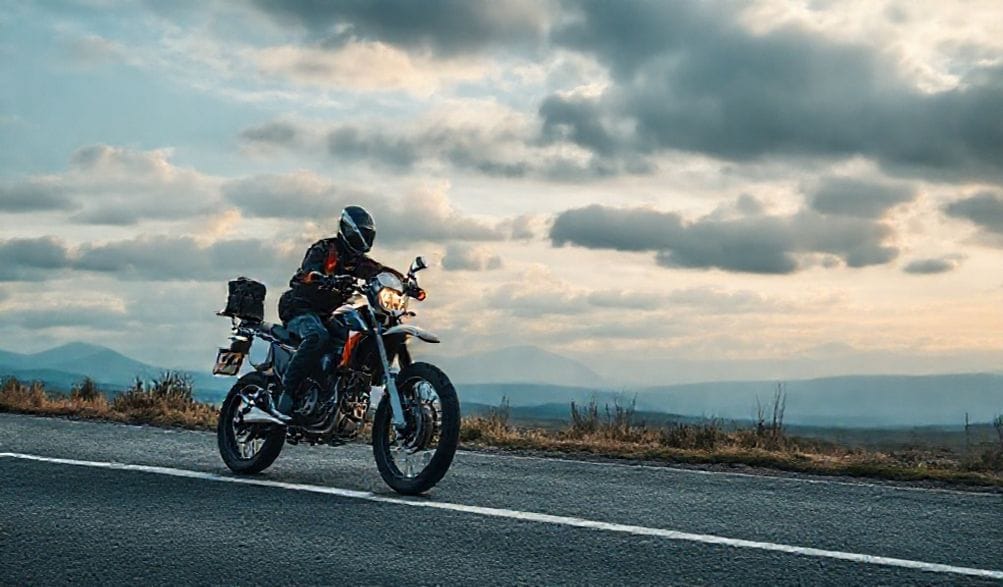
Road Legal Surron: Your Ultimate Guide to Street-Legal Electric Dirt Bikes
引言
2025款 Surron Light Bee 与 Ultra Bee have revolutionized the electric dirt bike scene, offering incredible power, agility, and near-silent operation. For many riders, the natural next question is: “Can I make my Surron 街道合法?”
The answer is a complex “it depends,” governed by an intricate web of state-by-state regulations, vehicle classifications, and specific modification requirements. The dream of legally connecting trails, running quick errands, or exploring backroads on a lightweight, torquey electric bike is powerful. However, the path to a plated Surron is fraught with bureaucratic hurdles, technical requirements, and significant financial investment.
This comprehensive guide is designed to cut through the confusion. We will provide a detailed, authoritative roadmap based on current DMV classifications, manufacturer specifications, and real-world rider experiences. Our goal is to equip you with the knowledge to navigate the legal process safely and responsibly, ensuring your pursuit of a road legal Surron is both informed and compliant. This is not a guide to loopholes, but a manual for legitimate conversion where possible.
1. Understanding the Core Challenge: Vehicle Classification
The primary and most significant hurdle in making a Surron street legal isn’t the modifications—it’s paperwork. It all starts with how the vehicle is classified from birth.
1.1 Manufacturer’s Statement of Origin (MSO)
- The Critical Document: Every new vehicle comes with a Manufacturer’s Statement of Origin (MSO), its birth certificate. Crucially, Surron Light Bee X and Ultra Bee models are typically classified as “Off-Road Only,” “For Competition Use Only,” or “OHV” (Off-Highway Vehicle) on this document.
- **为何这一点至关重要:** This classification is the foundational data point for every state’s Department of Motor Vehicles (DMV). It sets the legal presumption that the vehicle is not designed or certified for public roads. Registering an “off-road” vehicle for on-road use is an uphill battle—it’s the exception, not the rule. The entire conversion process is essentially an appeal to the state to reclassify the bike based on added equipment.
1.2 Motorcycle vs. Moped vs. Motor-Driven Cycle
- State-by-State Definitions: If you succeed in getting a title, 其 will your Surron be? Laws vary dramatically. Some states may classify a modified Surron as a “motor-driven cycle” or “limited-speed motorcycle” (often defined as under 50cc equivalent in power), which might have simpler equipment or licensing rules. Others will classify it as a full “motorcycle” regardless of its electric powertrain.
- Impact on Requirements: This final classification dictates everything:
- 设备要求: Full motorcycle requirements often demand self-canceling turn signals, specific headlight heights, and stricter reflectors.
- 驾照要求: A “moped” might only require a standard driver’s license, while a “motorcycle” will mandate a motorcycle endorsement (Class M).
- 保险与注册: Costs and policy types will differ based on classification.
2. The State-by-State Legal Landscape
This is the most crucial section of this guide. Generalizations are dangerous. Your specific state’s statutes and DMV procedures are the ultimate authority. The process in rural Montana has no bearing on your chances in New York City.
2.1 “Green-Sticker” vs. “Red-Sticker” States (A California Example)
- Explanation of Terminology: California’s Air Resources Board (CARB) system is a prime example of strict vehicle regulation. “Green Sticker” vehicles can be ridden year-round in designated areas, while “Red Sticker” vehicles have seasonal restrictions. This system primarily targets emissions.
- How it Applies to Electric Bikes: Even though electric vehicles like the Surron have zero tailpipe emissions, they are still subject to these use classifications based on their MSO. Getting a Surron plated in California is famously difficult, as the state requires a bike to have a federal EPA and CARB certification for on-road use, which Surrons do not possess. This creates a near-insurmountable barrier.
2.2 States with “Dual-Sport” or “Street-Legal” Kits Recognition
- Some states have more established—though still stringent—processes for converting off-road vehicles. States like Arizona, South Dakota, and Vermont (historically) have been known for more feasible processes.
- The Role of State-Specific Inspections: This is the common thread. These states typically require a certified vehicle inspection, often by a state trooper, police officer, or DMV inspector. This official verifies that the VIN matches the MSO and that all required street-legal equipment is permanently installed and functional. They fill out a form certifying the bike’s compliance, which you then submit with your title application. Success here depends entirely on the inspector’s knowledge and willingness to follow the letter of the law.
2.3 States Where It Is Extremely Difficult or Impossible
- It is vital to manage expectations. States with highly prescriptive vehicle codes and powerful emissions boards often make conversion virtually impossible. These include:
- 加利福尼亚州: As mentioned, due to CARB regulations.
- 纽约州及新泽西州: Have stringent safety and certification requirements that an aftermarket-converted Surron is unlikely to satisfy.
- Washington & Oregon: Have tightened procedures significantly in recent years.
- In these states, attempting conversion may lead to a dead end after spending thousands on parts. Research is non-negotiable.
3. The Essential Road Legal Modification Kit
If your state’s laws permit conversion, you must equip your Surron to meet both Federal Motor Vehicle Safety Standards (FMVSS) and your state’s specific traffic code. Do not cut corners here.
3.1 Lighting and Signaling Systems
- Headlight (DOT/SAE Approved): Must have a dedicated high and low beam switch. The light must be stamped with DOT or SAE compliance. Many kits include LED units that are vastly superior to the stock off-road light.
- Tail Light, Brake Light, and Turn Signals: All must be DOT compliant. Integrated rear fender kits that combine these elements are popular and clean-looking for Surrons. Turn signals must be amber in front, red or amber in the rear, and spaced a minimum distance apart.
- 牌照照明灯: A dedicated, white light to illuminate the rear plate is a frequently overlooked but legally required item.
3.2 Audible and Safety Equipment
- 喇叭: An electric horn audible from a minimum distance (typically 100-200 feet) is required. The stock “bicycle bell” is not sufficient.
- 后视镜: At least one (most states require two) rearview mirror. They must provide a clear, stable view of the road behind.
- 所有州都要求配备正常工作的速度表。对于任何需要所有权凭证的车辆,里程表通常也是标准要求。 A permanently mounted, functional unit displaying MPH is mandatory. Smartphone apps are not acceptable. Many riders use a simple, handlebar-mounted digital unit.
3.3 Tires and DOT Certification
- The Non-Negotiable Upgrade: This is critical. Off-road knobby tires are 不允许 DOT-approved for street use. The rubber compound and tread pattern are not designed for pavement safety (especially in wet conditions).
- Safety and Liability: Installing DOT-certified dual-sport or street tires is essential. Using non-DOT tires on public roads is a major safety risk, will likely fail inspection, and would absolutely invalidate your insurance in the event of an accident.
4. The Step-by-Step Legalization Process
Assuming your state allows it, here is a general procedural walkthrough. Treat this as a framework, not a guarantee.
4.1 Pre-Purchase Verification (DO NOT SKIP)
- Contact Your Local DMV/BMV: Before buying a bike or any parts, call or visit your state’s DMV website. Ask very specific questions: “What is the exact process to title and register an off-road, electric motorcycle for on-road use? What forms are required? Is a state patrol inspection needed?” Take names and notes.
- Verify the MSO with Your Dealer: Confirm the exact wording on the MSO for the bike you intend to buy.
4.2 Installation and Documentation
- Purchase a Comprehensive Kit: Source a kit from a reputable vendor known for providing 通过DOT认证的 components. Quality varies wildly.
- Keep All Receipts and Documentation: Maintain a meticulous file with receipts for the bike, every part in the kit, the tires, and any professional installation services. This paper trail is crucial for inspection and titling.
4.3 The Inspection and Title Application
- Schedule a VIN Inspection: Often the first step, where law enforcement verifies the VIN isn’t stolen and matches the MSO.
- Complete the State Safety Inspection: The formal check of all required equipment (lights, horn, mirrors, tires, etc.). This is often done by the same officer or a designated DMV inspector.
- Submit Your Dossier to the DMV: Bring your completed inspection form, the original MSO, all bills of sale, a completed application for title/registration, and proof of insurance.
- Pay All Fees: Be prepared for title fees, registration fees, plate fees, and taxes.
5. Insurance, Licensing, and Ongoing Compliance
Once you have a plate, your responsibilities shift to those of any other road vehicle owner.
5.1 Obtaining Motorcycle Insurance
- You must now insure the bike as a street-legal motorcycle. Call your provider with the new VIN and title information. Not all companies will insure a converted vehicle, so you may need to shop around.
- Liability coverage is legally mandatory. Comprehensive and collision are highly recommended to protect your investment.
5.2 Rider Licensing Requirements
- In nearly all cases where the bike is registered as a motorcycle, a standard motorcycle endorsement (Class M) on your driver’s license is required.
- This involves passing a written knowledge test and an on-bike skills test, either through your state’s DMV or an approved motorcycle safety course.
5.3 Renewals and Legal Responsibilities
- You are now responsible for annual registration renewal.
- You must adhere to all traffic laws: obey speed limits, use turn signals, wear a helmet (if required by state law), and carry your license, registration, and proof of insurance.
6. Weighing the Pros and Cons
Is it worth it? Let’s break down the reality.
6.1 Advantages of a Road-Legal Surron
- Unmatched Utility: Legally connect trail networks, run local errands, commute short distances, and explore forest service roads without a trailer.
- Quiet and Eco-Friendly: Enjoy the peace of electric propulsion without disturbing communities or the environment.
- Lower Operating Costs: No gas, oil changes, or complex engine maintenance compared to gas-powered dual-sports.
- The “Cool Factor”: Owning a unique, street-legal electric dirt bike is a point of pride and a conversation starter.
6.2 Significant Drawbacks and Considerations
- Cost and Complexity: The process can easily cost $1,000 – $2,200+ in parts, tires, and fees, and requires significant time, research, and paperwork navigation.
- Compromised Performance: DOT-approved dual-sport tires are a necessity but offer markedly worse grip in loose dirt or mud than aggressive knobbies. The added weight of lighting kits can slightly affect the bike’s nimble feel.
- Legal Vulnerability: Any error in the process—a non-DOT part, an incomplete form—can result in denied registration. Worse, if you make a mistake and are pulled over, you could face tickets for operating an unregistered vehicle.
- Resale Implications: The bike will have a “reconstructed” or similar brand on its title in many states, which can complicate future sales and potentially lower resale value.
常见问题
问:我能买到出厂即道路合法的Surron吗?
答: No. Surron does not currently manufacture a factory street-legal model for the US market. All new Surrons are sold with an “Off-Road Only” MSO. Any “street-legal” Surron for sale is a converted used bike.
Q: Is there a “loophole” or easy way to plate a Surron?
答: There is no universal, reliable loophole. Stories often refer to outdated processes (like Vermont’s old mail-in title service) or risky methods like using a different bike’s VIN plate (“VIN-swapping”), which is illegal and fraudulent. Pursuing such avenues can lead to fines, impoundment, and criminal charges. The only safe path is through your own state’s official conversion process.
Q: Do I need a motorcycle license to ride a road-legal Surron?
答: In the vast majority of states, 需要。. Once registered as a motorcycle or motor-driven cycle, state law will require the appropriate motorcycle endorsement on your driver’s license. Check your local laws to be certain.
Q: How much does it cost to make a Surron street legal?
答: Beyond the bike’s purchase price, budget for:
* Quality DOT Conversion Kit: $500 – $1,500
* DOT Tires & Installation: $200 – $400
* DMV Fees (Title, Registration, Plates): $100 – $300+
* Potential Professional Help/Inspections: Variable.
* Total Estimated Range: $800 – $2,200+.
Q: What happens if I ride my unregistered Surron on the street?
答: You risk severe penalties: substantial fines (hundreds of dollars), impoundment of the bike (with costly storage fees), points on your license, and absolute liability in the event of an accident (your insurance will not cover you, and you could be sued personally). It is never worth the risk.
结论
Transforming a Surron into a road legal Surron is a challenging, detail-oriented project that appeals to the dedicated enthusiast who values legality and maximum utility. It is not a simple bolt-on affair. Success hinges entirely on meticulous, upfront research of your state’s specific laws, a commitment to using certified safety equipment, and patience with bureaucratic processes.
There is no one-size-fits-all answer. For some, the reward of a plated, electric trail machine is worth the journey. For others, the cost, complexity, and legal uncertainty are deal-breakers.
Your first and most important step is not buying a kit—it’s consulting an authoritative source: your state’s official DMV website or a direct, documented phone call. Use the framework in this guide to ask informed, specific questions.
If the process seems too daunting, remember that the Surron is an exceptional machine in its natural habitat. Consider enjoying it for its intended purpose—as a premier off-road electric bike—or explore purchasing a factory-made, street-legal electric dual-sport from manufacturers that design them for the road from the ground up. Riding legally ensures your safety, protects your financial investment, and respects the broader riding community and the laws that govern our shared roads.
METADATA_START—
DISPLAY_TITLE: Road Legal Surron: The Complete Guide to Street-Legal Conversion
SEO_TITLE: Road Legal Surron Guide | How to Make a Surron Street Legal (2024)
META_DESC: Want a street legal Surron? Our ultimate guide covers state laws, required DOT kits, the step-by-step legal process, costs, and pros/cons of converting your Light Bee or Ultra Bee for the road.
IMG_PROMPT: A Surron Light Bee electric dirt bike parked on a paved mountain road, equipped with a full street-legal kit including front and rear turn signals, a larger headlight, mirrors, and a visible license plate on the rear fender, scenic backdrop.
—METADATA_END—